National STEM/STEAM Day: Make Room for Discovery
Celebrate November 8 with hands-on projects that connect science, technology, engineering, art, and math to students’ lives.


National STEM/STEAM Day celebrates discovery through hands-on learning. Explore exciting projects and ways schools and families can get involved.
National STEM/STEAM Day, celebrated Sunday, November 8, 2026, gives schools and families a reason to make room for the questions that send students looking for answers: Why did that bridge collapse? How does a game know when to keep score? Could we design something better?
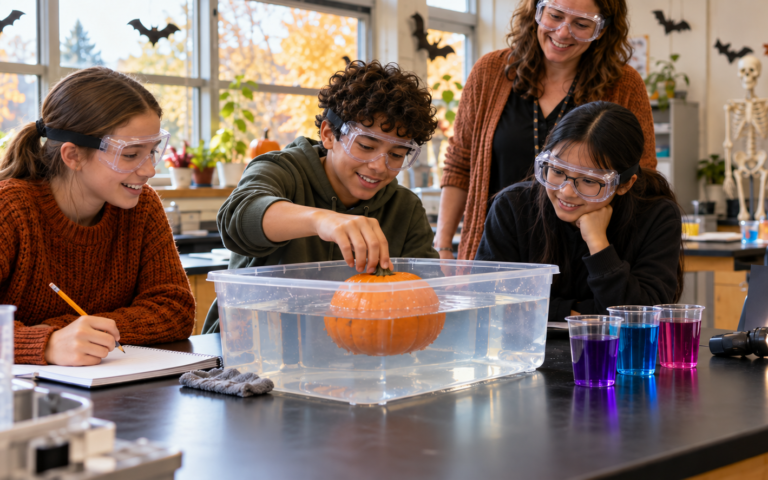
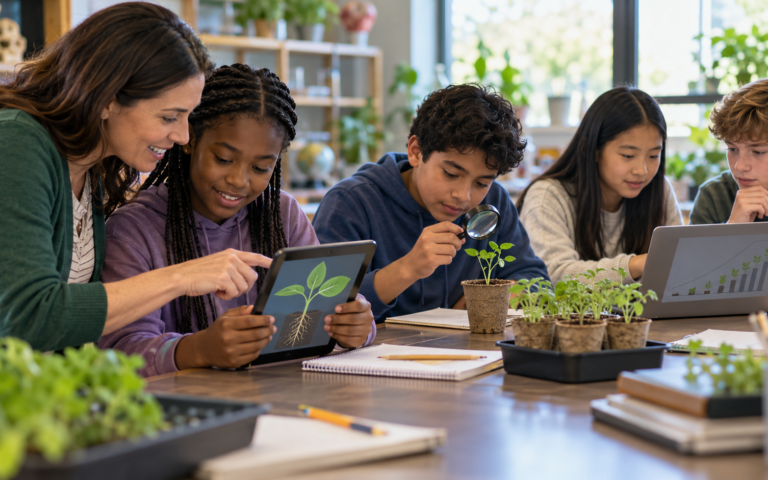
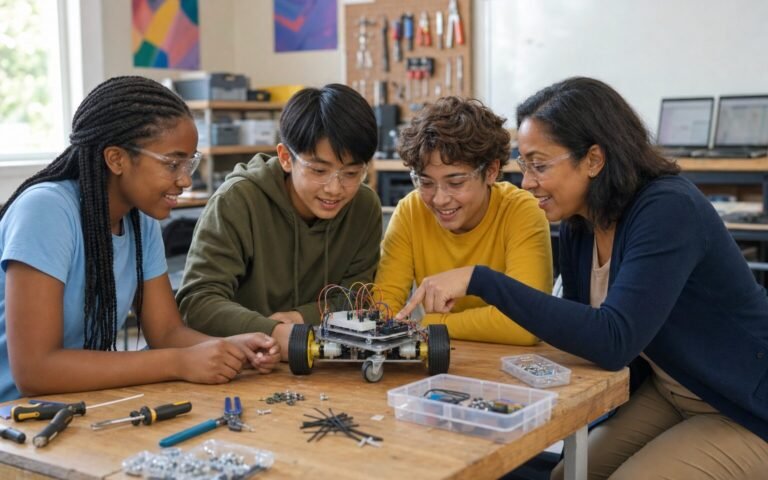
Picture a classroom where one group is folding paper into bridge supports, another is recording sounds for a digital story, and a third is arguing over which graph best explains its results. There is activity everywhere, but there is also a purpose. Students are making decisions, testing ideas, and learning how to explain what happened.
That is the kind of energy worth celebrating.
The Technology Student Association recognizes November 8 as National STEM/STEAM Day. STEM brings together science, technology, engineering, and mathematics; STEAM includes the arts. The observance offers an opportunity to help students explore how these fields connect—and where their own interests fit.
Because this year’s celebration falls on a Sunday, schools can plan activities for Friday, November 6, or Monday, November 9, while families carry the exploration into the weekend. A single challenge can also become the starting point for a longer classroom project.
Give students a problem worth solving
A good STEM or STEAM experience begins with something students want to understand or improve.
A school garden might need a better watering plan. A classroom might need clearer directions for sorting recycling. A student-designed game might be difficult for younger children to use. Each problem creates a reason to investigate, measure, design, and communicate.
Consider a challenge to redesign a crowded school courtyard. Students could observe how people use the space, measure its dimensions, and develop a scale drawing. They might investigate shade, compare materials, and build models within a proposed budget. Artistic choices would help shape the space’s appearance and communicate the design, while feedback from potential users would reveal whether the plan actually meets their needs.
Teachers can adapt the challenge by age. Younger students might draw a more welcoming playground and explain their choices. Older students could compare costs, calculate areas, and defend tradeoffs between different proposals.
The connection between subjects becomes clear because the work requires it. Students need mathematics to make the drawing accurate and evidence to support their decisions.
Make the arts part of the thinking
In a STEAM project, the arts deserve a meaningful role from the beginning.
An animation requires decisions about timing, movement, and storytelling as well as code. A musical instrument invites investigation into vibration and pitch alongside composition and performance. An exhibit needs accurate information, but it also needs a visual arrangement that helps visitors understand it.
A classroom studying local wildlife, for example, could create an illustrated field guide. Students would research species, observe physical features, and use careful drawings to show identifying details. Their artistic decisions would affect how useful the guide becomes: Does the illustration show the feature a reader needs to recognize? Is the page easy to navigate?
The Smithsonian Learning Lab offers free access to digital resources across art, culture, history, and science, along with educator-created collections. Teachers can use those materials to help students examine objects closely and develop questions that cross subject boundaries.
Give art teachers a place in planning the celebration. They can help shape projects around observation, composition, interpretation, and audience—skills that contribute directly to the work.
Four projects that can bring the celebration to life
These suggested activities use familiar materials and can be adapted to different grade levels. Teachers should select a challenge that fits their students and allow enough time for a second attempt.
Build a bridge and investigate what holds
Give small groups equal amounts of paper and tape, two supports placed a fixed distance apart, and a shared goal: build a bridge that holds a specified load.
Before construction, students sketch their ideas and predict where the bridge might bend. Test each design under the same conditions, adding small loads gradually and recording the results. Keep the testing surface low and clear so falling materials do not strike anyone.
Then ask students to change one feature. Would folding the paper help? What happens if the supports move? Does reinforcing the center improve performance, or does another part become the weak point?
Younger students can count identical objects supported by the bridge. Older students can measure mass, compare strength relative to material use, and graph results. A labeled drawing can explain how the design directs the load toward its supports.
The revealing moment often comes after the first collapse, when a group has to decide what its evidence suggests changing.
Create an interactive story
Challenge students to build a short digital story in a school-approved, age-appropriate coding environment. A character might explore a habitat, navigate a community, or explain a scientific idea.
Students plan the story, create or select suitable artwork, and write instructions that control movement and interaction. They could use a repeated sequence to animate a character or a conditional statement to respond to a reader’s choice.
Ask another group to test the story. Does the intended action happen? Are the instructions understandable? Can the audience follow the explanation?
For classrooms without enough devices, begin with paper storyboards and instruction cards. Students can act out the sequence and identify missing steps before translating it into code.
This project gives students a concrete reason to revise both their programming and their communication.
Turn observations into a visual explanation
Choose a question students can investigate without collecting personal information: How much of the playground is shaded at different times? Which types of leaves appear most often along an approved walking route? How does the length of a paper spinner affect its fall time?
Students decide what to record, use consistent procedures, and organize their observations. Then they create a graph, illustrated explanation, or simple infographic for a specific audience.
The design work matters. A beautiful chart can still be misleading if its scale is confusing or its categories are unclear. Ask students to explain why they chose a particular format and what their observations cannot tell them.
Older students can discuss sample size, unusual results, and possible sources of measurement error. Younger students can use picture graphs and spoken explanations.
The goal is an explanation another person can understand and question.
Design something that makes daily life easier
Invite students to identify a small inconvenience and develop a prototype. Possibilities include a desk organizer, a book stand, a clearer classroom sign, or a model of a more accessible play space.
Start by asking who will use the design and what that person needs. A sign, for instance, must be understandable from the place where someone will see it. A book stand must support the book without making pages difficult to turn.
Students can build with cardboard, paper, and other teacher-approved materials. They should test their ideas, gather feedback, and revise. Older students might develop a digital model or calculate production costs.
If the challenge concerns accessibility, involve people with relevant experience where appropriate. Their feedback can help students recognize needs they missed in an initial sketch.
Leave time to test again
A celebration can become so busy that students finish building just as the bell rings. Protect time for testing and improvement, even if that means choosing a smaller project.
NASA’s engineering design resources describe a process that includes defining a problem, imagining solutions, planning, creating, testing, improving, and sharing. That cycle gives teachers a useful structure for a classroom challenge.
Students need to know the goal and constraints before they begin. How will success be measured? Which materials can they use? What must the design accomplish?
After testing, ask questions that make the results useful:
What did you expect, and what happened?
Which observation supports your explanation?
What would you change first?
How could you check whether that change helped?
A design that does not work yet can produce valuable evidence. Teachers can acknowledge the disappointment while helping students decide what to do next. Students should also have opportunities to explain a successful design rather than stopping at “it worked.”
Use technology with a clear purpose
Digital tools can extend a project when they help students do something specific. A spreadsheet can reveal patterns across trials. A simulation can let students explore a system that is difficult to reproduce in class. A short video can document a test for closer review.
Schools can also use the day to discuss artificial intelligence as a technology students should examine thoughtfully. In a teacher-led activity using an approved tool, students might evaluate an AI-generated explanation of why a bridge bends, then compare it with a trusted reference and their own observations.
Present that explanation as a claim to investigate. Students still need to measure, test, and decide whether the evidence supports it. Teachers should review generated material before using it and follow school requirements for student access and privacy.
A project can be equally worthwhile without AI or specialized equipment. Paper models, handwritten data, and close observation give students plenty to investigate.
Make participation possible for every student
Plan the celebration so students can contribute in different ways. Offer spoken explanations, sketches, photographs, or written reflections where those formats meet the learning goal. Provide accessible workspaces and suitable materials, and adapt tools or instructions when needed.
Group roles should rotate. Every student deserves a chance to handle materials, make design decisions, and explain results. A student who usually records notes should also have an opportunity to build or test.
Start with interests students already have. Sports invite questions about motion and statistics. Music opens discussions about sound and patterns. Drawing can lead to animation, architecture, or scientific illustration. Those connections give students a familiar place to begin exploring something new.
Schools can invite community members to share their work, including technicians, designers, skilled tradespeople, programmers, and researchers. Ask guests to bring a problem, a prototype, or an example of a revision. Seeing how someone works through uncertainty can make a career more understandable than a job title alone.
Take the discovery home
Sunday’s celebration gives families an opportunity to try a modest challenge together. Build a paper bridge across two stacks of books, compare designs, and talk about what changed. On a walk, look for patterns in leaves, buildings, or shadows. Sketch an invention that would solve a household inconvenience.
Schools can send home an optional activity using common materials, with a paper version available. Keep it short enough for families to enjoy without a special purchase or an adult’s technical expertise.
Adults can join the investigation by asking, “What made you think of that?” or “How could we find out?” A child’s explanation is often the most interesting part of the activity.
Keep the work going after November 8
A school showcase can display the first sketch beside the revised design, with test results and a brief student explanation. That gives visitors a chance to see how the work developed and ask questions about the decisions behind it.
Before the celebration ends, give students a place to record what they want to investigate next. Choose a few of those questions for a follow-up lesson, club meeting, or longer project.
National STEM/STEAM Day is a chance to celebrate students’ curiosity by giving them something worthwhile to do with it. Put a problem in front of them, provide the tools and support to begin, and leave room for the unexpected result. Then make sure they have time to try again.
Subscribe to edCircuit to stay up to date on all of our shows, podcasts, news, and thought leadership articles.
Related reading
More on STEM and STEAM Education