
Public-Private Partnerships in Special Education Should Start With the Child
Mark Claypool, president and CEO of ChanceLight Behavioral Health and Education, discusses the debate over private providers in public schools, the changes in special education and autism services, and how districts can make public-private partnerships work.
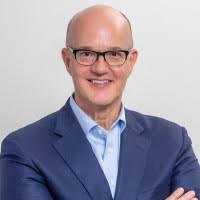


Public schools have bought from private companies for generations, yet the moment a private provider offers to teach children, the argument turns fierce. At the BMO Capital Markets Back to School Education Conference in New York this month, Mark Claypool, president and CEO of ChanceLight Behavioral Health and Education, told edCircuit why he thinks that argument misses the point, how special education has outgrown the laws it was built on, and what a district needs for public-private partnerships in special education to work.
Claypool speaks from inside the work. His company runs programs for students with special needs and for students at risk of dropping out, in partnership with public school systems, and its oldest programs have been doing that work for decades. The question he keeps returning to, whoever provides a service, is what is best for the child.
Why do private providers in public schools spark such fierce debate?
Claypool finds something almost comical in the debate. Charter schools and private schools set off some of the most bitter arguments in education, and the media coverage tends to follow one line: public money is being handed to a private, for-profit company, and that will ruin public education.
Yet public schools have leaned heavily on the private sector for decades, for nearly everything they use. Districts do not write and print their own textbooks or build their own computers. They do not put up their own buildings, and when they do build, they do not go looking for not-for-profit construction firms, not-for-profit banks to finance the project, or not-for-profit publishers to supply the curriculum. They hire companies, and few people object.
That is why Claypool calls it a bit disingenuous to get hung up on for-profit versus not-for-profit only when the service is instruction. In his view the line is drawn there because instruction is the territory of the labor unions, and because teaching children directly is what public school systems see as their core function.
ChanceLight has worked on the instructional side of that line for many years. Two of its divisions provide instructional services directly to public school systems. Spectrum Center Schools and Programs serves students in California. Ombudsman Learning Centers focus on dropout prevention and dropout recovery, working with students who have left school or are close to leaving. Both have been operating for about 40 years, and together they have worked with about 150,000 young people.
What the debate costs families
For families, Claypool says, the cost of the argument is simple to state. Whenever a discussion in education strays from what is best for a child, it becomes counterproductive. When families cannot reach the best forms of treatment or the best instruction for their children, it is the children who suffer.
His answer is that the provider’s legal structure should not decide the question. If a service is best for children, schools should use it, whoever provides it and however that provider is organized. Parents, he says, do not care who provides a service or how the provider is organized. They want what is best for their children, and a debate about the provider can stand between them and the help they are looking for.
How has special education changed in 40 years?
Few parts of education are changing as fast as special education, and Claypool finds that pace fascinating. Special education has existed on a formal basis for about 40 years, resting on a small number of landmark laws. Those laws were civil rights laws. Their purpose was access: making sure that children with disabilities could attend public school and receive an academic education, with accommodations that made that education possible.
Over the 35 to 40 years since, Claypool says, public schools have become the default place where a wide range of children’s needs are treated, including learning disabilities, behavioral issues and mental health issues. The original law was never meant to make schools the main provider of that care. It was meant to open the schoolhouse door.
Autism and the change in diagnosis
The way children are diagnosed has changed as well. Conditions that were once sorted into different categories are now seen differently, and autism stands out in front of everything else. As diagnoses of autism have risen, Claypool notes, diagnoses of other conditions have fallen, among them intellectual disability and pervasive developmental disorder.
The Centers for Disease Control and Prevention reported in March 2014 that the prevalence of autism spectrum disorder among 8-year-olds at its monitoring sites was 14.7 per 1,000, or one in 68 children. For public schools, Claypool says, that makes autism a very large problem: virtually every classroom now includes a child with autism.
Autism also differs from many other disabilities in how much timing matters. It is, in his words, a very dynamic disability. Every day that passes without the most effective and intensive treatment program is a day the child cannot get back.
What services help students with autism succeed?
With classrooms that diverse, the question becomes which services make the difference. For a child with autism, Claypool says, the work is about addressing the behaviors that will keep the child from succeeding in a typical classroom. Timing is the heart of it. The longer those behaviors go unaddressed, the more entrenched they become, the more they reward themselves, and the harder it becomes for the child to grow into an independent adult.
Today a parent of a child with special needs generally reaches services through the school system’s due process and individualized education program (IEP) procedures. For a child with autism, every day spent waiting counts. Part of ChanceLight’s work, Claypool says, is to cut through the noise and help parents find their way to services more quickly.
Does the 2016 election matter for the business of education?
With a presidential election coming next year, Claypool is not worried about which side wins or what it means for education policy. ChanceLight has been in business a long time, he says, and it has rolled with the punches, adjusting its business model as the political winds have changed.
He expects to do the same whichever way they blow. If the winning side wants to put more money in the hands of parents and less in the hands of institutions, the company can be prepared for that. If the winning side wants to strengthen the public sector with more money and provide more services for children, ChanceLight can work within that as well. Because the company stays focused on children, he says, it has never been partisan or overtly political.
How can districts make a public-private partnership succeed?
For districts and providers considering a partnership, Claypool’s first word is transparency, and the work starts at the top of the school system. The superintendent and the school board both need to want the partnership. Their support gives the relationship a chance to last, and it gives the people carrying it out political cover.
From there, each side needs to be fully open with the other. The provider has to understand what the district wants the partnership to accomplish, be honest about what it can achieve, and agree on realistic targets for that achievement. The goals of the partnership, and what both sides are trying to achieve for the students involved, should be laid out on the table at the start, so that everyone is pulling in the same direction.
Who holds control in a public-private partnership?
Much of the resistance to partnerships rests on a fear that the district gives up control. Claypool argues the opposite. A district has complete control over a contract with a private provider, unlike a charter school arrangement, where the district may not be the authorizer and may have little say.
The contract sets the terms, and the district holds every one of them. It can extend the contract, enhance it, shrink it or cancel it. “They can fire us at any time,” Claypool says.
More conversations with founders and investors are collected in EdTech Entrepreneurs.
Mark Claypool is the president and CEO of ChanceLight Behavioral Health and Education.
Subscribe to edCircuit to stay up to date on all of our shows, podcasts, news, and thought leadership articles.
Related reading
- Educational Games That Children Choose to Play, and the Push to Prove They Teach
- Innovation From Within: How Investors Partner With Universities to Build New Programs
- Pairing Top Universities With Global Brands to Teach Professional Skills Online
- Investing in Education: Where the Money Comes From and Where It Is Going
More on EdTech Entrepreneurs


