RAMP Laboratory Safety: Teach Students to Think Ahead
Four questions can help teachers plan safer labs and teach students to recognize risk before an activity begins


RAMP laboratory safety helps teachers and students identify hazards, reduce risks, and prepare for emergencies before an activity begins.
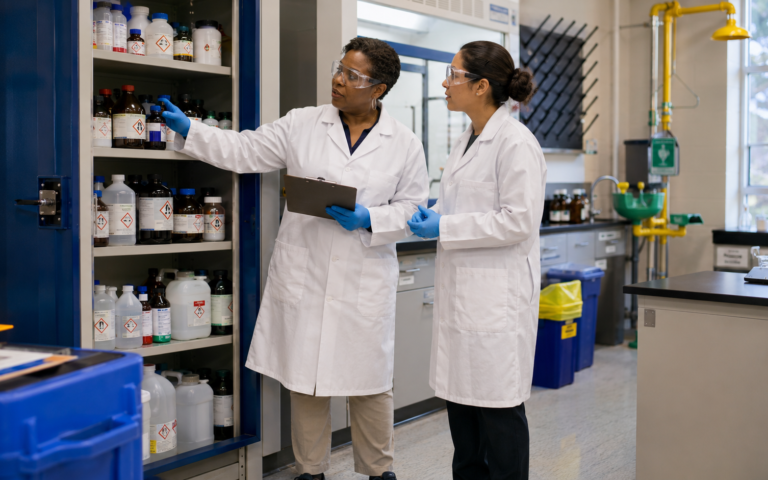
RAMP laboratory safety begins before students touch a beaker. A teacher has reviewed the activity, checked the materials, and decided how to reduce the risks. Students know what they are handling, why the precautions matter, and when to stop and ask for help.
The American Chemical Society’s RAMP framework gives teachers and students four questions to work through: What are the hazards? How could they cause harm? How can we lower the risk? What will we do if something goes wrong?
Those questions correspond to four steps: Recognize hazards, Assess risks, Minimize risks, and Prepare for emergencies. The steps apply to the entire activity, from setup through cleanup. An acid-base investigation shows how they work together.
Recognize the hazards
Before choosing materials for the investigation, the teacher identifies the hazards in each step. That includes the chemicals and their concentrations, as well as possible splashes, spills, broken equipment, and waste generated by the activity.
Chemical labels and Safety Data Sheets provide information about the substances. The teacher also needs to consider how students will handle them in this particular room. Where will materials be poured? How much space will students have? What could happen during cleanup?
Students can take part in that thinking. Before the lab, ask them to point to a step where a spill or splash could occur. They should be able to identify the hazard in the activity they are about to perform, rather than only recall a rule from the first day of class.
Assess the risks
A hazard is a potential source of harm. Risk depends on how likely harm is under the planned conditions and how serious it could be.
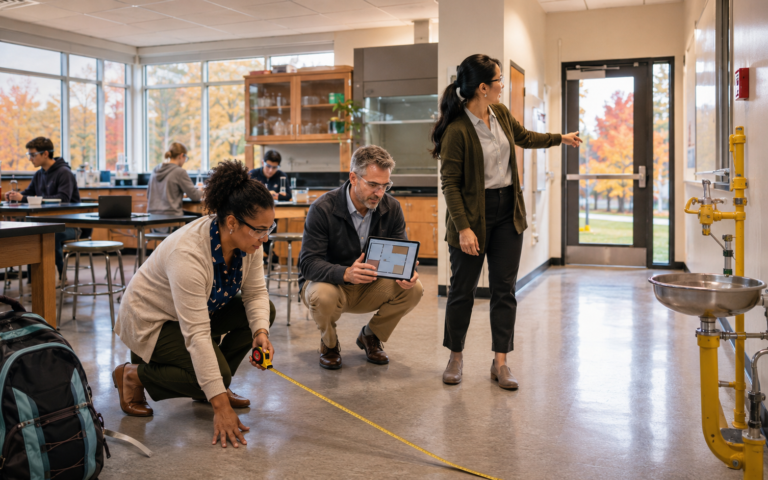
In the acid-base investigation, the teacher considers the substances and quantities, the equipment, the room setup, and the students’ experience. Pouring from a large container at a crowded station may create a different risk than transferring a small amount at a clear workspace. The teacher assesses the activity as it will actually happen.
Students can explain where they think a mistake is most likely and who might be affected. Their observations can prompt a useful discussion, while the teacher remains responsible for deciding whether the activity is appropriate.
Minimize the risks
The risk assessment should lead to changes where they are needed. Could the investigation use a less hazardous material? Would smaller quantities meet the learning goal? Would a different station layout give students more room to work?
The NIOSH hierarchy of controls encourages planners to consider removing or substituting a hazard before relying on equipment, procedures, and personal protective equipment. For the acid-base investigation, the teacher might change the materials or scale of the activity, organize the transfer process, and specify the protective equipment needed for the risks that remain.
Students should know why those measures are in place. “Wear goggles” tells them what to do. “A splash could reach your eyes during this transfer” helps them recognize when the precaution matters.
After making changes, the teacher reassesses the activity. If the room, equipment, or available controls cannot support it safely, the activity needs to change.
Prepare for emergencies
The final question is practical: if a container breaks, a student is splashed, or a reaction behaves unexpectedly, what happens next?
Before the lab, the teacher should know the response required for the materials in use, check that relevant emergency equipment is accessible, and follow the school’s procedures for getting help. Students need clear directions suited to their role: stop working, move away if directed, alert the teacher, and follow instructions.
This step should cover cleanup as well. Students need to know which materials they may handle and when a spill or broken item requires the teacher’s response.
Make the thinking visible
Students do not need a lengthy form for every investigation. A short exchange before work begins can reveal whether they understand the activity:
What could cause harm during this step?
What have we done to reduce that risk?
What change would make you stop and tell the teacher?
For a more complex activity, the ACS RAMP worksheet provides a way to examine hazards, risks, controls, and emergency responses step by step.
The conversation should continue during the lab. If a student notices damaged equipment or an unexpected result, the right response is to pause and speak up. Teachers build a stronger safety culture when they take those observations seriously and adjust the activity when necessary.
School leaders have a role, too. Teachers need time to review activities, access to hazard information, working equipment, and support when an investigation needs to be changed or canceled.
RAMP makes safety part of how students do science. They learn to look closely at the work ahead, understand the reasons for precautions, and respond when conditions change. Those habits last longer than a rule memorized for a quiz.
Subscribe to edCircuit to stay up to date on all of our shows, podcasts, news, and thought leadership articles.
Related reading
More on School Safety