


 EdCircuit Staff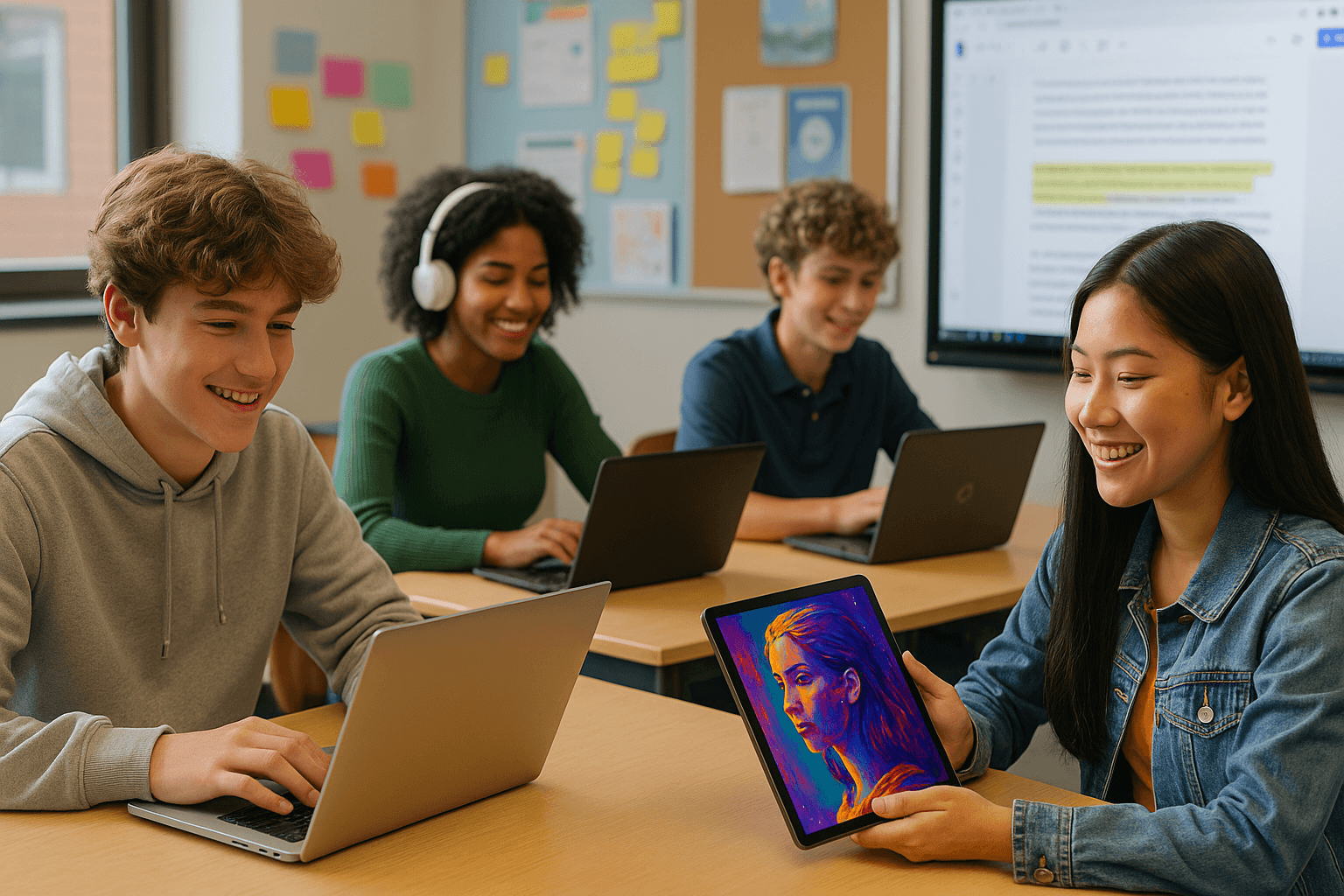
Table of Contents
Today’s high school students are digital natives. Born into the world of gaming consoles, smartphones, and streaming media, they expect fast Wi-Fi, seamless tech integration, and personalized experiences. In grades 9–12, many students now enter classrooms where educational technology (EdTech) isn’t just a tool—it’s a cornerstone of how they learn, collaborate, and express themselves.
Thanks to widespread 1:1 device programs and improved broadband access, high schools have become environments where innovation and curiosity thrive. Whether they’re creating AI-assisted art projects or getting real-time feedback from innovative learning platforms, students are embracing EdTech in ways that accelerate learning and expand opportunity.
AI: A Powerful Partner in Learning
Students across the country are using AI not to cut corners, but to refine ideas and sharpen skills. From brainstorming essay structures with ChatGPT to receiving grammar feedback from tools like Grammarly or Quillbot, AI has become a trusted writing assistant.
“I use it to check my tone or make sure I’m getting my point across clearly,” said one junior in Cleveland, Ohio.
Teachers are also tapping into AI to support differentiated instruction. Platforms like Khanmigo, Kira Learning, and Socratic by Google act like digital teaching aides—offering adaptive support, instant insights, and scalable tutoring. The key is balance: schools are embracing these tools while embedding lessons in ethics, academic honesty, and critical thinking.
Gamification & Immersive Learning: Motivation Unlocked
Beyond AI, high schoolers are hooked on gamified learning environments. Tools like Blooket, Quizizz, and Classcraft turn assessments into fast-paced, interactive competitions that keep students engaged and eager to improve.
Meanwhile, virtual reality (VR) and augmented reality (AR) are opening entirely new educational experiences. Students in biology classes dissect frogs through digital simulations. In world history, they walk the streets of Ancient Rome in VR headsets. These immersive platforms aren’t gimmicks—they’re enhancing understanding by turning abstract content into tangible, emotional learning.
“Learning about ancient civilizations by virtually walking through them? That’s the kind of experience I’ll actually remember,” shared a senior in San Diego.
Creative Expression with Tech: From Art to AI
In digital art classes, students are using platforms like Canva, Adobe Express, and Runway ML to blend creativity with AI-generated enhancements. Whether it’s making animations, generating backgrounds, or creating interactive portfolios, students are learning how to use technology to amplify their voice.
In journalism electives, AI is helping draft headlines and analyze tone. In music programs, software like Soundtrap or BandLab enables students to compose collaboratively—even across classrooms.
These platforms are reshaping electives, not replacing them—giving students new pathways to explore identity, storytelling, and collaboration.
Esports & Tech-Driven Extracurriculars
High schools are seeing a boom in esports programs, providing competitive, tech-centered opportunities for students who grew up gaming. Teams train, strategize, and compete just like traditional sports—and gain valuable skills in leadership, communication, and problem-solving.
“Being on the esports team helped me get better at thinking under pressure,” said a sophomore team captain from Texas. “It’s not just fun. It’s a serious commitment.”
Paired with media production clubs, drone racing teams, and student-run tech support crews, these new-age extracurriculars show how schools are embracing student passions while building real-world readiness.
Badges, Portfolios & Personalized Pathways
Digital microcredentials and skill badges are gaining traction, especially in career and technical education (CTE) pathways. Through platforms like Science Safety, Google’s Applied Digital Skills, and Naviance, students are earning credentials in coding, data literacy, and even entrepreneurship.
For college-bound students, digital portfolios are helping them showcase not just grades, but growth, creativity, and initiative.
Why Students Love EdTech
-
Relevance: Tools match how students interact with the world—visual, fast, and interactive.
-
Control: Personalized learning gives students autonomy and clarity over their progress.
-
Creativity: From AI art to student-led podcasts, tech expands what’s possible.
-
Recognition: Esports trophies, digital badges, and online portfolios give students new ways to shine.
What Teachers & Districts Must Do
To harness the power of EdTech, schools must take strategic, equity-focused action:
1. Strengthen Infrastructure
Tech tools are only as strong as the network behind them. Schools must continue to invest in reliable Wi-Fi, cybersecurity, and device access.
2. Support Teachers
Professional development should include AI ethics, prompt engineering, and student data privacy. Tools are powerful, but only when paired with empowered educators.
3. Teach AI Literacy
Students must understand how AI works, where its limits are, and how to fact-check or revise its output. AI literacy is as important as traditional digital literacy.
4. Maintain Human Connection
Even the best technology can’t replace empathy, nuance, or inspiration. Schools must ensure that digital learning complements—not replaces—relationships and student support.
5. Close the Equity Gap
Ensure students in all zip codes have access to the same EdTech tools. Partnerships, grants, and targeted investment are key to ensuring digital equity.
The Future Is Here—And It’s Personal, Powerful, and Playful
High school students are not just using EdTech—they’re thriving with it. From AI-generated study help to esports tournaments and digital portfolios, today’s classrooms reflect a shift from passive consumption to active creation.
The schools that embrace these trends are seeing more than just improved test scores—they’re witnessing engaged learners, empowered teachers, and classrooms full of possibility.
As we look ahead, one thing is clear: the future of high school isn’t coming—it’s already here. And it’s being shaped by the students who grew up with Minecraft, mastered TikTok, and now use AI to write, create, and lead.
The challenge—and the opportunity—for educators is simple: Keep up. Stay curious. And never stop learning.
Subscribe to edCircuit to stay up to date on all of our shows, podcasts, news, and thought leadership articles.