


 EdCircuit Staff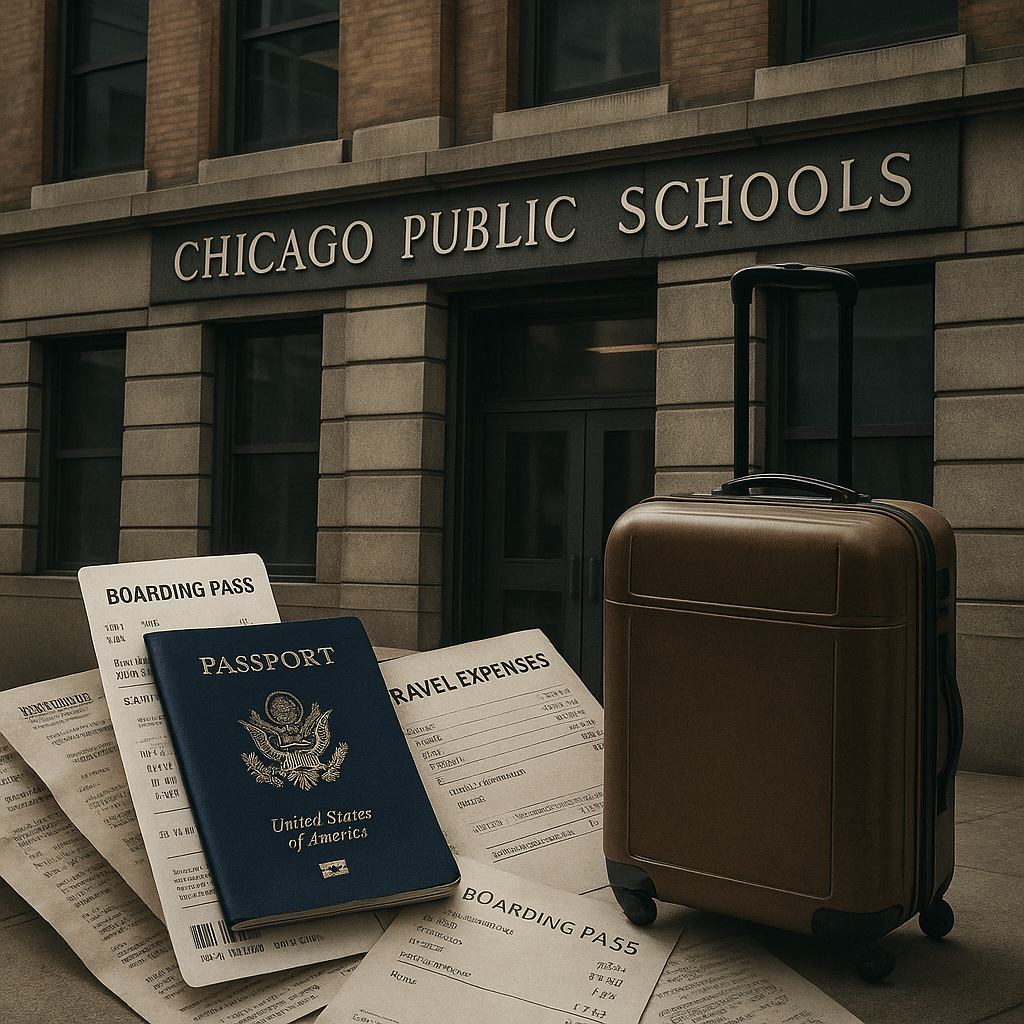
Table of Contents
Chicago Public Schools travel abuse became a statewide flashpoint earlier this month after multiple investigations revealed a dramatic rise in questionable travel spending. Reporting from NBC Chicago, CBS Chicago, WGN Investigates, the Chicago Tribune, the Chicago Sun-Times, and Chalkbeat Chicago shows that CPS travel expenditures doubled post-pandemic—even as classrooms faced shortages of staff, materials, and essential resources.
The CPS Office of Inspector General (OIG) found patterns that educators and taxpayers describe as “excessive,” “misaligned,” and “deeply concerning.”
Read the full OIG report here.
Despite the regional focus, the scale of CPS—serving more than 320,000 students—makes this a nationally relevant case with implications for oversight, equity, and public trust within public education.
Inside the Chicago Public Schools Travel Abuse Findings
Post-Pandemic Travel Spending Doubled
NBC Chicago and Chalkbeat Chicago reported that CPS travel spending more than doubled following the pandemic.
Trips included destinations such as:
-
Las Vegas
-
Finland
-
Estonia
-
Other high-cost or luxury travel locations
The OIG found that many trips lacked clear academic justification, had minimal documentation, or were connected only loosely to educators’ official roles.
Luxury Hotels and High-Cost Trips With Weak Documentation
CBS Chicago and WGN Investigates detailed cases involving:
-
Stays at luxury hotels
-
High-priced international flights
-
Duplicate or unapproved travel expenses
-
Trips extended for personal benefit
-
Missing receipts and vague explanations
Several international visits cost tens of thousands of dollars, despite schools reporting that they needed funds for core instructional materials.
Oversight Breakdown Across the District
Chalkbeat Chicago reported that CPS’s approval systems became decentralized and inconsistent after the pandemic, allowing staff to bypass essential controls.
The OIG cited “serious deficiencies” in:
-
Pre-travel approval
-
Post-travel documentation
-
Budget verification
-
Department-level accountability
These failures allowed questionable spending to escalate for years.
How the Travel Abuse Harmed Teachers and School Administrators
While travel budgets swelled, teachers and school administrators faced growing pressure.
Classrooms Struggled While Travel Costs Skyrocketed
During the same period, many CPS classrooms reported:
-
Shortages of substitute teachers
-
Outdated or broken equipment
-
Limited funds for classroom supplies
-
Aging HVAC systems that disrupted learning
Educators expressed frustration to reporters at NBC Chicago and the Sun-Times, describing the spending as a “misplaced priority” while essential resources remained scarce.
Unequal Professional Development Access
Teachers also noted an equity problem:
A small group of central-office staff benefited from expensive travel, while frontline educators were expected to “make do” with limited training opportunities.
The OIG report showed no clear criteria for who received these travel opportunities.
Burden on School Leaders
Principals expressed concerns about inconsistent budget communication and a lack of transparency around who approved travel and why.
This contributed to what several administrators described as “a culture of confusion” and “minimal trust in district decision-making.”
Why Chicago Public Schools Travel Abuse Matters Nationally
Though the story centers on Chicago, its implications reach far beyond Illinois.
A National Pattern of Post-Pandemic Oversight Weakness
School districts across the country expanded travel and professional development spending using federal ESSER funds, often without updating internal controls.
CPS is now one of the clearest examples of how rapid funding increases + weak oversight = systemic abuse.
Large Urban Districts Are Especially Vulnerable
CPS, Los Angeles Unified, and New York City Public Schools all manage massive budgets with complex administrative structures.
CPS’s scandal highlights:
-
Variability in oversight across departments
-
Difficulty tracking reimbursements
-
Structural gaps that can be exploited
Public Confidence in Education Spending Is at Stake
As national debates intensify around school budgets, taxpayer trust becomes critical. Chicago’s travel abuse scandal fuels growing skepticism about:
-
How school dollars are spent
-
Whether funds reach classrooms
-
Whether district leaders are held accountable
-
How equitably opportunities are distributed
What CPS Says It Will Do Next
Following the media coverage, district leadership pledged to:
-
Strengthen travel documentation
-
Centralize approval processes
-
Add new layers of fiscal oversight
-
Increase post-travel reporting
-
Conduct internal audits on past travel
While these steps may help restore public trust, many educators believe deeper systemic reforms are needed to align spending with student needs.
Conclusion
The Chicago Public Schools travel abuse investigation reveals more than financial missteps.
It exposes profound systemic failures in oversight, transparency, and priority-setting in one of America’s most important school districts.
As other districts confront their own post-pandemic spending choices, CPS serves as a national warning:
When oversight erodes, students and frontline educators pay the price.

CBS Chicago – CPS faces backlash over luxury travel expenses
Subscribe to edCircuit to stay up to date on all of our shows, podcasts, news, and thought leadership articles.