
 EdCircuit Staff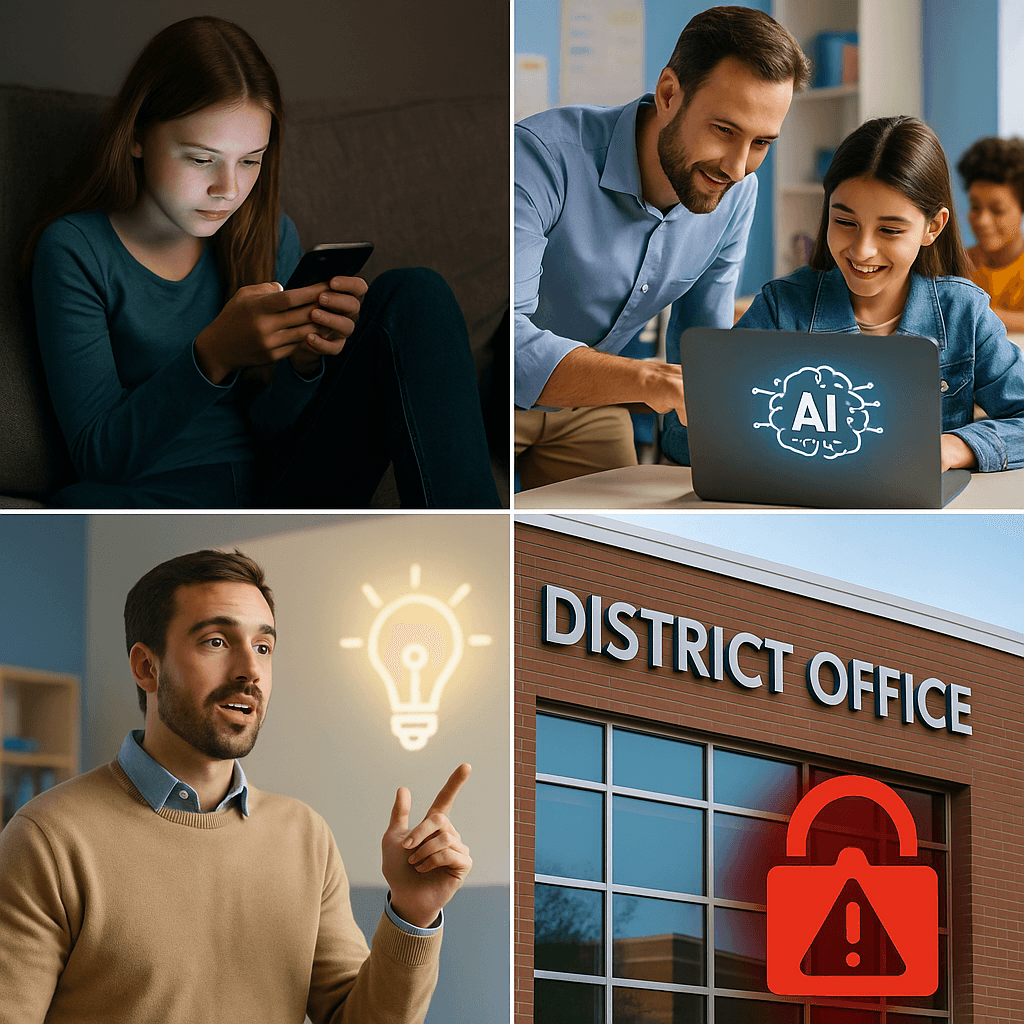
Table of Contents
In this week’s edition of The Stories That Matter, edCircuit examines how schools are navigating digital boundaries, federal uncertainty, cybersecurity pressure, and the new expectations emerging from an AI-driven world. From longstanding questions about screen time to the implications of a national SIS breach, these stories highlight the decisions shaping safe, equitable, and future-ready schools.
How Much Screen Time Is Too Much?
Screens are interwoven into nearly every aspect of learning—but how much is too much? This article breaks down the latest research on cognitive load, sleep disruption, and the difference between “active” and “passive” digital engagement. It reframes the conversation around quality, context, and healthy digital habits for students of all ages.
Why read it: It moves past outdated “hour limits” and focuses on how digital learning can support—not substitute—meaningful instruction.
Discussion it opens: How can schools build balanced screen-time policies without stifling innovation or student engagement?
Department of Education Restructuring Explained
With federal responsibilities shifting across agencies, leaders are asking what this means for funding, accountability, and district operations. This article breaks down what’s being transferred, why critics are raising concerns, and what district administrators should prepare for now.
Why read it: It translates a complex, fast-changing policy shift into clear guidance for K–12 decision-makers.
Discussion it opens: How should districts plan for uncertainty when federal guidance, oversight, and timelines are in motion?
How to Launch an EdTech Startup: From Idea to Impact
Teachers, developers, and founders are increasingly turning classroom challenges into EdTech solutions. This guide walks readers through identifying real problems, building teams that blend education and technology, validating ideas with authentic school feedback, and navigating procurement hurdles.
Why read it: It offers a realistic, step-by-step playbook for anyone looking to move from idea to minimum viable product in the K–12 market.
Discussion it opens: How can new EdTech startups design products that meet teacher needs without adding to classroom workload?
Generative AI in Middle School: Collaboration, Curiosity, and Classroom Impact
This article is the second installment in edCircuit’s three-part series on generative AI in K–12—building on Part One, Generative AI in Elementary Schools: Creative Curiosity Meets Classroom Innovation.
Middle school teachers are beginning to use generative AI to support brainstorming, writing development, debate preparation, and creative exploration—all while maintaining thoughtful guardrails. This piece highlights real classroom examples and shows how educators design age-appropriate structures that encourage curiosity while teaching responsible use.
Why read it: It illustrates how AI can enhance—not replace—student creativity, confidence, and collaboration during a pivotal developmental stage.
Discussion it opens: Where should middle-school AI boundaries be drawn to protect readiness and safety while still fostering innovation?
PowerSchool Data Breach 2025: What Schools Must Know
One of the nation’s largest student information system providers experienced a major breach—impacting districts across multiple states. This article details what happened, how schools learned about the incident, PowerSchool’s response, and what this event signals about K–12 cybersecurity readiness.
Why read it: It’s a crucial overview of how vulnerable student and staff data has become—and why districts must strengthen incident response planning.
Discussion it opens: Should SIS platforms be held to higher federal cybersecurity standards as student data becomes increasingly targeted?
Law School Tuition, Debt, and Access: Is It Only for the Wealthy?
With tuition rising and debt loads climbing, many students question whether law school remains an accessible pathway or a privilege of wealth. This article explores structural inequities, income-driven repayment challenges, and how new models—like hybrid J.D. programs and alternative credentialing—may reshape the future of legal education.
Why read it: It exposes a widening affordability crisis with long-term implications for diversity and equity in the legal profession.
Discussion it opens: How can higher-education institutions redesign legal pathways to attract and support students who don’t come from financial privilege?
Takeaway
Across this week’s Stories That Matter, one theme emerges: education leaders are being asked to balance innovation with protection. Whether managing screen-time expectations, responding to federal restructuring, experimenting with AI in middle school, or confronting cybersecurity threats, the work of modern schools lies in shaping environments that are safe, equitable, and forward-thinking—all at the same time.
Subscribe to edCircuit to stay up to date on all of our shows, podcasts, news, and thought leadership articles.