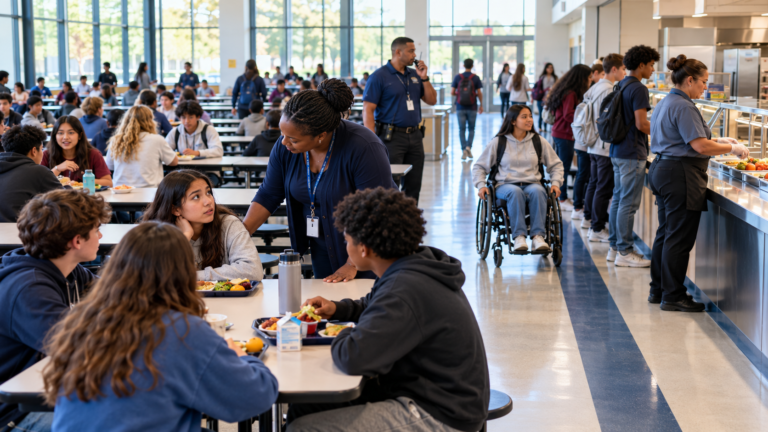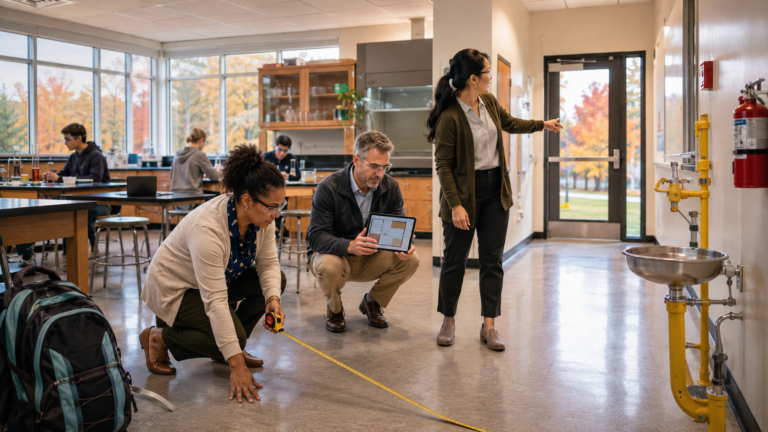
Teacher in-service now prepares educators for AI, cybersecurity, school safety, and student wellness as education continues to evolve.
EdCircuit Staff
edCircuit is a mission-based organization entirely focused on the K-20 EdTech Industry and emPowering the voices that can provide guidance and expertise in facilitating the appropriate usage of digital technology in education. Our goal is to elevate the voices of today’s innovative thought leaders and edtech experts. Subscribe to receive notifications in your inbox
Author Posts
The hierarchy of controls in schools helps educators reduce hazards at the source before relying on PPE as the final layer of protection.
School cell phone bans work when districts distinguish ordinary violations from defiance and support teachers with consistent enforcement.
T9 texting transformed a cramped phone keypad into a cultural phenomenon and offers schools a timely lesson about teaching technology skills.
Student agency gives learners a meaningful role in setting goals, making decisions, and taking responsibility for their growth
E-Rate and school filtering are closely connected. Districts need strong technical protections, clear local policies, and realistic expectations.
Strong CTE pathways connect high school learning with real experience, helping students build skills and make informed choices about what comes next.
School cell phone bans are spreading. Here is how districts use lockers, pouches and lockboxes while preserving emergency and medical access.
After-hours school safety depends on clear leadership, accurate rosters, reliable communication, and confirmed student dismissal.
AI and student learning should be evaluated through achievement, independence, equity, teacher workload, user feedback, and unintended consequences.
The high school athletics arms race is transforming facilities, but taxpayers, donors, and students do not share the costs or benefits equally.
E-Rate helps schools afford reliable connectivity. As the FCC weighs major changes, educators have until October 13, 2026, to share their experiences.
Teacher in-service is transforming through artificial intelligence, giving educators personalized professional learning that fits their roles and goals.
CoSN’s 2026 Blaschke Report and companion toolkit offer district leaders a practical approach to managing lasting technology change.
AI training for teachers must go beyond prompt writing to address privacy, accuracy, assessment, student use, bias, and professional judgment.