 Alexey Pokatilo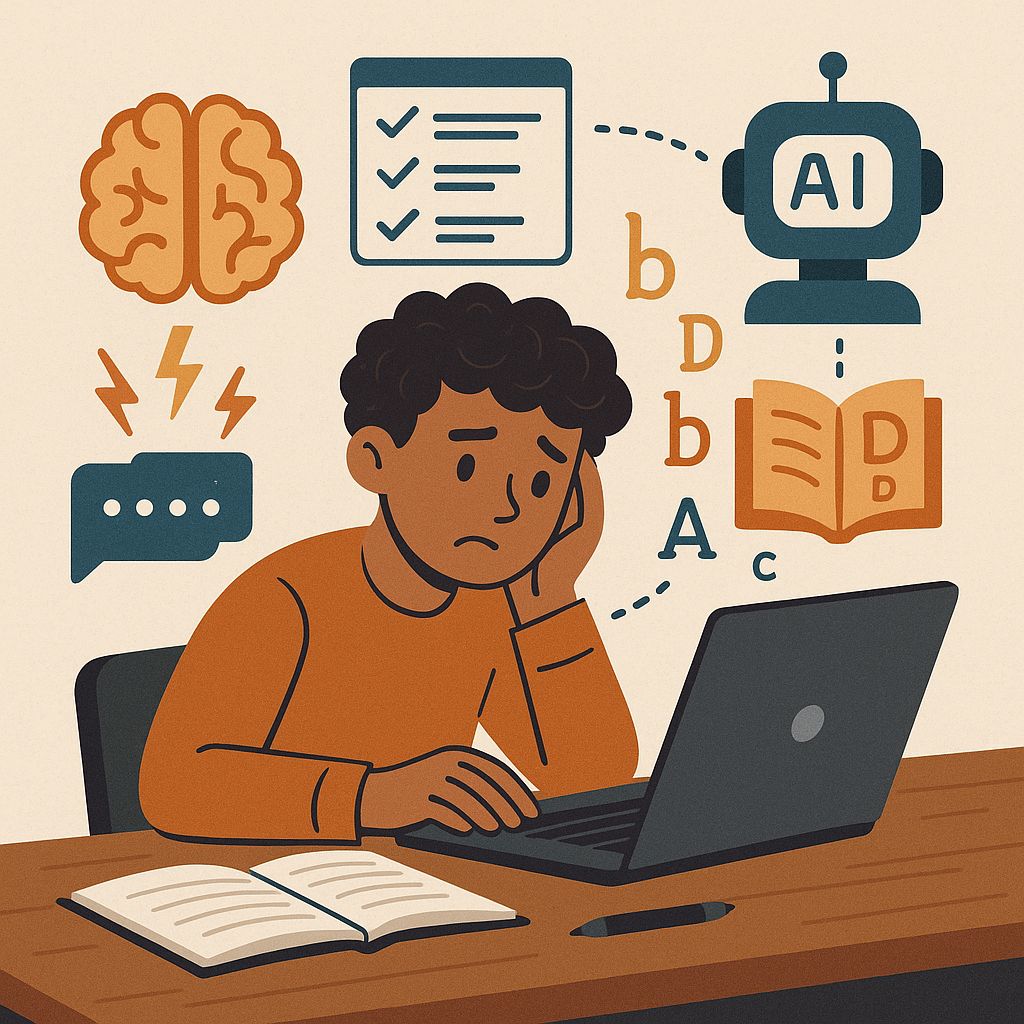
The rise of artificial intelligence is rapidly transforming how we think about education. Modern AI tools can now adapt to individual learning styles, helping students plan their work, stay focused, and reduce anxiety. This is especially valuable for people with learning differences such as ADHD or dyslexia.
According to the U.S. Centers for Disease Control and Prevention (CDC), about 9.8% of children are diagnosed with ADHD. Meanwhile, research from the Yale Center for Dyslexia & Creativity shows that one in five people worldwide, roughly 20% of the population, has dyslexia.
With numbers like these, it’s no surprise that interest in studying ADHD and dyslexia is on the rise. Scientists are digging deeper into how the brain processes information, what mechanisms shape focus and reading, and how new technologies can help people manage these differences.
A good example is Litero.ai, an AI assistant designed with neurodiversity at its core. Unlike traditional writing tools that focus only on grammar or correctness, Litero supports the cognitive process behind writing – something especially valuable for students with ADHD or dyslexia. The platform helps users structure their thoughts through step-by-step scaffolding, breaking large assignments into manageable components and reducing the overwhelming cognitive load that often accompanies open-ended writing tasks. For dyslexic learners, features like text-to-speech, adaptive rewriting suggestions, and phonological support make reading and editing more accessible.
Students with ADHD benefit from the system’s ability to maintain focus by guiding them through writing stages, providing gentle prompts, and automating routine tasks such as reference formatting or outline generation. Most importantly, Litero does all of this while preserving each student’s unique voice and style – supporting expression rather than replacing it. This demonstrates how assistive writing technology can empower neurodivergent learners to communicate their ideas clearly, confidently, and authentically.
Together with the team at Litero.ai, we explored the latest research in this area and looked at how AI can make a real difference for people with ADHD and dyslexia.
ADHD and Dyslexia Share Common Genes
Recent research, including large-scale genome-wide studies (GWAS), increasingly shows that what’s inherited isn’t a specific disorder, but a predisposition to certain brain characteristics. In other words, there’s no single “dyslexia gene” or “ADHD gene.” Instead, there’s a whole network of genetic variants that influence how a person processes information, focuses, remembers, and learns.
Scientists have found that many of these genes are involved in several cognitive functions at once – things like attention, speech and language processing, reaction speed, and working memory. That’s why the same biological mechanism can show up differently in different people: for some, it might lead to reading difficulties (dyslexia). For others, problems with focus (ADHD) and in some cases, both at the same time. This overlap helps explain why these two conditions so often occur together.
Computational Models Are Helping Us Understand How the Brain Works
In recent years, scientists have increasingly turned to computational approaches, using mathematical and computer models to better understand how the brain processes information and why some people struggle with attention or reading.
This shift allows researchers to move beyond simply describing symptoms and instead focus on the specific cognitive mechanisms behind them, like reaction speed, the ability to recognize patterns from experience, or how well someone can stay focused on repetitive tasks.
With these tools, scientists can now identify unique brain activity patterns linked to dyslexia, ADHD, and their overlap. For instance, models show that people with dyslexia tend to process visual and auditory information more slowly and have trouble automating reading skills. Those with ADHD, meanwhile, often show fluctuations in attention and a different response to rewards. Combining these insights makes it possible to design more personalized learning and support strategies.
The downside? These methods are still being tested. Researchers are currently validating them on real clinical samples to make sure they work outside the lab. But the potential is huge: in the future, such models could help doctors spot learning differences early on and tailor education to each child’s unique needs.
Beyond Medication: Behavioral Programs That Help People with ADHD and Dyslexia
Research shows that, alongside medication, there are also non-drug approaches that can make a real difference for people with ADHD and dyslexia. For ADHD, these include behavioral therapy, parent training, executive function exercises, and even neurostimulation techniques.
According to researchers, these methods can improve attention, impulse control, and behavior, though results vary from person to person. Their effects are often less consistent or long-lasting than those of medication, but they can still be an important part of treatment.
When it comes to dyslexia, studies focus mainly on phonological training and targeted reading practice. These methods strengthen skills like recognizing sounds and words, improving reading fluency and comprehension and they’ve been proven to deliver steady, reliable results.
Gamification: A Key to Managing ADHD and Dyslexia
Recent studies increasingly point to digital and gamified tools as an effective way to support children and teens with ADHD and dyslexia.
Meta-analyses from the past few years show that these programs really work. Participants often see improvements in focus, working memory, and emotional stability. Games that require quick reactions, planning or sustained attention tend to be especially effective. They turn therapy into something that feels more like play, boosting motivation and engagement along the way.
AI-powered tools can take this even further by analyzing written language, spotting common errors, adapting exercises to a user’s pace, and offering personalized feedback. If a child struggles to recognize sounds or read words quickly, the system adjusts the rhythm and format of the tasks. For people with dyslexia, that means more accessible reading through text-to-speech features, word highlighting, and phonological support.
For those living with ADHD, these technologies help structure learning, break large projects into manageable steps, and gently maintain focus. All while easing the anxiety that often comes with making mistakes.
Researchers emphasize that these tools don’t replace teachers. They enhance the learning experience, making it more flexible and inclusive. By adapting to each person’s real cognitive profile, they help close the gap between students who process information in different ways.
Subscribe to edCircuit to stay up to date on all of our shows, podcasts, news, and thought leadership articles.