
 Jennifer Wagner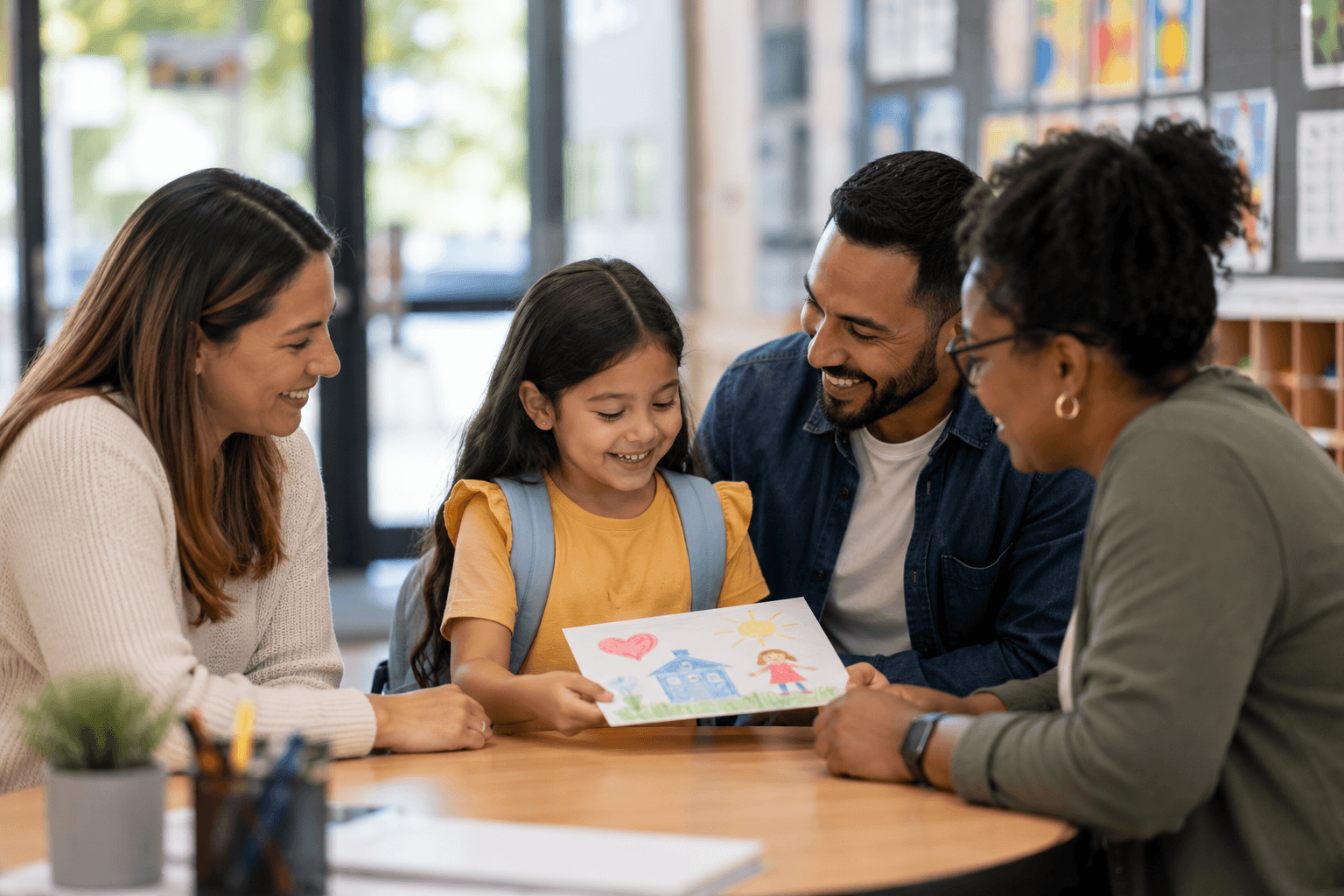
Table of Contents
There was a moment recently when I realized something uncomfortable about the way we communicate in schools.
We were sending more information than ever before including emails, newsletters, updates across multiple platforms—everything a family could need to stay informed. And yet, I couldn’t say with confidence that families felt more connected.
That disconnect isn’t unique to one district. It’s happening everywhere.
For years, school communication has been measured by output. Did we send the message? Did we post the update? Did we check the box? But families don’t experience communication that way. They experience it in moments—quick glances between work and home, short interactions on their phones, fragmented attention in the middle of busy days. If what we send doesn’t meet them in those moments, it doesn’t land.
In districts like ours—serving more than 12,000 students across 26 schools—that realization forced a shift in thinking. Like many systems, we had a mix of tools and approaches. Some classrooms were highly connected to families, while others relied on more traditional methods that were becoming less effective including weekly Friday folders that often get left in the student’s backpack.
At the same time, our community was becoming more complex. We serve families who speak 31 different languages. We were asking them to engage with systems that were not always intuitive or aligned with how they communicate in their daily lives. The more we examined it, the clearer it became: we weren’t struggling to communicate with families. We were struggling to involve them. And that distinction matters.
Involvement starts with visibility, not volume
Involvement doesn’t come from sending more information. It comes from giving families meaningful access to what is happening inside our schools.
That shift became clear not in a strategy meeting, but in conversations with families. What they valued most wasn’t another update. It was the simple moments—a photo from the classroom, a short video, a quick message that gave them a window into their child’s day.
Those moments change how families experience school. They feel more connected and more willing to engage. In practice, that shift shows up in interaction. In our district, it has translated into tens of thousands of exchanges between educators and families each month, with most messages read the same day.
When communication is timely and accessible, families are more likely to participate. In a single month, more than 100 school events were shared with families through digital channels, shifting communication from static announcements that could be easily missed to real-time updates and reminders delivered directly to families’ phones.
That shift matters. Instead of simply knowing an event is happening, families are more consistently reminded and better positioned to attend, turning awareness into participation.
For districts serving multilingual communities, accessibility is foundational. Communication that requires translation outside the moment creates friction. But when families can receive and respond in their own language, engagement becomes more immediate and more consistent.
Consistency and simplicity drive real engagement
As we worked to strengthen communication, another challenge surfaced. It wasn’t just how we were communicating—it was how consistently that communication was happening across the district. Elementary schools often set the standard. Families are used to frequent updates and classroom visibility. But as students move into middle and high school, that connection can fade. If we want to build real involvement, communication has to follow students throughout their entire experience.
That requires more than adding another tool. It requires alignment around approaches that are simple enough for educators to use consistently and accessible enough for families to rely on. Because if something is complicated, it won’t be used—not consistently, and not at scale. Across districts, we’re seeing a clear pattern: when communication becomes easier to deliver and easier to consume, it becomes more consistent. And when it becomes consistent, engagement follows.
In some schools, this visibility now extends into school culture. When families can see what’s happening day to day—whether it’s classroom learning or student behavior—it creates a shared understanding of expectations. Students gain ownership, and families have a clearer picture of progress.
In our district, that has translated into tens of thousands of positive behavior interactions being shared with families each month.
The shift that matters most
Public schools are operating in a more competitive environment than ever before. Families have more choices, more information, and higher expectations. They are not just asking whether their child is learning, and they are asking what that experience looks like and whether they can see it for themselves.
If we can’t answer those questions clearly and consistently, someone else will.
That has changed the role of communication. It is no longer just about sharing updates. It is about showing what makes our classrooms meaningful places for students. Tools can support that shift, but they are not the story. In our case, adopting a platform like ClassDojo for Districts helped us move toward more immediate, visual communication—but the real change came from rethinking how and when we engage families.
We have to stop thinking of communication as something we send and start thinking of it as something families experience. That shift sounds simple, but it changes everything.
When communication is visible, accessible, and consistent, families don’t just receive it—they act on it. And that’s when engagement becomes real—because we’ve realized our goal isn’t just to inform families—it’s to involve them.
Subscribe to edCircuit to stay up to date on all of our shows, podcasts, news, and thought leadership articles.