 EdCircuit Staff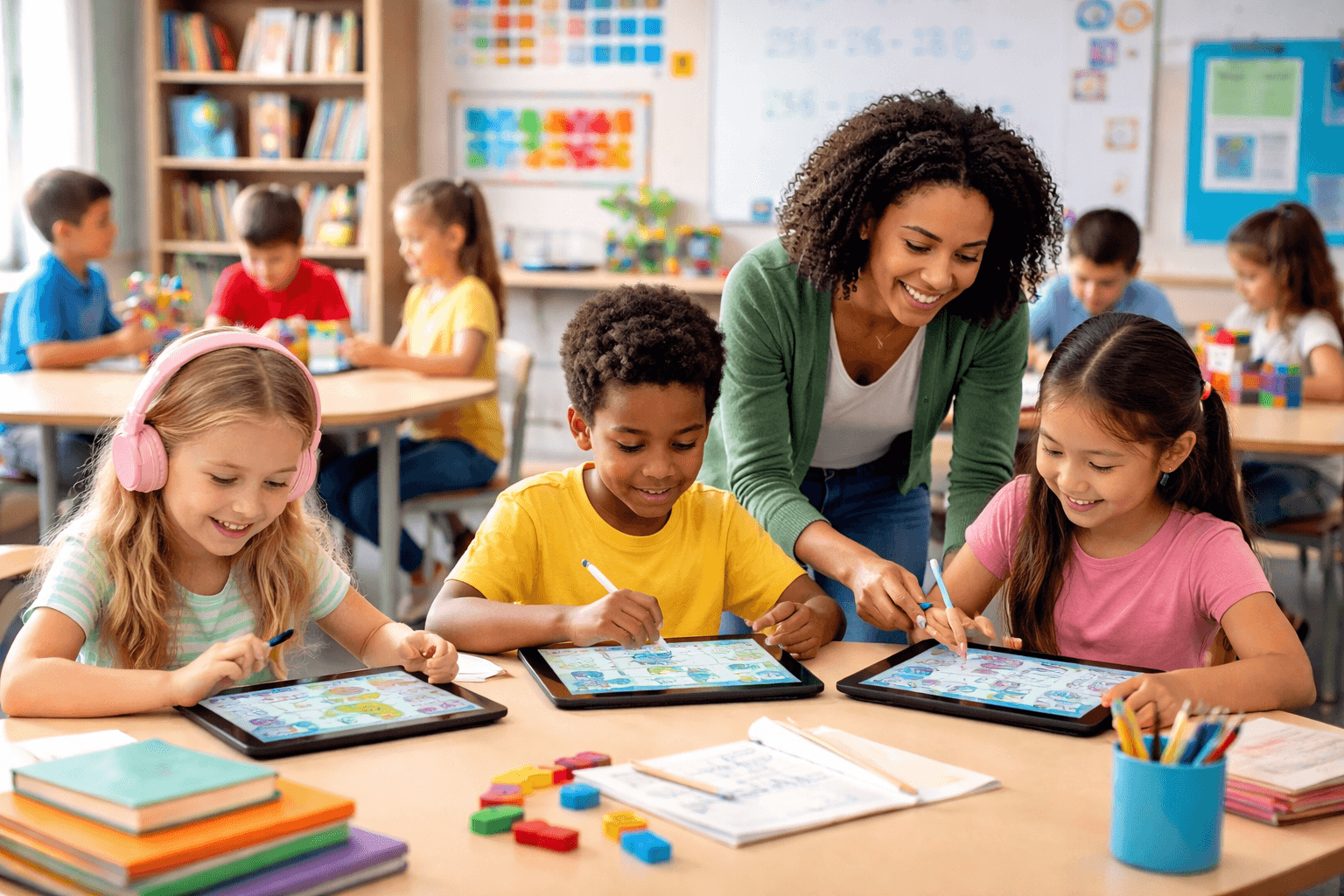
Table of Contents
AI in K-5 classrooms is becoming part of everyday learning, and you can see it when you walk into almost any elementary classroom today. Students might be gathered on the rug for a read-aloud, working in small groups on math, or exploring a lesson on tablets or laptops. Increasingly, those digital tools are quietly shaping how young students learn while supporting teachers behind the scenes.
For K-5 students, AI isn’t about replacing teachers or speeding kids through content. It’s about support. It helps meet students where they are, gives teachers better insight into learning progress, and keeps students engaged — especially in reading, math, and problem solving. When used thoughtfully, AI gives teachers more time to do what matters most: build relationships and help kids grow.
Personalized Reading Support for Young Learners
Learning to read is deeply personal. Some students take off quickly, while others need repeated practice, encouragement, and reassurance. AI-powered reading tools can help by listening as students read aloud, identifying where they struggle, and offering immediate, gentle feedback.
In a real classroom, this might look like a second-grade teacher reviewing reading data before the school day starts. She notices three students are having trouble with the same phonics pattern. Instead of reteaching the lesson to the entire class, she pulls those students into a small group later that morning while the rest continue practicing independently with adaptive tools. No one feels singled out. Everyone keeps moving forward.
AI doesn’t teach kids to love reading — teachers do that. But it can make sure students get practice at the right level, at the right time, without waiting days or weeks for help.
Making Math More Approachable and Less Intimidating
Math anxiety can start early. For many students, one confusing lesson can snowball into frustration and self-doubt. AI-driven math platforms help break that cycle by adjusting in real time.
If a student struggles with subtraction, the system slows down, offers visuals, or revisits prerequisite skills. If another student masters a concept quickly, it introduces new challenges instead of holding them back. This kind of flexibility is hard to manage in a class of 20 or more students — especially without a teaching assistant.
AI tools can also help students think through math problems rather than guess. Step-by-step hints and guided reasoning encourage persistence and show students that mistakes are part of learning, not something to fear.
Problem Solving as a Skill, Not Just an Outcome
Problem solving goes beyond getting the “right answer.” In K-5 classrooms, it’s about learning how to think, test ideas, and try again. AI-supported tools often prompt students to explain their thinking, explore different approaches, or reflect on what worked and what didn’t.
This is especially powerful for students who might be hesitant to speak up in class. With AI, they can practice privately, build confidence, and then bring their ideas into group discussions. Teachers can see patterns in student thinking and adjust instruction to address misconceptions early.
Over time, students begin to see challenges as puzzles instead of roadblocks. That mindset shift matters.
Gamification: Why Engagement Comes First
At the elementary level, engagement isn’t optional — it’s foundational. If students aren’t interested, learning stalls. This is where gamification and game-based learning make a real difference.
Platforms like Minecraft Education show how structured play can support academic goals. In these environments, students build worlds, solve challenges, collaborate with classmates, and apply reading, math, and logic skills without always realizing they’re “doing school.”
For example, students might:
-
design structures using measurement and geometry
-
read and follow multi-step instructions
-
work together to solve in-game problems
-
explain their thinking to peers
Games naturally encourage experimentation and persistence. When students fail, they try again. That’s exactly the behavior educators want to foster in learning.
When AI and gamification work together, students stay engaged longer, practice more willingly, and approach challenges with curiosity instead of resistance.
Supporting Teachers When Help Is Limited
Many K-5 classrooms operate without a co-teacher or full-time instructional aide. Teachers juggle lesson planning, grading, behavior management, and individual student needs — often all at once. AI can help lighten that load.
AI tools assist teachers by:
-
tracking student progress automatically
-
identifying learning gaps early
-
suggesting differentiated activities
-
reducing time spent on routine tasks
Instead of spending hours sorting through data, teachers get clear, actionable insights. That time savings often goes right back to students — through small-group instruction, one-on-one check-ins, or simply being more present in the room.
AI doesn’t replace teacher judgment. It supports it.
Why the Human Element Still Matters Most
No matter how advanced technology becomes, it cannot replace trust, empathy, and connection. Young children learn best when they feel safe, understood, and encouraged. Teachers notice when a student is tired, frustrated, or proud of their progress — things AI cannot truly interpret.
Adults also help students make sense of technology. Teachers guide discussions, ask follow-up questions, and help students understand why an answer works. They model curiosity, kindness, and resilience in ways no tool can replicate.
AI works best when it gives teachers more space to do that human work — not less.
Finding the Right Balance
The most successful classrooms don’t use AI for everything. They use it intentionally.
When balanced well:
-
AI personalizes practice
-
gamification increases engagement
-
teachers gain insight and time
-
students build confidence and skills
Families also play a role. When parents understand how AI is being used — and why — it becomes a shared tool rather than a mystery. Transparency builds trust.
A Future Built on Partnership
AI is not a silver bullet for education. But in K-5 classrooms, it can be a powerful partner. It helps students practice reading, math, and problem-solving in ways that feel supportive and engaging. It helps teachers manage complexity and focus on relationships. And when paired with thoughtful instruction, it helps classrooms feel more responsive, not more robotic.
At the end of the day, children don’t learn from tools alone. They learn from people who care. AI simply helps those people do their jobs a little better — and that’s where its real value lies.
Subscribe to edCircuit to stay up to date on all of our shows, podcasts, news, and thought leadership articles.