

 Ian Egan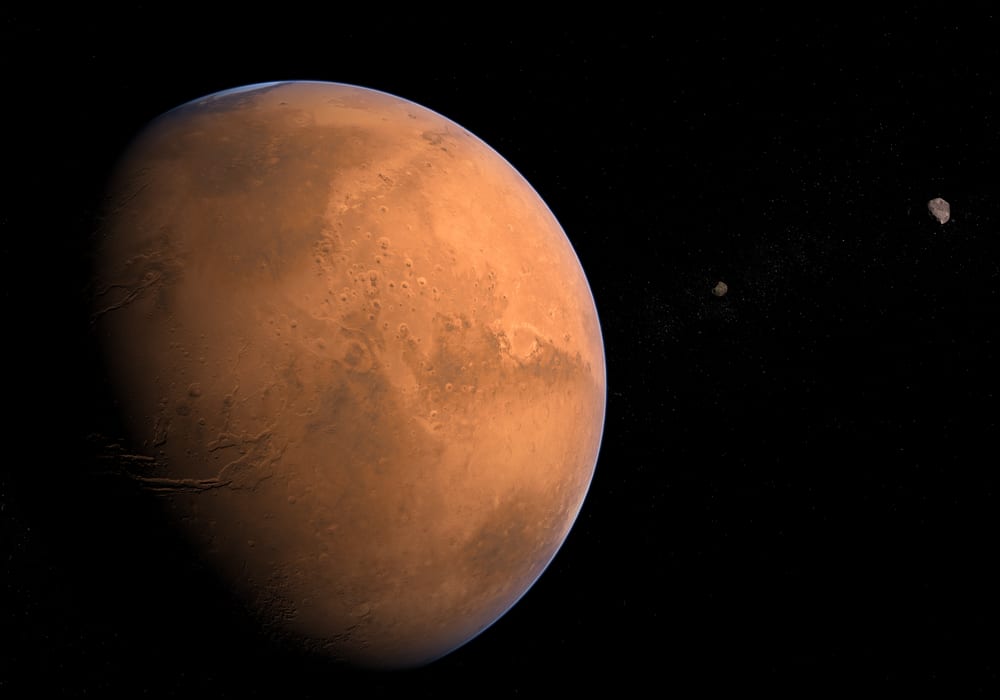
We Do Not Have to Be What We Once Were
By Chris Aguirre
 Last month, I had the good fortune to attend two educational conferences. From the inside looking out, everything looked and sounded pretty much the same: the same venders, the same sessions, the same ideas. For me, attending education conferences has become an affirmation of the adage that “the more things change, the more they stay the same.” My trip left me with the cold truth that, in education, there are truly no more original ideas—just the next iteration of the same thoughts and concepts that have defined us for decades, but wrapped in the latest educational catchphrase.
I know I could be alone in my thinking, but that doesn’t make it any less true to me. After 17 years of being in public education, I have yet to come across an idea or thought that is “original.” Believe me, I have looked hard.
I have stayed until the closing session of countless conferences and sailed to the four corners of the Internet on keywords like “project-based learning” and “Early College.” I have worked with many industry leaders to develop meaningful work experiences, and I implemented social and emotional learning programs. In the end, no matter what I have done to climb out of the box that is the American educational system, I somehow always end up in the same spaces: proms, after-school activities, grade levels, report cards, school calendars, transcripts, remediation, career and technical education, AP courses, robotics, literacy skills, counseling, the arts, standardized testing, and so on.
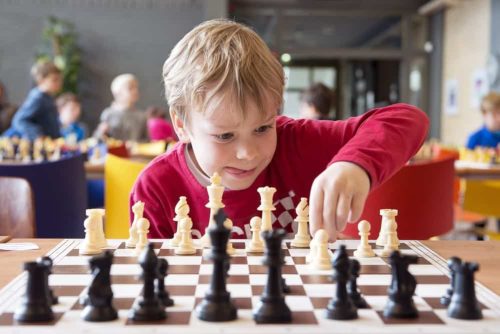
It doesn’t matter if you’re a reformer or a traditionalist, the truth is that our current educational system is just the next iteration of our American mental model of what an educated person should know and be able to do. I grant you that our current iteration of education has some interesting versions: micro-schools, children zones, career academies, charters and magnet schools, to name a few. All of them have merit, but wrap around the same old structures. No matter how hard we try to reinvent it, return it to what it once was or simply improve it, we always end up pushing the same ideas, processes and structures around the education chessboard and proclaiming to the world, “This is better!” The truth is that very seldom is it better for everyone. It might be better, in the moment, for some people directly impacted by our ideas, but finding the thing that changes everything for the better for everyone has been elusive.
 When you think about it, there are very few things that tie all Americans together. Education might be the only thing that most of us have done together. Whether you were homeschooled, public schooled, private schooled or schooled at sea, we all think we know what education looks like and how it works. We get upset when an idea comes along that challenges our mental model of education.
The fact that we share a mental model of education and believe that we agree on how it works probably is the biggest reason why everything we have done, are doing, and will do in education will most likely end in the same spaces: proms, after-school activities, grade levels, report cards, school calendars, transcripts, remediation, career and technical education, AP courses, robotics, literacy skills, counseling, the arts, standardized testing, and so on. Sure, we have tinkered with some of them and occasionally have even come up with a really good iteration of a couple of them. But, that is exactly what we have created: another iteration of the box we have been living in for decades.
There is a very real chance that the school our great-grandchildren will attend will look and act like the school we attended. Maybe the printers will work differently and possibly VR will pan out; but, more likely than not, it will have a teacher who will be charged with the responsibility of solving the spectrum of learners’ problems, the day will be divided up into blocks of time, the school calendar will still attempt to do 180 days of work in 160 days, and we will still call it “school.” Given our current framework and our longtime trend in education of taking one step back for every two steps forward (if we can even agree on which direction is forward), this could most likely be the framework for schools in the year 2040.
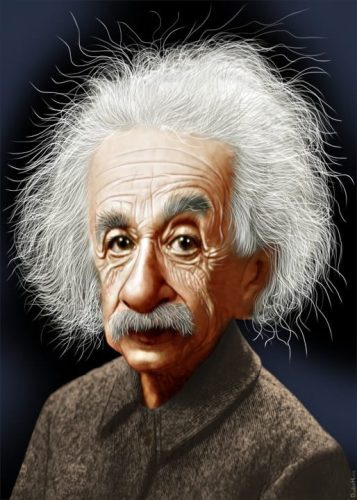 I am sorry, but I have to raise my hand at this point and state loudly, “This is not okay!” We are capable of so much more. We do not need to be what we have always been. I believe our answer to imagining a future that meets our ever-evolving needs as a society starts with our looking inward. Einstein once said, “We cannot solve our problems with the same thinking we used when we created them.” Maybe our journey to a better place in education starts with acknowledging that our current system of teaching and learning is constrained by our jointly held mental model of education. When you think about it, we keep inventing the same things over and over again in education because that is what we collectively know the experience of education to be. We lack the ability to rethink the entire experience because doing so would require us to unstitch the concept of school from our lives. It would mean letting go of an experience that binds us together as Americans: a compulsory K–12 education.
I have come to the conclusion that perhaps the way to envision a better future for education and our society is through playing a simple mind game. Think of it as a thought experiment. Ask yourself: What would teaching and learning look like if they were being done on Mars?
That sounds like a silly question, but follow my thinking. Getting the concept off of our planet, even in theory, presents an opportunity to rebuild the box completely. It gives us the opportunity to identify the best of what we know about the human brain, child development, and human interaction and the freedom to reassemble all of it in such a way that we might finally see what is beyond our latest iteration of our past.
 So, for the next year, I am embarking on a journey to identify the things I would take with me to Mars to begin the process of ensuring that my fellow Martians were an informed citizenry that took care of all of its members; that, as Martians, we were educated to contribute to a larger good, but still had the skills and knowledge to follow our individual aspirations; that, as Martians, equity and equality were nurtured through the acquisition of knowledge and that the most valuable thing any Martian could own was his or her personal bank of knowledge.
I believe that we have discovered the foundational pieces to build this education system on our planet, but we hold ourselves back because what we currently have is what a great many of us know too well: proms, after-school activities, and all the rest. We think that, if our kids do not get what we experienced, somehow they have been given less. That idea ensures that we are destined to continue holding education conferences, professional development sessions, school board meetings, and school events that look pretty much the same as they did 20 years ago and that will look in 20 years pretty much as they do now.
Or we could embrace the ingenuity and imagination that have been the hallmark of our nation from its first spark and use them to envision a whole new world.
Author
- The Times of India – Sugata Mitra talk at festival of Ideas
- US News – Trump Wants to Send Humans to Mars
- edCircuit – Navigating Chaos