



 EdCircuit Staff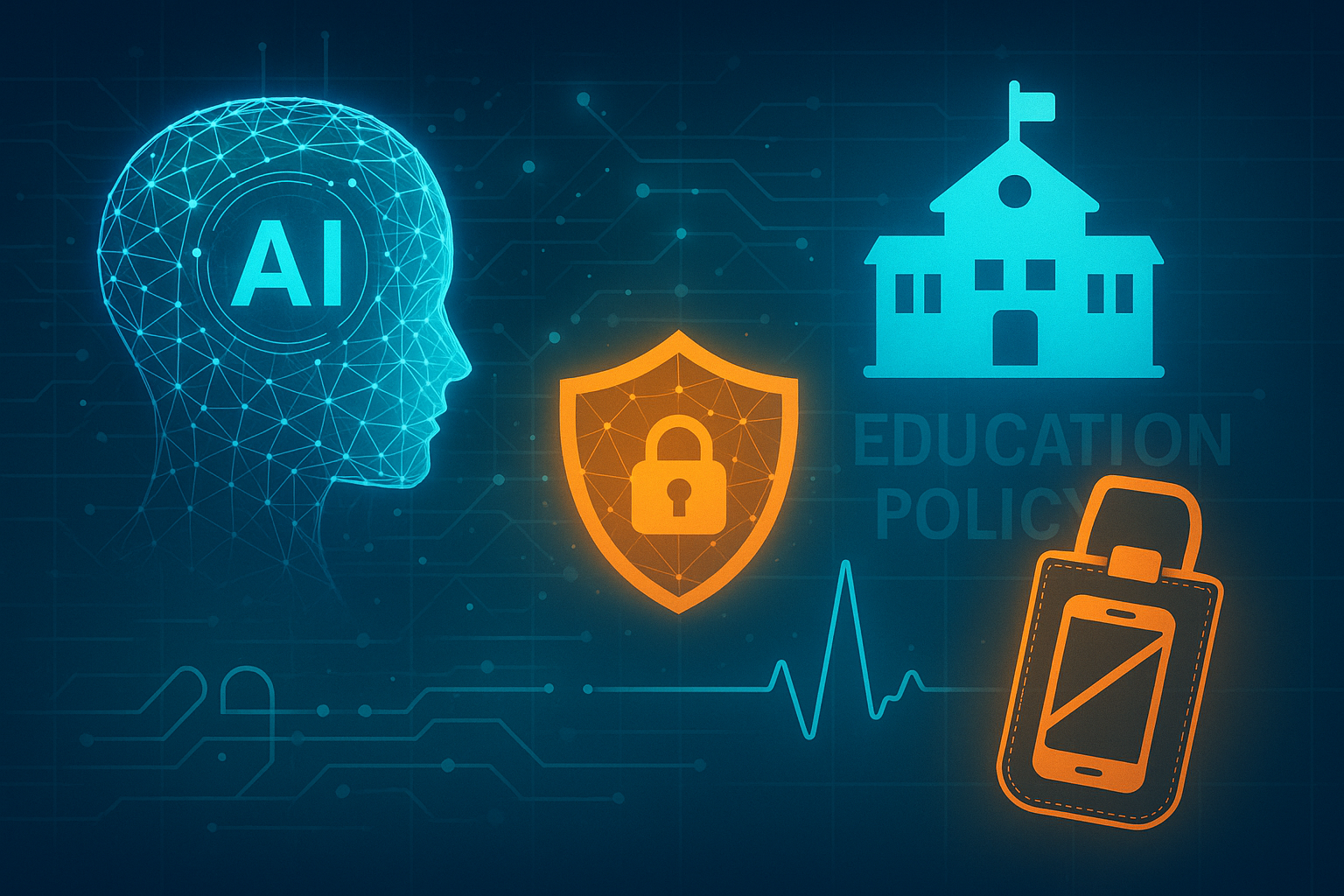
Table of Contents
Education Trends 2025 captures a year where artificial intelligence, cybersecurity threats, classroom culture battles, and unprecedented federal restructuring reshaped the K–12 landscape. AI became a practical instructional tool rather than a novelty. A national data breach shook confidence in edtech systems. States and districts pushed sweeping cellphone bans. And the U.S. Department of Education entered an era of profound instability.
For teachers, principals, superintendents, school boards, and policymakers, the year revealed something deeper: education is no longer evolving in slow cycles. It is shifting in real time. And the systems school communities rely on—technology, staffing, policy, and culture—are being rebuilt while still in motion.
Below is a detailed overview of the biggest national stories that defined 2025 and the implications for 2026.
1. AI Became Core Infrastructure, Not an Experiment
While AI has been part of K–12 conversations for years, 2025 marked the moment when it quietly became infrastructure rather than “innovation.” Instead of pilot programs, districts began integrating AI tools directly into LMS platforms, SIS workflows, teacher planning, and instructional resources.
AI’s footprint expanded across instruction
In literacy, math, and writing, AI tools supported practice, generated targeted prompts, offered instant feedback, and helped teachers differentiate instruction. Instead of replacing educators, AI increasingly handled repetitive, time-consuming tasks—drafting lesson components, generating reading passages, analyzing student writing patterns, or creating quick checks for understanding.
AI policy moved from optional to essential
Districts also began adopting AI governance frameworks addressing:
-
Transparency and explainability
-
Ethical use guidelines for students
-
Data privacy and acceptable-use parameters
-
Guardrails to prevent overreliance
-
Oversight committees connecting curriculum, IT, and legal
This shift marked a transition from “What AI tools should we buy?” to “What AI capacity should our system build?”—a critical distinction heading into 2026.
Why the emphasis changed
The story of 2025 was not AI hype. It was AI normalization. Educators stopped asking whether AI belonged in classrooms and started asking how to implement it responsibly and sustainably.
2. Cybersecurity Became a Daily Operations Crisis
No story in 2025 forced as much immediate action as the massive national data breach affecting PowerSchool users. Districts across the country faced questions about compromised student information, vendor accountability, and the broader fragility of edtech ecosystems.
The breach forced systemic reevaluation
Thousands of schools experienced:
-
Forced password resets
-
Emergency incident-response protocols
-
Parent-notification obligations
-
Legal and compliance reviews
-
Contract audits with third-party vendors
District leaders realized that cybersecurity is no longer an IT problem—it’s an operational, financial, and reputational one. One breach could halt enrollment, payroll, transportation routing, special education documentation, or communication systems.
Boards and superintendents took a new role
2025 saw an expansion of:
-
Board-level cybersecurity committees
-
Mandatory staff training across all departments
-
Districtwide privacy handbooks for teachers
-
Third-party vulnerability assessments
-
Increased investment in MFA, IAM, and encryption
As districts prepare for 2026, cybersecurity has become the cornerstone of school safety—not secondary to physical security, but equally essential.
3. The National Wave of Cellphone Bans Reshaped Classroom Culture
One of the most widely discussed education stories of 2025 was the rapid acceleration of cellphone bans in schools. This trend crossed political lines, geographic regions, and district sizes, revealing a rare point of bipartisan consensus.
Why cellphone bans surged in 2025
Several factors converged:
-
Escalating concerns about anxiety and social comparison
-
Evidence linking phones to academic distraction
-
Increased on-campus bullying and digital harassment
-
TikTok-driven disruptions during class
-
Teacher burnout from constant enforcement
-
Parent frustration with social media conflicts bleeding into school
States such as Florida, Indiana, and Ohio debated or enacted statewide restrictions, and hundreds of districts moved to locked-pouch systems or full “away for the day” policies.
What schools saw after implementing bans
Teachers and administrators reported:
-
Higher engagement and more academic focus
-
More face-to-face interaction, especially in middle school
-
Reduced hallway drama and office referrals
-
Greater consistency in behavior expectations
But challenges emerged
Bans also raised complex questions:
-
How should emergencies be handled?
-
When should phones be allowed for instructional use?
-
How do districts ensure consistent enforcement?
-
How does policy adapt to smartwatches and wearable tech?
The cellphone debate is now shifting from “Should we ban phones?” to “How do we build sustainable, equitable, enforceable policies?”
4. The U.S. Department of Education Entered a Period of Radical Transition
Late 2025 brought an unprecedented policy shift as the U.S. Department of Education began transferring significant responsibilities to other federal agencies. This restructuring created uncertainty across the nation’s school systems.
Decentralization reshaped federal oversight
Programs tied to early education, career pathways, special populations, and international education began shifting into partner agencies. With this came:
-
Confusion about grant administration
-
Shifting compliance expectations
-
Unclear chains of accountability
-
Concerns about civil rights enforcement stability
States suddenly found themselves managing multiple new federal touchpoints. Districts braced for funding delays, updated reporting requirements, and changes to long-standing program guidance.
Districts adapted with stronger internal governance
In the absence of predictable federal structure, school boards and superintendents leaned on:
-
Local policy development
-
Multi-year strategic planning
-
Tighter alignment with state guidance
-
More robust internal compliance systems
Heading into 2026, districts cannot depend on federal consistency—they must build systems capable of operating in flux.
5. Staffing, Attendance, and Enrollment Pressures Continued to Strain Schools
Even with technological and policy upheavals dominating headlines, the everyday realities of school operations remained challenging.
Teacher shortages and under-certification persisted
Special education, STEM fields, multilingual education, and rural districts saw particularly acute shortages. Even where vacancies were filled, many educators were working outside their certification areas—straining instructional quality and increasing burnout.
Chronic absenteeism stayed alarmingly high
Many districts reported absenteeism rates that remained double pre-pandemic levels. Contributing factors included:
-
Illness
-
Anxiety and mental health barriers
-
Housing and transportation instability
-
School avoidance tied to digital peer conflict
-
Immigration enforcement concerns in certain communities
Enrollment shifts complicated planning
Declines in major urban districts forced difficult conversations about staffing, building utilization, and resource allocation. Migration patterns and local economic changes further reshaped enrollment trends.
What Schools Must Take From 2025 Into 2026
The year revealed a clear pattern: innovation and instability rose together.
For education leaders, this means:
AI must be governed, not just adopted
Districts need clear guardrails, transparent communication, and ongoing professional development to ensure AI amplifies—not replaces—good instruction.
Cybersecurity must be treated as core safety infrastructure
Every adult in a district, not just IT professionals, plays a role in protecting student data.
Cellphone policy must balance culture, safety, and feasibility
Expect more states to implement regulations—and more districts to experiment with enforcement models.
Federal uncertainty requires strong local systems
Districts must build resilient governance structures that can adapt to shifting federal landscapes.
People—not tools—determine outcomes
Staff capacity, student engagement, and community trust remain the most important variables in whether any innovation succeeds.
Subscribe to edCircuit to stay up to date on all of our shows, podcasts, news, and thought leadership articles.