 EdCircuit Staff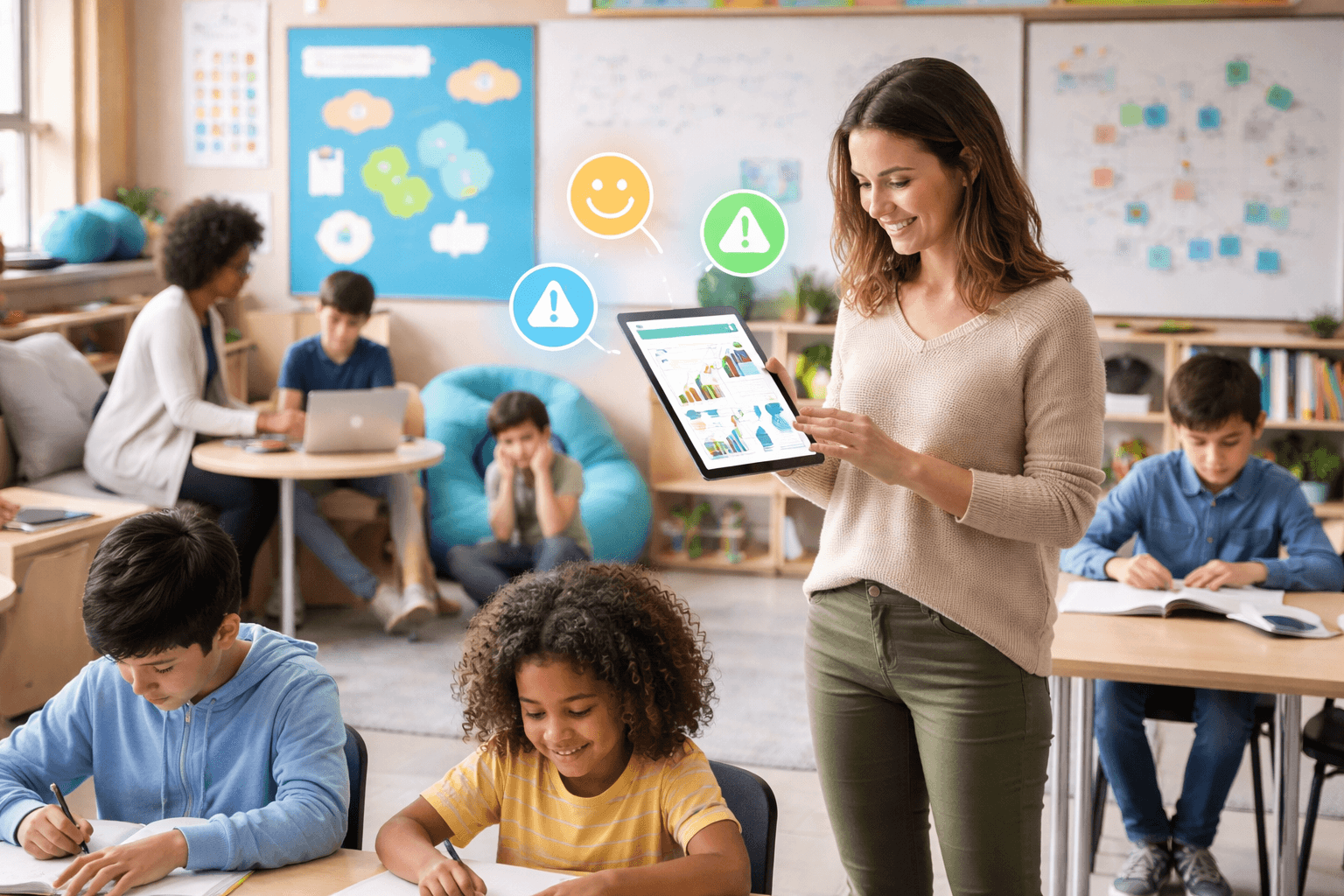
Table of Contents
AI student behavior support is reshaping how schools respond to behavioral challenges, helping educators act with greater consistency, empathy, and effectiveness.
For decades, managing student behavior has relied on observation, instinct, and fragmented documentation. Teachers tracked patterns in notebooks. Counselors relied on referrals and anecdotes. Administrators reacted after problems escalated. Parents were often brought in late, with limited context. Students—especially those with emotional or behavioral needs—experienced uneven expectations and inconsistent responses.
Artificial intelligence is beginning to change that dynamic—not by replacing human judgment, but by strengthening it.
Today, AI-powered systems help schools identify patterns earlier, respond more consistently, reinforce positive behavior appropriately, and de-escalate situations before they become crises. When implemented thoughtfully and ethically, AI becomes a powerful support tool for teachers, counselors, families, and students alike.
Why Behavior Management Has Been So Difficult to Get Right
Student behavior is complex. It reflects emotional regulation, trauma, learning differences, home environment, peer relationships, and school culture. Even experienced educators struggle with:
-
Inconsistency across classrooms or staff
-
Delayed intervention due to limited visibility
-
Over-reliance on punitive measures
-
Fragmented communication among stakeholders
Strong evidence-based frameworks already exist to help schools address these challenges. Guidance such as the Utah State Board of Education’s Evidence-Based Interventions for Student Behavior Support outlines proactive strategies—including antecedent supports, positive reinforcement, and progress monitoring—that help prevent escalation and support student success.
Behavior data often exists—but it lives in silos. Office referrals, classroom notes, counseling logs, and family communication rarely connect in real time. AI’s greatest contribution is not automation—it is connection.
How AI Is Improving Consistency Across Classrooms and Schools
Consistency is one of the most powerful benefits of AI student behavior management.
AI systems analyze behavior data across classrooms, grade levels, and time periods to surface patterns educators may not see in isolation. For example:
-
A student labeled “defiant” in one class may show anxiety-related behaviors during unstructured transitions.
-
Behavior incidents may spike during schedule changes or testing windows.
-
Certain strategies may work well for specific student profiles but not others.
By surfacing these insights, AI helps schools align responses. Teachers receive guidance grounded in evidence. Counselors recommend strategies with a higher likelihood of success. Administrators ensure policies are applied equitably.
Consistency does not mean rigidity—it means fairness, predictability, and trust.
Supporting Appropriate Rewards and Positive Reinforcement
Effective behavior management is not only about addressing challenges—it is about recognizing growth.
AI-supported systems help schools move beyond generic incentives toward more meaningful positive reinforcement by:
-
Tracking positive behaviors across settings
-
Identifying which rewards motivate individual students
-
Ensuring recognition is equitable across demographics and needs
For students with behavioral challenges, timely reinforcement matters. AI helps educators notice and celebrate progress that might otherwise go unseen, reinforcing growth rather than focusing solely on correction.
Helping Manage Meltdowns and Emotional Escalation
One of the most impactful uses of AI is supporting emotional regulation and de-escalation.
AI does not diagnose emotions. Instead, it identifies early warning signals by analyzing patterns such as increased minor incidents, disengagement, or repeated visits to support spaces.
Scenario:
Consider a middle school student who experiences frequent emotional meltdowns during class transitions. Individually, these incidents appear unrelated. Over time, AI-supported analysis reveals a clear pattern: unstructured transitions are the trigger.
With that insight, educators intervene earlier—adding structured transition support, scheduling a brief check-in, or adjusting expectations. Instead of reacting after a crisis, the school responds with intention and care.
For students, this reduces shame and fear. For staff, it replaces reactive discipline with proactive support.
How Teachers Are Using AI in Daily Practice
In classrooms, AI-powered tools help teachers spend less time documenting and more time teaching.
Teachers use AI to quickly log observations, receive de-escalation suggestions, and track progress toward individualized goals. These tools do not replace professional judgment; they provide timely insights that help educators respond with greater consistency and confidence.
Scenario:
In an elementary classroom, a teacher notices that a student with ADHD responds inconsistently to traditional behavior charts. AI-supported tracking shows that immediate verbal praise is far more effective than delayed rewards. The teacher adjusts her approach, reinforcing behavior in the moment. Engagement improves—and disruptions decrease.
For new teachers or substitute staff, AI also supports continuity by helping maintain clear expectations even as classroom dynamics shift.
The Role of Counselors and Support Staff
Counselors, social workers, and psychologists often manage complex needs across many students. AI helps shift their work from reactive case management to strategic, preventative support.
With longitudinal visibility, counselors can identify early warning signs, coordinate interventions across classrooms, and evaluate which strategies are producing meaningful results. This data-informed approach strengthens multidisciplinary collaboration and ensures students receive support before challenges escalate.
Engaging Parents and Caregivers More Effectively
AI student behavior management also improves family communication.
Instead of hearing only after serious incidents, families can receive consistent updates on progress and growth, with context that explains patterns rather than isolated events. AI-supported systems help align expectations across home and school, strengthening partnerships that benefit students.
Empowering Students Through Self-Awareness
In age-appropriate ways, AI tools can help students build self-regulation and reflection skills by:
-
Tracking personal behavior goals
-
Identifying emotional triggers
-
Recognizing progress over time
This supports student agency and aligns with social-emotional learning goals. When students understand their own patterns, they are better equipped to manage challenges independently.
Ethical Use, Privacy, and Human Oversight
Responsible implementation is essential.
Federal guidance has long emphasized the importance of understanding why student behaviors occur before responding to them. Guidance from the U.S. Department of Education on using Functional Behavioral Assessments (FBAs) reinforces that behavior support should be individualized, evidence-based, and focused on creating supportive learning environments rather than relying on punitive discipline.
AI-supported tools can complement this work by helping educators identify patterns and trends more efficiently—while keeping assessment, interpretation, and intervention decisions firmly in human hands.
Effective AI student behavior support requires strong privacy protections, transparency with families, clear limits on data use, and ongoing human oversight. AI should never label, stigmatize, or predict outcomes without context. It must support—not replace—professional judgment and relationships.
From Reaction to Prevention
The most significant shift AI enables is philosophical.
Schools are moving from punishment to prevention, from isolated incidents to patterns, and from reactive discipline to proactive care. AI helps connect data, people, and interventions—making prevention possible at scale.
Looking Ahead
AI student behavior management is not a shortcut, nor a standalone solution. Its value lies in how it supports the people closest to students—teachers, counselors, administrators, and families.
As schools explore these tools, success will depend on thoughtful implementation: clear policies, strong privacy protections, professional development, and a shared commitment to using data with empathy.
When paired with strong relationships and a supportive school culture, AI can help schools move from reaction to prevention—creating environments where students feel understood, supported, and capable of growth.
Subscribe to edCircuit to stay up to date on all of our shows, podcasts, news, and thought leadership articles.