
 EdCircuit Staff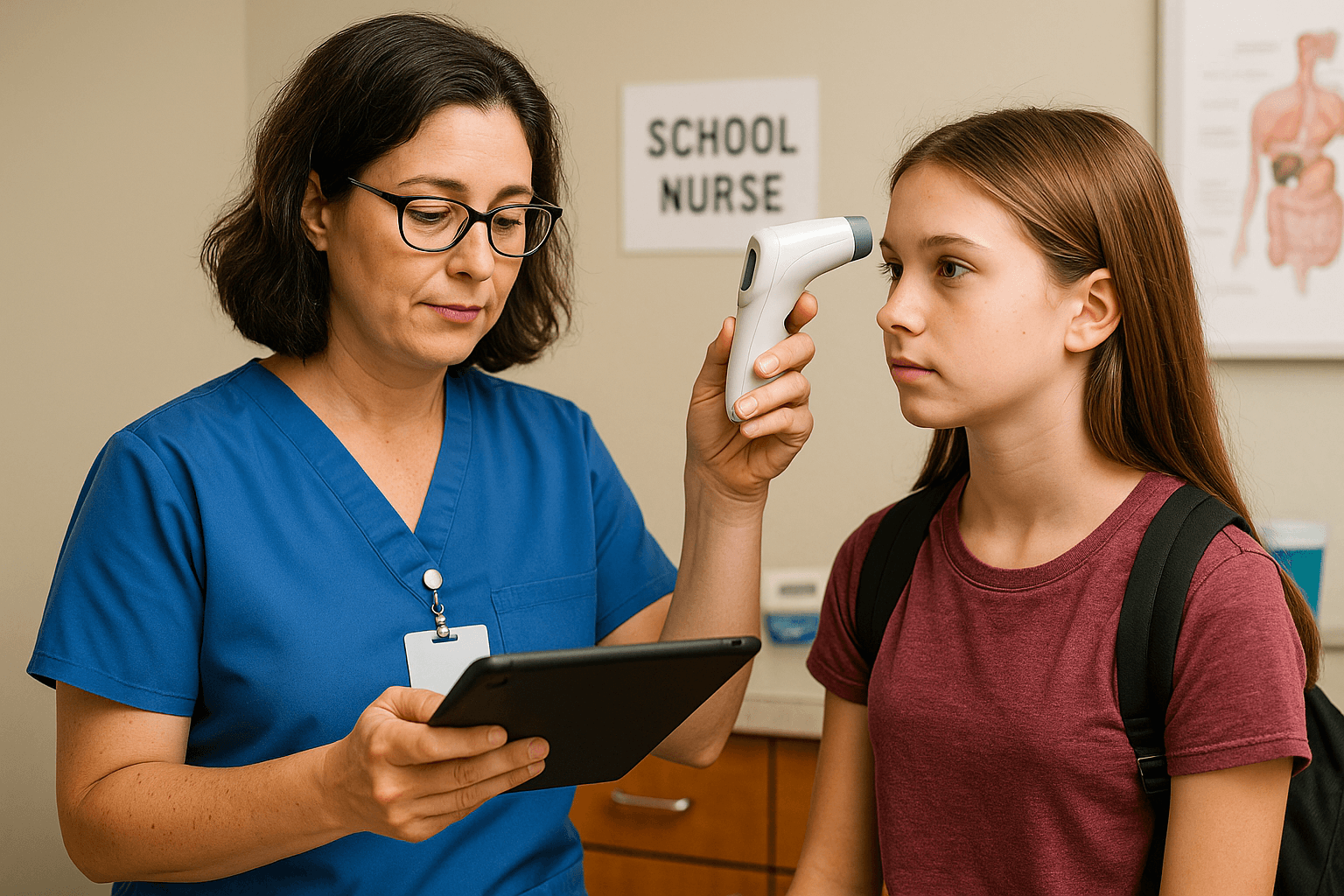
Table of Contents
For many in K-12 education, “education technology” often bring to mind digital whiteboards, online homework platforms, and virtual classrooms. But there’s another vital area where technology is making a significant impact: student healthcare. From the school nurse’s office to the sidelines of high school sports, new tools are modernizing how illness and injury are tracked, communicated, and treated. And for many educators, administrators, and even parents, this shift is only beginning to register.
Gone are the days when a student’s health record was scribbled on a clipboard or an injury update was delivered through a game-day phone call. Today, schools are investing in integrated communication systems, mobile apps, and secure health platforms that allow nurses, athletic trainers, administrators, and families to collaborate in real time. This new approach is improving student safety, streamlining care, and strengthening trust between schools and families.
A New Era of Student Healthcare in the Nurse’s Office
Step into a modern school nurse’s office, and you’ll likely find more than thermometers and ice packs. Tablets and secure cloud-based health systems are now part of the standard toolkit. When a student visits the nurse, information like symptoms, vitals, medications, and treatments can be entered directly into a digital system using an iPad or laptop.
These records are:
-
Time-stamped and standardized, ensuring consistency and accuracy.
-
Immediately shareable with authorized staff, including parents, pediatricians, school physicians, and administrators.
-
Stored securely and easily accessible for future reference, making it easier to track chronic conditions, recurring symptoms, or health trends over time.
Imagine a student who frequently experiences asthma flare-ups. With a digital record, the nurse can flag patterns, share data with the student’s doctor, and inform teachers about necessary precautions—all without the delays and gaps that come from paper-based systems.
Today, schools can take it even further. When a student visits the nurse and is showing signs of illness, the system can automatically notify all of that student’s teachers before the student returns to class. This ensures teachers are aware the student may not be feeling well and can adjust expectations or classroom activities accordingly. If the student leaves school early, all their teachers and the attendance office receive a notification—closing the loop and helping prevent any confusion about absences or missed work.
Injury Tracking from the Field to the Phone
Athletic programs have also embraced health technology, especially at the high school level. Athletic trainers are now equipped with mobile devices that allow them to document injuries the moment they occur. Using apps designed specifically for sports medicine, trainers can:
-
Record symptoms and mechanisms of injury immediately on-site.
-
Verify and update emergency contact information.
-
Notify parents or guardians via automated messages or alerts.
-
Track treatment plans and rehabilitation progress.
For example, when a student-athlete suffers a suspected concussion, the trainer can document symptoms on an iPad, inform the family in real time, and initiate a return-to-play protocol that can be monitored by all stakeholders. In the past, this might have involved a phone tag, handwritten notes, and confusion about next steps.
Now, parents can log into a secure app on their phones and see:
-
When and how the injury happened.
-
Whether treatment has been administered.
-
The expected timeline for recovery.
-
Any new updates from the trainer or physician.
This transparency and immediacy help parents stay engaged and reassured, while allowing school staff to deliver coordinated, student-centered care.
Just as importantly, teachers are now included in this communication loop. If a student is placed under concussion protocol, their teachers are automatically notified and can plan accordingly. Knowing a student is dealing with symptoms of a head trauma injury allows teachers to adapt lesson plans, delay assessments, or provide additional academic support. Everyone—from the nurse and coach to the parent and teacher—is informed and aligned, ensuring the student’s well-being comes first.
Communication is the Game Changer
Perhaps the most transformative aspect of these digital systems is communication. In the past, student health updates often relied on phone calls, physical letters, or in-person meetings. These methods were slow, inconsistent, and often failed to reach all necessary parties.
Now, with integrated platforms, everyone involved in a student’s care can be on the same page. Teachers can be notified if a student needs to avoid physical activity. Parents can receive a heads-up if their child visits the nurse. Administrators can review anonymized trends to assess school-wide wellness.
These systems improve:
-
Speed: Critical updates are shared instantly.
-
Access: Information is centralized and searchable.
-
Collaboration: Teachers, nurses, parents, and doctors can work together in a secure digital environment.
This real-time communication helps prevent small issues from becoming serious problems and fosters a school culture that prioritizes student well-being.
Protecting Privacy with FERPA
As with all student records, health data is protected under the Family Educational Rights and Privacy Act (FERPA). Any use of education technology for student healthcare must strictly comply with FERPA guidelines.
This means:
-
Only authorized individuals can access student health records.
-
Data must be stored in secure, encrypted systems.
-
Schools must inform parents about what data is collected and how it will be used.
-
Consent is required for sharing certain health information beyond the school system.
It’s essential for schools to conduct regular audits of their health technology platforms and provide ongoing staff training to ensure compliance. Privacy cannot be an afterthought—it has to be built into every layer of the system.
Looking Forward: The Future of School-Based Student Healthcare
We are only at the beginning of this transformation. As technology evolves, schools will have access to even more advanced tools, such as:
-
Predictive analytics that can identify students at risk based on attendance and symptom history.
-
Telehealth integrations that connect students with doctors virtually during school hours.
-
Wearable health monitors that track vital signs in real time for students with chronic conditions.
-
AI-powered dashboards that help administrators spot health trends across schools or districts.
All of these tools aim to do one thing: help students stay healthy, safe, and ready to learn.
Conclusion
Education technology isn’t just changing the way we teach—it’s changing the way we care. By embracing digital tools in the school nurse’s office, on the athletic field, and in communication with families, K-12 schools are becoming more proactive, responsive, and transparent when it comes to student health.
For superintendents, principals, school nurses, athletic trainers, parents, and policymakers, the message is clear: technology is not a luxury—it’s a necessity. And as we continue to invest in it, we must do so with a focus on equity, privacy, and meaningful collaboration.
Because when a school can respond to a student’s medical need with the same precision and urgency as it responds to an academic one, that’s when real progress happens.
Subscribe to edCircuit to stay up to date on all of our shows, podcasts, news, and thought leadership articles.