 Ian Egan
It’s not what you may think Hear more from Randy Ziegenfuss and other innovative analysts, thought leaders, and educators at the 2018 Future of Education Technology Conference (FETC), January 23-26 in Orlando, Florida. Learn more here.
by Randy Ziegenfuss, Ed.D and Lynn Fuini-Hetten
 In a previous article, we shared the beginning of our journey with shiftyourparadigm.org, reviewing Episodes 1-5. In Episodes 6-10, we continued to learn valuable lessons from learner-centered practitioners in the field. Leaders and learners from across the country are excited to share examples of learner-centered education in action!
Through the process of interviewing learner-centered leaders and learners, we are seeking to answer these questions: What is learner-centered leadership, and what distinguishes it from traditional school-centered leadership? What new sets of knowledge, skills and dispositions do school leaders need to lead transformation of the current school-centered paradigm to a learner-centered paradigm?
In this series of episodes, we explored some valuable skillsets and mindsets of learner-centered leaders. They create conditions for stakeholders to do the work of transformation and own it. This often involves the learner-centered leader giving up control. Finally, learner-centered leaders are focused on an audacious vision rooted in the community’s needs and values.
Here is a short recap of Episode 6 through Episode 10. Be sure to visit the Shift Your Paradigm site for full audio episodes and reflective blog posts. You can also subscribe to the podcast on iTunes.
Episode 6 featured RSU 2 in ME. We spoke with Bill Zima, superintendent; Mark Tinkham, principal; and Bryce Bragdon, learner. Bill shared an important quality about learner-centered leadership. In RSU 2, the leadership team has provided the space for teachers and learners to thrive in a competency-based system where diplomas are awarded based on proficiency. They’ve done this through a focus on building the mindsets and skillsets of all stakeholders.
 Bill suggests the role of leadership in this transformation: “My job is to set the right conditions in the right context. As superintendent, I’m trying to set conditions so the principals can work with the teachers to create what needs to happen inside the building.” Learner-centered leaders build mindsets and skillsets in ways that model the expectation for learning in the classroom.
Episode 7 took us to the Avalon School in St. Paul, MN where we spoke with Carrie Bakkan, program coordinator and teacher; and Riley Molitor, learner. Avalon School has a deep focus on developing agency in both learners and teachers. Carrie shared an important mindset necessary for releasing agency, “All students have these really incredible gifts in some areas, and things they are working on in others. Everybody is on their own plan.”
Learners at Avalon are encouraged to learn about themselves as learners, and then design the work they want to complete throughout their education. While learners complete this work, teachers are learning alongside them. Avalon is fully aware that it needs to fit into the framework for meeting the expectations of higher education, and students do receive a transcript. Additionally, learners are graded and complete state-mandated standardized tests.
In Episode 8 we connected with Pike Road Schools, speaking with superintendent, Dr. Suzanne Freeman, and principal, Ryan Kendall. Our conversation reinforced the idea that learner-centered leaders create the conditions for those in the system to learn. They do this though a strong vision, mission and set of beliefs about learning as defined within and by the community.
 In order to develop this vision as well as a shared understanding, the most effective learner-centered leaders are open-minded and anchored in the school’s beliefs. What is right for the community? What is best for our students? Who are our students? Learner-centered leaders ask, “Who is my ‘who’? How do I design experiences that are both intellectual and for the heart?”
Dr. Cederic Ellis, superintendent in the McComb School District in MS was our guest on Episode 9. McComb School District “empowers students to change the world.” Most importantly, leaders in a learner-centered environment have an audacious vision. To work towards that vision, the learner-centered leader is invested, having a future-focused mindset for building something that cannot be seen at the moment, along with plenty of patience.
Relationships with other leaders, teachers, students, and parents are critical in this journey. Learner-centered leaders rely on others and build passionate people around them to ensure everyone is on board together for the journey to a learner-centered environment.
Episode 10 took us to Mesa County, CO and a conversation with superintendent, Steve Schultz. The importance of community was a thread through our conversation. Steve includes the following in what we would traditionally call “stakeholders” in the definition of community – students, teachers, leaders, board members and community representatives such as newspaper reporters and Chamber of Commerce leaders.
 Our conversation with Steve reminded us that learner-centered leaders leading a system transformation effectively engage community. In Mesa’s work over the past 18 months, community has been engaged to develop a model of proficiency-based learning that best serves the unique context and needs of Mesa County.
We’ll outline the next stages in our journey to distinguish learner-centered leadership from traditional educational leadership in future posts! In the meantime, check out the Shift Your Paradigm podcast site for all episodes and accompanying blog posts that deconstruct some of the learning from each episode. And join us for a new conversation every two weeks as we uncover what it takes to lead a learner-centered learning environment. It’s not what you may think!
 Randy Ziegenfuss will be speaking at the upcoming Future of Education Conference (FETC) January 23-26 in Orlando, Florida.
Author
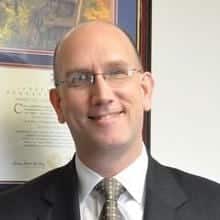 Randy Ziegenfuss currently serves as Superintendent in the Salisbury Township School District. Prior to his current position, Randy was a classroom teacher, Department Chair, Technology Integration Specialist, Director of Technology and Assistant Superintendent. Randy is also Clinical Adjunct Professor of Education at Moravian College, teaching courses in inquiry, assessment and technology in the undergraduate, graduate and principal certification programs.
He graduated from Moravian College with a B.Mus. degree, earned his M.A. from Teachers College, Columbia University in technology leadership, and an Ed.D. from the University of Pennsylvania in educational and organizational leadership. In 2014, the Pennsylvania School Librarians Association (PSLA) recognized Randy as the Outstanding District Administrator for the state of Pennsylvania.
In 2015, Randy was recognized by the Pennsylvania Association for Educational Communications and Technology (PAECT) as the Outstanding Leader of the Year. Read Randy’s blog WorkingAtTheEdge.org and listen to the podcast co-hosted with @lfuinihetten at TLTalkRadio.org. Follow Randy on Twitter.
 Lynn Fuini-Hetten is the Assistant Superintendent in the Salisbury Township School District. Prior to her work in this position, Lynn served as Supervisor of Instructional Practice, middle school teacher, instructional coach, instructional support teacher and assistant principal in the district. Lynn is responsible for professional learning for all staff, supporting curriculum development, supervising the district’s virtual learning academy (VAST), and managing federal programs. Lynn has been an integral part in the success of Salisbury’s 1:1 teaching and learning initiative – Teaching and Learning 2020 (TL2020).
As a result of her work in the area of professional development, Salisbury Township School District was recently recognized nationally as a Project RED Signature District and an Apple Distinguished Program. Lynn was recognized in 2013-14 with a mini-grant from LearningForward PA to provide professional development focused on leading the implementation of PA Core Standards for the administrative team.
Lynn received a BS and an MS in elementary education from Kutztown University, principal certification from Penn State University, instructional technology certification from Kutztown University and is currently pursuing a doctorate in educational leadership from Wilkes University. Lynn has taught undergraduate course at DeSales University. In May 2014 Lynn received the Wanda McDaniel Award from the Women’s Caucus of PASA (Pennsylvania Association of School Administrators.) Follow Lynn on Twitter.
Further Reading
- Edutopia – Student-Centered Learning: It Starts With the Teacher
- Education Week – Introducing the Student-Centered-Learning Syllabus
- THE Journal – Designing Learner-Centered Spaces