
 EdCircuit Staff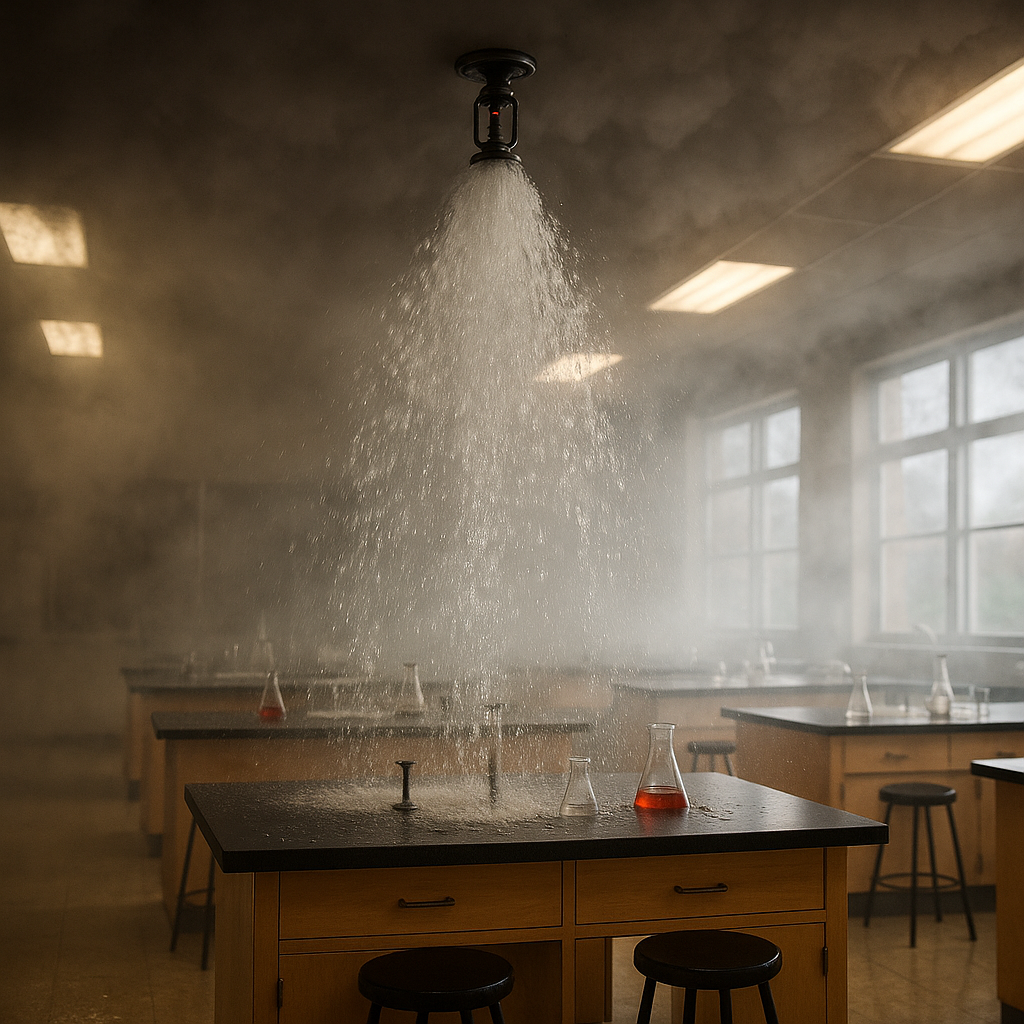
Table of Contents
Science lab fires rarely make national news — but when they happen, they reshape the entire rhythm of a school day. A brief ignition can trigger evacuations, sprinkler activation, districtwide communication plans, virtual-learning pivots, environmental testing, and weeks of cleanup.
And what happens after the flame is out is just as important.
Recovery — from building clearance to restoring trust — often requires days or even weeks of coordinated work.
This companion article expands on the Safer Ed Podcast episode “When the Science Lab Catches Fire: Duty of Care, Response & Recovery” and builds on the original edCircuit reporting:
When the Science Lab Catches Fire: Duty of Care, Prevention, and the Barnegat High School Wake-Up Call
Duty of Care: Prevention Starts Before the Experiment
Duty of care sits at the heart of laboratory safety. It’s more than legal compliance — it’s a cultural and operational expectation that schools take proactive steps to prevent foreseeable harm.
In K–12 science programs, duty of care includes:
-
Safe environments: compliant labs with working fume hoods, emergency shutoffs, and unobstructed exits
-
Proper storage: well-maintained inventories and separated incompatible chemicals
-
Competent training: staff and students who understand the materials and equipment they handle
-
Preventive oversight: scheduled safety inspections, documented maintenance, and enforced PPE norms
-
Preparedness: emergency plans, communication pathways, and remote-learning contingencies
Even when the response is executed flawlessly, the cost of disruption — lost instruction time, damaged facilities, shaken community trust, and unplanned expenses — is high.
The smarter move is prevention that sits firmly within the district’s duty of care.
How Science Lab Fires Unfold: The Systemwide Impact
Recent incidents across the U.S. follow a predictable pattern:
-
A routine experiment
-
An unexpected ignition
-
Immediate sprinkler activation
-
Smoke infiltrating HVAC lines
-
Moisture and contamination in adjacent rooms
-
Building closure for inspection and air-quality testing
In one recent high-school example, the fire itself lasted seconds — but classes moved online for more than a week. Facilities teams removed ceiling tiles, cleaned ducts, tested air quality, and sanitized multiple classrooms.
A 15-second ignition can produce 5–10 days of recovery work.
Lab fires are uncommon, but they’re far from rare. NFPA estimates more than 3,200 school structure fires occur annually, with 10 percent originating in science labs or classrooms with heat sources and chemicals.
Human factors — not equipment failure — remain the leading cause.
Science Lab Fires: What Prevention Really Looks Like
Science-lab safety depends on three interconnected layers:
1. Engineering Controls
Built-environment protections that contain small problems before they escalate:
-
Sprinkler and suppression systems
-
Emergency gas shutoffs
-
Functional, tested fume hoods
-
Fire-resistant surfaces
-
Clear, unobstructed egress routes
-
Up-to-date electrical equipment
2. Administrative Controls
Systems, rules, and protocols that ensure consistency:
-
Chemical inventories and safety data sheets
-
Pre-lab risk assessments
-
Required PPE usage
-
Annual safety training for all staff
-
Regular facility inspections
-
Documentation that meets OSHA and NFPA standards
3. Safety Culture
The most important and most fragile layer.
When teachers model safety, students internalize it. When shortcuts are accepted, risks multiply.
A strong culture means:
-
Safety isn’t optional
-
Concerns are addressed immediately
-
Students understand why rules matter
-
“We’ve always done it this way” is no longer acceptable
Duty of care becomes culture when leadership reinforces it every day.
Response: What Happens After the Alarm Sounds
Science-lab fires activate a complex, high-stakes chain of events. A strong response plan reduces disruption and accelerates recovery.
Effective response includes:
-
Immediate evacuation of the lab and surrounding classrooms
-
Activation of suppression systems
-
Securing the lab and shutting off utilities
-
Rapid communication with district leadership and families
-
Environmental air-quality testing
-
Moisture checks and contamination assessments
-
Documentation for insurance, regulatory review, and internal evaluation
A fire doesn’t end when the flame disappears — it ends when experts declare the building safe for re-entry.
Recovery: Rebuilding Trust and Reopening Safely
Recovery is both scientific and emotional. Students, staff, and families need to feel confident returning to the lab.
Strong recovery includes:
-
Professional HVAC cleaning and air-quality clearance
-
Fire and moisture remediation in affected rooms
-
Structural and electrical inspections
-
Re-entry assessments signed off by facilities and safety officers
-
Updated training, maintenance logs, and safety plans
-
A staff and student debrief focused on what happened and what will change
Restoring trust matters as much as replacing damaged materials.
The Overlooked Variable: Occupancy and Class Size
One of the clearest risk factors in laboratory incidents is overcrowding. Tight spaces reduce supervision, increase human-error rates, and complicate egress during emergencies.
Tools like Science Safety’s free Occupancy Load Calculator help districts determine safe room capacities based on NFPA guidelines.
Right-sizing classes is not just an instructional decision — it’s a safety imperative.
Are Science Lab Fires Preventable? Nearly Always.
Most experts — and most incident reports — say yes.
Research on laboratory safety consistently shows that human factors drive the majority of fires:
-
Unlabeled materials
-
Blocked ventilation
-
Rushed demonstrations
-
Ignition sources left unattended
-
Poorly maintained equipment
-
Lack of PPE or procedural discipline
Small habits prevent the biggest fires:
-
Checking valves
-
Closing containers
-
Labeling chemicals
-
Respecting fume-hood limits
-
Wearing required PPE
-
Following established procedures
The sprinklers that contained the recent fire worked exactly as designed.
The ignition that triggered them should never have happened.
What School Leaders Must Do Now
Strong prevention and response frameworks start at the district level. Leaders must ensure:
-
Up-to-date chemical inventories
-
Proper storage of flammables and incompatible substances
-
Fully functional ventilation and emergency shutoffs
-
Mandatory annual training
-
Clear occupancy limits
-
Regular maintenance logs
-
Fire-inspection schedules
-
Reliable emergency communication plans
Duty of care becomes reality only when leadership makes safety non-negotiable.
Science Lab Fires: Call to Action
Before the next experiment begins, review your district’s:
-
Lab safety protocols
-
Staff training records
-
Chemical storage systems
-
Ventilation and suppression equipment
-
Occupancy loads
-
Emergency response and communication plans
Proactive preparation costs far less than post-fire recovery — and protects the students and educators at the heart of every science program.
Subscribe to edCircuit to stay up to date on all of our shows, podcasts, news, and thought leadership articles.