 EdCircuit Staff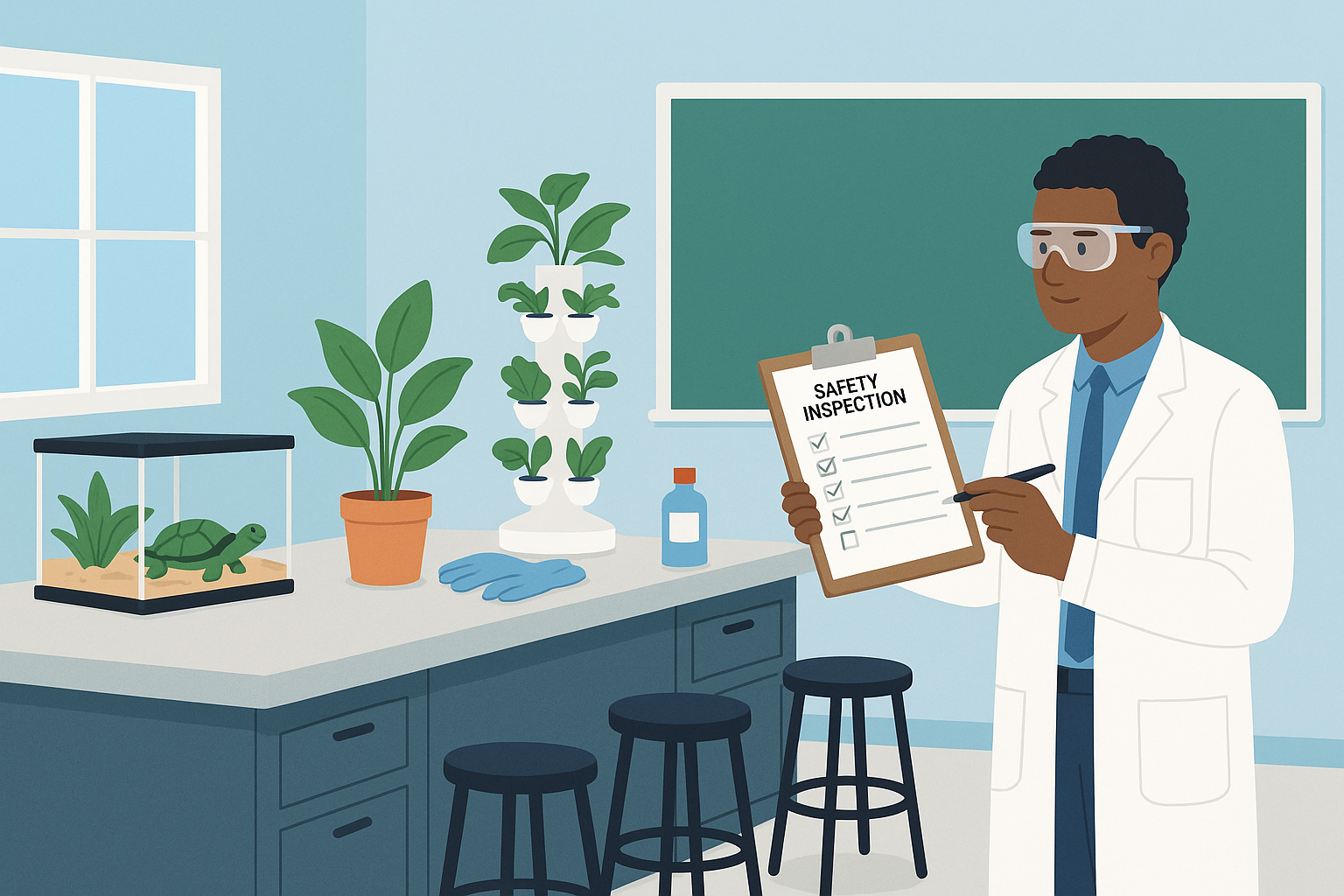
Table of Contents
Science safety culture takes center stage in Part 2 of Safer Ed’s Holiday Shutdown Safety series, Beyond the Break: Organism Care, Compliance, and Building a Districtwide Safety Culture. This episode digs into the often-unseen systems that protect students all year—systems that include living organism care, documentation routines, inspections, and the foundational practices that create consistency across an entire district.
While Episode 1 focused on shutting down equipment, cleaning labs, and preparing facilities, Episode 2 shifts the focus to operational continuity and long-term cultural habits that define safer learning environments. Educators, administrators, and science leaders will find the episode packed with practical, repeatable steps they can bring into the second semester.
???? Listen to the full episode here:
The Overlooked Area of Science Safety: Living Organisms
Science classrooms are living ecosystems—not just equipment storage spaces. As the episode highlights, plants, terrariums, aquatics, mammals, and hydroponic systems all require thoughtful planning before a long closure.
Key considerations include:
-
Ensuring adequate hydration and temperature stability
-
Adjusting lighting for plants and heat for animals
-
Cleaning enclosures and resetting hydroponic systems
-
Creating written care guides for whoever is taking responsibility
-
Identifying backup caretakers in case plans change
This isn’t simply about keeping organisms alive—it’s about maintaining ethical care, instructional continuity, and a safe, stable classroom ecosystem ready for students’ return.
Documentation: The Administrative Backbone of Safe Science Programs
Episode 2 emphasizes that science safety isn’t just hands-on—it’s documentation-driven. A strong safety culture is built on records, forms, and compliance practices that prevent accidents and protect educators.
The episode highlights essential documents and annual review tasks:
-
Chemical Hygiene Plan
-
Science Safety Manual
-
Student and staff safety contracts
-
Classroom-specific expectations
-
Inspection logs
-
Training requirements
-
Districtwide regulation updates
Research cited in the episode reinforces the need for ongoing documentation: many teachers never receive formal safety training, half cannot recall their last annual inspection, and accident rates rise with oversized class rosters. These are systemic issues, not individual errors—and documentation is a key remedy.
Inspections as a Cornerstone of Program Stability
The winter break serves as a natural checkpoint for formal safety inspections—not just at the building level but through a districtwide lens. According to the discussion, thorough inspections involve:
-
PPE availability
-
Chemical inventory and SDS management
-
Alignment with legal standards
-
Classroom readiness
-
Department organization and workflows
Ideal programs conduct inspections twice a year—before winter and summer—to ensure systems stay proactive rather than reactive.
Building a Districtwide Science Safety Culture
As the hosts explain, safety culture isn’t a checklist; it’s a mindset supported by shared systems. A true districtwide model includes:
-
Consistent onboarding for new staff
-
Professional development aligned to grade levels
-
Digital systems for contracts and inventories
-
Scenario-based training modules
-
Collaborative communication across departments
-
Micro-credentials and certifications
-
Standardized inspection protocols
When these elements work together, safety becomes predictable, sustainable, and equitable across schools—not dependent on the experience level of a single teacher or administrator.
Why This Episode Matters for District Leaders, Teachers, and Safety Teams
This episode gives educators tangible steps for improving long-term safety outcomes. From the ethical treatment of organisms to creating documentation systems that reduce liability, the guidance applies to districts of every size.
The core message is clear: holiday preparation is more than cleaning—it reinforces a culture that protects students all year.
Subscribe to edCircuit to stay up to date on all of our shows, podcasts, news, and thought leadership articles.