Getting to know the presenters at FETC 19 As we get closer to FETC 2019, we’re diving into our series of interviews with conference presenters. Many of the presenters we spoke with prior for FETC 2018 are presenting once again this coming January, so now is an ideal time to catch up on those conversations.
One such interview is included here, with featured presenter and all-around edtech innovator Steven Anderson, who has been working as a consultant to educators and school leaders across the globe, helping them better understand technology and social media.
Join us as we revisit Steven’s interview with Dr. Berger and read below to get a preview of the sessions he will be presenting at FETC 2019 in Orlando.
Steven Anderson’s Sessions at FETC 2019:
Session C188 | Showing You’re Awesome! Creating Effective School Communications
- Room: SOUTH 220C
- Tuesday, January 29, 2019: 4:00 PM – 4:40 PM
Description
The digital age is making it easier for parents and the community to learn what happens inside the school building. Using social media and other tools, schools and districts can more deeply engage with those stakeholders, providing a more unified foundation for better relationships. It also makes it easier for professionals to tell their stories and take control of the message they want all to know about the great things happening in schools and districts. Join us as we will examine the current social media landscape, describe personal and school branding and explore non-traditional tools for communication. He will also show how to accomplish it easily and simply but having maximum impact.
Session $W119 | 4 Edtech Ways to Differentiate in a Student-Centered Classroom
Co-presenting with Shaelynn Farnsworth
- Room: NORTH 220D
- Monday, January 28, 2019: 8:00 AM – 10:00 AM
Description
When moving from direct instruction to a more student-centered classroom, care and consideration must be taken to reach all learners. Through differentiated instruction, educators rely on several different methods and techniques to ensure students are successful. Differentiation of content, interest, process, and demonstration is responsive teaching and meets the learner where they are at. Effective technology integration provides additional support to a differentiated classroom. Join us as we will examine the differentiation processes and how technology fits in the differentiated classroom. Participants will walk away with a ready-made technology-infused differentiated toolkit and strategies to implement differentiation in any classroom.
Session $W159 | Key Indicators of Highly Effective Technology Use
- Room: SOUTH 330C
- Monday, January 28, 2019: 1:00 PM – 3:00 PM
Description
Technology in the classroom is becoming nearly as ubiquitous as textbooks and pencils. Each day students encounter lessons designed with technology in mind. However, as educators and school leaders, how do we know if the lesson is highly effective? Join us as we will examine the key indicators of highly effective technology use and how school leaders can best identify when technology works and when it does not.
Session C069 | Ensuring Engagement and Effectiveness in Learning
- Room: NORTH 320H
- Tuesday, January 29, 2019: 12:00 PM – 12:40 PM
Description
Each day, students encounter lessons designed with technology in mind. However, as educators and school leaders, how do we know if the lesson is highly effective? Teachers and leaders need to not only know how to make learning fun and engaging but also use research-proven strategies to ensure learning is effective. When new technologies or instructional practices are introduced into classrooms, it can be a challenge for leaders to communicate how everything fits together to create a richer learning environment. Join us as we will examine the key indicators of highly effective technology use and how school leaders can best identify when technology works and when it does not.
Session C132 | Utilizing Critical Thinking in the Digital Information Age
- Room: NORTH 220D
- Tuesday, January 29, 2019: 2:00 PM – 2:40 PM
Description
With ubiquitous access to information, why is it that we still have people who believe that the Earth is flat, 9/11 never happened, and vaccinations cause autism? Technology provides users with unprecedented amounts of information at the click of a button. Readers are inundated with endless search results that are filled with truths, half-truths, fake news, bias, fallacies, and fictitious websites. In this information age, it is imperative educators develop healthy skepticism within their students. Teach students how to think, not what to think; by providing them with opportunities, strategies, and tools to hone skills to analyze, evaluate, and debunk the misinformation that they encounter daily.

About
 Steven W. Anderson is a Dad, Learning Evangelist, Speaker and Author. After a successful career in public education as a Teacher, Instructional Technologist, and Director of Instructional Technology, Steven works with educators across the globe as a consultant. Highly sought after for his skills in helping educators and school leaders better understand technology and social media through his humorous approach to learning, Steven can work with you to improve learning for all students.
See more at https://web.archive.org/web/20240226132410/https://www.web20classroom.org/ and follow Steven W. Anderson on Twitter.
View Steven’s full edCircuit interview Build Pedagogy Before Technology
Hear more from Steven Anderson and other innovative analysts, thought leaders, and educators at the 2019 Future of Education Technology Conference (FETC), January 27-30 in Orlando, Florida. Learn more here.
- 10times – FETC National Conference
- Amplify – FETC 2019
- Getting Smart – 26 Can’t-Miss Education Conferences for 2019

 I was talking with a principal a few days ago at a professional development session I was leading. She mentioned that she had recently suspended a particular student with whose story she was very familiar. I asked if knowing the student’s story impacted her choice of discipline. In other words, was there any bias – negative expectations of the student that informed the decision to suspend rather than take a restorative approach to the situation? The principal paused to reflect then added, “When I disciplined her, I told her that she is capable, and I expect more from her. I spoke life to her. It’s her choice.”

 There is a myth that surrounds the gifted child. That they are super smart, that they can figure out anything, that they have all the answers. The problem with these representations is that giftedness becomes like a gimmick, so when we are faced with a real gifted child, we expect them to do unrealistic, amazing things like some sort of parlor trick.
  Many gifted children are more mature than other kids their age. That does not mean though they are ready to have mature conversations that children a few years older than them are having. Emotionally they are still the age on their birth certificate. They might be able to talk about quantum physics but still throw a fit when things do not go their way. No matter how smart they appear to be, it is important not to forget they are children.
  Those who have taught gifted children for any amount of time recognize that some of their students have certain quirks. This could be such things as a lack of social awareness, a tendency toward perfectionism, becoming stressed about seemingly small things, worrying about problems halfway across the globe, or the overexcitabilities talked about in chapter 1. If you are going to teach gifted children, it just becomes standard practice that you learn to accept these quirks as a part of doing business. These quirks can sometimes make a child stand out from the rest of the class, especially if she is in a regular education classroom. These quirks become more the norm in a program will all gifted children because more children have them, so it does not stand out so much.
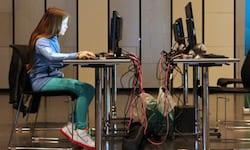 Like their colleagues, both Lance and Sam have used programs and apps like
 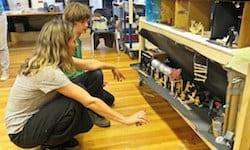 Sam adds, “There was a focus for technology in the classroom, but we learned that with the tools we needed better ways to give the kids the personalized learning they needed. We were concerned with finding those moments of time to use that device as a way to move student learning forward and not sticking the kid on the device for an hour and calling that ‘class time.’” Sam says the solution was to trust the teachers. The idea is to give them ample professional development and technology to help them move the needle and then let the teachers make the decisions about students on an individual basis in a classroom devoted to personalized learning.

 Through the years, I often heard the call of the paints, brushes, and canvases. I wanted to express myself, but I criticized my self-expression before it was even a pencil sketch. “You can’t paint that. You can’t think that. You can’t feel that. You can’t. You can’t.
  I think one of the biggest obstacles as educators and parents is getting over the idea that taking care of ourselves is in some way selfish. It’s not. Giving our souls time and space to