https://vimeo.com/286243726
Shifting students from absorbing information to becoming creative thinkers  I sat down to talk with Dr. Matthew Joseph recently and we discussed his current role as the Director of Digital Learning and Innovation at Milford Public Schools in Massachusetts, along with the interesting path he took to get there. Matt will be a featured speaker at the Future of Education Technology Conference (FETC 2019) in Orlando from January 27th through the 30th, where he will present “Blitz Educational Transformation” in the IT Track and will serve on the “From IT to Innovation” panel.
 Before accepting his current position, Matt was a teacher and principal in Massachusetts for 11 years. During that time, he was very focused on being an instructional leader, and he took great pride in that role. As an instructional leader, it was his duty to make sure that his students were getting the education that was needed and that his teachers had the support in place to effectively educate all learners. Matt says it was a hard realization once he no longer had the “instructional” part in his title. He is no longer responsible for directly teaching content, but has the huge responsibility to get the knowledge and tools in the hands of the principals and teachers that do. “My current role is in a district position supporting all schools and students,” he says.
He found himself in this leadership position just as the paradigm of education started to shift from students sitting in a classroom and consuming educational content to a dynamic environment where educators were actually training students to become creative thinkers. Matt saw his schools becoming just as complex with technological advances as the world beyond the classroom was to his students. He knew that he needed to have some supports in place to make sure that his principals and teachers were adequately trained and equipped to meet the new challenges. Matt saw the primary support to be communication: the conveyance of ideas, solutions, tips, curriculum help, and support between leaders, teachers, and staff.
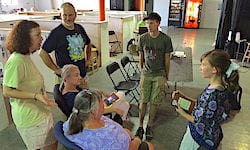 At the same time that his district was shifting the educational paradigm, he and his team were looking at the tools to help add innovation and creativity into the classroom. They started calling their philosophy melding technology and creativity “digital learning,” and Matt started by defining their goals. “The innovation piece is, are we going to create creative classrooms? How are we going to create classrooms that are modeling the world around us and their dynamic and active learning?”
He concentrated on professional development for his educators and staff, and the hard work has paid off. “When all is said and done,” Matt says, “in the past two years we’ve gone from no wireless in any building and no student devices to fully wireless and 3,000 Chromebooks in student’s hands.”
About Dr. Matthew Joseph
 Dr. Matthew X. Joseph is the Director of Digital Learning and Innovation in Milford Public Schools (MA). Previously, he served as an elementary school principal for 11 years, which givens Matt incredible insights on how IT can best support teaching and learning, for which is recognized nationally.
Matt holds licenses in education, administration, and MA superintendent. His master’s degree is in special education and his Ed.D. in Educational Leadership from Boston College. Matt is an accomplished writer in the EdTech space with articles with articles in Tech and Learning Leader, eSchool News, and EdTech K-12 and he regularly presents at MassCUE, ISTE, and many other regional and national events.
Follow him on Twitter and his blog: techinnovation.live

Dr. Matthew Joseph will be a featured speaker at FETC 2019, January 27-30 in Orlando, Florida. The conference will bring together thousands of educators and technology leaders for an intensive, highly collaborative exploration of new technologies, best practices and pressing issues. Registration is now open.
Author
Dr. Berger is an educator and former school administrator. His video interview work and conversational podcasts have been featured in various media outlets. He often hosts education panel discussions and develops strategic content. As an academic Dr. Berger is a guest lecturer at Vanderbilt University’s Owen Graduate School of Management. A former assistant principal, he has been an adjunct undergraduate professor and developer of online college courses. He is a passionate Detroit sports fan who has also adopted Nashville sports teams as his own.
- Education Week – No, Teachers Shouldn’t Put Students in the Driver’s Seat
- ABC News – Male teachers return to Australian classrooms
- ATD – Let’s Have Some Fun! Keeping Learners Engaged and Learning

 The good news is that alternative credit options can help address all three of the biggest barriers to earning a college degree. One of the best-kept secrets in higher education is that some credits can be earned online, making getting a degree faster and more affordable. Alternative pathways to college credit can help with the lack of access to higher education, but unfortunately, not enough people know about them. Options like the College-Level Examination Program (

 Typically, students have scheduled recess during their elementary and middle school years, and then suddenly they are cut off. No more going outside and hanging with their friends, engaging in sports or other games that keep them active. Instead, we get them in and out of lunch and on to the next class where they will be sitting idly for hours.
 that the teacher is doing most of the talking, leading the students through what they are supposed to be learning. High schoolers participate in a lot of teacher-centered activities.

 As the former superintendent of one of the largest school districts in America, Avossa acknowledges that he always kept himself at arm’s length with the procurement process. But in terms of working with big partners, once that procurement occurs, he states that it’s important for any leader to participate, push back and ask a lot of questions. It’s about relationships, after all. “We’re trying to solve a problem here, and that is improving student achievement,” he says. “It’s not about trying to get rid of teaching positions and save money. This is about investing in education.” And the partnerships with these companies through FETC are just that: an investment of time, money and expertise by everyone involved.
 Dr. Robert Avossa is the Sr. Vice President and Publisher of Education Products, LRP Publications. After 25 years in public education, Robert Avossa joined LRP in Palm Beach Gardens in April, 2018. Dr. Avossa’s portfolio includes, District Administration (DA) magazine and DA Leadership Institute, University Business magazine and conference, Future of Education Technology Conference (FETC), National Special Education Institute, and all the books, trainings, newsletters that are produced for educators.
 Once you’re a teacher, you’re always a teacher… and Nancy Conrad is a teacher. I sat down with Nancy recently to talk about her work with the
 “I’ve been working at transforming education my entire life,” Nancy says. “I had the great honor to be married to a fantastic human being who had a rough ride in education,” she shares, referring to her late husband, astronaut Pete Conrad, who was expelled from a prestigious school in the 11th grade because he was a severe dyslexic in the years before it was recognized, much less treated. He ended up repeating 11th grade in a small upstate New York school.
 As past Conrad Challenges have shown, the process is difficult but very rewarding. Students will write a business plan, a market study, and a visual representation of their proposed idea. They’ll even file for patents, and the students will own their patents and intellectual property.
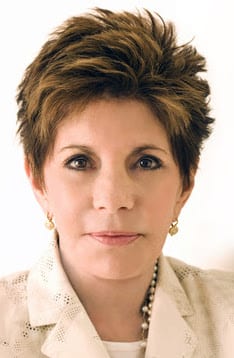 Nancy Conrad created the

 “School districts have been trying the simple ‘digitalization’ of curriculum for over 30 years, and it hasn’t worked,” Sonny says. “Some people think you have to choose either the technology or the human. That is a very simplistic and inane conflict; to say it’s either one or the other is ridiculous.” Sonny compares the two using a musical metaphor: “The pedagogy is the melody, the technology integration is the harmony, and together you get great music.”
 Dr. Anthony J. Sonny Magana III is an award-winning educational futurist, best-selling author, and pioneering educational technology researcher. Sonny is a highly sought-after leadership consultant, speaker, and instructional coach with more than thirty years experience helping educational systems around the world realize the power of transcendent learning.