Get students thinking and reflecting over the break
By Danny Wagner
 Summer movies are known for action-packed storylines filled with high-speed chases, shoot-outs, explosions, and over-the-top fight scenes. This year is no exception with Avengers: Infinity War, Solo: A Star Wars Story, and Incredibles 2 hitting the big screen. Of course summer movies have high entertainment value, but some can also offer valuable opportunities for out-of-school learning.
Students benefit from experiences that expand their knowledge, not just of math or science but also of the world around them. We all have a framework of attitudes and beliefs that define our worldview. Sometimes to see life for what it truly is, we need to break away from these notions. Movies can remind kids that we all have different perspectives, that human rights matter, that cultures can share many fundamental values, and that kindness and compassion are key qualities in a just, civil, and inclusive society.
As the school year winds down, consider sending kids off with a few movie recommendations to get them thinking and reflecting this summer. The selections here can help students see the world from new perspectives, giving them an introduction to people, cultures, events, and beliefs that may be new to them. And though movies aren’t always 100 percent historically or scientifically accurate, they can still be a great starting point for rich conversations.
 The Iron Giant (Grades 1+)
With the 1950s setting, there’s a lot to unpack about technology vs. nature in The Iron Giant. But what kids (and even adults) will really learn from this tale of robot/kid friendship is the consequences of being too quick to judge, and the many forms of heroism.
Discussion questions: What do you know about the Cold War of the 1950s? How might the characters have acted differently if the story had been set in another time period (like post-9/11)? Where do you see statements about technology vs. nature? How does paranoia drive the plot of the film?
 Wall-E (Grades 1+)
This Disney flick about human excess and environmental decay manages to be relatable to kids. An adorable robot and his quest to connect with another are the backdrop for a reflection on the impact of our collective actions.
Discussion questions: What does Wall-E learn from the movie Hello, Dolly? How is satire used in the movie to drive home the messages about the environment and big business? What similarities do you see in the movie and in our consumption of media today? Do you think this is our future?
 Coco (Grades 2+)
Coco explores the Day of the Dead and a kid’s desire to become a musician despite his family’s wishes. A moving tribute to Mexican traditions and customs, this movie will get kids contemplating the ways we remember and honor our departed family members.
Discussion questions: What about learning the traditions of the Day of the Dead surprised you? How does your family pay tribute to relatives and loved ones after they’ve passed away? How do you think the practice of honoring the dead might factor into how tight-knit Mexican families make important decisions?
 A League of Their Own (Grades 5+)
Based on the real-life 1940s All-American Girls Professional Baseball League, this classic film will get kids thinking about the value of female athletes throughout history. Students will also see how both individual strength and teamwork play a factor in success.
Discussion questions: What is women’s role in most professional sports — and their role in the film? Have all those changes been good? To keep the game popular with fans, the players flaunted their femininity. Do you think this was all in good fun, a sign of the times, or somewhat demeaning?
 Remember the Titans (Grades 5+)
Remember the Titans tells the inspirational true story about the struggles and victories of a newly integrated high school football team in 1971. Themes of segregation and prejudice will help students think critically about race relations.
Discussion questions: How did playing football help the students better understand the prejudice of the time? Do you see segregation or racism today in schools or neighborhoods? How might you apply the lessons from the movie (change is inevitable, teamwork and attitude are important) to the issues of today?
 The Truman Show (Grades 5+)
The main character in this satirical movie discovers that everyone around him is part of an elaborate “show” and that every aspect of his life has been orchestrated. Kids will inevitably begin to question the consequences of our media-driven world.
Discussion questions: How does this movie address the reality of those who spend hour after hour of their free time watching TV or movies? Does the proliferation of social media make the story outdated today? What lessons can we still learn about how we consume — and are influenced by — media?
 Arrival (Grades 6+)
With a strong female lead, this sci-fi alien tale leaves out the action scenes in favor of a reflective look at how we communicate as a species. It’s great for class discussions, and students will end up having lots to say about the political and personal choices we make.
Discussion questions: How might you have started to communicate with the aliens? What are the benefits of communicating through symbols rather than words? How does this movie compare with other movies or stories about aliens?
 The Help (Grades 7+)
Despite some controversy surrounding a central white character in a civil rights-era film, this movie adaptation still demonstrates how oppressed people have a story that needs to be told. It will get kids thinking about segregation and class differences in our society, and what it takes to break the legacy of racism.
Discussion questions: Why do you think people might be critical that the story is anchored in the coming-of-age tale of a white girl? Do you think the characters are realistic representations of the time, or are they stereotypes? How do we know?
 Bend It Like Beckham (Grades 8+)
A girl living in England struggles to pursue her soccer dreams while also respecting her parent’s traditional Indian values. This feel-good story grounds the popular “follow your heart” theme in relevant discussions about second-generation immigrant families and cultural identity.
Discussion questions: How much should you preserve the traditions of a culture when you’re no longer living (or never lived) in that place? What are some strategies for helping to build up your own sense of self-worth and coping with pressures from family or society?
 Love, Simon (Grades 8+)
While this lighthearted tale isn’t based on a historical event and doesn’t delve into deep intellectual themes, it gives insight into the emotional turmoil of a young man trying to come out. It’s a rare slice of cinema that gives kids a chance to relate to and empathize with the struggles of a gay man and the gay community.
Discussion questions: How does the film compare to the novel (Simon vs. the Homo Sapiens Agenda)? Do you think these childhood experiences later affect someone as an adult? What other secrets do you think students may be struggling with in high school? How might it affect their relationships with their classmates?
This article originally appeared on Common Sense Education.
Author
 Danny Wagner is Senior Editor, Education Reviews at Common Sense Education. His focus is on guiding the editorial direction of the Ratings & Reviews platform to discover the best in education technology. In addition to reviewing digital media for learning potential, Danny produces content and writes articles for a variety of topics, including STEM and social and emotional learning.
Common Sense Education helps educators find the best edtech tools, learn best practices for teaching with tech, and equip students with the skills they need to navigate the digital world with confidence. Get free resources including full reviews of digital tools, ready-made lesson plans, videos, webinars, and more at https://www.commonsense.org/education.
Previously, Danny Wagner was Curriculum Technology Integration Specialist for San Francisco Unified School District and a science and robotics teacher for a decade in the Midwest. Prior to his career in education, Danny worked as an Environmental Engineering consultant. You can follow Danny on Twitter.
Further Reading
- New York Times – What Have You Learned From Movies?
- TeachHub – Using Movies to Increase Student Learning
- Learning Scientists – Benefits and Perils of Using Movies in Education

 I have worked with parents of gifted children over twenty years in my career as an educator. I have had many good conversations, with an occasional bad one. When the bad ones do occur, it is usually not something personal against me that has this parent riled up. It is because at its root, gifted parents, like most parents, simply want what is best for their child.
  To provide an example, in order to qualify for our gifted ELA course at the junior high, students must have a gifted identification in reading as well as a cut score for cognitive. If a student has the gifted reading identification but is below the cut score, she is not considered for the program. We do this because we only so many qualified teachers to run the course as well as class size limitations. Neither one of these has anything to do with the individual student, but realistically it has to do with the system we are working within. In a perfect world, every student gifted in reading would be provided an opportunity to participate in the class. In an even more perfect world, we would take into consideration those students who have not been identified as gifted, but are hard workers and have the grit to be successful in the class, probably having a better chance than those who are gifted but are not particularly hard workers. This would require the district to take each student on a case by case basis and involve a lot of criteria, much of which can be argued as being subjective. In a nutshell, it would be very difficult to do and in the end, you would have outliers there as well whose parents would want to advocate for them.
  5. Who would not want what is best for their child? As parents, we spend our entire adult lives trying to provide what is best for our children. Because of this, we want to ensure our children get every opportunity that is afforded to them. For the gifted parent, this includes school. They want to ensure that their child is getting the best education possible.
 We live in a time when our nation has a great need for its people to stand up and take action. Whether it is children in cages, children shooting other children, children being stolen and sold, or children taking their own lives, we are surrounded by the outcry to do something. Children in need call out. They cry out like someone dialing 911, until they no longer have hope their call will be answered. Then they just suffer in silence… alone.
  The mother in the article wants to blame the college for not rescuing her son, and for not calling her to dash to his rescue. But it’s not entirely the college’s fault, is it? Maybe his high school failed to prepare him. Maybe his elementary or middle school teachers missed something. But, those accusations will fall flat and fade, and the one person the mother will forever blame the most will be herself.
  Our nation’s teachers are amazing people… heroic people. They are dedicated, highly trained, well-intentioned, and over-worked people. They are not the cause of this. They have been asked to carry too much of the load. They are expected to have all the answers for every child’s deepest need. We have entrusted them with too heavy a burden, and expect them to do more than any human can achieve. Valiantly, they have not shirked the job, and I imagine they lay awake at night wrestling with how to do more. They are not to blame.
 Must we continue to ignore that the way parents and children experience their transition into the widening gap caused by Kindergarten is a cognitive parallel for the way they will experience a child’s exit across the chasm to college? Can’t we at least prepare parents to be better guides for their child’s departures into separation? Can’t we try things and learn? Can’t the village come together for the sake of the children? Isn’t it worth changing, not only the minds of those who would end their own existence, but also the minds who would even peer into such darkness? If we could at least agree to try, we could then begin to move the mountain a few inches. Maybe then we could all sleep better at night, no longer haunted by the anguish of wondering what more we could have done.
 Steve Clark has more than eighteen years of experience as a highly-engaged parent of students in public schools. He is founder and president of
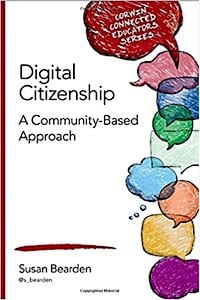 In order for schools to successfully integrate technology, they need to create a culture of
 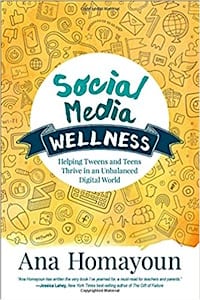 Helping students find a healthy balance in their social media use can be challenging for parents and educators. In this thoughtful book, author and educator Ana Homayoun offers a practical, solutions-oriented approach to helping schools and families navigate digital dilemmas. Her straightforward strategies can help parents, students, and educators work together to promote organization, time management, and executive functioning skills.
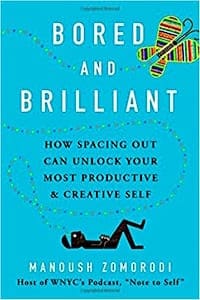 With mobile devices and anytime, anywhere connectivity, moments of boredom are now few and far between. In this fascinating exploration of the importance of boredom, journalist Manoush Zomorodi offers us a research-based look at how our relationship with technology is affecting our productivity and creativity. She gives practical advice on how to examine our own technology use and introduces the “Bored and Brilliant Challenge,” which could be a fun way to bring topics of media balance and digital well-being to the classroom.
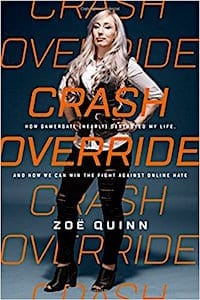 While it might seem like the world is more polarized after the 2016 election, the hate and vitriol circulating on social media has been long-festering. This book by game developer and artist Zoë Quinn documents her experiences as a victim and opponent of Gamergate, a hate campaign aimed at marginalized folks in the video game community that many see as a precursor to the alt-right and toxic culture found in many pockets of the internet. While that may sound heavy — and it is — Quinn also offers hard-earned lessons on how to confront and combat online hate, lessons our students need to learn.
![Book cover for unSpun: finding facts in a world of [disinformation] by Brooks Jackson and Kathleen Hall Jamieson. The title is in black text, with disinformation in red brackets. A review blurb appears at the top.](https://edcircuit.com/wp-content/uploads/2018/07/Unspun.jpg) As politicians, pundits, and experts (verified or not) fill the news cycle and our social media feeds with their perspectives, it can be hard to identify what’s factual and what’s “spin.” To help us navigate this complex media landscape, Brooks Jackson and Kathleen Hall Jamieson, the founders of FactCheck.org, offer a kind of primer on disinformation and biased media reporting to give us some useful tools to begin differentiating fact from fiction. From how to recognize and identify deception in media to an analysis of the tricks people use to try to convince us of something, the media-literacy tools and strategies in this book will serve you and your students.
As politicians, pundits, and experts (verified or not) fill the news cycle and our social media feeds with their perspectives, it can be hard to identify what’s factual and what’s “spin.” To help us navigate this complex media landscape, Brooks Jackson and Kathleen Hall Jamieson, the founders of FactCheck.org, offer a kind of primer on disinformation and biased media reporting to give us some useful tools to begin differentiating fact from fiction. From how to recognize and identify deception in media to an analysis of the tricks people use to try to convince us of something, the media-literacy tools and strategies in this book will serve you and your students.
 It’s easy to get lost in the “newness” of technology, especially now with widespread anxiety over the internet, social media, and smartphones. Every innovation is touted as transforming or destroying our world. But what happens when you look back on old technologies that were once new? Did these technologies change our lives? Was each new development either the best thing ever or the worst? Carolyn Marvin takes a look back at the technologies of the 19th century and finds out something surprising: Perhaps technologies don’t change us but rather reflect changes that have already happened. While this is a thoroughly academic book — for better and worse — if you can get through it, it might just change the way you think about the world.
 If you still have some confusion about how copyright law applies to the materials you use in the classroom, this book by media-literacy expert Renee Hobbs is a great resource. Hobbs not only helps readers fully understand how the doctrine of fair use supports media-literacy education, she also empowers you and your students to think critically about how to use and remix media for educational purposes.
 In this accessible and deeply insightful book, Christopher Emdin diagnoses a pressing, long-running problem in American schooling: white teachers who see themselves as the saviors of kids of color. Instead of the traditional narrative of uplifting these students, Emdin offers an alternative: reality pedagogy. This means starting from the lived experiences of kids of color, understanding their talents, and giving them the support and agency to succeed on their own terms.
 Erin Wilkey Oh’s work has focused on supporting K-12 students and teachers for over a decade. As executive editor of education content for Common Sense, she provides teachers with practical tips and strategies for using classroom technology, and helps students use media productively to become critical thinkers and creators.

 So music is not just a mood-enhancing method for lovesick Orsinos. Or even a helpful device for improving your physical and mental health.

 Our multicultural family lives in urban Nashville. In fact, we live in an