 Ian Egan
https://vimeo.com/207698879
Education technology – it’s all about the timing.
By Mind Rocket Media Group
Dr. Benny Lile, Superintendent of Metcalfe County Schools in Edmonton, Kentucky believed in personalized learning well before the concept became a popular phrase. According to Lile, the notion has been there all along, but differentiation was the challenge. In the last three to four years, technology has finally caught up to help with the management side of personalized learning making it a process that can succeed in teaching.
1:1 learning is no longer kids playing around on iPads, it’s a deliverable with instructions and management systems. Even the concept of lesson plans has changed to the point where parents, teachers, and administrators can view full lessons and track the progress of student achievement on a daily basis.
As a former technology director, Dr. Benny Lile is proud to support advancements through the AASA Personalized Learning cohort. The program has helped evaluate education technologies that deliver content and interaction platforms for different segments of grade school. Lile points to advancements in K-8 that have greatly benefited from technology catching up to the lower grade learning environments.
Education technology – it’s all about the timing.
Interview
Dr. Berger: Benny, I think we’re in an interesting time in school leadership around the country because we’re finding that resources can be scarce and/or the ways in which we try to best manage the funding that we have. A lot of districts are looking for alternative means to support the needs of the students and the teachers and their buildings.
In Kentucky, have you had conversations around the proper timing in the way to engage corporate America or corporations or entities in the private sector within Kentucky to help interface with public schools? If so, how do you view that?
Dr. Benny Lile: That’s an ongoing issue, and I think we have different levels. We’re fortunate to have a UPS hub in Louisville, Kentucky, and I know there’s been a lot of cooperation through larger districts as in Jefferson County.
I’m in a much smaller district in very rural Kentucky so that presents its own challenges.
Most any district will have some number of manufacturers or some entity within the district that you can work through. The issue there becomes sustainability and then how to build it into the long haul.
Kingsford Charcoal manufacturing, for instance, is in our district. They’re a wonderful partner and they’re wonderful for a specific project. But to build that into any type of long-term sustainability for a district presents more of a challenge.
Hence, we tend to have to go outside. We have a grant writer and we’re constantly looking for those partnerships or even relationships that we can do that will be more long term in nature.
DB: Let’s talk a little bit about technology and the way in which we go from resources to then providing into the classroom. I think we’re maturing as an industry. Do you agree with me that when we first see technology sort of hit a district, it’s just K-12.
But I’m starting to see more thoughtful discussions not only from technology providers but also from districts in saying that K-8 is a little bit different than 8-12. How do you separate that out and what kinds of conversations?
I know that you spent years as a technology director. I would imagine this is sort of personal to you in the way in which you can also personalize the experience for both students and teachers at K-8 versus K-12.
BL: One of the conversations we’re having right now is that most districts are trying to work through personalized learning. I’ve been fortunate to be a part for the past year of the AASA Personalized Learning Cohort. And so, we’re making connections with my colleagues from across the nation talking about what we’re doing.
And you are correct. One of the challenges, specifically, is lower primary. So when we’re looking at K-2, K-3, we’re having our own struggles and debate in that right now. We have some major projects going on in Grade 4-12. we’re having that conversation ─ how does it work in K-3?

There are some models out there. We had some of our school personnel visit Wisconsin just two weeks ago and see some of that in action, and they came back with some ideas.
So I think you’re going to see more movement in ─ I’ll call it ─ K3 sector in that arena and it’s more than just a child having a good time with an iPad swiping back and forth. It’s going to be actual content and interaction. And I think our students can handle that. I think they’re prepared for it.
DB: I’m glad you brought that point up because I’m happy to see that there’s a shift from students being consumers to creators.
BL: Absolutely.
DB: And that really, then, speaks to the younger generation. Do you find that you need to provide more supports for your own staff so that you can be looking at it through that lens?
When we think of technology, we think it’s just sort of icing on the cake. But, there are technologies not only that we can apply to different subjects that we originally thought were only isolated to one, and there are so many different impacts that they can have.
BL: I think back to my time in the classroom and the colleagues who were teaching at that time that I still have communication with. Today’s emphasis on personalized learning ─ as I look back I think we had that concept all along. We had that desire and we had that dream and so many of our national authorities in education kept speaking of differentiation.
And it’s hard to argue differentiation. But when you’re in a classroom from 8 to 3 in maybe a 15-minute or an hour-long period, how do you manage that? That’s has been the challenge all the way along.
Finally, I think just probably in the last three to four years, technology has caught up with that. When I taught middle-grade science and social studies, I was wanting to do this and trying to do it but not having any resources to help manage. Now we have that. The technology is finally there to do it.
So when we see the one-to-one projects that are taking place now, it’s not just to say that you have a computer and I have a computer. No, it is the delivery of the instruction; and the mode of the instruction. What you’re able to do as a learner now is capable of being managed in a very efficient manner because of the technology we have available.
DB: Regarding the way we communicate the achievement and results of the students to the greater community, which includes parents and all sorts of stakeholders, how do you look at in the ways in which we are adding more and more and in which we are personalizing learning and documenting that experience? How does your district look at not only documenting it but also communicating that out?
BL: Let me talk first about the documenting because, I think, the conversation we’ve been having just recently goes back to lesson plans ─ the whole thing of teacher lessons plans that are due on Friday or due Monday morning or whatever it may be.
We’re having a conversation now. If we’re truly personalizing learning, we’ve got our content digitized and students are moving at their own pace. It is open for the school and I might even say that it should be open for parents as well.
From my administrator point of view, the old way of turning in a lesson plan in a little 3-inch block should be gone because, now, you don’t just have the lesson plan, you have the lesson.
If you’re the principal, if you’re the curriculum director, you should be able to go in at any time and see the lesson and the progression.
Now, talk about the parents. The majority of the tools that I’m aware of have what they call a “parent view.” So, at any given time, a parent can drop in and see exactly what their child is working on and exactly what they’re doing and see their grades. My phone may buzz at any moment in my pocket with my daughter’s grade today in her classes so I know exactly where she is and what she’s doing. That just continues to advance.

And for the larger community, I think, when we begin to accelerate student work and our community can see what’s taking place, I really think it begins not to de-emphasize our state results, whether it’s a number or a letter grade, but communities do not get so fixated on that but they fixated on what the students are doing not only in the classroom but in their community.
DB: Let’s look at your personal story. What have you learned along the way in being a superintendent? I think there are a lot of misconceptions about what it means to be a superintendent and what it takes to be a superintendent in the ever growing and changing industry.
What have you personally learned?
BL: I think I’ve learned that it’s important to listen ─ to always listen. The open-door policy kind of gets overused and, in some cases, is a misnomer. But I’ve tried to develop an environment, whether it’s in the parking lot, at the grocery store, in the stands at the ball game, or walking into my office, I’m there to have a conversation with anybody.
In my first few months on the job, I had several people ask me, “I bet you’re getting a lot of phone calls,” and I said, “No, not really. They just come see me.”
It was almost like when the word got out that “yes, this guy will talk to you,” they were just about lined up.
DB: For those who don’t know you personally, you’re part of a band, correct?
BL: Yes
DB: So I would imagine that you, then, can fill the seats pretty well if you’ve got an open-door policy.
BL: I think that helps. We do. There are eight of us ─ administrators, teachers, and students.
DB: And the name of the band?
BL: It’s the Hornets’ Nest Pickers and the Hornets being our mascot for Metcalfe County.
I think that when you put yourself in that environment and people see you out there, number one, they can have a good time; they can come and enjoy something and be a part of it.
That makes people a lot more open to approaching you as an individual and it just creates a more relaxed atmosphere. I think that’s not why we did that but it’s certainly been a nice byproduct.
About Dr. Benny Lile 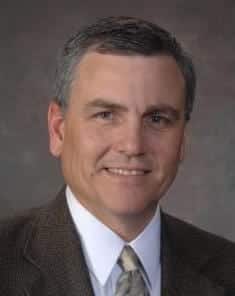
Dr. Benny Lile has been Superintendent of Metcalfe County Schools in Edmonton, KY since 2013. Before becoming superintendent, Dr. Benny Lile was Director of Instruction and Technology for Barren County Schools for 19 years. Lile received his Doctor of Education from Western Kentucky University and his BS from the University of Kentucky Dr. Benny Lile Twitter
This article was originally published on The Huffington Post by Dr. Berger
Author
education correspondent for MindRocket Media Group is an education correspondent and correspondent with articles in The Huffington Post and Forbes
- The Glasgow Daily Times – Benny Lile gets super review
- EdSurge – Edtech Executives Weigh In: 3 Conditions for Personalized Learning Success
- eSchool News – How one district improved its personalized learning by failing forward