 EdCircuit Staff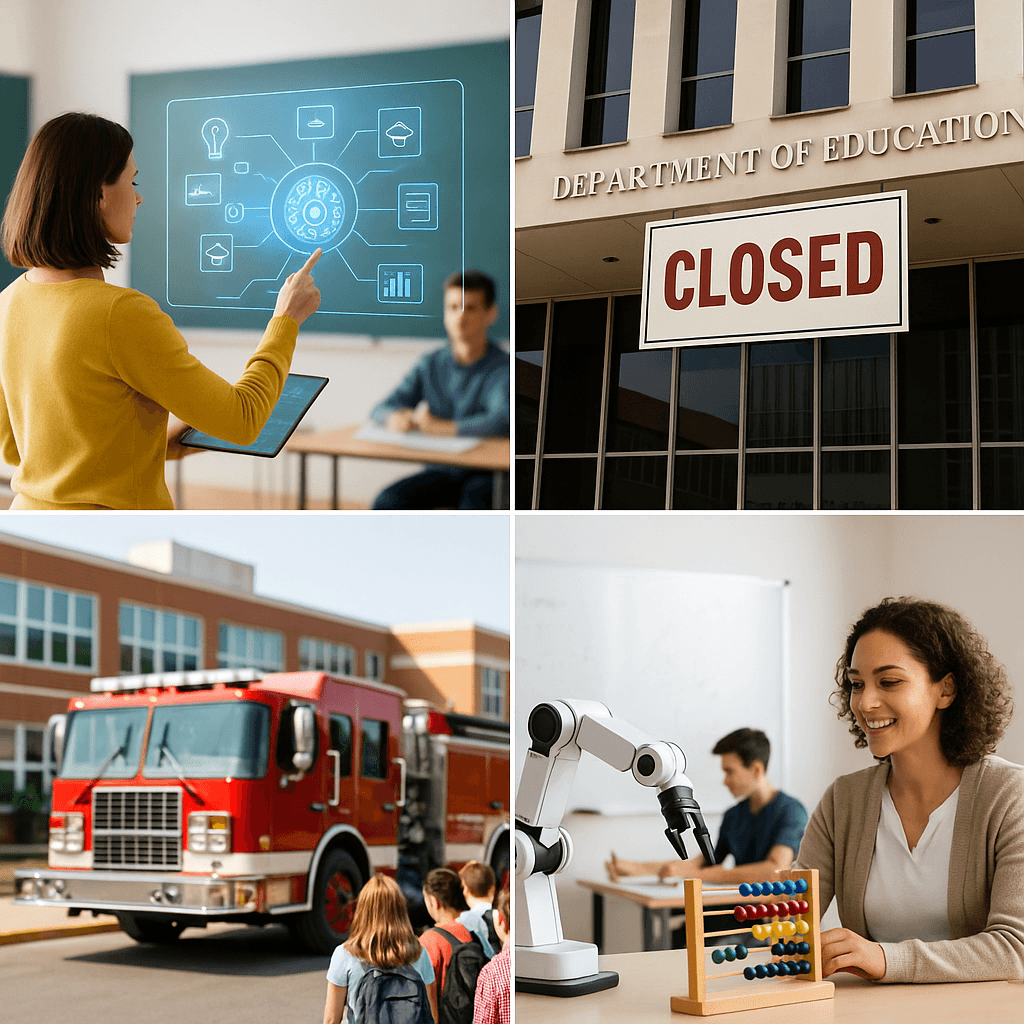
Table of Contents
In this week’s edition of The Stories That Matter, edCircuit explores how artificial intelligence, policy uncertainty, and real-world safety incidents are influencing K–12 education. From next-generation learning management systems to a federal shutdown’s ripple effects, these stories spotlight how technology, leadership, and accountability are redefining what it means to run safe, adaptive, and future-ready schools.
Can AI Power a Future Learning Management System?
AI is transforming how learning platforms track progress, personalize instruction, and anticipate student needs. This article explores what an LMS might look like when powered by adaptive AI—moving beyond simple course management to true learning intelligence.
Why read it: It reimagines the LMS as a responsive, data-driven partner that learns with educators.
Discussion it opens: How can AI-powered systems personalize learning while maintaining student privacy and teacher autonomy?
The Department of Education in a Shutdown: What’s Actually Happening and What It Means for Schools
When the federal government shutters, ripple effects reach every classroom—from delayed funding to stalled data reporting. This article breaks down how shutdowns affect teachers, administrators, and students across the country.
Why read it: It separates myth from reality, explaining what “shutdown” really means for district operations and student aid.
Discussion it opens: Should schools have contingency plans for federal disruptions, just as they do for natural disasters?
When the Science Lab Catches Fire: Duty of Care, Prevention, and the Barnegat High School Wake-Up Call
A high school lab accident in New Jersey serves as a sobering reminder of what’s at stake when safety protocols fail. This article examines duty of care, risk assessment, and the human cost of overlooked precautions.
Why read it: It’s a real-world case study in how lapses in preparation can endanger students—and how prevention saves lives.
Discussion it opens: How can schools ensure every lab meets safety standards before experiments ever begin?
Hazards, Equipment, and Classroom Challenges in Career and Technical Education (Part 3 of 4)
From welding shops to culinary labs, CTE programs are where learning meets real-world risk. This Safer Ed article and companion podcast explore how educators can manage equipment, integrate PPE effectively, and cultivate a safety-first culture—without losing the hands-on, career-driven focus that defines technical education.
Why read/listen: It provides expert-backed insight into building safer, smarter CTE programs that prepare students for both industry and responsibility.
Discussion it opens: How can CTE programs embed safety as a transferable workforce skill, not just a compliance requirement?
How AI Is Helping Schools Manage the Staffing Shortage
Districts nationwide face record vacancies. AI is emerging as a quiet force behind scheduling, grading, and communication—helping educators reclaim time for student connection and instruction.
Why read it: It shows how automation can reduce burnout and make classrooms more sustainable, not less human.
Discussion it opens: Where is the line between supporting teachers and replacing essential educator roles?
What Is Online Course Management?
Online course management is the backbone of digital learning—but it’s often misunderstood. This explainer outlines how districts can use modern systems to organize content, track student progress, and integrate hybrid and asynchronous models.
Why read it: It’s a clear, jargon-free guide to understanding the systems driving today’s virtual classrooms.
Discussion it opens: How can schools select the right platform without overwhelming teachers or students?
From Beads to Bots: How “Counting Companions” Evolved into AI
What began as an abacus centuries ago has become artificial intelligence today. This fascinating feature traces the lineage of learning tools that shaped the human quest to calculate, automate, and innovate.
Why read it: It connects history, curiosity, and technology—showing that AI is part of a much older learning story.
Discussion it opens: How can understanding technology’s roots help educators teach its responsible use?
Takeaway
Across this week’s Stories That Matter, one theme stands out: schools are redefining responsibility—to safety, to innovation, and to each other. Whether it’s preventing accidents, managing federal uncertainty, or building smarter systems with AI, these stories remind us that progress in education is only meaningful when it safeguards students first.
Subscribe to edCircuit to stay up to date on all of our shows, podcasts, news, and thought leadership articles.