
 EdCircuit Staff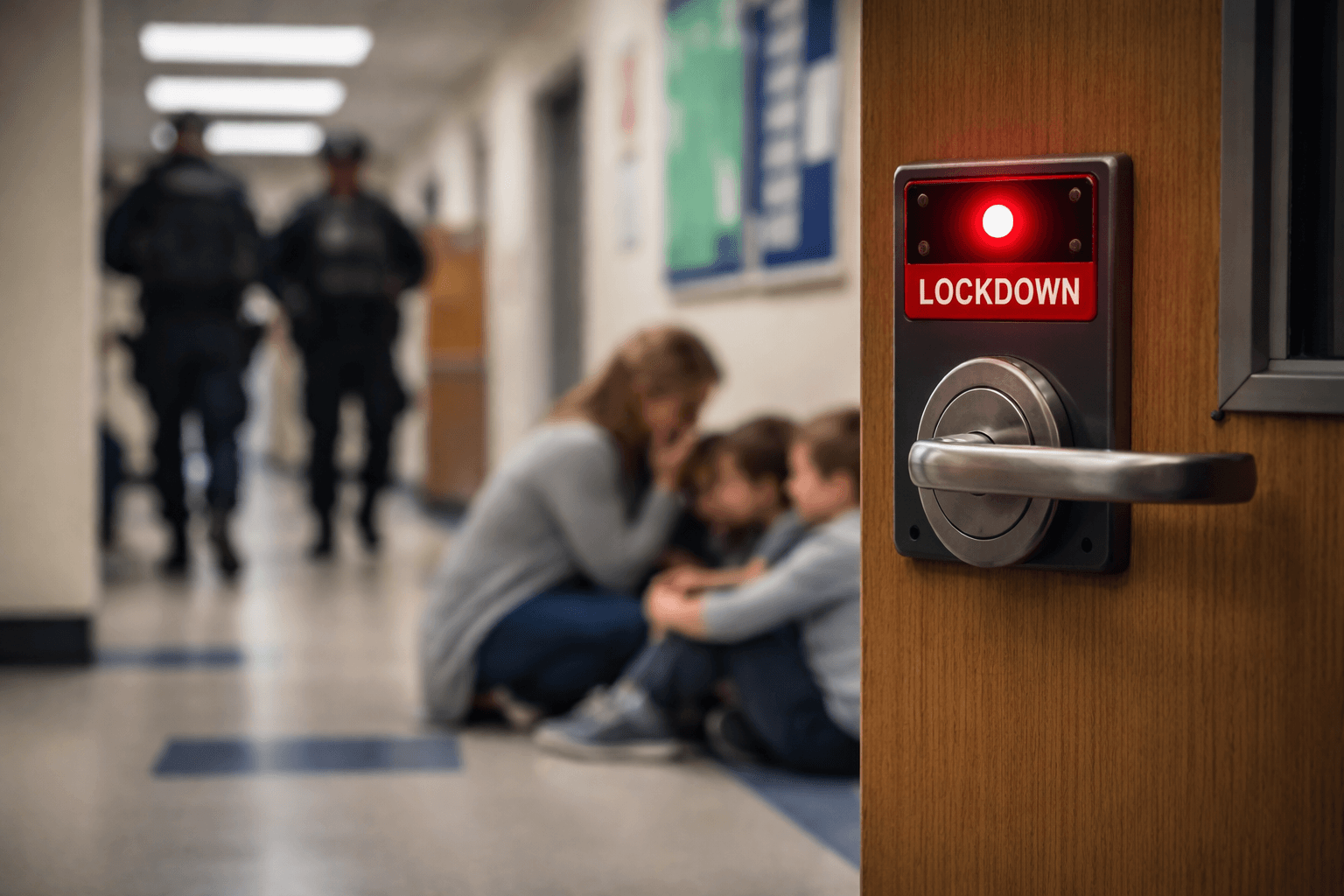
Table of Contents
School lockdown procedures have become a central component of modern school safety planning as districts across the United States respond to rising threats, swatting incidents, and growing expectations around duty of care for students, teachers, and staff.
For school administrators, educators, law enforcement partners, and school boards, a lockdown is not simply an emergency response protocol—it is part of a district’s legal and ethical duty of care. That responsibility requires school leaders to prepare for potential threats, respond quickly when they arise, and ensure that students and staff remain safe inside the school building.
But the conversation surrounding lockdowns is evolving. Schools are now balancing three equally critical responsibilities: protecting physical safety, communicating clearly with families, and addressing the mental health impact of these events on students and staff.
For many communities, the most important question is no longer whether lockdown procedures exist. The real question is: How prepared is your district when a threat occurs?
What Constitutes a School Lockdown Threat?
School lockdown procedures are typically initiated when administrators believe there is a credible threat that could endanger individuals inside the building.
Threats that may trigger a lockdown can include:
-
A weapon reported on campus
-
An active shooter or violent individual
-
Police activity or a dangerous suspect in the surrounding area
-
A credible threat communicated online or by phone
-
Escalating violence or unsafe behavior inside the school
One type of incident that has grown more common in recent years is swatting—a malicious act in which someone falsely reports a violent event, such as a school shooting or bomb threat, to trigger an armed police response. These incidents force schools to initiate lockdowns while law enforcement verifies whether the threat is real.
Because the consequences of underreacting can be catastrophic, most districts follow a precautionary approach. If administrators believe there is even a possibility of danger, lockdown procedures are typically activated immediately while authorities investigate.
This rapid decision-making highlights the core principle behind school safety policies: protect first, confirm later.
What Happens During a School Lockdown?
While exact procedures vary by district, most school lockdowns follow similar steps to secure classrooms and limit movement throughout the building.
When a lockdown is announced, teachers and staff immediately begin securing their classrooms. Doors are locked, lights are often turned off, and students are moved away from windows and doors to remain out of sight.
Students who may be in hallways, restrooms, or common areas are quickly directed into the nearest secure classroom. Movement throughout the building stops entirely.
In classrooms, students are expected to remain quiet while teachers monitor the situation and, if possible, maintain communication with school leadership.
At the same time, school administrators contact law enforcement and begin coordinating with first responders. Police officers assess the situation, determine the nature of the threat, and work with school officials to decide when it is safe to lift the lockdown.
The lockdown remains in place until an official “all clear” is issued.
Many districts now support these procedures with additional security infrastructure, including controlled door access systems, surveillance cameras, and emergency notification technology designed to help administrators respond quickly during a crisis.
Communication: The First Battle Against Panic
One of the greatest challenges during a lockdown is not just managing the emergency—it is managing information.
Parents often learn about incidents through social media or student text messages before receiving official updates from the school district. Without clear communication, rumors and misinformation can spread quickly.
To address this challenge, districts increasingly rely on layered communication systems that include:
-
Emergency text alerts to parents and guardians
-
District notification apps
-
Automated phone calls and emails
-
Updates posted to district websites or social media channels
The challenge for administrators is balancing speed with accuracy. Sending information too quickly can lead to incomplete or incorrect updates. Waiting too long, however, can create confusion and anxiety for families.
Many districts now prepare pre-written emergency message templates and designate specific staff members responsible for crisis communications. This allows school leaders to provide timely updates while ensuring messages remain consistent and accurate.
Clear communication not only reassures families, but it also helps prevent panic from escalating during an already stressful situation.
The Mental Health Impact of Lockdowns
While lockdowns are designed to protect physical safety, research increasingly shows they can also leave a lasting emotional impact on students and educators.
Studies examining school lockdown experiences have linked these events to increased anxiety, stress, and heightened perceptions of danger among some students. Researchers have also found that students who already experience stress or mental health challenges may be particularly vulnerable to the emotional impact of lockdown situations.
This growing awareness has prompted many districts to rethink how lockdown drills are conducted.
Rather than using surprise drills or simulated violence, many schools are shifting toward trauma-informed safety training that prepares students and staff without causing unnecessary fear.
Schools are also expanding mental health support following lockdown events. This may include access to school counselors, classroom discussions led by teachers, or additional communication with families to help students process what occurred.
Experts emphasize that students should understand why safety procedures exist and how they help protect everyone inside the school community.
The Role of Teachers and Staff
Teachers and school staff are often the first line of response during a lockdown.
In the first moments of an incident, they must secure their classrooms, protect students, and maintain calm under pressure. For many students, the teacher’s emotional tone determines how they react.
When educators remain calm and confident, students are more likely to feel safe even in stressful situations.
Because of this responsibility, many districts now provide annual safety training for teachers and staff that includes crisis response planning, threat recognition, and communication strategies.
This preparation ensures that when a lockdown occurs, teachers are not improvising—they are following procedures they have practiced and understand.
What Students and Parents Should Know
While administrators and law enforcement ultimately make decisions during a lockdown, students and families also play an important role in school safety.
Students should understand the purpose of lockdown procedures and the importance of following the teacher’s instructions immediately during an emergency. Remaining quiet, staying out of sight, and avoiding unnecessary movement can be critical to keeping everyone safe.
Parents, meanwhile, should familiarize themselves with their district’s safety protocols and emergency communication systems.
During a lockdown, safety experts strongly advise parents not to rush to the school campus, as this can interfere with emergency responders and complicate the situation.
Instead, families should rely on official district updates and wait for guidance before attempting to retrieve students.
A Question Every School Community Should Ask
Every district has a lockdown policy written somewhere in its safety handbook.
But far fewer communities regularly revisit those plans with the people who must carry them out.
Do students understand what a lockdown means?
Do teachers feel confident securing their classrooms under pressure?
Do parents know where to get information during an emergency?
And perhaps most importantly, does the district have a plan to support students emotionally after a lockdown?
These questions are becoming increasingly important as schools recognize that safety planning must address both physical protection and emotional well-being.
Preparing for the Future
School lockdown procedures are not simply about reacting to a crisis. They are about preparation, communication, and trust.
Across the country, districts are working to improve safety planning by strengthening partnerships with law enforcement, investing in better communication technology, redesigning lockdown drills to reduce trauma, and expanding mental health support for students and staff.
These improvements reflect a growing understanding that school safety is not defined by a single policy or drill. It is the result of continuous planning, training, and community awareness.
Because when students walk through school doors each morning, they expect a place of learning.
It is the responsibility of every district to ensure it is also a place of safety.

KBTX News – Focus at Four: What to Do When Your Child’s School Goes on Lockdown
Subscribe to edCircuit to stay up to date on all of our shows, podcasts, news, and thought leadership articles.