
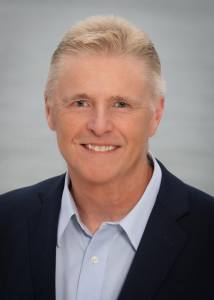
 Marcus Conyers
We stand at an exceptional point in education. New findings from education, psychology, and brain research on how people learn as well as large-scale studies of the impact of effective teaching practices provide powerful insights for schooling. School systems have a tremendous opportunity to align instruction with current findings and, in so doing, to guide virtually all students to be college and career-ready. The traditional model of teachers working in isolation is unlikely to be very effective in these times when significant change in teaching practice is needed. What is needed today is for administrators to support teachers to work together in a process we call purposeful collaboration. Over the last 17 years, we have facilitated such an approach and share some ideas for implementation based on our work with thousands of educators.
Capitalizing on Educators’ Combined Sea of Strengths
We call the combined knowledge and experience educators bring together collectively a powerful sea of strengths. For example, when administrators support teachers by creating formal and informal opportunities for collaborative work, teachers can tap into their collective expertise in terms of their knowledge of students, content, and instructional strategies. Everyone has much to contribute based on their experiences — and much to gain in learning from the suggestions of others. Here are some practical strategies for purposeful collaboration so that students reach higher levels of achievement.
Strategies for Purposeful Collaboration
• Step 1: Identify a common purpose. Establish your purpose for collaborating together. For example, teachers might benefit from working together to support each other to increase student achievement.
• Step 2: Set performance goals. Having set a common purpose for collaboration, it is important to set specific performance goals. In the above example, with the purpose for collaborating being to increase student achievement, a performance goal might be to create more effective lessons.
• Step 3: Bring together team members with complementary skills. It is important to bring together groups of individuals with a common purpose who have complementary skills. In our example, with the goal of creating more successful lessons, teachers might meet in job-alike groups such as grade-level or content-specific teams. Team membership could consist of individuals who have different strengths and weaknesses in terms of their lessons. For instance, if an individual has successfully taught a particular lesson and someone needs assistance with that lesson, the former teacher can share what has worked well with the teacher who needs support. Ideally, each person would have developed complementary skills that can support someone in the group who requests assistance in that area. Individual teachers can be the champions of a particular successful teaching strategy, mastering key content, or reaching and lifting a student who finds class particularly challenging. Purposeful collaboration means that every teacher can shine among their colleagues when they share successes and be supported by the group when they need it.
• Step 4: Work together in small groups. Working in small teams often helps to get the job done most efficiently. There are many ways to contribute in small groups such as sharing ideas for teaching a lesson based on a prior success, asking for suggestions if a particular lesson was not as successful as you wish, offering support, or just listening to a colleague. Look for ways to use your initiative to enhance teamwork.
• Step 5: Learn to listen and ask. As in all forms of community, empathy and compromise are valuable skills for educators to develop as they work together to optimize student learning. Continue to cultivate the delicate art of listening carefully to the frustrations and questions shared by colleagues.
• Step 6: Celebrate working together. Purposeful collaboration with the goal of generating measurable gains in student learning can lead to opportunities for celebrating small wins as student performance improves as a result of interventions. This can support a virtuous circle of ongoing improvement.
As educators work together for positive change in their schools and districts, the challenge can bring out each person’s best and help to break down the walls of isolation while building important professional and social capital in their place. For more on the ideas described in this article, check out Smarter Teacher Leadership: Neuroscience and the Power of Purposeful Collaboration (Teachers College Press, 2016)
Subscribe to edCircuit to stay up to date on all of our shows, podcasts, news, and thought leadership articles.