 EdCircuit Staff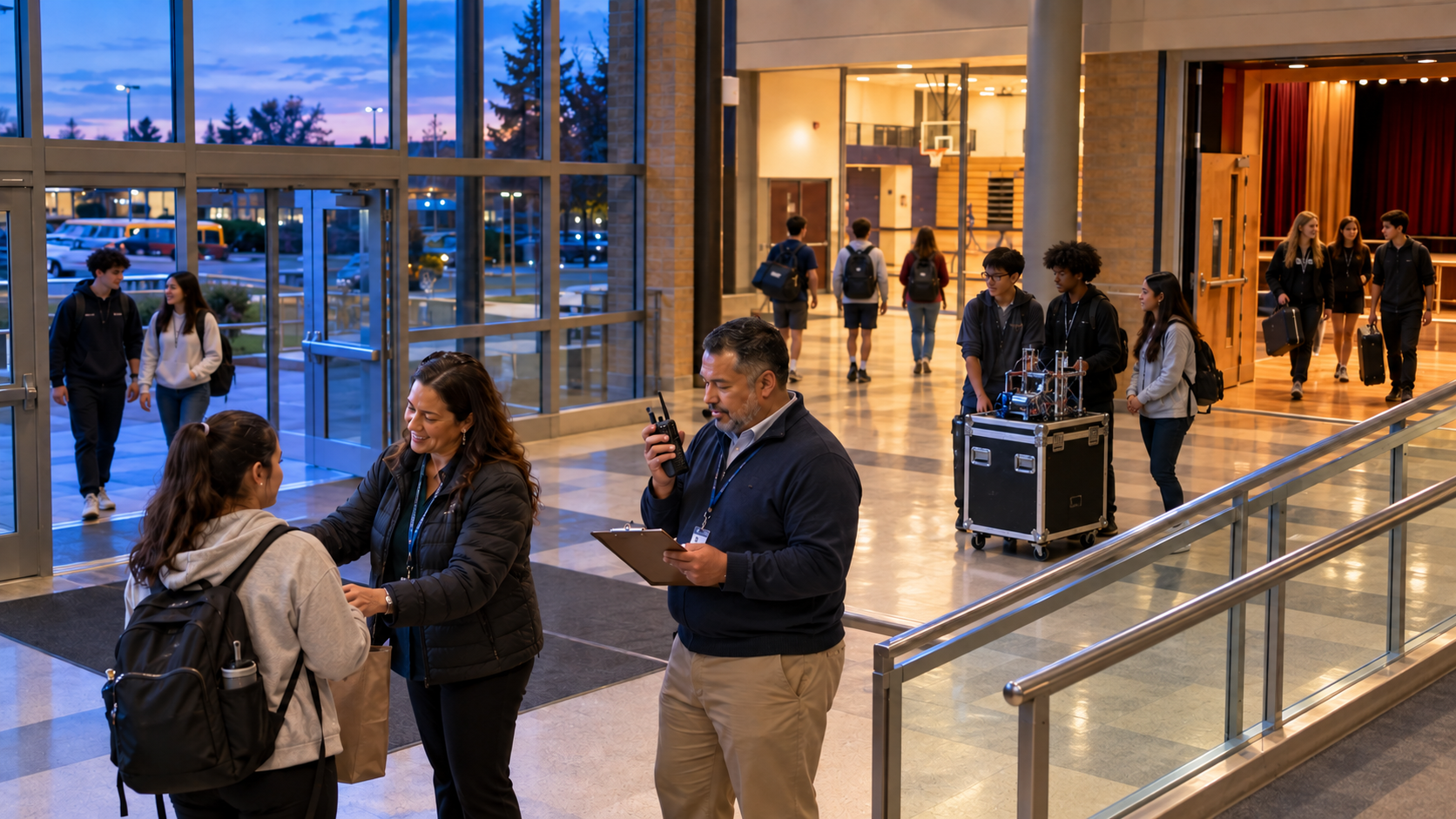
After-hours school safety begins with a basic question: Who is in charge when the regular school day ends but students remain?
During the school day, most buildings operate within a familiar structure. Administrators and support personnel are available, the main office is staffed, and teachers generally know where to find help.
By early evening, much of that structure may be gone.
A basketball practice is underway in the gym. The robotics team is working in a lab. Students are rehearsing in the auditorium, while tutoring continues in another part of the building. Then the power goes out.
The outage is only part of the problem. Do the adults who remain know who has authority? Can they account for every student? Which entrances are open? How will they communicate if the usual systems are unavailable?
That is the focus of the latest episode of the Safer Ed Podcast, “After the Final Bell: Who Is Responsible When School Stays Open?” The episode examines a reality that can be easy to overlook: The final bell changes staffing, but it does not end the school’s duty of care.
After Hours Is a Different Operating Condition
After-school programs are often treated as extensions of the regular day. Yet many of the systems supporting the school day are no longer fully available.
The principal may have left, the nurse’s office may be closed, and only part of the building may be occupied. Programs may operate independently while personal phones replace school communication systems and emergency supplies remain secured elsewhere.
After-hours safety is not the regular school-day plan with fewer people. It is a different operating condition that needs a practical plan of its own.
Identify Who Has Authority
Every activity needs an adult responsible for its students. The campus also needs someone with authority to coordinate a building-wide response when several programs are taking place at once.
Those roles are not interchangeable. A coach can supervise a team, and a theater director can manage a rehearsal. But if a fire alarm activates, severe weather approaches, or the building loses power, someone must be ready to make decisions for the campus.
Before activities begin, adults should know:
Who is serving as the after-hours site leader
Who takes over if that person is unavailable
Who can delay dismissal, relocate groups, evacuate the building, or contact emergency services
How directions will reach every occupied area
“Everyone is responsible” may sound collaborative, but it does not establish authority. When something changes quickly, unclear leadership creates delay.
Account for Who Remains—and How They Leave
After the final bell, the school population changes constantly. Some students leave immediately. Others report to practices, tutoring, rehearsals, clubs, or detention. They may move between programs, leave early, or wait for transportation after an activity ends.
Each program needs an accurate roster. The campus also needs a reliable way to determine which groups are still present and where they are located.
A head count can show that a number is wrong. An updated roster identifies who is missing. That distinction matters when a student changes activities or leaves with an authorized adult.
Dismissal deserves the same attention as arrival. Students may leave with parents, board an activity bus, drive themselves, walk home, or wait for a late ride. When plans change, staff need to know who can approve the change, how the receiving adult will be identified, and where the release will be documented.
Responsibility does not transfer because someone assumes a student has gone home. It transfers when the handoff is communicated and confirmed.
Reconsider Building Access and Communication
A locked building is not automatically a secure building.
After hours, doors may be propped open for families or performers, students may wait near side entrances, and community groups may share the campus. An entrance that is convenient for one program can create an accountability problem for everyone else.
The after-hours plan should identify which entrances will be used, who will monitor them, how visitors will be directed, and what happens when a student needs to reenter the building.
Staff members also need to know whether announcements reach every occupied space and what backup is available when the intercom is not.
Personal cell phones may be part of that plan, but they should not be the entire plan. Batteries die. Reception varies. During an emergency, the person with the contact list may already be helping a student.
What matters is having a dependable way for activity leaders, the site leader, families, and emergency responders to exchange accurate information.
Plan for Medical and Individual Needs
Students do not leave their medical, mobility, sensory, communication, or behavioral needs behind when the school day ends.
The people and resources supporting those needs, however, may be different. The nurse may not be present. Medication or emergency equipment may be stored elsewhere. A substitute coach or volunteer may not know a student’s established response plan.
Information must remain protected and limited to those who need it. At the same time, the adult responsible for a student must know how to access authorized medication or emergency supplies, contact help, and follow the appropriate plan.
Accessibility also includes evacuation routes, restrooms, transportation, communication, and reunification. Those needs must be considered before the activity begins—not improvised during an emergency.
Keep the Plan Short Enough to Use
The difference between confusion and coordination is rarely a larger binder.
A one-page after-hours safety sheet can be more useful than a lengthy plan no one can locate. It could include:
The site leader, backup, and emergency contacts
Active programs, locations, adult leaders, and current rosters
Building entrances and occupied areas
Primary and backup communication methods
Medical, accessibility, evacuation, and reunification information
Adults also need a short, direct orientation. Who is in charge? How do they call for help? Where should their group go? What happens if the normal dismissal or transportation plan changes?
The plan can then be tested through brief tabletop discussions. Consider a power outage, severe weather, an unclaimed student, or a site leader who suddenly has to leave. Brief discussions can expose gaps before an emergency.
The Final Bell Does Not End Responsibility
After-school activities give students opportunities to build skills, relationships, confidence, and belonging. Thoughtful safety planning protects those experiences without making them feel restrictive.
The central lesson is simple: The final bell changes who is in the building. It does not change the responsibility to protect the students who remain.
Before the next practice, meeting, rehearsal, or event, school leaders should ask whether every student can be accounted for, every adult knows who is in charge, and every occupied area can reach help.
Those answers reveal whether after-hours safety is part of the school’s working system—or merely an assumption.
Safer Ed is sponsored by Science Safety and produced in partnership with edCircuit.
To learn more about how duty of care follows students across school settings, explore the free Duty of Care learning module from Science Safety.
Subscribe to edCircuit to stay up to date on all of our shows, podcasts, news, and thought leadership articles.