 EdCircuit Staff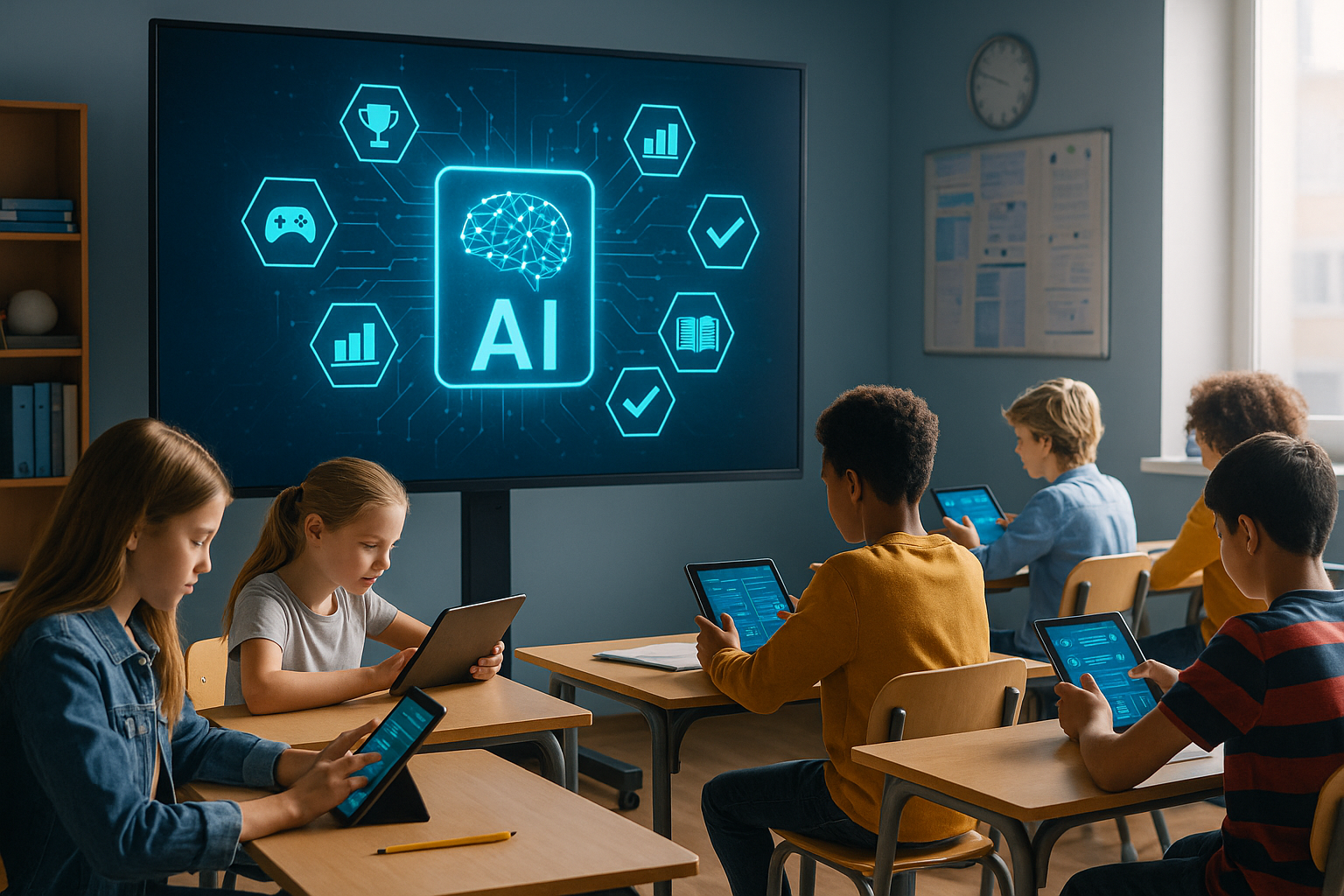
Table of Contents
AI and gamification are reshaping how students learn, how teachers teach, and how schools think about success. For educators and district leaders, these tools offer something that traditional instruction has struggled to provide: consistent engagement, real-time personalization, and learning paths that adapt to every student’s needs. When AI analyzes performance and gamification adds motivation, students experience lessons that feel accessible, challenging, and meaningful.
AI and Gamification Work Together to Boost Achievement
Schools are discovering that this combination does more than make learning fun. It increases confidence, strengthens problem-solving skills, and helps students move through content at the pace that matches their readiness. For teachers, it offers clearer data, deeper insight, and more time to focus on human connection. For students, it creates a learning environment that feels supportive and energizing rather than passive or overwhelming.
This shift is not about technology for its own sake. It is about helping students succeed through smarter tools, sharper feedback, and a learning experience built for today’s classrooms.
How AI Personalizes Learning
AI reshapes instruction by responding in real time to each student. Every click, answer, hesitation, or success gives the AI information that adjusts the learning path automatically.
Personalized learning paths
AI examines performance patterns and adapts the difficulty, pacing, and type of content each student receives. Struggling students get scaffolded support. Advanced students move ahead without waiting.
Real-time feedback
Students no longer wait for papers to be graded. AI tools show errors immediately and offer clear explanations, which helps them correct misunderstandings before they take root.
Adaptive challenges
AI keeps students in a “flow state.” Lessons are not too easy and not too overwhelming. By adjusting challenge levels in real time, AI helps maintain steady progress and reduces frustration.
Intelligent tutors
AI tutors work like digital study partners, offering step-by-step clarification and detailed reasoning. They help students stay focused and engaged during independent work.
Gamification Makes Learning More Engaging
Game elements turn learning into active participation instead of passive completion. When used well, gamification builds persistence, increases motivation, and helps students take ownership of their progress.
Points and badges
Small achievements provide quick motivation and help students see visible progress from day to day.
Leaderboards and community goals
Friendly competition encourages students to push themselves while promoting teamwork and shared goals.
Story-driven challenges
Many platforms introduce narrative elements that help students stay connected to the learning experience.
High engagement
Gamification encourages consistent practice, which is essential for mastery, particularly in foundational subjects.
Examples of AI and Gamification in Action
Duolingo
Duolingo uses AI to tailor lessons based on skill level, mistakes, and learning patterns. Gamification elements like streaks, hearts, and rewards keep users motivated.
Prodigy Math
Prodigy blends math practice with a role-playing adventure. AI adjusts math problems in real time so each student receives challenges that match their ability.
Kahoot! AI
Kahoot’s AI generates questions based on lesson content and student needs, saving teachers time and giving students targeted practice.
Intelligent tutoring systems
Modern AI tutors provide step-by-step guidance and instant feedback, making independent study more efficient and more effective.
How Alpha School Uses AI and Gamification
Alpha School is often held up as a clear example of what happens when AI and gamification are embedded into the foundations of learning, not added on as extras. Their model blends adaptive technology with student-centered design, creating a learning environment where motivation and mastery support one another. Instead of relying on one program, Alpha uses a complete ecosystem of AI tools that analyze performance, track strengths, and personalize pacing.
Students approach learning the way athletes approach training. They set goals, receive immediate feedback, and celebrate personal bests. AI systems identify areas where a student needs reinforcement, then provide targeted challenges that strengthen weak skills without overwhelming them. Gamified elements, such as progress points and level-based achievements, reinforce steady growth and make improvement feel tangible.
Teachers remain central to the process. AI gives them real-time data they can use to lead small groups, personalize instruction, or intervene early when a student needs support. Students learn to track their own progress and recognize how effort connects to growth. This combined approach shows what is possible when technology and strong pedagogy work together to transform daily learning.
Benefits for Schools and Students
Student Engagement and Motivation
AI and gamification replace passive learning with interactive experiences that keep students interested. Engagement rises because challenges feel achievable and progress feels visible. Increased motivation leads to better participation and stronger overall performance.
More Consistent Practice and Skill Development
Game-like rewards encourage students to return to practice on their own. AI provides targeted questions that reinforce exactly what each student needs most. With repeated, personalized practice, skills become stronger and more automatic.
Faster Correction and Real-Time Learning Adjustments
Immediate feedback helps students fix mistakes before they become habits. This reduces frustration and encourages students to try again. Teachers also gain insight into common misconceptions and can adjust instruction faster.
Improved Problem-Solving Abilities
Gamified environments often include puzzles or strategic challenges that help students develop critical thinking. AI supports this process by offering hints or scaffolds without giving away the answer. Over time, students build resilience and confidence in complex tasks.
Greater Equity Through Personalized Pacing
AI platforms adjust to each learner’s pace, ensuring every student can grow, whether they need extra time or additional challenge. This reduces achievement gaps and ensures all students receive the right level of support. Personalized pacing also reduces the stigma students may feel when they fall behind.
Teacher Support and Instructional Efficiency
AI tools reduce grading time and give teachers detailed data on how students are performing. This allows educators to focus more on small groups, relationship building, and targeted interventions. Teachers can support more students effectively because AI handles routine tasks and analysis.
Considerations and Challenges
Teacher Training and Professional Learning
Tools are only as effective as the teachers who use them. Districts need to provide ongoing training so educators feel confident integrating AI and gamification into instruction. When teachers understand both the tools and the pedagogy behind them, implementation becomes more impactful.
Data Privacy and Security
AI systems rely on student data, so schools must ensure the platforms they use are secure and compliant with privacy laws. Families need clarity on how data is stored and used. Strong privacy practices help maintain trust and transparency.
Equity and Access
Not all students have equal access to reliable devices or Wi-Fi at home. Schools must provide equitable access to ensure no student is left behind. When districts plan carefully, technology becomes a tool for equity rather than a barrier.
The Risk of Over-Gamification
If gamification becomes more important than the academic goal, students may focus on rewards instead of learning. Schools must design gamified lessons that reinforce learning rather than distract from it. Balance is essential.
Tech Fatigue and Balance
Students need a mix of on-screen and off-screen learning. Too much tech can reduce attention and motivation. Teachers play a key role in blending digital tools with discussion, hands-on activities, and real-world applications.
A Clear Path Forward
AI and gamification are not trends. They are tools that help schools create learning environments where students feel excited to grow, confident in their progress, and supported at every step. When districts pair strong teaching with adaptive technology and engaging design, students gain the skills and motivation they need to succeed in a fast-changing world. The future of learning is not about replacing educators. It is about giving them the power to reach every learner with precision, creativity, and heart. Schools that embrace this shift are not just improving instruction. They are building a foundation for long-term student success.

Subscribe to edCircuit to stay up to date on all of our shows, podcasts, news, and thought leadership articles.