 EdCircuit Staff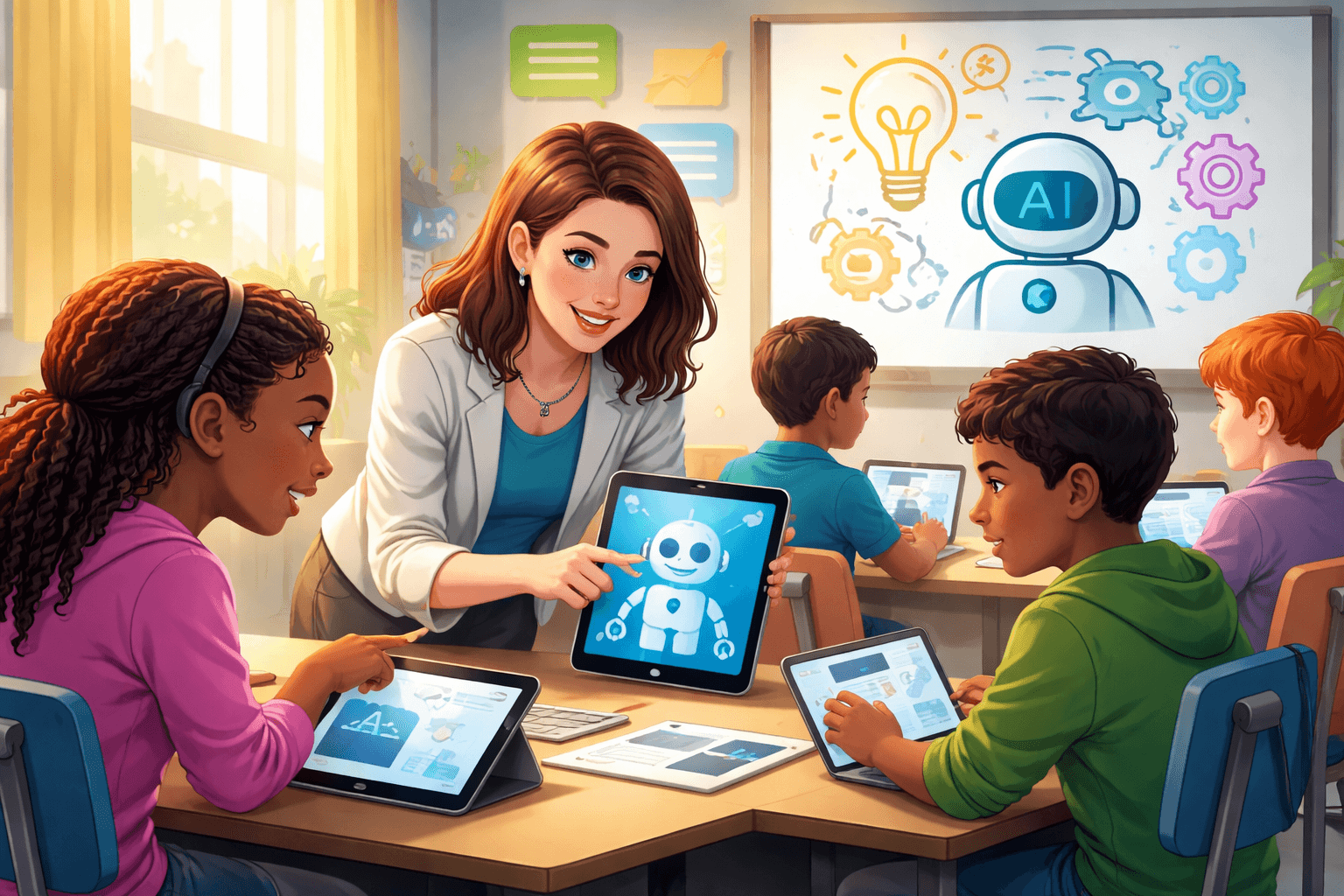
Table of Contents
AI in the classroom is no longer a future concept—it is a present reality. Students encounter AI-powered tools through search engines, writing platforms, study aids, and creative software long before schools formally introduce them. For many students, the classroom becomes their first guided experience with artificial intelligence. That reality places teachers in a pivotal role—not as gatekeepers or enforcers, but as mentors who shape how AI is understood, used, and trusted.
AI can assist teachers in meaningful ways, from lesson design to differentiated support. But it cannot—and should not—replace the professional judgment, relationships, and instructional expertise that define effective teaching. When used intentionally, AI becomes a support system rather than a substitute. The difference lies in how educators frame it, model it, and integrate it into everyday learning.
AI as a Teaching Assistant, Not a Replacement
One of the most important messages teachers can communicate is straightforward: AI is a tool, not a teacher. It can generate ideas, rephrase explanations, or organize information—but it cannot understand context, emotion, or student growth in the way an educator can.
Teachers remain responsible for interpreting student needs, making instructional decisions, evaluating learning with nuance, and building classroom culture. AI may accelerate certain tasks, but it cannot replicate professional judgment or human connection.
When educators position AI alongside familiar tools—such as calculators, spell-checkers, or reference materials—students learn to see it as one input among many, not an authority or shortcut. This framing is especially important for students encountering AI for the first time, who may otherwise assume AI-generated responses are always accurate or complete.
How AI Can Assist Teachers Day to Day
For many educators, AI’s greatest value lies in reducing time spent on repetitive or administrative work, allowing more focus on instruction, feedback, and relationships.
Lesson Planning Support
AI can help brainstorm lesson outlines, generate discussion questions, or suggest alternative explanations for challenging concepts. Teachers remain the editors, selecting what aligns with standards, students, and instructional goals.
Differentiation and Accessibility
Teachers can use AI to adjust reading levels, reword instructions, or provide multiple examples for diverse learners. This supports accessibility without requiring educators to recreate materials from scratch.
Formative Assessment and Feedback
AI can assist in drafting rubrics, suggesting feedback language, or identifying trends in student responses. The teacher still evaluates learning and determines next steps.
Time Management and Communication
From organizing instructional materials to drafting family communication, AI can reduce behind-the-scenes workload that often contributes to burnout.
In every case, AI supports professional expertise rather than replacing it.
Teachers as the First Model of Responsible AI Use
For many students, the classroom is the first place they are shown how to use AI responsibly. That makes teachers the most influential voice in shaping AI habits—not warning banners, filters, or detection tools.
When educators model responsible AI use, they demonstrate how to write thoughtful prompts, evaluate AI-generated responses, identify errors or missing context, and treat AI output as a draft rather than a finished product.
For example, a teacher might show students an AI-generated explanation and then walk through how they revised it—correcting inaccuracies, improving clarity, and aligning it to learning goals. That moment reinforces critical thinking while making AI use transparent and intentional.
Teaching Students to Think With AI, Not Around It
A productive shift in classrooms is moving from “Can students use AI?” to “How should students think alongside AI?”
Teachers can guide students to ask better questions instead of copying answers, compare AI output with trusted sources, identify bias or oversimplification, and reflect on how AI influenced their thinking.
These practices align naturally with instructional goals such as analysis, evaluation, and metacognition. AI becomes a tool for deeper learning—not a shortcut around it.
Framing AI use as a literacy skill also helps. Just as students learn how to research, cite sources, and evaluate online information, they must learn how to interpret and contextualize AI-generated content.
Why Districts Still Need an AI Handbook
While classroom practice should not feel like a policy exercise, clarity matters. Teachers benefit when districts provide an AI handbook that outlines shared expectations, definitions, and guardrails.
A well-designed AI handbook supports educators by clarifying acceptable classroom use, establishing consistent language across grade levels, reducing uncertainty, and reinforcing responsible use without fear-based messaging.
This guidance is not about restriction—it is about alignment. When districts provide clear reference points, teachers can focus on instruction rather than interpretation.
Addressing Common Teacher Concerns
Concerns about originality, overreliance, or academic integrity are valid. But avoidance rarely prepares students for the reality they already face.
Teachers who address AI openly can design assignments that emphasize process and reflection, ask students to explain how they used AI, require revisions that demonstrate understanding, and use discussion to unpack the strengths and limitations of AI-generated work.
These approaches reinforce learning while acknowledging that AI is already part of students’ lives.
Keeping Humans at the Center of Learning
Teaching is inherently relational. AI cannot replace encouragement, curiosity, empathy, or mentorship. It cannot read the room, build trust, or respond to a student’s emotional needs.
When teachers lead AI integration thoughtfully, they send a powerful message: technology exists to support human learning—not replace it.
Students don’t just learn with AI in these classrooms. They learn how to use it responsibly, ethically, and reflectively—skills that extend far beyond school.
A Positive Path Forward
AI in the classroom does not diminish the role of educators—it elevates it. Teachers are the guides who help students navigate powerful tools with care, context, and purpose.
When used intentionally, AI enhances instruction, supports teachers, and prepares students for a future where critical thinking matters more than automation. The most effective classrooms will not be driven by algorithms, but by educators who ensure that humanity, judgment, and learning always come first.
Subscribe to edCircuit to stay up to date on all of our shows, podcasts, news, and thought leadership articles.