
 EdCircuit Staff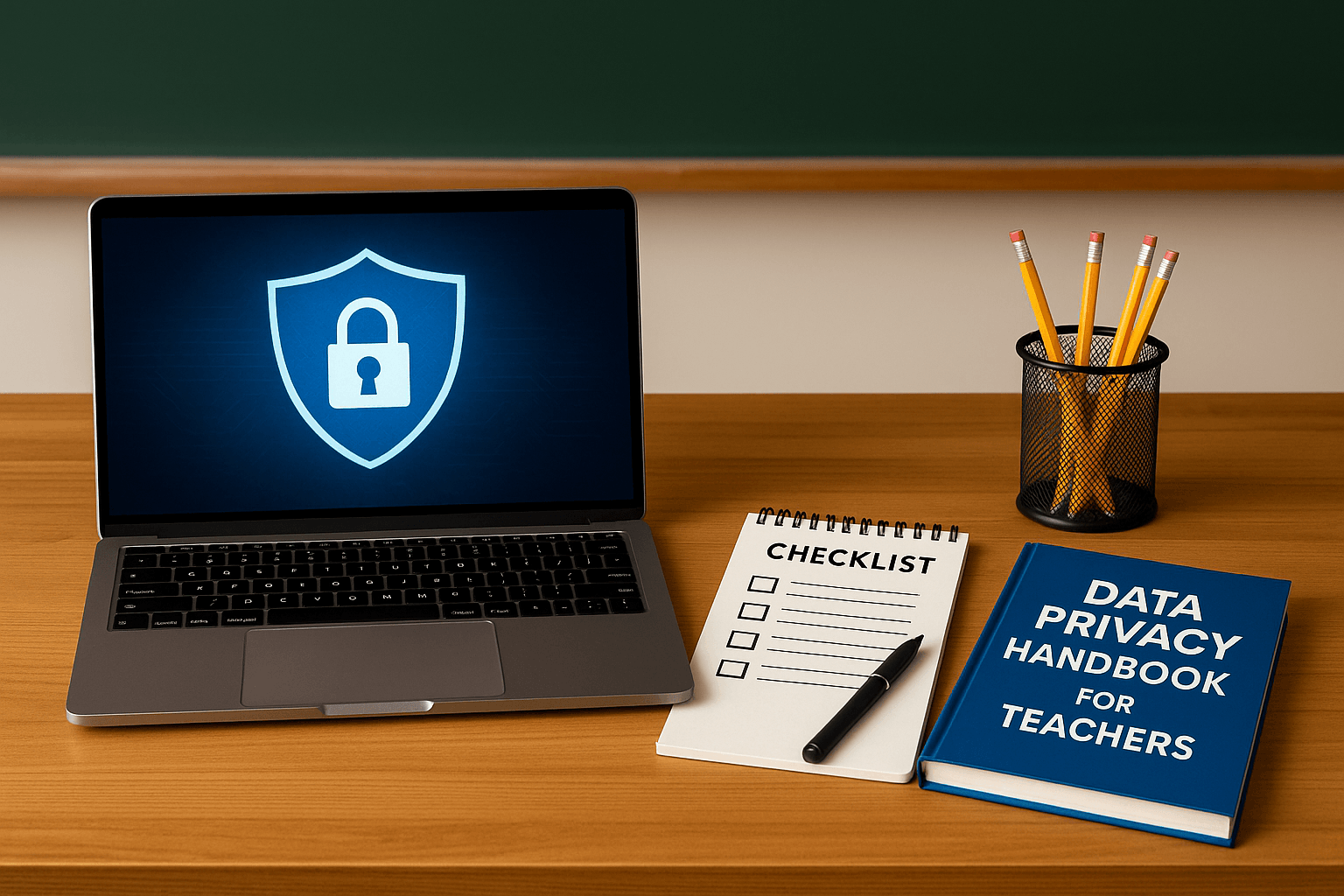
Table of Contents
Data Privacy in Schools is often talked about at the district office or in IT meetings, but the truth is simpler and more urgent. Teachers are the first gatekeepers of student information, and no data privacy plan works unless the people in classrooms understand how to protect the data they use every day. District policies matter. IT safeguards matter. Still, none of it prevents a breach if the people handling student information hour by hour don’t have the training, the clarity, and the support to do it well.
Over the past decade, schools have adopted more digital tools, more cloud platforms, and more data-driven instruction. This growth brought real benefits, but it also opened the door to real risk. The PowerSchool data privacy incident last year was a sharp reminder of how quickly student information can be exposed. Even though that event happened upstream from teachers, it sent shockwaves through classrooms because it highlighted a hard truth. A single weak point anywhere in the chain can compromise sensitive information for thousands of families.
That is why every school and district, no matter its size, needs a clear and practical data privacy handbook written specifically for teachers. And teachers need to understand that they are not passive users of technology. They are the frontline defense that protects students from avoidable harm.
Why Teacher-Level Data Privacy Matters
Teachers work with the most sensitive information in real time. Grades, attendance, behavioral notes, health restrictions, parent communications, student documents, reading assessments, IEPs. This is not abstract data stored on a server somewhere. It is information teachers see, touch, share, and store every single day.
Yet many teachers assume data privacy is “handled by IT.” They may think that if the district has strong firewalls, encryption, and vendor contracts, their own choices in the classroom matter less. But breaches rarely start with a firewall. They usually start with something small. A shared password. An unapproved app. A student list posted online. A document emailed to the wrong person. A laptop left unattended. A personal device used for school work. These moments seem harmless until they aren’t.
When teachers understand that their daily habits form the foundation of the school’s entire privacy posture, their behavior shifts. They slow down. They think before clicking. They ask questions. They become a protective layer no software can replace.
The Lesson From Recent Data Incidents
The PowerSchool incident showed how one vulnerability can ripple outward and affect districts everywhere. It also showed how families hold schools accountable for any breach involving their children. Even if the issue originates with a vendor, parents turn to teachers asking what happened. Teachers then face tough questions without having any guidance for how to explain what data schools hold, how it is used, and what the school is doing to protect it.
A teacher privacy handbook fills that gap. It explains the boundaries, the responsibilities, and the protections in terms teachers can use confidently. It sets a standard long before an incident occurs. Without that foundation, teachers are left with guesswork during the worst possible moment.
What a Teacher Data Privacy Handbook Should Include
A strong handbook does not overwhelm teachers with legal jargon. It gives them practical steps, real examples, and clear procedures. The most effective handbooks include the following sections.
1. What counts as student data
Not all teachers realize how much qualifies as protected information. A good handbook lists examples: academic records, identifiers like student ID numbers, attendance histories, IEP or 504 information, medical notes, family details, behavioral records, and even metadata generated by digital tools.
2. Approved tools and platforms
Teachers need to know which apps, websites, and services are cleared for classroom use. This prevents the common mistake of introducing a new platform without district approval, which can expose student information to unvetted vendors.
3. Password and access guidelines
Simple steps such as unique passwords, multi-factor authentication, and storing login details securely reduce risk dramatically. The handbook should outline the minimum expectations and the consequences of ignoring them.
4. Handling and sharing student information
Teachers should know exactly when they can share data, with whom, and through what channels. This includes email etiquette, parent communication protocols, and rules around sharing documents with colleagues.
5. Device and classroom management
Unattended laptops, unlocked screens, and shared classroom devices all create vulnerabilities. A good handbook outlines procedures for securing devices, especially during passing periods or after school.
6. Reporting a data concern
Teachers need a simple path for reporting suspicious activity or accidental exposure. They should never fear consequences for raising a concern early. Early reporting is how problems get contained.
7. Scenarios and examples
Story-based examples make the guidelines real. A scenario might show a teacher accidentally emailing a spreadsheet to the wrong parent or using an unapproved quiz app. The handbook then walks through best practice solutions. These examples stay with teachers longer than any policy list.
Training Teachers to See Themselves as Protectors
A handbook is a starting point. The real shift happens through training. Teachers benefit from sessions that show how data privacy connects to the work they already do, not separate from it. Training should feel practical, not punitive. It should treat teachers as partners, not compliance hurdles.
Strong training includes live demonstrations of common mistakes, breakdowns of recent incidents, practice with secure communication tools, and time for teachers to ask questions without judgment. When teachers understand the “why” behind the rules, they follow them with purpose.
Training should happen every year, not only when a breach occurs. Technology changes. Threats evolve. New staff join. Annual refreshers keep everyone aligned and confident.
Why This Matters For School Culture
When teachers see themselves as data stewards, the entire culture shifts toward protection. Students learn safer digital habits because their teachers model them. Staff begin to think before posting photos online. Parents feel more informed and more trusting. District leaders sleep better knowing the people closest to student data understand how to protect it.
The alternative is a culture where privacy is assumed to be someone else’s job. That mindset leaves schools exposed. It creates confusion during an incident and prevents proactive improvement. A handbook and training program eliminate that confusion by defining roles clearly.
A Teacher-Centered Approach to Privacy
Data privacy in schools is not just a technical issue. It is a human issue built on everyday decisions. Teachers control more touchpoints with student data than any other group in a district. They are the first line of defense, and with the right guidance, they can be the strongest one.
A clear, teacher-focused data privacy handbook is not optional anymore. It is essential. It protects students. It supports staff. It strengthens district systems. And it ensures that when the next data incident hits the news, teachers feel prepared instead of caught in the dark.
Subscribe to edCircuit to stay up to date on all of our shows, podcasts, news, and thought leadership articles.