

Schools have always been at the heart of their communities: places where people connect, celebrate, find support and come together around a shared goal of helping children succeed. But somewhere along the way, many schools began equating communication with connection.
We became very good at sending information. Today, we can see who received a message, who opened it and when they read it, and while those capabilities are useful, they represent only the first step. A parent opening a message does not necessarily mean that parent feels connected to the school.
You don’t build community by sending more messages. You build community by starting more conversations. That distinction matters because when communication is primarily one-way, families can remain spectators. When schools create opportunities for families to ask questions, share concerns, celebrate successes and initiate conversations themselves, they begin to become partners.
For school and district leaders who want to make that shift, I believe there are four places to start.
1. Make communication easier, not more complicated
Technology should remove friction, not create it.
I was a principal in the early 2000s at a bilingual school, and I sent a lot of physical letters home. Even then, I couldn’t be certain parents received them or understood them. Technology has solved many of those problems, but in some cases, it has created new ones.
Families may now have to navigate multiple systems, remember different passwords or figure out which platform contains which information, while teachers face the same overload. Start by looking at family communication from the user’s perspective. How many places must a parent check to understand what is happening at school? How many steps does it take to contact a teacher? How many systems are teachers expected to update?
Then look for opportunities to simplify. The goal should be intuitive communication that fits naturally into people’s lives. At ClassDojo, we think about this constantly because reducing those barriers makes it easier for teachers and families to move from simply exchanging information to having actual conversations.
2. Make two-way communication the expectation
Schools should also examine whether their communication systems are primarily designed to distribute information or encourage interaction. One simple question can reveal a lot: Can families easily start the conversation, or are we expecting them to wait for us?
Creating genuine two-way communication means giving parents clear opportunities to ask questions, respond to teachers and reach out when they need support. It also means ensuring educators understand that family-initiated communication is something to welcome, not manage.
District leaders can reinforce that expectation by looking beyond traditional measures such as messages sent and open rates. Pay attention to responses, family-initiated conversations and the types of interactions taking place. Those measures tell you much more about whether communication is becoming engagement.
3. Remove the barriers that keep families on the outside
Access remains an issue for some families, but the digital divide isn’t only about devices or connectivity. There can also be a language divide, a usability divide and, perhaps most importantly, a trust divide. If families don’t trust the school, giving them another communication tool won’t solve the problem.
Schools need to meet families where they are by communicating in the languages they use, considering how they access information and making participation as simple as possible. We also have to recognize that parents are overloaded; families don’t need one more complicated thing to manage, and every unnecessary step creates another opportunity for someone to disengage.
School leaders should regularly ask families what makes communication difficult. Their answers may reveal barriers that aren’t visible from inside the district office.
4. Build trust in the everyday moments
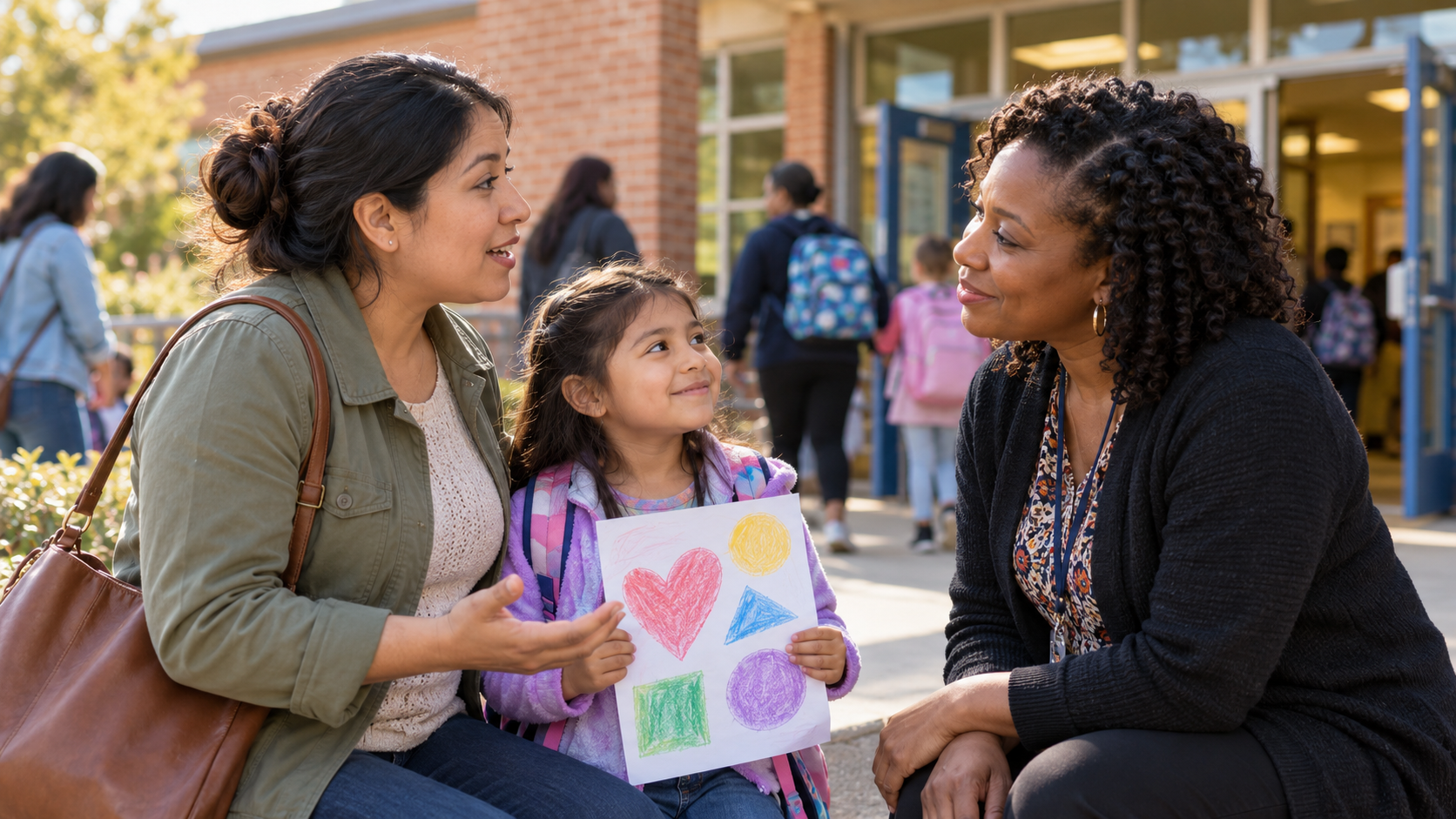
Trust isn’t created by one big event. Back-to-school night, family nights and school celebrations all matter, but community is built just as much on an ordinary Tuesday afternoon. It’s the principal stopping a student before they get on the bus and saying, “I saw what you did in science today. You did a great job, and I’m proud of you.” Or it’s seeing a parent in the pickup line and taking a few seconds to say, “Your child did something terrific today. Make sure you ask them about it.”
Those moments are powerful precisely because they are authentic rather than scripted or part of a communications campaign. They show families that the adults at school know and care about their children.
Technology can extend those moments beyond the school building. A quick message, photo or positive update can give families a window into their child’s day and create an opening for a conversation at home. That’s when technology is at its best: not when it replaces human connection, but when it helps create more of it.
Schools don’t need to communicate more for the sake of communicating more. They need to make it easier for families and educators to connect, respond and participate, because the measure of a strong school community isn’t how many messages we send. It’s how many meaningful conversations those messages help begin.
Subscribe to edCircuit to stay up to date on all of our shows, podcasts, news, and thought leadership articles.