Fighting the Darkness of Depression
A 2017 Imagine Cup project to help doctors monitor depression remotely, updated with research on depression apps and where students can find help.


Student apps for depression: a 2017 Imagine Cup entry, what research on depression apps shows, and its limits.
In 2017, Andrei Isac, a computer science student from Romania, and the other members of a student team reached the Imagine Cup finals with deTpression, a project meant to help doctors monitor depression remotely. The section below, added in 2026, looks at what the Imagine Cup entry was, what research says about student apps for depression and similar tools, and where students and schools should send someone who is struggling.
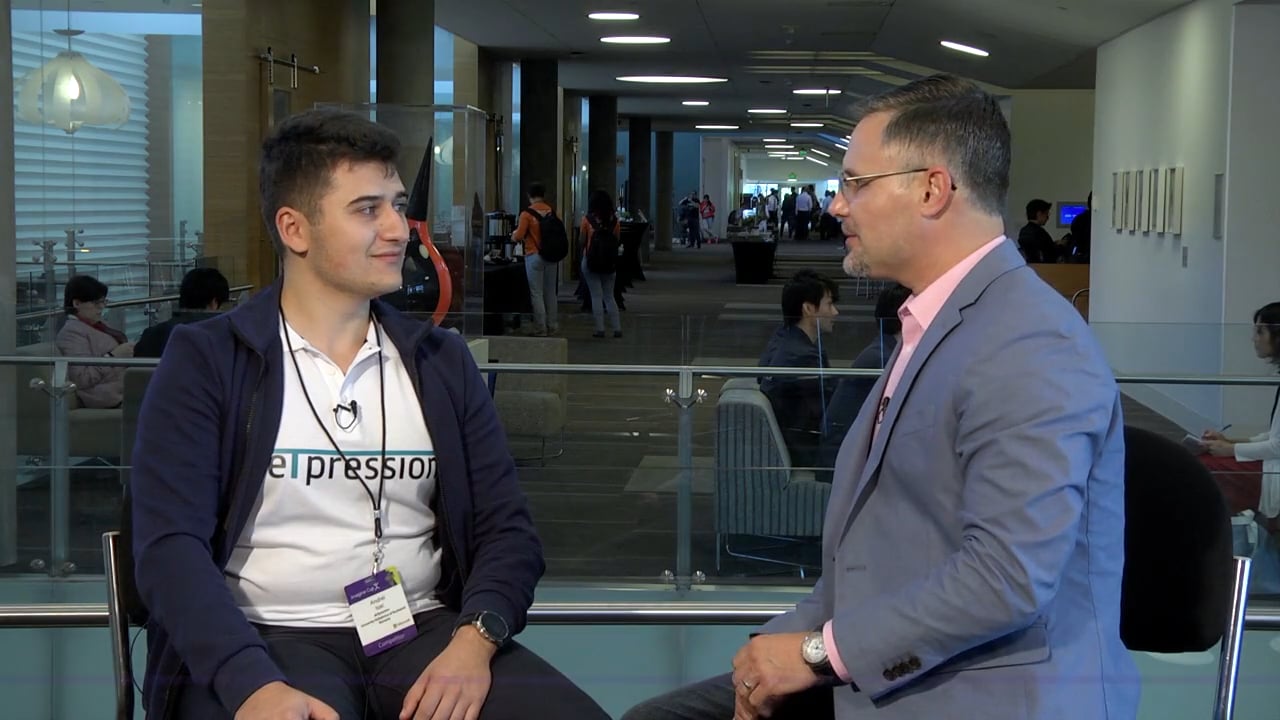
deTpression offers diagnosis and treatment for those who couldn’t afford it

Andrei is a Computer Science Student from Romania and believes that students in the field of technology have both an increased opportunity and a responsibility to do something to help others. According to Andrei, eighty percent of people that suffer from depression cannot afford treatment. DeTpression makes treatment more affordable by allowing doctors to observe and remotely recommend treatment.
This article was originally published in the Huffington Post
Student apps for depression: what an Imagine Cup project and the research show
Student apps for depression are a natural subject for a technology competition, and the 2017 entry described above is one example. Andrei Isac and the other team members were students at the Politehnica University of Bucharest. According to Microsoft’s announcement of the European finalists, the Imagine Cup that year drew more than 350,000 competitors from over 180 countries, 54 teams reached the World Finals in Seattle, and Romania’s entry was one of 17 from Europe. The team members named there are Vlad Niculescu, Andrei Isac and Alexandra Ciobîcă.
What the project actually was
The Microsoft announcement describes the entry, spelled “Detpression” there, as a cloud-based device for detecting and monitoring depression over time. Two algorithms analyze a person’s voice and facial movements. The hardware is a small box containing a Raspberry Pi, a battery, a camera and a microphone, meant to sit in the corner of a room, and a web interface lets medical professionals see what the system picks up. That makes it a monitoring tool for clinicians, and a different kind of product from the self-help smartphone apps that most research on depression apps studies. The announcement does not report how the finals turned out, and no result was found for this section.
What research says about depression apps
The largest review of smartphone mental health apps found so far is a 2024 meta-analysis in World Psychiatry by Linardon and colleagues, of 176 randomized controlled trials. Apps had a small but significant effect on depressive symptoms compared with control conditions (g = 0.28, number needed to treat 11.5). In plain terms, about one additional person improves for every eleven or twelve who use an app, compared with the control condition. The effects held across follow-up periods and after small or high-risk-of-bias trials were excluded.
Depression effects were larger for apps with cognitive behavioral therapy features or chatbot technology. The authors caution that these subgroup results are less certain, because most trials had a high risk of bias and small samples. These findings apply to self-help apps, so they do not tell us whether a camera-and-microphone monitoring device like the Imagine Cup entry helps patients.
Why the tools matter: the treatment gap
The World Health Organization’s depression fact sheet estimates that about 322 million people worldwide have depression, and that 5.2 percent of adults were affected in 2023. It says psychological treatments such as behavioural activation, cognitive behavioural therapy, interpersonal psychotherapy and problem-solving therapy are the first-line option, and that they can be reached through self-help manuals, websites and apps. It also reports that in high-income countries only about one third of people with depression receive treatment. Isac’s own statement in the article above, that eighty percent of people with depression cannot afford treatment, was not checked against a published source for this section; the WHO page gives no figure for low- and middle-income countries.
What students and schools can take from this
- A student project that touches on health is strongest when it is built with clinicians, as the Imagine Cup entry’s web interface for medical professionals suggests.
- Students who design tools that capture voice, faces or mood data should learn early how to protect that information, and teachers can make privacy part of the project assessment.
- Apps can be one of several supports, and they do not replace evaluation or treatment by a qualified health professional.
- A student who shows signs of depression should be connected with the school counselor, a family doctor or another qualified professional promptly, and not left to rely on an app.
Isac’s belief, as reported above, is that technology students have both an opportunity and a responsibility to help others. The research suggests that this is a reasonable aim, provided that student builders and schools are clear about what a tool has and has not been shown to do.
Further Reading
- Futurism – Scientists Don’t Understand the Connection Between Obesity and Depression
- Science Daily – Will ketamine treat your depression? Check your activity monitor
- ABC7 – Do smartphones lead to depression in kids?
Related reading
More on EdTech Entrepreneurs