

When districts implement science interventions for students, we talk a lot about meeting students where they are. The challenge is figuring out how to do that in a classroom where one student may need significant support, while another is ready to expand their learning well beyond the lesson in front of them.
That’s why I have come to think about effective science interventions as having a “low floor, high ceiling.”
A low floor doesn’t mean lowering expectations or watering down the content. It means scaffolding that content to make it more accessible to a student who needs an alternative entry point. A high ceiling means that same resource can keep challenging a different student who is ready to go further and expand their knowledge.
Finding that balance is difficult, especially when teachers are managing large classes, limited instructional time, and students with learning gaps across different standards. Technology can help educators tier instruction to meet every student exactly where they are, but the tool alone is only part of the equation.
Start with strong data to identify what students need
Effective science intervention begins with strong data.
In our district, teachers use common formative assessments and other data to identify where students are struggling. When we began using our new science intervention, one of the things that stood out to me was its ability to pair the data we already had with assessment data from the platform.
That matters because “intervention” doesn’t mean giving every student who struggled with an assessment the same extra lesson. One student may need additional scaffolding around a concept. Another may understand the content but struggle to interpret a graph or dataset.
And what about the students who demonstrate mastery on an assessment? These learners may already be ready for enrichment, so an extra lesson on what they already know could be holding them back from deepening their knowledge.
The more ways we can evaluate students’ understanding, the clearer the picture becomes of what they know, where they’re struggling and what they need next. That allows teachers to determine the appropriate next step and tier instruction to every student based on their level of mastery.
Multiple pathways to learning help every student learn
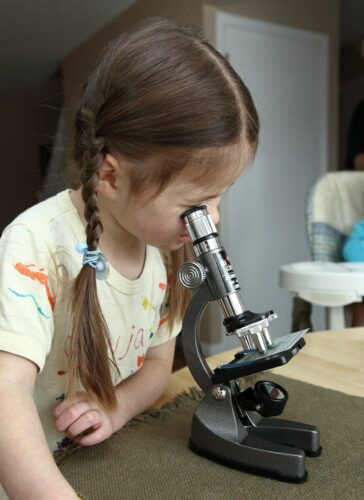
When students have learning gaps, our goal shouldn’t be to remove the complexity of science content. Instead, we need to give students different ways to access it.
Science lends itself particularly well to this because understanding can be developed through data, graphs, visuals, videos, simulations, and hands-on activities. It’s common for students to need to encounter the same idea in several different modalities before they truly understand the concept.
This is part of what makes the “low floor, high ceiling” approach so meaningful. We can adjust when a student needs more support with language translation and read-aloud tools while still providing opportunities to enrich upward when another student is ready.
Through this approach, learning science is accessible to everyone without requiring everyone to take the same pathway to get there.
Technology shouldn’t operate on autopilot
Teachers only have so much time and attention to divide across their classrooms, so an online platform that provides automated assignments, auto-grading and another way to assess and support individual students is incredibly valuable. However, even high-quality science intervention programs that offer automated assignments and engaging content are not meant to operate alone.
In my own district, the teachers who are consistently most successful with our science intervention platform are the ones helping drive the bus, rather than having their students simply click through activities.
This active teacher guidance looks different depending on the classroom. At one campus, teachers used the program during a dedicated intervention and extension period and focused students on specific areas of need. At the high school level, our biology teachers assigned digital activities for homework that they reviewed and applied to classroom learning the following day.
There is no single “right way” to leverage technology as a means for science intervention. However, the best implementations involve active teachers who know what their students need and find ways to connect online standards-based lessons back to the classroom instructional experience.
Effective interventions give teachers capacity
Teachers spend considerable amounts of time finding resources, designing activities, giving assessments, and making decisions about what comes next when students either demonstrate mastery of the content or need further support.
A high-quality, engaging intervention resource like Penda Learning can remove some of that burden and expand teachers’ capacity in the classroom. In our district, that is an important consideration whenever we implement a new program or initiative. We look for resources and tasks that not only give students different entry points and opportunities to extend their learning but also make the best possible use of teachers’ limited time.
Our science intervention program equips teachers to evaluate data and identify gaps, determine their next instructional move, and instantly access aligned content. This results in less time spent building intervention materials from scratch and more time available to respond to students’ instructional needs.
Subscribe to edCircuit to stay up to date on all of our shows, podcasts, news, and thought leadership articles.