
 EdCircuit Staff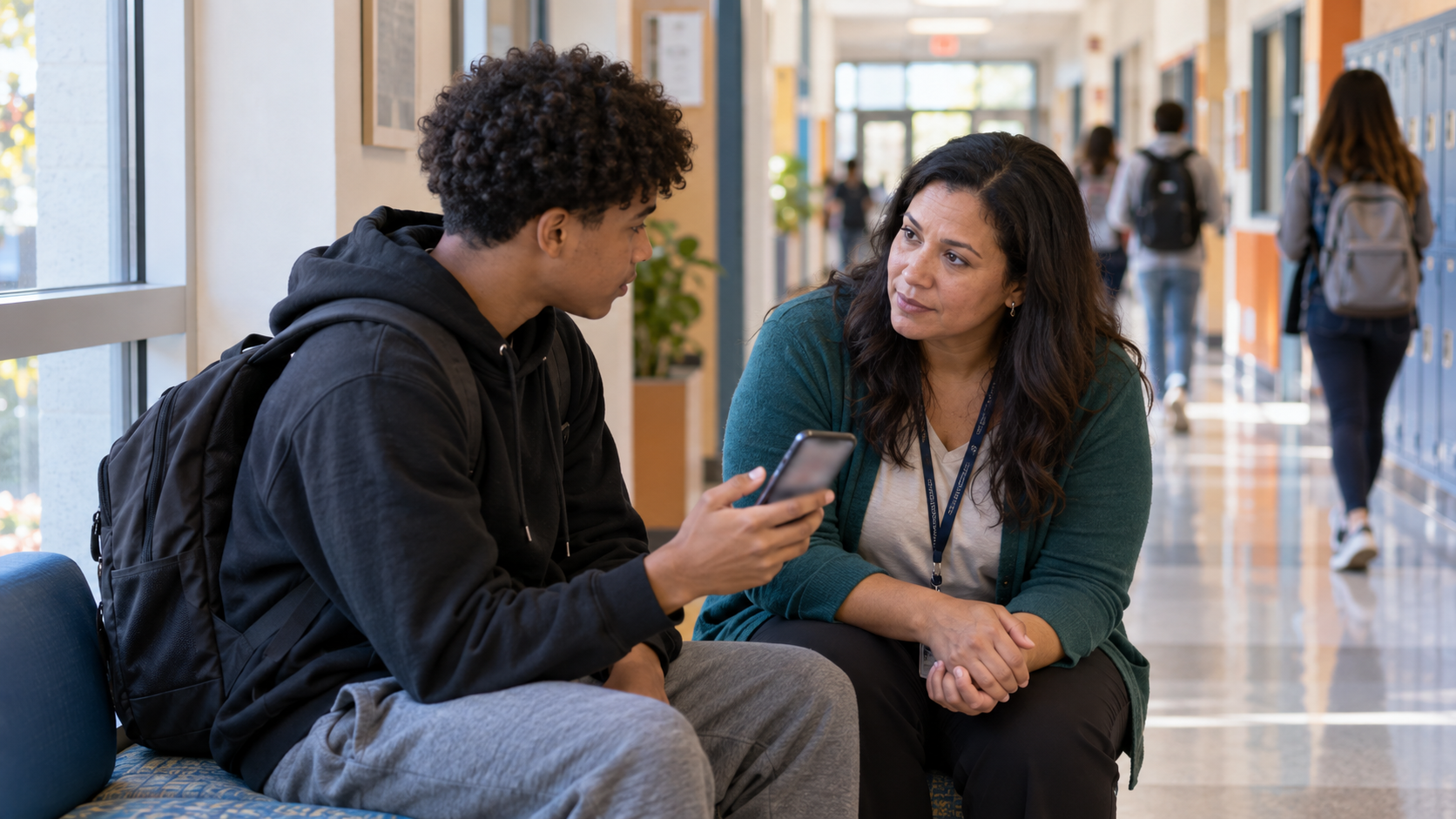
School threat assessment depends less on one person seeing everything than on a system that connects what different people see.
A teacher notices a troubling sentence in an assignment. A coach sees a sudden change in behavior. A student finds a disturbing social media post. A counselor knows the same student is dealing with a significant personal loss.
Each observation may seem incomplete. Together, they may reveal a student who needs support—or a situation requiring immediate attention.
The warning signs were not invisible. They were isolated.
That challenge is the focus of the latest episode of Safer Ed: how schools can recognize, report, and evaluate concerning behavior before a situation becomes a crisis.
Listen to the Episode
Safer Ed Season 4, Episode 2
Before a Crisis: How Schools Recognize and Respond to Concerning Behavior
Reporting Is Not an Accusation
One of the most important points raised in the episode is also one of the most easily misunderstood: reporting a concern does not mean declaring that someone is dangerous.
People often hesitate because they are uncertain about what they observed. Was the comment a joke? Was the student simply frustrated? Would sharing the concern damage a relationship or trigger an unnecessary disciplinary response?
Teachers, coaches, bus drivers, cafeteria employees, students, and families are not expected to answer those questions alone. Their responsibility is to share credible concerns through the school’s established reporting process.
A report gives a trained team the opportunity to gather information, understand the context, and determine whether support or intervention is needed.
If proof becomes the threshold for speaking up, meaningful information may remain hidden until a situation has already escalated.
Connect Context, Not Labels
As discussed in the podcast, behavioral threat assessment and management—commonly called BTAM—is not designed to predict which student will become violent. It is not a personality profile, disciplinary shortcut, or checklist for labeling students.
A student who writes about violence does not automatically pose a threat. Neither does a student experiencing anger, isolation, depression, conflict, or a sudden behavioral change. Even a threatening statement must be considered within the circumstances in which it occurred.
A trained team may examine what was communicated, whether a target was identified, whether behavior has escalated, and whether there are indications of planning or preparation. The team should also consider stressors, relationships, available support, and other factors that may affect the situation.
The U.S. Secret Service National Threat Assessment Center describes behavioral threat assessment as a multidisciplinary process grounded in observable behavior and reliable information—not stereotypes or assumptions.
That distinction protects school safety while helping ensure that students are treated fairly.
No One Should Evaluate a Serious Concern Alone
A central theme of the episode is the danger of isolated information. The same principle applies to decision-making.
No single employee should be expected to evaluate a serious concern alone. A multidisciplinary team may bring together school leadership, counselors, psychologists, educators, student-support personnel, special education professionals, and law enforcement or community partners when appropriate.
Each person sees a different part of the school environment.
An administrator may understand school operations and disciplinary history. A counselor may recognize support needs and protective factors. A teacher may have observed changes in classroom behavior. A coach or activity advisor may understand a conflict that others have not seen. A special education professional can provide important context about communication, disability-related needs, and existing services.
Bringing those perspectives together helps the team separate verified information from rumor and choose a response that fits the circumstances.
Build a Reporting System People Trust
Telling students and staff to “report concerns” is not a complete reporting system.
People should know what types of behavior or communication to report, where to send the information, whether anonymous or confidential options are available, and what to do when danger appears immediate.
Reporting options should extend beyond a single office or administrator. Concerns can emerge during transportation, athletic practices, field trips, evening activities, and weekends.
Students are especially important to this process. They often see messages, posts, videos, and group conversations that adults never encounter. They may recognize a change in a peer before it becomes visible in a classroom.
But students will only share what they know when they believe adults will listen and respond responsibly.
The federal K–12 Bystander Reporting Toolkit emphasizes awareness, accessibility, trust, appropriate follow-up, and protection against retaliation.
Trust is shaped by what happens after someone speaks up.
A rushed response such as “They were probably joking” can end the conversation before important details are shared. The receiving adult should listen carefully, document what was directly seen or heard, determine whether anyone appears to be in immediate danger, and follow the school’s reporting procedure.
Adults should avoid promising secrecy, conducting an informal investigation, confronting the person of concern without guidance, or circulating information among people who do not need to know.
If a threat to life or safety appears immediate, the school should activate its emergency procedures and contact emergency services. Behavioral threat assessment supports prevention; it does not replace crisis response.
Assessment Must Become Action
Identifying and evaluating a concern is only the beginning. Prevention depends on what happens next.
A management plan may include mental health services, family engagement, conflict resolution, academic assistance, increased supervision, changes in access, community-based support, or law-enforcement involvement when warranted.
Support and safety are not competing priorities. Helping a student address a grievance, loss, conflict, or unmet need may be an important part of reducing risk.
Discipline may still be appropriate, but removing a student from school does not automatically resolve the underlying concern. Suspension or expulsion can interrupt the school’s contact with a student while leaving a personal crisis, grievance, or conflict unchanged.
When discipline is necessary, it should be coordinated with a broader plan for safety, communication, support, and follow-up.
The episode also emphasizes that situations can change. New stressors emerge, relationships shift, and previously effective supports may stop working. A strong management plan identifies who will maintain contact, monitor meaningful developments, and reconvene the team when new information appears.
Avoid Underreaction and Overreaction
Both extremes can cause harm.
Ignoring concerning behavior may allow a situation to escalate. Treating every troubling statement as evidence of violent intent can damage trust, discourage future reporting, and unfairly remove students from learning.
A structured process helps schools replace isolated judgment with a fair, documented, multidisciplinary review.
School leaders should consider five questions:
- Do students and employees know what to report?
- Can concerns be submitted outside the regular school day?
- Are staff members trained to receive and route reports?
- Are decisions based on verified behavior and context?
- Does every assessment lead to appropriate support and follow-up?
No process can predict every act or eliminate every risk. The goal is to prevent meaningful information from remaining scattered across classrooms, offices, conversations, and devices.
Continue the Conversation
Listen to Safer Ed Season 4, Episode 2, “Before a Crisis: How Schools Recognize and Respond to Concerning Behavior,” and use the discussion to begin a conversation with your staff:
Do people know what to report, how to report it, and what will happen after they do?
Explore Science Safety’s online Behavioral Threat Assessment and Management module, designed to help school staff identify, assess, and manage potentially dangerous or violent situations.
Safer Ed is sponsored by Science Safety and produced in partnership with edCircuit.
Subscribe to edCircuit to stay up to date on all of our shows, podcasts, news, and thought leadership articles.