
 EdCircuit Staff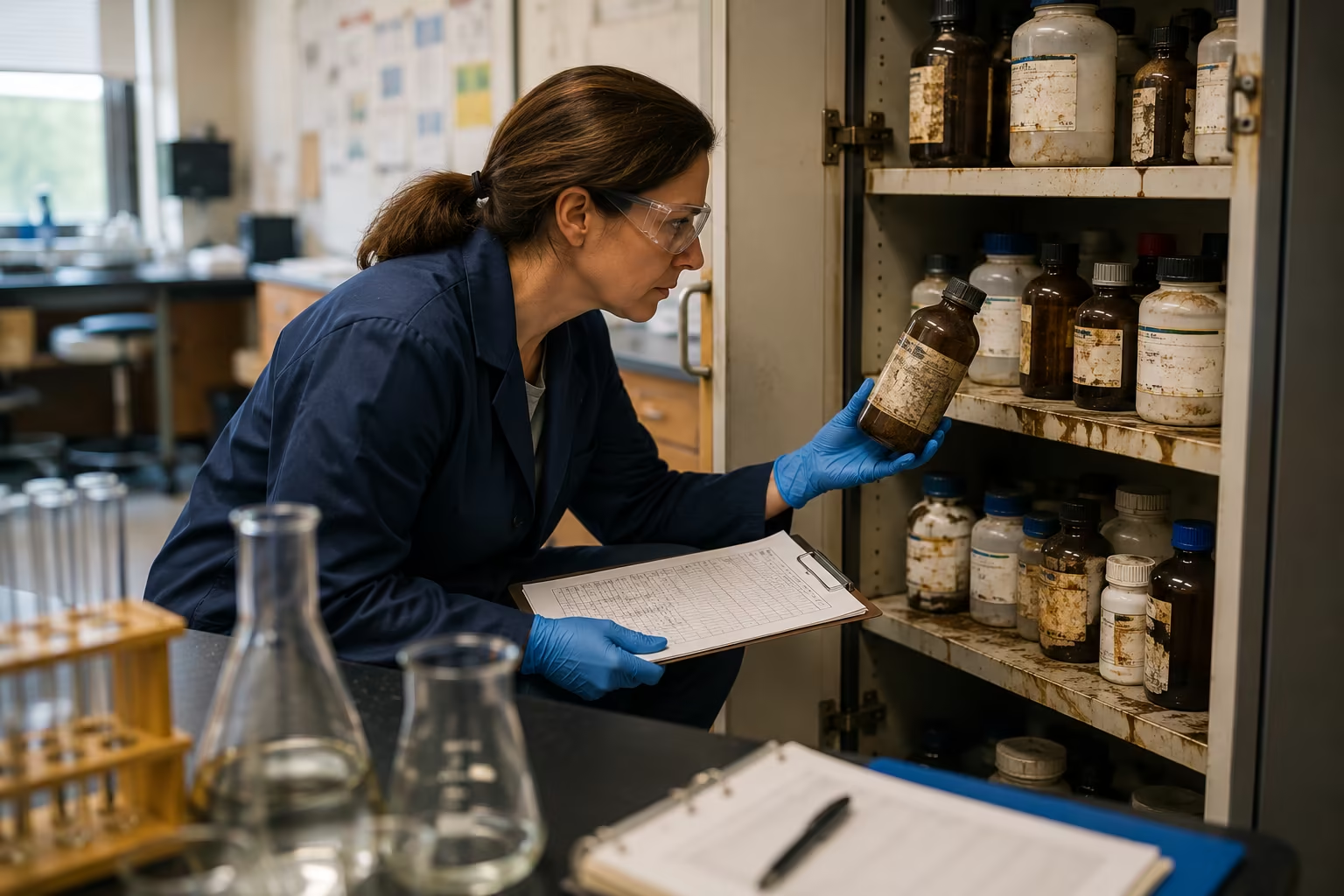
Science lab hazards rarely announce themselves. They do not arrive with flashing warning lights or dramatic emergencies. They develop quietly, often over months or years, hidden behind cabinet doors, inside storage rooms, beneath laboratory benches, and within routines that have become so familiar that nobody questions them anymore.
A blocked eyewash station.
An outdated chemical inventory.
A damaged piece of personal protective equipment.
An expired chemical tucked away in a cabinet.
An emergency shutoff hidden behind stored materials.
Individually, these issues may appear insignificant. Together, they can create conditions that increase risk for students, teachers, administrators, and entire school districts.
One of the greatest misconceptions in laboratory safety is the belief that hazards are always obvious. In reality, the most dangerous risks are often the ones nobody notices anymore.
That is why annual inspections remain one of the most powerful tools available to science programs.
They help schools see what familiarity has hidden.
The Laboratory That Looked Perfect
Imagine an inspector arriving at a middle school science laboratory.
The room is clean.
The countertops shine.
Student projects decorate the walls.
Safety goggles are neatly organized.
Chemical cabinets appear orderly.
From the doorway, everything looks exactly as it should.
Then the inspection begins.
The eyewash station has not been tested in more than a year.
Several boxes partially obstruct the path to the safety shower.
A fire extinguisher is difficult to access because classroom equipment has gradually accumulated around it.
Inside a storage cabinet, incompatible chemicals are sitting next to one another.
The chemical inventory does not match the materials actually present in the room.
Nothing appeared wrong.
Yet the inspection uncovered multiple opportunities for improvement.
This scenario is not unusual.
In fact, it is remarkably common.
Many science laboratories appear safe because the most significant concerns are hidden beneath the surface.
The purpose of an inspection is to reveal what cannot be seen from the doorway.
The Danger of “We’ve Always Done It This Way”
Few phrases create more concern among safety professionals than:
“We’ve always done it this way.”
The statement is rarely made with bad intentions.
In fact, it often comes from experienced educators who have successfully taught science for many years.
The problem is that experience alone does not eliminate risk.
Laboratory safety standards evolve.
Equipment ages.
Facilities change.
Chemical inventories expand.
Student populations grow.
What worked twenty years ago may not represent best practice today.
Unfortunately, familiarity can create a false sense of security.
When a laboratory operates for years without a major incident, it becomes easy to assume existing systems are adequate.
Success creates comfort.
Comfort can create complacency.
And complacency often becomes one of the most significant hazards in any laboratory.
The absence of accidents does not necessarily indicate the absence of risk.
It may simply mean that conditions have not yet aligned to create an incident.
The safest schools understand this distinction.
They continue evaluating, questioning, and improving even when everything appears to be working well.
The Hazards We Find Most Often
When people think about laboratory hazards, they often imagine dramatic scenarios involving explosions, large spills, or serious emergencies.
In reality, inspectors are far more likely to discover common issues that quietly increase risk over time.
Blocked emergency exits.
Damaged goggles.
Missing Safety Data Sheets.
Expired chemicals.
Improperly stored materials.
Unsecured compressed gas cylinders.
Outdated emergency contact information.
Ventilation concerns.
Broken fume hood indicators.
Chemical containers with deteriorating labels.
These findings occur because science laboratories are dynamic environments.
Supplies are moved.
Equipment is added.
Storage needs change.
Personnel turnover occurs.
New curriculum introduces new materials.
Without regular review, conditions gradually shift.
The hazards themselves are often predictable.
The challenge is recognizing them before they contribute to larger problems.
The Student Who Depends on Seconds
Safety discussions often focus on equipment.
But laboratory safety is ultimately about people.
Consider a student experiencing a chemical splash to the eyes.
In that moment, seconds matter.
The student depends on an eyewash station that is immediately accessible and fully operational.
The student depends on clear pathways free from obstructions.
The student depends on teachers who understand emergency procedures.
The student depends on adults who previously identified and corrected potential hazards.
The same principle applies to fires, spills, exposures, and other emergencies.
Students trust that the laboratory environment has been prepared long before they walk through the classroom door.
Most never think about the safety systems protecting them.
Nor should they have to.
That responsibility belongs to the adults responsible for the space.
A Cabinet Nobody Had Opened in Years
One of the most common stories shared by laboratory inspectors involves storage cabinets.
A cabinet appears untouched.
Nobody currently teaching in the building remembers placing materials inside.
The key is located.
The doors open.
Inside sits a collection of chemicals left behind from previous curriculum programs, former instructors, or projects completed many years earlier.
Some labels are faded.
Others are unreadable.
Inventory records make no mention of the materials.
Nobody intentionally created the problem.
The cabinet simply became forgotten.
Situations like this occur far more frequently than many educators realize.
Over time, schools accumulate materials.
Without regular inspections, forgotten storage areas can become repositories for outdated chemicals, unnecessary supplies, and unknown risks.
What nobody knows often creates the greatest concern.
Laboratory hazards often remain hidden until someone intentionally looks for them. The following laboratory inspection video provides a real-world example of the types of conditions safety professionals evaluate when reviewing science learning environments.
Chemical Storage: Hidden Risks Behind Closed Doors
If there is one area where inspections consistently uncover issues, it is chemical storage.
Many schools work hard to maintain organized storage systems.
Yet even well-managed laboratories can develop concerns over time.
Containers deteriorate.
Labels fade.
Shelving becomes crowded.
Inventories drift away from reality.
Storage practices evolve.
The challenge is that most chemical hazards remain hidden.
A cabinet may appear perfectly organized.
The actual risk may involve chemical compatibility, aging materials, improper segregation, or inventory inaccuracies.
This is why inspectors spend significant time reviewing storage areas.
The goal is not simply to determine whether chemicals are present.
The goal is to determine whether they are being managed appropriately.
Safe storage is one of the most important foundations of a safe science program.
The Infrastructure Nobody Notices
Some hazards have nothing to do with chemicals.
They involve the laboratory itself.
Ventilation systems.
Gas shutoffs.
Electrical infrastructure.
Safety showers.
Eyewash stations.
Laboratory furniture.
Storage cabinets.
Countertops.
These systems operate quietly in the background.
Most people never think about them until something stops working.
Unfortunately, deterioration rarely happens all at once.
It occurs gradually.
A ventilation system loses efficiency.
A valve begins aging.
A countertop develops damage.
A safety shower receives less attention.
Over time, these small issues accumulate.
Regular inspections help identify concerns before they become operational failures.
They transform maintenance from a reactive process into a preventive one.
The Hazard Nobody Talks About
Of all the hazards inspectors encounter, one stands above the rest.
Complacency.
Not because it is dramatic.
Not because it is visible.
But because it influences every other decision.
Complacency convinces people that inspections can wait.
Complacency suggests that inventories do not need updating.
Complacency encourages schools to postpone maintenance.
Complacency assumes that because nothing bad happened yesterday, nothing bad will happen tomorrow.
The strongest science programs actively resist complacency.
They recognize that safety requires continual attention.
They understand that risk management is not an event.
It is a process.
Most importantly, they refuse to let success become an excuse for inaction.
Why Chemical Hygiene Officers Matter
Identifying hazards is only the beginning.
Addressing them requires leadership.
This is why many schools designate Chemical Hygiene Officers, laboratory managers, science supervisors, or safety coordinators.
These individuals serve as champions for safety throughout the year.
They coordinate inspections.
Review inventories.
Track corrective actions.
Monitor training.
Support documentation.
And ensure that concerns identified during inspections lead to meaningful improvements.
The most effective inspection programs do not end when the report is completed.
They continue through the actions that follow.
Safety improves when someone owns the process.
The Questions School Leaders Should Ask
Laboratory safety is not solely a science department responsibility.
It is a leadership responsibility.
Principals, facilities directors, risk managers, district administrators, and school boards all influence the safety culture of a school.
Strong leaders ask questions.
When was the last inspection?
Who conducted it?
What findings were identified?
Which corrective actions remain incomplete?
Who oversees laboratory safety?
How are improvements tracked?
These questions are not about assigning blame.
They are about maintaining visibility.
The hazards schools miss are often the hazards leaders never ask about.
Finding Hazards Is a Success
Many people associate inspection findings with failure.
The opposite is true.
Finding a hazard during an inspection is a success.
Discovering an expired chemical before it becomes a disposal issue is a success.
Identifying a blocked exit before an emergency occurs is a success.
Recognizing a maintenance concern before equipment fails is a success.
Every hazard identified represents an opportunity to prevent an incident.
The goal of laboratory safety is not to create the illusion of perfection.
The goal is to create systems that continuously identify and reduce risk.
Honoring the Trust Students Place in Us
Every student who enters a laboratory places trust in the adults responsible for that space.
They trust that chemicals are stored properly.
They trust that emergency equipment will work when needed.
They trust that potential hazards have been identified long before they walk through the classroom door.
Science lab hazards often remain hidden until someone intentionally looks for them.
The schools that make inspections, training, maintenance, and continuous improvement a priority are not simply reducing risk.
They are honoring that trust every single day.
Because the safest laboratories are not the ones without hazards.
They are the laboratories where hazards are identified, addressed, and reduced before they have the opportunity to harm someone.
That is the true purpose of laboratory safety—and the true value of seeing what others might miss.
Subscribe to edCircuit to stay up to date on all of our shows, podcasts, news, and thought leadership articles.