https://vimeo.com/279701629
Monica Burns is fresh off ISTE 2018 and ramping up for FETC 2019 in Orlando
At ISTE 2018 at the end of June in Chicago this year, one of the things that Dr. Monica Burns got really excited about was all the different open-ended creation tools available that were giving kids the skill-sets and tools to learn and express themselves in the classroom. She will be presenting at FETC 2019 conference from January 27th through the 30th 2019 in Orlando. When I sat down to talk with her recently, as always technology in the classroom was foremost on her mind. We talked about how EdTech content gets created by developers, and then how it gets discovered and implemented by educators in the classroom.
A rapid increase in iPads and Chromebooks in schools has given rise to a growing debate over the balance and purpose of EdTech in the hands of students. With so many different programs and apps and curriculums available for tablets and smartphones, teachers and parents are hard-pressed to properly evaluate and try out the latest of the best and brightest. But the students have the advantage of being a generation that grew up with technology and having it already incorporated into their lives. They are familiar with the digital word and have been reading, learning, and having debates across platforms and crossing boundaries in ways unimagined a few short decades ago. By expanding the conversations with students, parents and educators are becoming better-educated and asking more meaningful questions.
 “People are getting smarter with their questions when it comes to evaluating their decisions on curriculum and education,” Monica says. “I think that there are some companies that do a really good job at sharing user cases and collecting user stories showing different ways that a tool could be used to really impact teaching and learning.”
Monica sees better curriculums and modules on the horizon because content creators are actually listening to teachers and parents, but that’s not everyone in the playing field. “I think there are other vendors and other companies that need to play catch-up and need to be a little bit better listeners,” Monica says. “Especially when it comes to what people are not just asking for, but what they’re asking about.”
In her new book Tasks Before Apps, Monica says it’s really about putting learning goals front and center and saying, “What is it that we want students to know and be able to do? Then, how can they be able to apply that learning, to show the world that they know how to do?” Because as she notes, like it or not, some of the decisions that are going to be made and some of the factors going into those decisions are based upon the fact that they need to be tested and assessed. It’s critical that platforms and digital curriculum comply with state standards in assessment.
That’s where the student and educator’s creativity becomes crucial. Monica says, “What digital tools that are available are going to help get them there?” She says she hears from teachers about new education apps like Flipgrid that they’re excited about and what they’re doing to help empower students as creators in the classroom. But we have to keep asking the obvious and hard questions, Monica cautions. “What is the reality,” she asks? “Is it that we’re sitting and we’re testing in front of these devices more than anyone like a child should be doing? Or are there more innovative opportunities for students to be creative, to solve problems, and to make a product that shows what they know and could be shared with the world?”
About Dr. Monica Burns
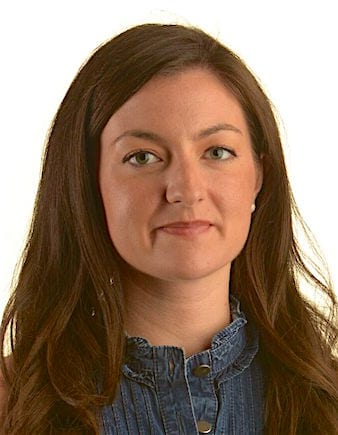 Dr. Monica Burns is a curriculum and educational technology consultant, Apple Distinguished Educator and founder of ClassTechTips.com. As a classroom teacher, Monica used one-to-one technology to create engaging, standards-based lessons for students. Monica has presented to teachers, administrators and tech enthusiasts at numerous national and international conferences including SXSWedu, ISTE, and EduTECH. She is a webinar host for SimpleK12 and a regular contributor to Edutopia. Monica is the author of Tasks Before Apps: Designing Rigorous Learning in a Tech-Rich Classroom (ASCD), #FormativeTech: Meaningful, Sustainable, and Scannable Formative Assessment with Technology (Corwin), Deeper Learning with QR Codes and Augmented Reality (Corwin), and co-author of Taming the Wild Text (Shell).
Monica visits schools across the country to work with PreK-20 teachers to make technology integration exciting and accessible. She also provides support to organizations using technology to reach children and families in need. Her mission is to help educators place tasks before apps and promote deeper learning with technology. You can find out more about working with Monica, and her books and resources by visiting ClassTechTips.com. Follow Monica Burns on Twitter.
 Monica Burns will be a featured presenter at FETC 2019, January 27-30 in Orlando, Florida. The conference will bring together thousands of educators and technology leaders for an intensive, highly collaborative exploration of new technologies, best practices and pressing issues. Registration is now open.
Author
Dr. Berger is one of many a staff education correspondents for the Mind Rocket Media Group, An educator and former school administrator. His video interview work and conversational podcasts have been featured in various media outlets. He often hosts education panel discussions and develops strategic content. As an academic Dr. Berger is a guest lecturer at Vanderbilt University’s Owen Graduate School of Management. A former assistant principal, he has been an adjunct undergraduate professor and developer of online college courses. He is a passionate Detroit sports fan who has also adopted Nashville sports teams as his own.
Contact the Mind Rocket Media Group if you are interested in an industry interview and a placement on EdCircuit.
- edCircuit – 6 Ways to Reflect and Respond to Field Trips
- EdTech Update – 10 Edtech Tools to Try in 2018
- edCircuit – Salman Khan to Give Opening Keynote at 2019 Future of Education Technology Conference

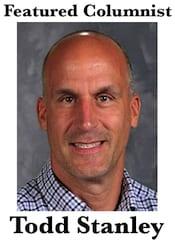 This is in response to a recent June 8, 2018 article in
  school being responsible for life skills as well. Teaching kids manners, how to socially interact with others, and how to be socially responsible. Where before these skills were handled at home, a lot of schools and teachers have taken this on. A teacher has to be a counselor now, addressing the social and emotional needs of their students just as much as the academic. The problem is training. I am not saying teachers would not be willing to help students with their mental health. I think any teacher would gladly do so. What I am saying is do they have the proper training to do so. There is nothing more dangerous than an individual offering mental health advice when they do not know what they are doing. Teachers need to be better equipped if we are to help with this situation.
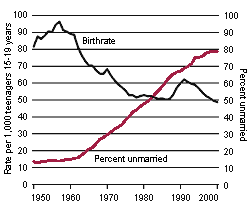 An example of this would be teen pregnancy. Back in the 1950s, teen pregnancy was something that was not talked about. If a girl did become pregnant, she was carted off to a “special school” and not allowed to carry the baby to full gestation at their neighborhood school. People were not aware this was an issue. Then in the 1970s, it became more accepting of a teenage girl to get pregnant, still frowned upon, but not totally shunned. There became an awareness that this was happening rather than hiding it away. Since the 1950s, the birthrate of teens has dropped from 80 teens per 1000 to 22.3 teens per 1000 in 2015. There are other factors that figure into those statistics, but just being more aware of it helped teens to prevent it from happening.

 Richard Gerver will join more than 40 leading presenters in the third annual Transformative Leadership Summit, which will take place online from July 30 to August 7, and focus on empowerment for administrators, teachers, students, and parents. Educators can attend each day’s online sessions free of charge and can also purchase an all-access pass to get exclusive bonuses and archived content. Visit TransformativeLeadershipSummit.com to register.

 Right now, education labors under the dominant scientific narrative, which portrays humans as a collection of chemicals held together by a complex wiring diagram and motivated primarily by survival, fear, and competition. It’s a mechanistic view of life, supported by behavioral methods, input-output models, and computer models of cognition. That approach underlies industrial education.
  This may be the most important question educators face. Over-reliance on traditional measures of intelligence leads inevitably to obedience to ‘rational’ solutions, which don’t seem to be taking the world forward. Perhaps there is a good reason. If humans are to sustain themselves, there must be an expression of intelligence that transcends the current models and yields cooperation rather than conflict. Emerging evidence from
  Is collaboration a technological accident or a survival strategy?


 Every year the
 Tanner Higgin is Director, Education Editorial Strategy at Common Sense Education where he leads the editorial team responsible for edtech reviews and resources. Previously, he taught writing and media literacy for six years, and has a Ph.D. from the University of California, Riverside. His research on video games and culture has been published in journals, books, and online, presented at conferences nationwide, and continues to be cited and taught in classes around the world.
 Danny Wagner is Senior Editor, Education Reviews at Common Sense Education. His focus is on guiding the editorial direction of the Ratings & Reviews platform to discover the best in education technology. In addition to reviewing digital media for learning potential, Danny produces content and writes articles for a variety of topics, including STEM and social and emotional learning.