Bringing Transformative Leadership to where it’s needed most
Jethro Jones is host of the Transformative Leadership Summit, which will take place from July 30 to August 7. This third annual event will feature more than 40 leading presenters, including Richard Gerver, Baruti Kafele, Peter DeWitt, Rick Wormeli, Jennifer Abrams, Nancy Conrad, and many more. Educators can attend each day’s sessions free of charge and can also purchase an all-access pass to get exclusive bonuses and archived content.
Visit TransformativeLeadershipSummit.com to register.
Living in Alaska, you are really far away from anything. It’s expensive and time consuming to attend conferences and conventions in the Lower 48 and major events don’t tend to head your way. I sat down with Jethro Jones, a middle school principal in Fairbanks, and talked about his solutions to being isolated from the greater national education community. He talked about teaching and empowering his teachers and staff. The more he learned and discovered over the years about teaching, the more he realized the need to share and discuss his experiences with his fellow educators around the world. But attending far-flung gatherings wasn’t within his limited budget or time constraints.
“It’s not enough for me to go find a mentor and learn from that person and keep it to myself,” Jethro says. “I believe that because I have the ability and the capacity to share what I’m doing, despite my isolation, I needed to create a podcast. I needed to create the Transformative Leadership Summit and bring the amazing thought leaders to us. And all those things have to happen because I have the need and the ability to do that.” Jethro believes that if we can empower those around us, they can multiply our efforts.
Described as “a podcast on steroids,” the Transformative Leadership Summit is a virtual online summit gathering the best and brightest thought leaders in the global education realm in one digital space and making their wisdom and knowledge accessible to all. Jethro believes that together, we can share what works and why and through this sharing of knowledge we can change the world.
Jethro says that the framework for success is deceptively simple. “You’ve got to find a way to lift teachers up and make them successful,” he says. “You’ve got to empower them to do what they can do in their area of strength and not be bound by the evaluation frameworks. Lift them up ─ and do the same thing with students and with parents ─ and you’re going to be successful.”











 Danny Wagner is Senior Editor, Education Reviews at Common Sense Education. His focus is on guiding the editorial direction of the Ratings & Reviews platform to discover the best in education technology. In addition to reviewing digital media for learning potential, Danny produces content and writes articles for a variety of topics, including STEM and social and emotional learning.
 I have worked with parents of gifted children over twenty years in my career as an educator. I have had many good conversations, with an occasional bad one. When the bad ones do occur, it is usually not something personal against me that has this parent riled up. It is because at its root, gifted parents, like most parents, simply want what is best for their child.
  To provide an example, in order to qualify for our gifted ELA course at the junior high, students must have a gifted identification in reading as well as a cut score for cognitive. If a student has the gifted reading identification but is below the cut score, she is not considered for the program. We do this because we only so many qualified teachers to run the course as well as class size limitations. Neither one of these has anything to do with the individual student, but realistically it has to do with the system we are working within. In a perfect world, every student gifted in reading would be provided an opportunity to participate in the class. In an even more perfect world, we would take into consideration those students who have not been identified as gifted, but are hard workers and have the grit to be successful in the class, probably having a better chance than those who are gifted but are not particularly hard workers. This would require the district to take each student on a case by case basis and involve a lot of criteria, much of which can be argued as being subjective. In a nutshell, it would be very difficult to do and in the end, you would have outliers there as well whose parents would want to advocate for them.
  5. Who would not want what is best for their child? As parents, we spend our entire adult lives trying to provide what is best for our children. Because of this, we want to ensure our children get every opportunity that is afforded to them. For the gifted parent, this includes school. They want to ensure that their child is getting the best education possible.
 We live in a time when our nation has a great need for its people to stand up and take action. Whether it is children in cages, children shooting other children, children being stolen and sold, or children taking their own lives, we are surrounded by the outcry to do something. Children in need call out. They cry out like someone dialing 911, until they no longer have hope their call will be answered. Then they just suffer in silence… alone.
  The mother in the article wants to blame the college for not rescuing her son, and for not calling her to dash to his rescue. But it’s not entirely the college’s fault, is it? Maybe his high school failed to prepare him. Maybe his elementary or middle school teachers missed something. But, those accusations will fall flat and fade, and the one person the mother will forever blame the most will be herself.
  Our nation’s teachers are amazing people… heroic people. They are dedicated, highly trained, well-intentioned, and over-worked people. They are not the cause of this. They have been asked to carry too much of the load. They are expected to have all the answers for every child’s deepest need. We have entrusted them with too heavy a burden, and expect them to do more than any human can achieve. Valiantly, they have not shirked the job, and I imagine they lay awake at night wrestling with how to do more. They are not to blame.
 Must we continue to ignore that the way parents and children experience their transition into the widening gap caused by Kindergarten is a cognitive parallel for the way they will experience a child’s exit across the chasm to college? Can’t we at least prepare parents to be better guides for their child’s departures into separation? Can’t we try things and learn? Can’t the village come together for the sake of the children? Isn’t it worth changing, not only the minds of those who would end their own existence, but also the minds who would even peer into such darkness? If we could at least agree to try, we could then begin to move the mountain a few inches. Maybe then we could all sleep better at night, no longer haunted by the anguish of wondering what more we could have done.
 Steve Clark has more than eighteen years of experience as a highly-engaged parent of students in public schools. He is founder and president of
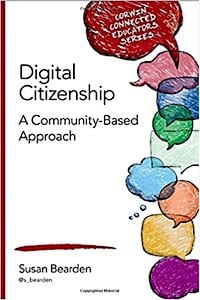 In order for schools to successfully integrate technology, they need to create a culture of
 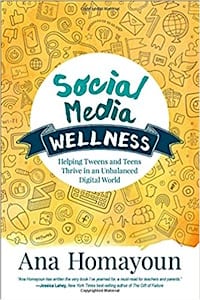 Helping students find a healthy balance in their social media use can be challenging for parents and educators. In this thoughtful book, author and educator Ana Homayoun offers a practical, solutions-oriented approach to helping schools and families navigate digital dilemmas. Her straightforward strategies can help parents, students, and educators work together to promote organization, time management, and executive functioning skills.
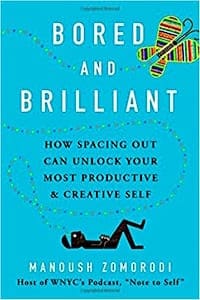 With mobile devices and anytime, anywhere connectivity, moments of boredom are now few and far between. In this fascinating exploration of the importance of boredom, journalist Manoush Zomorodi offers us a research-based look at how our relationship with technology is affecting our productivity and creativity. She gives practical advice on how to examine our own technology use and introduces the “Bored and Brilliant Challenge,” which could be a fun way to bring topics of media balance and digital well-being to the classroom.
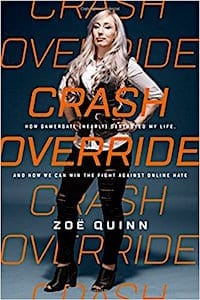 While it might seem like the world is more polarized after the 2016 election, the hate and vitriol circulating on social media has been long-festering. This book by game developer and artist Zoë Quinn documents her experiences as a victim and opponent of Gamergate, a hate campaign aimed at marginalized folks in the video game community that many see as a precursor to the alt-right and toxic culture found in many pockets of the internet. While that may sound heavy — and it is — Quinn also offers hard-earned lessons on how to confront and combat online hate, lessons our students need to learn.
![Book cover for unSpun: finding facts in a world of [disinformation] by Brooks Jackson and Kathleen Hall Jamieson. The title is in black text, with disinformation in red brackets. A review blurb appears at the top.](https://edcircuit.com/wp-content/uploads/2018/07/Unspun.jpg) As politicians, pundits, and experts (verified or not) fill the news cycle and our social media feeds with their perspectives, it can be hard to identify what’s factual and what’s “spin.” To help us navigate this complex media landscape, Brooks Jackson and Kathleen Hall Jamieson, the founders of FactCheck.org, offer a kind of primer on disinformation and biased media reporting to give us some useful tools to begin differentiating fact from fiction. From how to recognize and identify deception in media to an analysis of the tricks people use to try to convince us of something, the media-literacy tools and strategies in this book will serve you and your students.
As politicians, pundits, and experts (verified or not) fill the news cycle and our social media feeds with their perspectives, it can be hard to identify what’s factual and what’s “spin.” To help us navigate this complex media landscape, Brooks Jackson and Kathleen Hall Jamieson, the founders of FactCheck.org, offer a kind of primer on disinformation and biased media reporting to give us some useful tools to begin differentiating fact from fiction. From how to recognize and identify deception in media to an analysis of the tricks people use to try to convince us of something, the media-literacy tools and strategies in this book will serve you and your students.
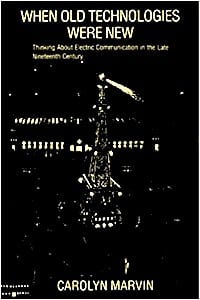 It’s easy to get lost in the “newness” of technology, especially now with widespread anxiety over the internet, social media, and smartphones. Every innovation is touted as transforming or destroying our world. But what happens when you look back on old technologies that were once new? Did these technologies change our lives? Was each new development either the best thing ever or the worst? Carolyn Marvin takes a look back at the technologies of the 19th century and finds out something surprising: Perhaps technologies don’t change us but rather reflect changes that have already happened. While this is a thoroughly academic book — for better and worse — if you can get through it, it might just change the way you think about the world.
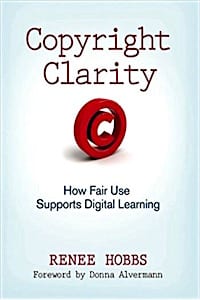 If you still have some confusion about how copyright law applies to the materials you use in the classroom, this book by media-literacy expert Renee Hobbs is a great resource. Hobbs not only helps readers fully understand how the doctrine of fair use supports media-literacy education, she also empowers you and your students to think critically about how to use and remix media for educational purposes.
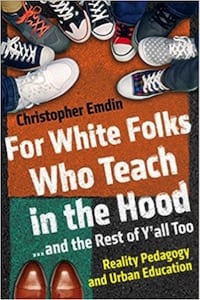 In this accessible and deeply insightful book, Christopher Emdin diagnoses a pressing, long-running problem in American schooling: white teachers who see themselves as the saviors of kids of color. Instead of the traditional narrative of uplifting these students, Emdin offers an alternative: reality pedagogy. This means starting from the lived experiences of kids of color, understanding their talents, and giving them the support and agency to succeed on their own terms.
 Erin Wilkey Oh’s work has focused on supporting K-12 students and teachers for over a decade. As executive editor of education content for Common Sense, she provides teachers with practical tips and strategies for using classroom technology, and helps students use media productively to become critical thinkers and creators.

 So music is not just a mood-enhancing method for lovesick Orsinos. Or even a helpful device for improving your physical and mental health.