
https://vimeo.com/247346608
Jones believes transparency equals accountability Shevrin Jones is the representative for the 101st district in the Florida House of Representatives, which is in southeastern Broward County. He was elected in 2012, and has always had a special focus on education.
 Shev believes there is no room for Republican or Democratic agendas when it comes to making policy about how we educate our kids; we just need to focus on the needs of the kids and their families.
One thing he believes in is the power of choice that parents should have in deciding how and where their kids are being educated. But as a legislator, he knows there are limits. “How far can we take that?” he asks. “Is there any way that choice in education reform can continue to run in tandem with the public school system? I believe they both can. There are a lot of smart people sitting around the table who can create a system to where both can function simultaneously.”
Shev also believes that transparency fosters accountability. When students, parents and members of the community know what is going on in their schools on a daily basis, as opposed to just getting reports of standardized test results once or twice a year, then educators and students alike are accountable for educational outcomes.
Shev is working toward positive change for the citizens of his district. That is why he ran for office. “If you want to change something, you can’t complain about it,” he says. “You need to put your stake in the game to be able to do that. And so, I ran.”
About Shevrin Jones
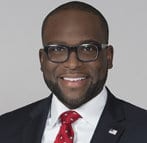 Shevrin Jones is a State Representative, representing the 101st district in Florida. He has a demonstrated history of fundraising, relationship building, and community organizing. Shev is skilled in the administration of nonprofit organizations, budgeting, strategy development, coaching, and entrepreneurship. Shev earned a Certificate of Completion focused in Senior Executives in State & Local Government from Harvard University, John F. Kennedy School of Government, and a Masters in Educational Leadership – Higher Ed from Florida Atlantic University.
Follow Shevrin Jones on Twitter.
AuthorDr. Berger is one of many industry education correspondents for the Mind Rocket Media Group, An educator and former school administrator. He often hosts education panel discussions and develops strategic content. As an academic Dr. Berger is a guest lecturer at Vanderbilt University’s Owen Graduate School of Management. A former assistant principal, he has been an adjunct undergraduate professor and developer of online college courses. He is a passionate Detroit sports fan who has also adopted Nashville sports teams as his own.
Contact the Mind Rocket Media Group if you are interested in an industry interview and a placement on EdCircuit.
Further Reading
- Tampa Bay Times – Gradebook podcast: Florida Rep. Shevrin Jones, ranking Democrat on the House Education Committee
- HuffPo – Small Town Principal Pushes for Accountability
- Miami Herald – Dade and Broward schools see improvement on state test scores

 When we think about sentence diagramming, or merely the ability for a young person to understand how they can manipulate language in a sentence to create a reaction or emotion response, it’s almost like playing chess. By following the pieces of the chess board, students are better able to understand the way in which to communicate.
 But here in America, Dr. Yu notes, our educational system has chosen for some reason not to emphasize pure sentence structure as strictly as it did in the past. “I think it’s a great pity that you don’t see the beauty or usefulness of that anymore,” she says. “I find it necessary because when we start to read more and more complicated sentences, we need something so that we can get back to the basics and understand the core of the things.”
 There is a barrier created for today’s average student who doesn’t understand sentence structure and the task becomes especially tough for the English language learner in the classroom. In the U.S. in areas of great cultural diversity, the difficulties are considerable.

 Jonathan K. Hage comes from a long and distinguished line of educators. His mother and father were both public school teachers, and in their house, public education was considered a great place and perceived as an equalizer across society.
 But as he notes, those simpler days are long gone. “Our average application today is over 500 pages long,” he says.
 Mr. Jonathan K. Hage is the Founder, Chairman, President and Chief Executive Officer of

 That is what really drives his approach to professional development for individuals, teams, department heads and schools. When they are finished, he comes back and asks, “In what way did that meet and align with that mission and vision? And, if not, why not and do we need to do something differently and/or do we need to revise our mission and vision?”
 As TeachThought’s Director of Professional Development and co-host of the