
Less face-to-face interaction stunts empathy and compassion by Matthew Howell
 Recently, I came across a student who was madly scribbling indecipherable lines in crayon on a sheet of paper. We were in the cafeteria. He was sitting at a table with peers, but at the far end- he was with others, yet by himself.
As I watched from a distance he cycled through the colors; red then green, back to red, purple, yellow, back to green, all at a feverish pace. He was pressing so firmly on the paper that I thought it might rip, or at a minimum a crayon would break from the strain.
As the students around him got up from the table to go outside for recess, he continued scribbling, seemingly oblivious. When nearly everyone had exited the cafeteria I walked over to the table and asked, “So what are you drawing?”
“It’s a spider web with a fly in it,” the student responded.
I looked closely at the work and tried to see his interpretation with my own eyes. “Sure” I said, “I can see the web but not the fly.”
The young man lifted his head and made eye contact with me. He said, “The fly is in there, you just don’t see it because you don’t know where to look. See,” he said, pointing to a black dot buried in the jumbled nest of lines, “The spider is right here in the center.”
 With that, he stuffed the paper between his binder and notebook. He stood, wished me a good day and walked off, seemingly happy to catch up with his friends.
The exchange got me thinking about how our students see themselves in our schools and the world at large. While I cannot attest that this student and his artwork intended to convey a sense of being lost in a swirl of chaos and commotion, I could not help but draw the conclusion myself.
As educators we are on the front lines of a shifting society. It is our job to ensure that students are not snarled in the web of activity that is modern learning. Below are three tips that have helped me to find the students who are trapped in center of the web:
Technology and the Din of White Noise:
People have never been as inundated by a constant stream of information, images, noise and ideas as they are today. Immediate access to the internet in various forms has impacted students in measurable and not so measurable ways. With this rapid and continued development, it can be difficult to fully understand the way that this influences the human psyche, especially in students who are in the early stages of development.
 What we do know for certain is that access to the Internet comes at a price. Students experience far less face to face communication than previous generations, which leads to the underdevelopment of empathy and the misunderstanding of once common social cues. Bullying is also rampant and pervasive on the Internet in all demographics.
To offset this, create spaces and activities in your schools and classrooms for students to detach from their devices. This is extremely valuable for the learner, as the removal of the stimulation will help regulate brain activity and open up cognitive capacity for creativity and reflection.
What Happens at Home Comes to School
When I greet my students at arrival in the morning I am aware that many of them have already been exposed to a stream of information, and much of it is often traumatizing and negative. I try to imagine them waking in a house where the television is turned to the news. Maybe they have their own unfiltered news feed on their telephones as well.
The parents, not for a lack of caring, may be engrossed by the same streams of information. The time for discussion could be nonexistent. Still, the subconscious mind is powerful, and in these instances the cortisol levels are proven to rise wildly. Even when the stimulation is indirect or unacknowledged, the brain still processes the information and formulates an involuntary response such as anxiety or fear.
 These same young people could be listening to the latest reports on the car ride in as well. When they enter the building, they are flung headlong into the mad dash that is modern education without the opportunity to process the information.
It is important that educators cultivate an active awareness this dynamic exists. Pay attention to your students’ verbal and nonverbal cues. Develop sensitivity that an off switch may not exist for your students. This will allow a more compassionate approach in trying times.
Eliminate the Cracks
In the best environments there are students who can go unnoticed. People with unmet needs will seek attention without fail, often in the most counterproductive ways.
One way to make certain that the students in your school are in a nurturing relationship with a trusted and caring adult is to do a school wide roster check.
Simply take the name of each student and post them on your walls during the safety and privacy of a faculty meeting. You can easily do this with chart paper or printed rosters. Have all members of your staff circulate the room and place a checkmark next to the students they have a positive rapport with. Does every student have someone who knows their interests? Does each student have someone who helps them with goal setting?
 There are plenty of questions you can generate to frame the activity. In the end, it is essential that each student has at least one person at a minimum. Learners need a constant stream of support and encouragement to flourish. This will ensure that no one goes unnoticed.
While the student’s drawing I mentioned earlier may have been nothing more than a dash of lines and a release of stress, it cannot be denied that our job as educators and leaders is constantly changing and full of challenge. It is more important now than ever that we find our students where they are, and give them the tools they need to arrive where they want to be.
Author
 Mr. Matthew Howell has earned a Bachelor of Arts degree from Montclair State University. He has also earned his Master of Arts Degree from Seton Hall University in Educational Leadership and Supervision. Mr. Howell is certified in English education and as a principal and school administrator.
Mr. Howell has served in the Oceanport School District since September of 2012. In addition to Oceanport School District, his 14 years in education include positions in Somerset, Ocean Township, Millstone and Hazlet. Mr. Howell’s professional experiences include classroom teaching, coaching, supervision, and administration. He has held positions at a number of age levels. Mr. Howell is passionate about education and he firmly believes that every child can succeed. Follow Mr. Howell on Twitter.
Further Reading
- Ed World – Stress Is Contagious In the Classroom
- TeachThought – 5 Easy Ways To Reduce Student Stress In The Classroom
- edCircuit – Countering the Stress and Anxiety of Modern Learning

 We educators are bombarded with data—test scores, graduation rates, GPA’s, drop-out percentages, college enrollment numbers, class size, remediation rates and more.
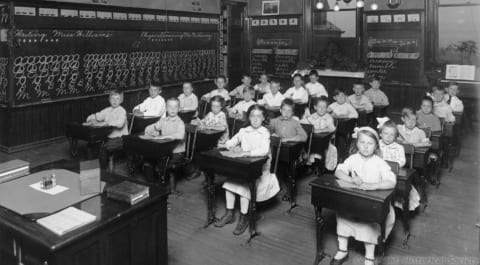 Our first public school, the
  I’m not suggesting we go back to a one-room building heated by a coal stove with a single blackboard. Yet as all our access to data and learning tools—via technology— expands the horizon of information, what about creating a sense that we’re all working together on creating connection, insight and application?
  Why not set aside some in-service time to allow school staff to develop their collaborative skills and build greater understanding? Give them space (and power) to share leadership in developing goals, making budgetary decisions, involving the community, brainstorming learning projects. As leadership becomes less concentrated and more mutual, we know from research as well as from experience that organizations become more agile, innovative, and energized.
  For the students, we can bypass the artificial separation of grade levels and trust their often-underestimated capacity to manage the classroom. Share power with them about lessons, projects, class norms, setting goals, every aspect that affects their development. Even better, we can work with other teachers to establish and support mentoring, coaching, and across-grade-level projects. After all, how much of our post-school life is spent working only with people of the same age? Teachers can become fellow learners, their greater knowledge and experience a resource rather than an authority. This shift creates an atmosphere of
  I’ve worked in a factory. Swing shift. Two fifteen-minute breaks, ½ hour for lunch. It was soul-numbing. I’ve also worked for most of my teaching life as part of several learning communities – teams (including the students) who share leadership, learn continuously, challenge each other and see our differences as a powerful resource, regardless of position or experience. The tedium of the first helped me realize the power of the second.


 Michael A. Cardona was named Superintendent of Schools for
 John Mikton’s introduction to English language international education was in Africa over 24 years ago, and his first concern wasn’t just teaching. There was also the lack of electricity, water and crumbling infrastructure to tackle. So he rolled up his sleeves and got to work.
 At the beginning of his career, the major issues he faced weren’t just getting cumbersome and expensive 1995 desktop computers to Africa with English keyboards, but also the licensing of the software. But now, because of cloud computing and affordable devices like tablets and smartphones, the playing field is leveled and (with the exception of China and other areas that have purposefully blocked the internet) the same resources and curriculum are available around the globe. “I would say a large percentage of international schools can leverage cloud computing to their advantage,” John says, “and then it’s much easier to provide those digital ecosystems across borders.”
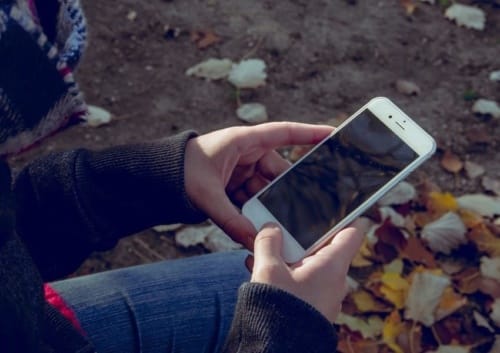 The technology isn’t the point, John says. The technology is merely a tool; the lessons themselves must be engaging to be effective. The technology alone is not going to improve learning. “I think that’s a hard one, sometimes, for a board of trustees to understand because they want a tangible result ─ test results ─ or evidence of better learning,” he says.
  John Mikton is currently the Head of Education and Media Technology/ Assistant Principal at the
 Possible STEM Problems
 A popular adaption of STEM is STEAM, which incorporates arts into the science, technology, engineering, and math curriculum. Proponents remind us that the arts can improve learning by enhancing the growth of cognitive, emotional, and psychomotor pathways in the brain.
  A great STEM/STEAM example that is particularly engaging to students is a Soap Box Derby. You may remember these from your childhood or your own children may have participated in one, but today’s activities can be directed toward STEM and STEAM. For example, students are able to learn about friction and force of motion for science, they can use technology for design and simulations, engineering incorporates design, building, and testing the stock car, the design elements are enhanced through art skills, and math concepts such as measurement and speed are valuable.
  In order to truly prepare students for life after high school, we must teach connections among science, technology, engineering, math, and if possible, art. However, it is too late if we wait until high school to focus on these areas. Using practical strategies and hands-on learning will excite students of all ages, and increase their interest in STEM and STEAM.