Skip to content
edCircuit
  • Start Here
    • Login
    • Register
    • Subscribe
    • Submit a Press release
    • Advertise or Sponsor
    • Contribute
    • Get Interviewed
  • On The Wire
  • Hot TopicsUpdated
    • Social-Emotional Learning
    • Diversity, Equity, Inclusion
    • Data and Cybersecurity
    • Creativity
    • Digital Citizenship
    • ESports
    • Professional Development
    • Covid-19
    • School Safety
    • Future of Education
    • Innovation
    • School Models
  • Artificial Intelligence
  • STEM and STEAM Education
  • Learning
    • Online Learning
    • Hybrid & Remote
    • Augmented & Virtual Reality
    • Project Based
    • Curriculum Models
  • Media
    • EDU Shows
    • EDU Podcasts
  • Community
    • Tools and Technology
    • edUcators
    • Parents
    • Students
    • edAdvocates
    • edAdministrators
    • edLeaders
    • Global
  • Industry
    • edTech Entrepreneurs
    • Market Trends
    • Upcoming Events
  • About edCircuit
Wednesday, April 1 2026 - Welcome
  • LOGIN
Home Tags Posts tagged with "Headline"
Tag:

Headline

This if for posts to be in the featured/top section of site

Abstract illustration of a molecular structure with connected spheres and rods, shown in blue and orange tones, against a geometric, gradient background.
EdTechHybrid and Remote Learning

The Evolution of Educational Credentials

by Ian Egan December 8, 2017
written by Ian Egan 8 minutes read

Founder and CEO Wayne Skipper of Concentric Sky leads the way

Wayne Skipper is the Founder and CEO of Concentric Sky and leads a team of professionals who design and build a wide range of software products – from focused, individualized K-6 software to large-scale analytics systems that quantify the activity of user populations. Wayne is somewhat of a maverick, a veteran of the US Navy, Texas Instruments and Dell who is now creating the future of credentialing in education.

Education is at a turning point. The hundreds-year-old system of non-specific diplomas and degrees quickly gives way to a system that identifies skill sets and competencies. K-12, community colleges, traditional higher ed and even post-graduate education are all redefining their value in the global marketplace. Learners will not only need to define their competencies, but they will need to display and share those competencies with employers.

We are moving towards a digital landscape where a common, shared language will allow learning achievements to be recognized, and skills will become transferable to any applicable working situation. It is not only the future of education; it is a future that is arriving at breakneck speed. There are a handful of companies and organizations that are making this happen. Fewer still are the companies that have the technical ability and the vision to get us there.

A person arranges blue blocks, each featuring a white icon of a human figure, in a pyramid shape on a white surface, suggesting concepts of team building or organizational structure.Wayne Skipper and Concentric Sky are very well-known within technology circles. Still, most educators and the general public have little knowledge of how the technical transformation in education is taking place. In twenty years, education at all levels will look very different. Learners will have a public persona, and their achievements will be documented and searchable, much the way we search for consumer products on the Internet today.

Companies will hire their employees globally, relying on provable skillsets to find and hire their remote workforces. It will all be made possible by an open system of credentials that industry and education institutions use and agree on. Skipper’s company, Concentric Sky, has been instrumental in helping to create this change in our educational system.

The Growing Impact of Open Badges and Open Technology Standards

A collection of colorful embroidered merit badges arranged on a black background, each featuring different symbols and images representing various activities and skills.

Nearly 15 million Open Badges have been issued in the last few years in the US alone.  Skipper was among many who saw a need for a digital version of the badge system. Concentric Sky’s leadership in the development of Open Badges and Open Pathways not only answered that need but revolutionized the utility of badges for users.

“Concentric Sky has led the development of open badges since 2015,” said Skipper. “Under the auspices of the MacArthur Foundation, we developed the 2.0 specification and wrote the developers’ tools, developers’ guide, as well as the open source badge validation tools which are currently used throughout the ecosystem to validate badges. If you’re working with badges, you are most likely using our tech at some level.”

Concentric Sky’s work with open badges led MacArthur Foundation spin-off Collective Shift to approach them in 2015 to take over stewardship of the Badge Alliance, which they held until January of 2017 when they passed it over to IMS Global Learning Consortium, a member-driven global standards body.

A yellow puzzle piece hovers above a matching empty space, ready to be placed in it. The background is plain white. “Open Badges is a technology standard that allows you to take any learning achievement, whether formal or informal and recognize it with a portable micro-credential,” said Skipper. “In the past, we’ve had formal achievements signaled by a degree and informal achievements like Scout badges signaled by other means. Open Badges allows both kinds of learning achievements to be signaled in the same way, along with a host of other kinds of achievements – think certifications issued by trade organizations, professional development credentials, and such. Open standards allow us to put all these types of learning activities on the same playing field and describe them all in the same language.”

Making Badges Better

In order for a badge to have meaning, said Skipper, it has to be part of a system of meaning that relates to other credentials. It needs context. “Using Open Pathways, we can describe badges in terms of the badges around them. We can take badges issued by any platform, and arrange them together – stack them – to give them rich context. It’s a revolutionary new way to think of credentials. It allows organizations to leverage credentials that they themselves did not originate.”  

As an example, Skipper said, “Let’s say your organization doesn’t teach computer fundamentals, yet those skills are a prerequisite for your coursework. Badgr allows you to pull in badges from programs that do teach those skills and make them prerequisites for your own program. This gives learners the opportunity to utilize the competencies they’ve developed elsewhere without you having to teach it all yourself. And the same is true of your credentials – others can stack them. This enables organizations to create what we call cross-institutional learning pathways, or pathways that start in one context, say high school – pass through another context such as community college – and then link together with pathways in higher education and workforce training.”

Badgr’s Pathways system provides value to three primary groups: students or badge earners, badge issuing institutions, and employers.

yellow arrow dark background“Pathways in Badgr allow students to discover new learning pathways upon which their badges may fall,” said Skipper. “We can look at all the badges a student has and show them pathways that they have already partially completed. For instance, if I’ve earned a certification in Maine, without something like Pathways, I wouldn’t have any way of knowing that it is accepted for credit as part of a Master’s degree in Georgia.”

For institutions, this technology creates a feedback loop that doesn’t currently exist: ‘how’ are people actually using your credentials. When an institution’s credentials are added to Pathways, and when students actually present them, we can report back to the issuing institution. This is so much more valuable than just counting Facebook likes, which is the best you can get from most badging platforms.  

Pathways also have major benefits for hiring and workforce development. Employers can understand not just what qualifications applicants have today based on a snapshot of their achievements, but what skills an applicant is likely to acquire based on their existing learning achievements. It’s a way of forecasting skills achievement based on the performance of other learners travelling similar pathways. With professional skillsets becoming more and more specialized, the unique profile each person can develop through open badges is a clear way to demonstrate who is right for a given position. Open Pathways supplies the standards and technology that makes this key intelligence available.

Badgr as a Tool Kit

A set of tools including a hammer, four screwdrivers with red handles, two interchangeable screwdriver bits, and a pair of orange-handled pliers arranged on a light background.“There are over a thousand different products in the world that will issue an Open Badge to you,” said Skipper. “What makes Badgr different is that it is a complete open source toolkit. Our goal is to give developers a tool that handles all of the heavy lifting around Open Badges and demonstrates industry best practices. Badgr was originally designed to serve as the official reference implementation of the Open Badges standard, and for that reason, great care has been put into its implementation.”

Solving the Skills Gap

We all understand the need for better outcomes for students today. Too many suffer from a skills gap – the gap between the skills they leave school with and what they actually need to get a job in today’s workforce. Badgr and Pathways are tools that allow educators to analyze those outcomes and improve them. Concentric Sky’s focus on building open standards allows for interoperability and for EdTech products from multiple companies to work together in the ways that the educators and students need them to work.

Now educators can address students’ skills gaps, whether 21st-century skills or soft skills. With Badges and Pathways, educators can add those skills into a program based on badges from third parties.

For instance, Concentric Sky’s partner in California Community Colleges’ New World of Work has an excellent rubric of 21st-century skills.  Those badges can be required on your pathway, solving the skills gap for your students with material backed by strong pedagogy taught by another organization – all in a way that is digitally verifiable.

Thinking Globally

A digital illustration of Earth with white interconnected lines and nodes over its surface, representing global connectivity and communication, against a light blue gradient background.Concentric Sky has long-standing partnerships with a wide number of prominent international organizations including The World Bank, United Nations, NASA, the National Science Foundation, National Geographic, Encyclopedia Britannica, and Cengage Learning. There are several thousand organizations using Badgr, including over seven hundred of the world’s leading academic institutions.

The company is internationally active with a strong presence in several regions. Concentric Sky was recently chosen to pilot a national digital credential infrastructure for the Netherlands based on their system of badging and pathways.

According to Skipper, “I’m motivated to the make the world a better place, which is one of the things that differentiates us as a company. Concentric Sky is a unique player in the technology space because we’re not a single product company, nor are we externally funded. I’m the only shareholder, and with no investors to please, I can decide to spend millions of dollars writing an open source project like Badgr and give it away.”
Author

Connie Bosley is a retired K12 teacher with over 30 years’ experience in the classroom.  She has served on multiple school and district curriculum and tech committees as well as on the local newspaper education board.

She continues to study and write about the K-12 Districts’ issues with tech purchase, as well as the problems Ed Tech companies have in understanding and working with educators. Connie is currently working as a freelance business-to-business writer for the Education industry.

You can follow her on Twitter. For more information, visit 

  1. Forbes – Taming The Wild West Of Digital Badges And Credentials
  2. PR Web – Concentric Sky and SURFnet announce collaboration
  3. Cision – Partnership Announced to Advance New Ecosystems for Learning
December 8, 2017 2 comments
0 FacebookTwitterPinterestLinkedinWhatsappCopy LinkEmail
Silhouette of a person against a blue background, surrounded by swirling trails of bright, light-pink sparks creating loops and arcs, giving a sense of motion and energy.
edLeaders

A Look At Being Generationally Savvy

by Jennifer Abrams December 7, 2017
written by Jennifer Abrams 12 minutes read

A Boomer took over as principal and immediately decided to ban computers from her leadership team meetings. Instead, she purchased journals for team members to take notes. She believed computers distracted users from ‘the work,’ distracting them from collaborating and discussing issues. Most team members who were under the age of 40 found the switch unreasonable. They used their computers to communicate, send files to one another, and note the tasks discussed in the meeting. The principal said these were follow-up tasks for after the meeting. The conflict could have been avoided with a little more generational understanding.

A Millennial first-year teacher arrived at his first teacher team meeting with colleagues who all taught the same subject in his high school. The experienced teachers were prepared to share their resources and unit plans with him, particularly on a student research paper they had historically all taught during the fall semester. The new teacher, feeling on equal footing, said he had a different approach to the research unit assessment that he felt would be more engaging. His ‘announcement’ didn’t go over well with his veteran colleagues.

From greeting a colleague at the staff mailboxes in the main office to our daily interactions in the lunchroom to our after-school meetings, we encounter others from several generations, with perspectives and understandings that can be very different from our own. Daily routine adult-to-adult communications in schools can help us build trust and make connections. They also can also become moments of miscommunication that lead to frustration and diminish understanding. As multiple generations come together in one workplace with a variety of expectations of how to “play well with others,” communication and collaboration can be tricky.

The generation gap, according to Deal (2007), is “in large part the result of miscommunication and misunderstanding, fueled by common insecurities and the desire for clout—which includes control, power, authority, and position.” School leaders need to understand the needs and wants of different generations as they work to create community.”

Who are the Generations in the Schools?

Leaders first need to know more about the four generations working in schools and what a generation is. One definition of a generation is “an identifiable group that shares birth years, age, location, and significant life events at critical developmental stages” (Tolbize, 2008). Members of a generation share experiences that influence their thoughts, values, behaviors, and reactions. Individuals, of course, bring their own personalities, influences and particular perspectives due to identification with class, gender, race, region, family, religion and more, but some broad generalizations are possible about those born in approximately the same years. The four generations working in schools today are:

Traditionalists
1922-1943

Many of these elder statesmen and women have been in the profession the longest. Given their inclination to stay with one profession, they may be on the cusp of retiring with 35 or more years in the field — dedication that can shock Millennials who might not plan to stay in one place or one job longer than a few years. The Traditionalists have seen world wars, an economic depression, and a slew of technological changes in their lifetime. Traditionalists generally are loyal, hard-working, respectful of authority and uncomfortable when conflict isn’t handled behind closed doors.

Baby Boomers
1944-1964

This generation is represented by educators who have become the anchors of the school, holding together grade levels or departments and providing institutional knowledge. They may be experienced principals or have moved to the district office, where they have been leading for the last decade or more. They are the most celebrated generation, largely because the generation is so large. Baby Boomers are usually collaborative consensus-seekers, service-oriented, and interested in relationships and outcomes, not just results.

Gen Xers
1965-1981

Born in the era of women’s rights, the introduction of the birth control pill, legalized abortion and higher divorce rates, Gen Xers might be a smaller group compared with the generational groups on either side of them, but they leave an impression with their direct style and attitude. Xers can be entrepreneurial and innovative, independent and autonomous. Xers respect individuals in roles, not just roles themselves, and as many HR staff have found, this generation is interested in a life-work balance, which can lead to requests for job shares and part-time assignments.

Millennials
1982-2000

The Millennials, teachers and administrators who are in their early 30s or younger, grew up with adults very aware of and interested in how to meet their needs educationally as well as socially and culturally. Many grew up with tremendous support and constant connection to family members, and they continue to expect similar just-in-time supports and structures within their school workplaces. Millennials can be assertive, collaborative, very focused and productive, and often look for praise. They are ready to change how adults communicate in schools and in professional learning communities.  

Knowing about each generation is a beginning step for school leaders. The next step is to consider what knowledge one needs about multiple generations working together so we all can communicate well and collaborate more effectively across the generations.

Gen Savvy Strategies for Effective Collaboration  

In Trust in Schools, Tony Bryk and Barbara Schneider (2002) discuss their study of the role of social relationships in schools in which they conclude that a base of trust in school heightens functioning and gets staff working at a higher level and achieving more ambitious goals. Creating that relational trust requires smooth communications. And yet, each of us has ways of communicating that perhaps align with our generational inclinations and get in the way of building better relationships across generations. To be more savvy in communicating with each generation, school leaders can identify linguistic nuances and approach collaboration using different strategies.

Traditionalists

  • Watch your grammar and informal language.

Many a time a participant in one of my workshops has come up to me after the session to share a dog-eared page from a training packet and to point out a ‘that’ instead of a ‘which’ or the use of a comma rather than a semicolon, sharing their intent to help me be as professional as possible. For many of this generation, good grammar indicates that you respect your colleagues enough to proofread and communicate properly. Imagine how some might view spelling errors, Internet slang, acronyms or profanity. Younger generations may think it’s ‘no biggie’ to use informal language, but members of this generation might find it unprofessional.

  • Be mindful of levels of disagreement and conflict in whole group discussion.

A Traditionalist superintendent might notice something amiss across a meeting room and immediately respond by going to the individual for a quiet conversation or reference the matter in a personal talk at a later date. Traditionalists see handling conflict or disagreement in front of the group as unseemly. Facebook, Twitter, and reply-all emails seem inappropriate to many of this generation, as does speaking up in a group. A younger leader asking in a meeting, “Does anyone have a problem with doing A or B?” might not elicit a response from a Traditionalist, who probably would prefer to handle differences of opinion in a subtler way.

Boomers

  • Think “we.”

Many Boomers were raised during the civil rights movement, the women’s movement, and a time of activism. They value community and group, and they find working together toward a goal meaningful. The word we is important; they appreciate recognition for contributing to the bigger picture. One of my Boomer colleagues who has been working “behind the scenes” for years, as she says, feels few recognize her contributions or the need for all to go the extra mile to do the hard work and show “we are in it together.” Even informally recognizing the value of the group and individuals’ contributions to the group goes a long way to helping Boomers feel connected.

  • Be careful of appearing brusque or unfriendly.

Icebreakers, social committees, appreciations, celebrations, acknowledgements and kudos at the start of staff meetings or in weekly newsletters have been common practice in schools for decades. Gen Xers sometimes are viewed as brusque or uncaring because they want to be efficient. Their goal is to get through the agenda so everyone can go home. One person’s desire to focus only on work can seem impersonal or uncaring to other generations. Understanding staff members’ approaches to meeting time can go a long way toward creating community.

Xers

  • Focus on pragmatism and results.

The key descriptor for many Xers is autonomous. Xers value independence and often feel that some agenda items could be better handled in an email, that explanations in meetings could be shorter, or discussions would be more productive and effective if all involved had a clearer understanding of the expected outcome. I have worked with colleagues who are interested in doing the work — but on their own time, outside school hours. They’ll say, “Give me the directions, tell me what to do, and I am on it.” Others have commented on how delighted they are when meetings aren’t “full of fluff.” Such focus might sound too blunt for other generations, but for many Xers, results win out over relationship.

  • Explain why. Transparency matters.

Xers want to know the rationale for what is being asked of them. They can rub others the wrong way when they ask, “Why do we have to do that?” rather than the more neutral, “Can you help me understand the thinking behind …” They may be perceived as having a bad attitude. (The same is true with Millennials’ asking, “Why can’t we do it this way?”) Leaders working with Gen Xers need to anticipate the question and be prepared.

Millennials

  • On teams, make sure everyone has a voice, including the new person.

The unspoken hierarchies or power structures that might diminish a new teacher’s voice would be frustrating to any new teacher but are especially so to Millennials, who believe in collaboration and co-creation no matter how many years of experience one has. Key to Millennials’ satisfaction is having opportunities to participate. Leaders who want to reach this generation should ask, “Do they feel acknowledged?” Millennials want opportunities sooner and faster. Just as on Facebook, where all voices are heard equally, this generation expects their voice to be acknowledged in their professional learning teams.

Traditionalists, Boomers or Xers who expect their voices to hold greater sway over the group based on their experience can be challenged by these newcomers’ expectations. Eyebrows often go up in groups when Millennials suggest that the way things were done last year might not work for them and a different way of doing the annual (pick the subject) sounds more up their alley. Millennials want to contribute to the team, and they voice their thoughts to show engagement. Their suggestion for what they are willing to do or not do isn’t a show of insubordination but a sign of commitment.

For example, after the first day of a two-day training, one Millennial participant approached me after the workshop to suggest several changes that could make the next day’s session even more effective. After an initial moment of shock, I realized he was demonstrating his sense of engagement and a desire to feel productive. Some might have taken the feedback and thought, “Who does he think he is?” but then we wouldn’t have improved the session. Millennials see their actions as collegial and collaborative, no disrespect intended. Leaders need to not take offense and find ways to acknowledge and include Millennials’ perspectives.

  • Don’t patronize.

Newbies, green beans, the baby of the group. These names for new staff members, who often are Millennials, diminish their role among colleagues. They often are viewed as youngsters without credibility. One assistant principal told me, “I am almost 30. I have taught for seven years. I am an administrator, but some of my more veteran colleagues continue to call me ‘Sweetie.’ It’s really disrespectful. I wear a tie and am professional. Why aren’t they?” Underlying assumptions about competency can diminish a relationship. With Millennials, examining your approach and watching your words are critical for creating community.

All school leaders need to be more generationally savvy to co-create a strong school climate and to communicate with all staff members in constructive and supportive ways. Adding the generational lens to your view of your staff will increase your generational dexterity and ability to work effectively with colleagues of all generations.

TEXT BOX – Collaboration across the generations

Based on our own generational characteristics, we might want a colleague who…
Traditionalists
  • Is clear and concise
  • Is non-confrontational
  • Communicates respect for the knowledge gained through experience
  • Thinks in terms of a greater goal
  • Acknowledges the hierarchy
  • Doesn’t openly disagree
  • Uses correct grammar
Boomers
  • Can speak about the profession in terms of values
  • Takes time in conversation to make a personal connection
  • Acknowledges experience
  • Isn’t particularly direct or blunt, because we read between the lines
  • Understands our need for protocols and policies
  • Avoids standing out from the group
Gen Xers
  • Isn’t afraid to answer “Why?”
  • Doesn’t take bluntness personally
  • Can be clear and discuss consequences honestly
  • Is comfortable with transparency
  • Is OK with getting down to business without a lot of pleasantries
  • Doesn’t judge when someone does the work just to get it done and move on to other things
Millennials
  • Is able to use social networking communication (texting, Tweeting, etc.)
  • Offers just-in-time support and access to materials
  • Listens without condescension
  • Offers frequent feedback
  • Doesn’t always need to follow the process
  • Is positive and motivational

    Source:


Abrams, J. & von Frank, V. (2013). The Multigenerational workplace:  Communicate, collaborate, & create community. Thousand Oaks, CA: Corwin Press, pp. 69-70.

Portions of this article are adapted from Abrams, J. & von Frank, V. (2013). The multigenerational workplace:  Communicate, collaborate, & create community. Thousand Oaks, CA: Corwin Press.

Resources:

Abrams, J. & von Frank, V. (2013). The multigenerational workplace:  Communicate, collaborate, & create community. Thousand Oaks, CA: Corwin Press.

Bryk, A. S. & Schneider, B. (2002). Trust in schools: A core resource for improvement. New York: Russell Sage Foundation.

Deal, J. J. (2007). Retiring the generation gap: How employees young and old can find common ground. San Francisco, CA: Jossey-Bass.

Tolbize, A. (2008). Generational differences in the workplace. Minneapolis, MN: University of Minnesota, Research and Training Center.

Subscribe to edCircuit to stay up to date on all of our shows, podcasts, news, and thought leadership articles.

December 7, 2017 0 comments
0 FacebookTwitterPinterestLinkedinWhatsappCopy LinkEmail
A medieval classroom scene with a teacher lecturing and students displaying various behaviors, such as talking, boredom, possible texting, and sleeping, highlighted with blue circles and humorous labels.
EducatorsK-12 Teachers

Fostering Purpose to Boost Student Motivation

by Ian Egan December 7, 2017
written by Ian Egan 5 minutes read

Even armed with the latest tools and the best of intentions, teachers struggle by Dr. Kendall Cotton Bronk

A group of children in a classroom gathers around a whiteboard as one boy reaches out to place or adjust a colorful number card, while others watch and participate.Are you one of the many secondary education teachers who rank motivating students as their greatest professional challenge? Research reveals a steep and steady decline in student motivation from kindergarten through high school, and this makes a teacher’s job difficult. Even armed with the latest curriculum, cutting-edge technology, and the best of intentions, teachers are likely to struggle with a classroom full of unengaged and unmotivated students.

Or maybe you do encounter exceptionally motivated students, but you worry they’re motivated for the wrong reasons. Working hard only to earn good grades, or only to ensure a class ranking, or only to get into an Ivy League college can lead to high levels of student stress, anxiety, depression, and burn-out.

The goal, of course, is to find a way to connect students in a genuine and positive way to their schoolwork, and recent research my colleagues and I have conducted suggests one way to do this: Help students discover their purpose in life. It may sound like a lofty aim, but a growing body of empirical research assures us it’s worth the effort.

A large stack of rolled parchment papers tied with red ribbons rests on a red cloth-covered surface, set against a background of vertical beige lines.Students inspired to pursue a long-term goal that will allow them to contribute to the world in a personally meaningful way are grittier, more resilient, and likely to feel a greater sense of control over their lives and schoolwork, compared to their non-purposeful peers. They also tend to report that the work they do in school is more meaningful. This makes sense when you think about it: Students pursuing a purpose in life have a strong sense of where they are headed and what they hope to accomplish, and consequently, they are better able to see how their school work can get them there.

Cultivating purpose can help students thrive not only in the classroom, but also beyond. Studies find that relative to non-purposeful classmates, students with purpose are happier, more hopeful, and more satisfied with their lives. They also report lower levels of stress, anxiety, and depression. They even sleep better!

Students who know what they’re working for are much less likely to feel stressed by working hard. When they see how their work can help them make progress toward personally significant aims, what might otherwise feel like an overwhelming project becomes an exciting opportunity.

So how can teachers help students discover their purpose in life? Good news: Our research provides some simple, effective direction.

Model purpose

A group of children sits at a table in a classroom, focused on working with laptops. Some are typing while others look at their screens, and a teacher stands nearby assisting them.For many educators, teaching is a calling. They enter the field because they genuinely care about young people and want to play a role in shaping the future generation. If this is the case for you, consider sharing the purpose you find in teaching with your students. Let students know why you became a teacher and what you hope to accomplish through your work. Doing so will not only improve your relationship with your students, but it also will introduce them to the language of purpose and help them reflect on their own purpose in life.

Focus on the long-term

All too often we only ask students about their short-term aims and activities: Are you going to the homecoming dance? What colleges are you applying to? Are you trying out for the school play? We rarely ask them what they want out of life, what they hope to accomplish, or how they want to leave their mark. Adolescents are cognitively ready and eager to reflect on these kinds of abstract questions, and doing so can help them begin to articulate their purpose in life.

Encourage gratitude

Several cupcakes with white frosting are topped with bright pink edible discs that display the “Future Learn” logo, arranged in rows on a white surface.When we focus on the blessings in our lives and on the people who have blessed us, our research finds, we are naturally inclined to consider ways we want to give back, and contribution is an important component of purpose. Encourage your students to keep a gratitude journal, where they jot down three good things that happen to them each day, or to write a gratitude letter, where they thank someone who has helped them in their lives. These kinds of gratitude-inducing activities have been found to improve both mood and rates of purpose.

Focus on the real-world applications of your subject matter

As an educator, you probably see quite clearly how your subject prepares students to do important work in the real world, but often your students don’t see this. They may not understand how learning algebra will prepare them for the higher-level math classes they’ll need to become engineers or physicists. They may not realize that learning a foreign language is critical if they want to work in international relations. They may not see how developing writing skills prepares them for meaningful careers in law, marketing, and journalism. Emphasize the real-world applications. Doing so will help students connect their work in your classroom to their personally meaningful, far-horizon aims.

Access tools and resources

A glass skyscraper reflects clouds in the sky, with a single open window breaking the smooth surface near the upper right side of the building.Psychological research on purpose has exploded in the past fifteen years, and today you’ll find empirically based online resources — many available for free — that can help your students discover their purpose. For instance, encourage your students to participate in the Purpose Challenge (www.purposechallenge.org), where they can complete a set of purpose-fostering activities, write a purpose-inspired college essay, and enter that essay for a chance to win thousands of dollars in a college scholarship.

Finally, helping students discover their purpose in life is not only good for them — it could also be good for you. Through the experience, you may reconnect with or discover your most personally meaningful aims, and the benefits of leading a life of purpose are equally available to all!
Author

A woman with blonde hair and a light purple turtleneck sweater smiles in an outdoor setting with green foliage in the background.Kendall Cotton Bronk is an Associate Professor of Psychology at the Claremont Graduate University, where she leads the Adolescent Moral Development lab.

Over the past fifteen years, her research has explored the benefits of leading a life of purpose, the presence of purpose among diverse groups of adolescents, and the ways young people discover meaningful purposes for their lives.

She has authored a book, Purpose in Life: A Critical Component of Optimal Youth Development (Springer Publishers), and numerous peer-reviewed journal articles on the topic, and she helped develop the Purpose Challenge. She earned her doctorate in Educational Psychology from Stanford University. 


Further Reading

  1. Edutopia – Questions Before Answers: What Drives a Great Lesson?
  2. PearsonEd – Encouraging Positive Student Engagement and Motivation: Tips for Teachers
  3. Reading Horizons – Seven Ways to Increase Student Engagement in the Classroom
December 7, 2017 2 comments
0 FacebookTwitterPinterestLinkedinWhatsappCopy LinkEmail
A group of people working together to lift and carry a small wooden house across a grassy field, with mountains and construction equipment visible in the background.
AdministratorsedLeaders

Getting the Community Involved in the Future

by Ian Egan December 6, 2017
written by Ian Egan 5 minutes read

The only way change happens is if the community supports it Interview with Dr. Jeff Burke, Superintendent of Splendora Independent School District, joined by Asst. Superintendent of Leadership & Culture, Rick Kershner


Black and white photo of a classroom with young children sitting at wooden desks, looking toward a female teacher standing at the front holding a book. The classroom has brick walls and large windows.After over two decades as a teacher and school administrator, Dr. Jeff Burke is now finishing his first year as superintendent of Splendora Independent School District north of Houston. He’s seen a lot of changes and adjustments to the role of superintendent over his lifetime. Even though he grew up closer to school administration than most kids, he still acknowledges that the superintendent of 30 or 40 years ago was a mysterious figure “over there.” It seemed like almost a mythic presence of the community with their name and picture always in the paper. 

Now, community engagement is the order of the day. “I’ve seen that the advent of social media requires us (the school district and superintendent) to be more fluid and more proactive with our community,” he says. “For a long time, I think we’ve been great at disseminating information, but we’ve not done a great job of asking for feedback and acting on that feedback.”

Four hands each hold a large puzzle piece—blue, yellow, red, and green—bringing them together to form a complete square against a light blue background.Dr. Burke has worked to improve and strengthen community engagement throughout his administrative tenures in the Georgetown ISD, the Alvin ISD, and in the Anderson-Shiro CISD. He and the Splendora ISD are members of TPAC, the Texas Performance Assessment Consortium, a group of 44 Texas school districts working to build on the success of community-based accountability systems already in use in districts across the state of Texas by developing next-generation measures and assessments.

“With TPAC, there are forty-four districts out of over a thousand in Texas that are actually doing this,” says Burke. “And, yes, we do represent a large portion of Texas, but there are so many out there that don’t have any idea about what we’re doing.”

Dr. Burke says the solution is the conversations he’s having with parents, staff, and the community. “I think it’s really important that this is a conversation, an ongoing conversation, where we’re asking the community, ‘What is it that you value?’ and then putting some action to what they say. How we hold ourselves accountable internally? We preach about intentionality and making sure that we’re focusing on what’s really important.”

When asked about the district’s ability to sustain the TPAC philosophy and processes into the future and permanently change the culture in the classroom, Dr. Burke says, “It’s about narrowing your focus and being very intentional about the processes to highlight it. It’s about putting your energy and focus on the things that matter and stop doing the things that don’t move the needle. I think it’s an all-encompassing focus because, with the things that we’re doing, we’re focusing solely on culture. Then everything should fall from that and not the other way.”

Illustration of a diverse crowd of abstract, colorful human figures standing together, viewed from the front, with no facial features and a white background.In explaining to the community that it’s an ever-evolving process, Burke says, “I think you have to tell that story and you have to tell it over and over and over. You have to tell it in a variety of context both internally and externally. But the hardest part for us is making our people tell their story. It’s one of the most frustrating things about our jobs. We want people to post stuff on We want you to share what’s going on.”

Rick Kershner, Asst. Superintendent of Leadership & Culture points out that the Splendora Independent School District is about to hit a population explosion. They have new communities coming in, new developments, new subdivisions being built, and people with different perspectives moving in. They are opening a new elementary school, and have plans for more campuses. As a blossoming bedroom community for Houston, Splendora and the surrounding area is primed for development.

Dr. Burke says, “I think we have a really good opportunity. We’re a small district of 4,000 students. We only have two main campuses. We have an east and a west campus. We’re the biggest employer in Splendora. We’re the focal point of the community, if you will because we’re the school district. We have a unique opportunity that might be more challenging for some of the bigger districts. We can have those conversations.”

About Dr. Jeff Burke

A man with short brown hair, wearing a gray suit, white shirt, and red patterned tie, smiling in front of a dark, textured background.Dr. Jeff Burke serves as the Superintendent of Schools in Splendora Independent School District in Splendora, TX.  Previously, Dr. Burke was the assistant superintendent of academics in Georgetown ISD in Georgetown, TX for two years, was the Executive Director of Professional Learning and Student Engagement in Alvin ISD, and was the High School Principal in Anderson-Shiro CISD in 2010.

Having served for 21 years in public education as a teacher and administrator, he is focused on designing meaningful student experiences at a systemic level.

Dr. Burke received his doctorate in educational leadership from Texas A&M University in 2015. His wife, Kim, is also an educator and together they have one child, their daughter Tylee.

AuthorDr. Berger is one of many industry education correspondents for the Mind Rocket Media Group, An educator and former school administrator. He often hosts education panel discussions and develops strategic content. As an academic Dr. Berger is a guest lecturer at Vanderbilt University’s Owen Graduate School of Management. A former assistant principal, he has been an adjunct undergraduate professor and developer of online college courses. He is a passionate Detroit sports fan who has also adopted Nashville sports teams as his own. 

Contact the Mind Rocket Media Group if you are interested in an industry interview and a placement on EdCircuit.
Further Reading

  1. eSchool News – 5 questions to ask when rethinking accountability systems
  2. Thought Co – Authentic Ways to Develop Performance-Based Activities
  3. Edutopia – What Are Some Types of Assessment?
December 6, 2017 0 comments
0 FacebookTwitterPinterestLinkedinWhatsappCopy LinkEmail
Two adult hands clasp each other, while two smaller hands, likely children’s, grasp the adults hands from either side, symbolizing unity and support. The image is in black and white.
Hidden

Clarifying Parent Engagement in Your Community

by Ian Egan December 6, 2017
written by Ian Egan 8 minutes read

If no one bothers to ask, how can you define it? by Steve Clark

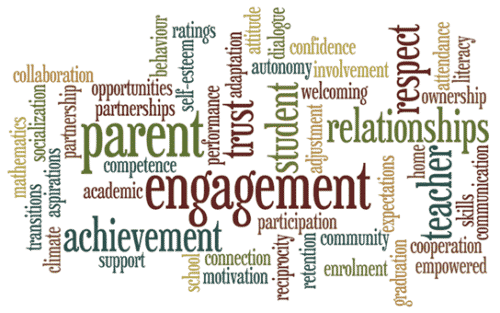
A word cloud with terms related to education, including parent, engagement, student, achievement, trust, relationships, teacher, respect, collaboration, and confidence.The vast majority of educators agree that parent engagement is hugely important and badly lacking in our schools. However, increasing parent engagement is a complex, widespread and confusing puzzle to solve.  It takes a specific effort focused on specific goals. And, as if the concept isn’t hard enough to get a handle on, it is made even harder to understand by its ambiguous definition.  

Parent Engagement – What Is It?

The word “engagement” has many meanings.  When used in “parent engagement” discussions, does it mean involvement, one-way communication, an exchange of thought, a commitment, or just new behaviors? Who starts parent engagement? Does it happen when a parent initiates contact, like when they call the school?  Or, is it when the school initiates things, like sending home a flyer? Is there a moment when we can say it has actually happened?  Who is responsible for whether it has happened or failed to happen? The school? The parents? If the flyer makes it home, but is never read, then that doesn’t count, does it? If the parent calls the school with a question, and hangs up feeling like an idiot, does that count as parent engagement when it likely means they won’t call again? In order to work on increasing parent engagement, it would be helpful if we knew what the term means.  

In the past ten years the phrase “parent engagement” has become a buzzword; a term that gets tossed around school board meetings, district mandates, and teacher/staff trainings. The education community loves to use buzzwords, jargon, and acronyms to categorize topics and expedite conversations. But, as commonly happens with buzzwords, the term has become a catchall – taking on more and more definitions – making it harder to see the specific work and results that are needed.  

We could make up a definition, and just say, “Parent engagement is any time a parent interacts with a district employee, a student or another parent.” Sure, we came up with an all-encompassing answer, but that doesn’t help us define what’s working, what’s not, and what’s specifically needed.  

Five people sit around a restaurant table, looking at menus and talking. Plates, glasses, and silverware are on the wooden table. The setting appears casual and relaxed, with art on the walls and natural lighting.The answer to “What is parent engagement?” is not one definition, it is many. Ask ten people what they think parent engagement is, and you will receive ten different answers. Ask a hundred people and you will get a hundred different answers. This proves that a catchall phrase isn’t going to help us focus on the specifics of what’s needed.
It’s important to note here that having a hundred different answers isn’t a problem.  It’s a good thing. But, due to the “convergent learning” training and culture of most educators, they may see it as a problem. Most educators like having one right answer instead of many.

Once we have a hundred different answers, we can begin to see the breadth of the issue. It also allows us to create some behavioral areas so we can narrow the variances into reasonable objectives. For example, the following ways parents get involved, despite being only nine groupings, shows us that “parent engagement” is much too general a term to be effective. Parents get involved as:

  • Personal tutors and mentors at home – encouragers, college application coaches, etc.
  • Mediators, problem solvers, and advocates between teacher and student
  • School site volunteers – participants, teacher aides, chaperones, and resource donors
  • School site leaders – serving on governance teams, PTA, PTO, and advisory committees
  • Program advocates for special education, STEM, anti-bullying, Junior Achievement, etc.
  • Supporters of athletics and performing arts through booster clubs and attendance
  • Oversight and accountability voices to school & district administrators
  • Voices of influence or even as candidates for the school board
  • Agents of political change – informed voter, outspoken constituent, or lobbyist

But even this many categories won’t include all options and examples of what parent engagement can be. Looking at this list, I can sympathize with over-worked educators and understand why they prefer the generic buzzword. Buzzwords are easier. They help us shove things in a box and label it. They also ease the pressure to do something by saying to outsiders, “We know what we mean by it and you don’t, so don’t get involved.”  What buzzwords don’t do is give us a specific objective to pursue. What we need is clarity.  

Fighting for Clarity

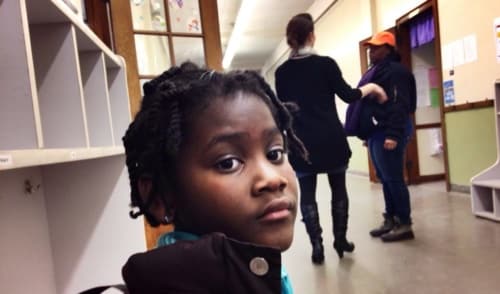
A young girl with short twisted hair looks at the camera while sitting indoors; two adults talk in the background in a hallway.Whether you are a teacher, principal or parent, there is something you can do to get things moving in a good direction. You can ask questions. Remember the hundred answers? It is a good thing because we end up getting a clearer picture of what people think, what to focus on, what to learn more about, what can be measured and what can be done.  
Whether it is you or whomever you let off the hook, to accept ambiguity simply because it is easier than asking someone else to come up with an answer is to fail to fight for what our children need. They need parent engagement. Our children need dedicated allies in the very complex, demanding, scary and life-determining path called school. Students will frequently change classrooms and teachers, but will have, on average, only two parents as constants through the years. Knowledgeable and involved parents are extremely important. If they aren’t knowledgeable, then let’s focus on ways to increase what they know. To do that they must be engaged.  

School leaders, whether they agree or not, also need parent engagement. Parents know what the job market is like, and how the workplace is evolving; knowing what technologies are being used, the importance of college and even grad school, and how career planning is changing, can help classrooms evolve to better prepare students for a career. Discipline, transportation, nutrition and dropout rates are all affected by parent involvement. College and career readiness, citizenship and community support are also impacted by parents.  Most districts’ budgeting and governance processes rely on parents as sources of advocacy and accountability. Title I funding requires measurable parent engagement methods and turnout. But, do your neighborhood schools really know how to increase, maximize, or improve parent engagement? Or could they use some help?

Making a Difference

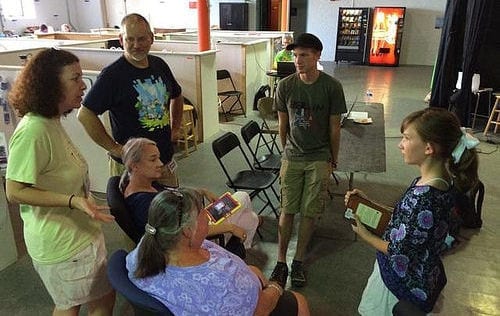
Six people, four standing and two sitting, gather in a casual indoor setting. Some are holding notepads and a tablet. The background shows tables, chairs, and a vending machine. The atmosphere appears relaxed and conversational.Improving parent engagement in your schools requires unique solutions.  There is no “one answer” that applies to all communities. Your community must figure out its own ideas, changes, initiatives, and solutions. What each group needs is a clear idea of how to engage parents, how to measure how well they are doing at improving it, and how to use things that are working in other schools. That’s why people like you must fight for clarity.  

You are someone with a choice. You may spend your whole life doing various good and bad things, but how many times will you be able to know for sure you made a lasting difference? It is a simple choice. You can stay at home or attend a meeting. You can attend a meeting and allow ignorance to persist or you can ask a question. You could simply ask people at school meetings what parent engagement means to them. Or, you could ask leaders to define it clearly enough so everyone will know when it has been accomplished or improved.  Do this and something consequential will happen. You will have changed the accepted norm. You will have moved the solution one inch closer to being found, accepted, and implemented. You will encourage others to ask questions, too. It may not seem like much, but doing this will actually impact many students and parents. It will make a difference.

It isn’t up to someone else. It isn’t someone else’s job or responsibility. Yes, it may take some courage to stand up and ask, “How will we know if we have achieved progressive improvements in parent engagement over the next five years?” It is a good question and worth asking even if a few others may not look too happy that you asked it. That’s okay. They’ll come around. The fight isn’t with them. It’s within you. Are you going to sit in silence when buzzwords fly, or will you ask the needed question?  
Author

Steve Clark has more than fifteen years’ experience as an engaged parent of students in the public education system.  He is an organizational learning consultant with more than twenty years’ experience in consulting, training, EdTech development, systems analysis, and community leadership. He has worked with many schools and non-profits, facilitated both large and small events, served on district-level committees, and developed hundreds of solutions for a variety of clients.

He is founder and president of Leading to Your Success – a consulting firm that recently launched the subsidiary Parent Engagement Solutions.  

Follow Steve Clark on Twitter.


Further Reading

  1. PowerSchool – Why Parent Engagement is Important to Student Success
  2. Edutopia – What Are Your Best Parent-Teacher Engagement Tips?
  3. WestEd – Family Engagement = Student Success

December 6, 2017 0 comments
0 FacebookTwitterPinterestLinkedinWhatsappCopy LinkEmail
A close-up of a woman with pale skin and glossy lips, a single tear on her cheek. She looks pensive and is set against a nighttime cityscape with a tall, illuminated skyscraper in the background.
EducatorsK-12 Teachers

The Dyslexic Prom Queen

by Ian Egan December 6, 2017
written by Ian Egan 8 minutes read

Slipping through the gender cracks in secret by Ellen Hurst

A smiling woman in a white dress and crown waves while wearing a sash, surrounded by other women in formal dresses and tiaras, with trees in the background.Once upon a time there lived a beautiful prom queen. This prom queen possessed all the requisite physical characteristics that one might expect in a fantasy queen. She had golden tresses, blue eyes, porcelain skin and a perfect white smile. She gave the illusion of developed sexuality without denying the possibility of innocence. She was a combination of loner and outsider. She had the ability to mediate conflicts within her high school population because she had the genius of communication. She could be characterized as a cultural heroine in that she unified the individual and the group.

Our prom queen differs significantly in one aspect of her life. She lived with a secret that she kept hidden throughout her school years. This young woman walked into my office and set my research into motion. This vision of perfection had one veiled flaw. She was an undiagnosed dyslexic.  

The majority of teachers in today’s workforce are white, female and middle class. Teachers of color comprise about 16 percent of the teaching force in the United States. In addition, pre-service, as well as in-service teachers, have little experience with children with learning differences or from cultures and languages different from their own.

Our call as advocates is to determine the particular attributes, skills, and dispositions that are needed to increase the probability that all teachers will be able to deliver an academically appropriate pedagogy to stop the industrial mentality of turning out products, flaws and all.

With the advent of Response to Intervention (RTI), all teachers are mandated with the task of meeting the educational needs of all children. General educators are understandably uncertain regarding their level of preparation for their new role of delivering differentiated pedagogy. New research must focus on how well we are preparing teacher candidates with the theoretical understandings and pedagogical skills necessary to meet different learning needs and styles of our children.

A silhouette of a person filled with plants and round fruits, each displaying letters or symbols. The person faces a stream of scattered, colorful letters on a contrasting background. The overall palette is a mix of yellow, blue, and orange tones.This call to arms to change how and what we are doing to our students must be shouted from the rooftops, “Something is rotten in the state of American education.”  I can’t help but suspect that unequal treatment of cisgendered children may have something to do with a collective failure to adequately educate all of our children.

The statistics are grim. Boys are kept back in schools at twice the rate of girls. Boys get expelled from preschool nearly five times more often than girls. Boys are diagnosed with learning disorders and attention problems at nearly four times the rate of girls. They do less homework and get a greater proportion of the low grades. Boys are more likely to drop out of school, and make up only 43 percent of college students. Furthermore, boys are nearly three times as likely as girls to be diagnosed with Attention Deficit and Hyperactivity Disorder (ADHD). Considering 11 percent of U.S. children –6.4 million in all – have been diagnosed with ADHD, that’s a lot of boys bouncing around U.S. classrooms.

Boys do not suffer alone. Many undiagnosed dyslexic girls enter the Literacy “closet” early in life, spending childhood years anxiously avoiding classroom participation in oral reading for fear of embarrassment and disclosure. Because girls tend to be affiliative by nature, the fear of possible peer rejection results in sustained levels of anxiety. Carried further, this fear of disclosure may curtail participation in typical literacy activities such as note writing, emailing, blogging and yearbook signing.

All of us share the common goal of providing equitable learning opportunities for every student in every classroom. This daunting task cannot ignore the elephant in the room  –  gender. A new study on gender disparities in elementary-school performance examines both the objective and subjective aspects of this deteriorating academic performance (Conwell, Mustard & Van Parys, 2012). Surprisingly, they show that:

…the grades awarded by teachers are not aligned with test scores. Girls in every racial category outperform boys on reading tests, while boys score at least as well on math and science tests as girls. However, boys in all racial categories across all subject areas are not represented in grade distributions where their test scores would predict. Boys who perform equally as well as girls on reading, math and science tests are graded less favorably by their teachers, but this less favorable treatment essentially vanishes when non-cognitive skills are taken into account. For some specifications, there is evidence of a grade ―bonus for boys with test scores and behavior like their girl counterparts. (Conwell, Mustard & Van Parys, 2012, p.1).

Illustration of three stylized people sitting in a row, each using a laptop. The figures are in shades of blue, and one laptop stands out in orange. The background fades from white to blue.This seems to defy the logic of assessment. It appears to be blatant discrimination. There were some exceptions to this puzzling phenomenon.  Teachers didn’t downgrade boys who had identical test scores to girls… on one condition. Boys that shared the girls’ positive attitude toward learning received the same grade. The well-socialized boys received a higher grade for good behavior.

To summarize, boys who match girls on both test scores and behavior get better grades than girls. Boys who match girls on both test scores but have bad behavior are graded more harshly. This means that the issue of what to do with underperforming students just became much more complicated.

Gender is a significant factor at play in determining performance in reading and writing. Yet, it is not the only factor. We cannot lose sight of the fact that the differences among boys and among girls are greater than the differences between boys and girls. We must be careful not to focus on the gender differences between students, but rather to recognize that the effectiveness of certain approaches in literacy instruction may be tied to gender. If we keep this focus, we will be better able to provide appropriate and equitable opportunities for both boys and girls.

There are four distinct categories of students who don’t read:

  • The dormant reader: “I’m too busy right now!”
  • The uncommitted reader: “I might be a reader, someday.”
  • The unmotivated reader: “I’m never gonna like it!”
  • The disabled reader: “It doesn’t make sense.”

By understanding these views, we can gain greater insight into why some students choose not to read. The frightening fact is as students get older, they increasingly describe themselves as non-readers. Few have this attitude early in their schooling, but nearly 50 percent describe themselves as non-readers by the time they enter secondary school. The downward spiral continues as students in middle school reported fewer social supports, less self-efficacy, and lower intrinsic motivation—the internal desire to attain academic goals.

A person with brown hair, seen from behind, stands in front of a chalkboard with the words BELIEVE IN YOURSELF written in large, white letters. The chalkboard is set against a brick wall background.My study of gender and dyslexia began some years ago when the Dyslexic Prom Queen courageously walked into my office. Long before I met her, I had many years working as a reading specialist. Many days have been filled with conversations with parents in which they report they have been told that their child’s reading delay was due to nothing more than a developmental lag. They are told to give it some time and their child will eventually catch up.

When a kindergartener confuses letters, associates the wrong sound with a letter, or cannot distinguish a rhyme, it usually has nothing to do with social maturity. Please do not accept the developmental lag excuse that has been used for generations. If your intuition tells you something is not right, do not wait to seek help.

The National Institutes of Health state that ninety-five percent of poor readers can be brought up to grade level if they receive appropriate early intervention. Of course, it is still possible to help an older child with reading, but children beyond third grade require much more frequent and intensive help. The longer you wait to get help for a child with reading difficulties, the harder it will be for the child to catch up.

Seventy-five percent of children receiving intervention at age nine or later continue to struggle throughout their school careers. Waiting until fourth grade, rather than taking action in kindergarten, will only make the task of remediation more complex and time intensive. It will take four times as long to obtain equivalent results.

Awareness of the red flags of reading disability is the first step to an early and accurate diagnosis. Those red flags will be the subject of my last in this series on Literacy. In the meantime, get up on your rooftop and do some shouting.
Author

A smiling older woman with short blonde hair, glasses, and a brown top sits indoors. She is wearing a necklace and earrings, with blurred bookshelves in the background.Dr. Ellen Burns Hurst, author of Why Can’t My Daughter Read? and Why Can’t My Son Read? She holds a Ph.D. in Language and Literacy and has spent a career focused on cutting edge reading interventions. Dr. Hurst continues to focus on her passion of changing the reading lives of children and adults through research presentations at national and international literacy conferences. She is an experienced reading/intervention specialist in public and private schools.

Currently, she engaged in her private practice in Atlanta, Georgia. Her past university teaching assignments focused on assessment in the early childhood classroom for undergraduates as well as literacy assessment and linguistic components of literacy at the graduate level. Visit Dr. Hurst’s new global contributions at https://myedexpert.com/vendor/Ehurst/ and learn more at https://whycantmydaughterread.com/.

Follow Dr. Hurst on Twitter.


Further Reading

  1. TES – Girls lose out in PE gender gap
  2. New York Times – Gender Gap in Education Cuts Both Ways
  3. The Times – Bias of female teachers ‘could limit boys’
December 6, 2017 2 comments
0 FacebookTwitterPinterestLinkedinWhatsappCopy LinkEmail
Newer Posts
Older Posts

Participate

  • Contribute
  • Sponsor
  • Submit Release
  • Subscribe
  • Get Interviewed
Logo with an orange lowercase letter e followed by the partially visible, faded text edCircuit on a light background.

edCircuit emPowers the voices of education, with hundreds of  trusted contributors, change-makers and industry-leading innovators.

  • Washington, DC

SHARE YOUR VOICE

  • Contribute
  • Sponsor
  • Submit Release
  • Subscribe
  • Get Interviewed
  • Contribute
  • Sponsor
  • Submit Release
  • Subscribe
  • Get Interviewed

FOLLOW edCircuit

Linkedin X-twitter Facebook Pinterest

Learn More

  • Our Reach
  • edCircuit Media
  • Careers
  • Our Reach
  • edCircuit Media
  • Careers

YOUTUBE CHANNEL

Youtube

@edcircuit

Copyright © 2014-2025, edCircuit Media – emPowering the Voices of Education.  

Are you sure want to unlock this post?
Unlock left : 0
Are you sure want to cancel subscription?
Sign In

Keep me signed in until I sign out

Forgot your password?

Password Recovery

A new password will be emailed to you.

Have received a new password? Login here

Shopping Cart

Close

No products in the cart.

Close
-
00:00
00:00

Queue

Update Required Flash plugin
-
00:00
00:00

Your cart (items: 0)

Products in cart

Product Details Total
Subtotal $0.00
Shipping and discounts calculated at checkout.
View my cart
Go to checkout

Your cart is currently empty!

Start shopping

Notifications