


 Alyssa Reynolds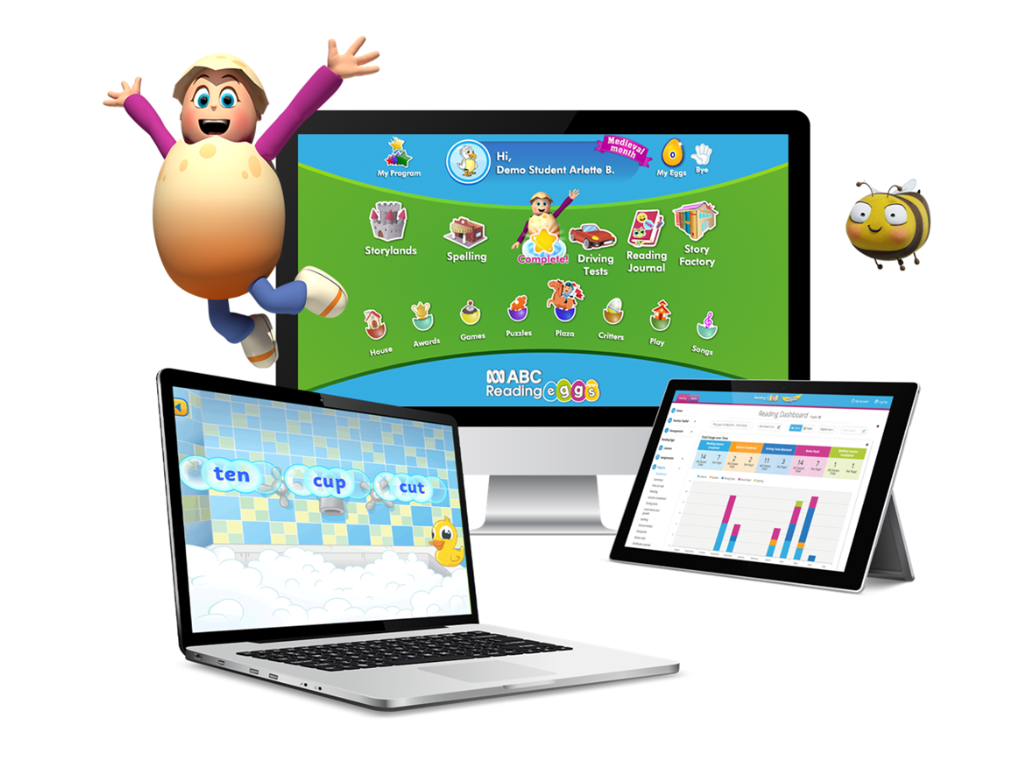
After spending years as a first-grade teacher, Carla Sconiers became the Instructional Support Coordinator overseeing K-12 literacy instruction in Northwest Florida’s Walton County School District. These days, she bases her districtwide work on a simple truism that she has learned alongside ELA teachers around the country: “Not all students in a classroom are going to be on the same reading level.”
To complicate matters for ELA teachers, “reading level” isn’t one skill. It’s composed of five pillars: phonemic awareness, phonics, vocabulary, fluency, and comprehension. A student might have a grade-level vocabulary but be performing below grade level when it comes to phonemic awareness. Traditionally, teachers have managed ELA classrooms by grouping students into reading levels, but with so many permutations and variations of skills, they can only group and regroup students so many times. For Sconiers, this is where a balance of technology and written materials become especially helpful.
Getting Students Excited About Reading
For the past five years, Walton County has placed a strong emphasis on teaching foundational reading skills, especially in pre-K through second-grade classrooms. In the 2023-2024 school year, the district conducted a pilot of a program called Reading Eggs that they had been using for targeted intervention since 2020. Wider application of the program garnered an enthusiastic response from teachers and, importantly, students, who were charmed by what Sconiers calls its “fun” appearance.
Sconiers, who was a classroom teacher at the time, remembers, “The students were so excited about the program.” The next year, Walton County adopted the program districtwide as part of its ongoing commitment to teaching the Science of Reading while also remaining mindful of screen time.
Moving Between On-Screen and Off-Screen Learning
Having a curriculum that’s board-approved for K-12 classrooms has helped teachers looking for supplementary resources avoid the temptation of printing out what Sconiers calls “random worksheets from just anywhere,” which might not align with the district’s wider goals.
Instead, if a teacher is introducing their classroom to a certain vowel or consonant sound, they can access worksheets that are aligned to core instruction and don’t require them to open a browser. Having printed materials is essential for kindergarten teachers, who Sconiers sees using handwriting worksheets to teach students how to form letters.
Having both printed and on-screen materials gives teachers a choice of how to teach each individual skill. They might have students use devices for independent reading, but hand out worksheets to teach skills that come to life more vibrantly on paper. The idea is not to reject technology but to use it when it is clearly the most effective pedagogical tool.
Reporting at the District, School, and Classroom Level
As with any districtwide implementation, a key to the success of Walton County’s literacy program is tracking progress and celebrating success.
Sconiers’ team tracks usage of Reading Eggs at the district and campus level. During meetings with the principals, she makes a point of highlighting the schools that are making the most progress, which has created a sense of friendly competition among schools.
At the classroom level, reading coaches pair their own day-to-day observations with data to identify which skills individual students are struggling with so they can provide support for each individual student.
The result of this coordinated, districtwide approach has been a consistent improvement in literacy scores. As Sconiers concludes, “Each year we are seeing an increase in proficiency for our ELA scores in all of the grade levels who utilize Reading Eggs. We would like to assume that some of that success has come from being able to use Reading Eggs as a support.”
Subscribe to edCircuit to stay up to date on all of our shows, podcasts, news, and thought leadership articles.
