 EdCircuit Staff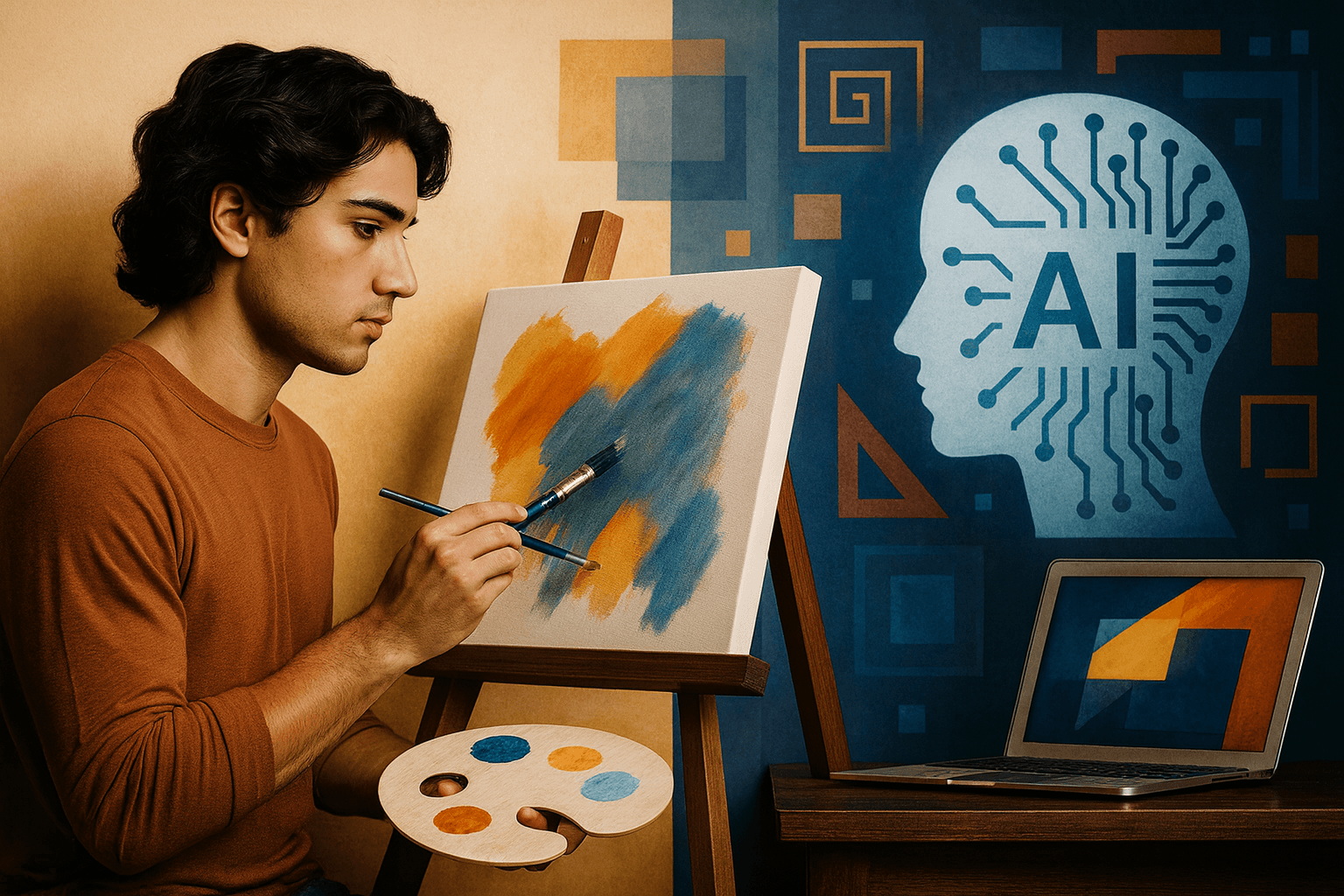
Table of Contents
Art and AI are rapidly transforming how students create, critique, and understand visual expression in today’s classrooms. For decades, many educators viewed computer-generated imagery as something separate from “real art”—more technical than expressive. But today, as AI becomes embedded in photography, painting, digital design, and concept development, it is redefining what creativity looks like in K–12 education.
The collaboration between Art and AI isn’t about replacing traditional skills; it’s about expanding the boundaries of what students can imagine and produce. Generative tools offer new ways to brainstorm, manipulate images, iterate on ideas, and build confidence—especially for students who struggle to get started. For teachers and administrators, this represents a major shift: creativity is no longer limited by technique alone but guided by vision, ethics, and intentionality.
Why Art and AI Belong Together in Modern Education
AI as a Creativity Amplifier
AI is not a shortcut—it’s a creative partner. When students use AI tools, they can:
-
Generate multiple concepts instantly
-
Experiment with style, color, and composition
-
Visualize ideas before committing to materials
-
Overcome fear of the blank canvas
For many, AI actually increases motivational buy-in because they can see a polished starting point before developing deeper ideas.
AI Creates More Room for Expression
By handling technical tasks—cleaning up images, adjusting lighting, or offering layout suggestions—AI frees students to focus on:
-
Meaning
-
Story
-
Mood
-
Message
In other words, the human parts of art.
How Art and AI Are Transforming Photography
From Point-and-Shoot to Dynamic Image-Making
AI-driven photography tools allow students to:
-
Correct exposure
-
Improve clarity and detail
-
Remove distractions
-
Enhance depth of field
-
Transform images into artistic styles
These capabilities mean beginners can produce remarkable images right away, increasing confidence and helping them understand photographic principles more quickly.
AI Provides Immediate Technical Feedback
Many photography platforms now offer AI-powered critique:
-
“This image is underexposed—try increasing light.”
-
“Focus is soft—want help correcting it?”
This real-time feedback accelerates skill development and supports classrooms with diverse learning needs.
Painting, Drawing, and Mixed Media: AI as a Concept Partner
AI Reduces the Barriers to Getting Started
A blank sketchbook can intimidate even the most creative student. AI supports ideation by:
-
Producing concept variations
-
Suggesting styles or color palettes
-
Offering references that match student prompts
-
Allowing quick experimentation without wasting materials
This shifts the early stages of painting and drawing from anxiety-driven to exploration-driven.
Encouraging Risk-Taking in Artistic Choices
When generating possibilities is fast and cost-free, students take more risks:
-
Trying bold colors
-
Mixing artistic traditions
-
Testing extreme compositions
-
Exploring new forms and shapes
AI broadens artistic courage, not replaces it.
Digital Design and AI: A New Creative Literacy
AI Streamlines Professional Workflows
Digital design students already work in a world where AI is standard in the industry. Tools can:
-
Remove backgrounds
-
Resize assets
-
Suggest layouts
-
Analyze typography
-
Generate custom illustrations
This allows students to focus on the design thinking that matters: visual hierarchy, message clarity, and aesthetic cohesion.
Student Portfolios Become More Professional
High school artists using AI-enhanced design tools can develop:
-
Branding suites
-
Social media graphics
-
Print-ready posters
-
Product mockups
-
Digital illustrations
AI helps elevate work to industry-level quality—important for art school and CTE pathways.
Teaching Students to Use Art and AI Ethically
Copyright, Attribution, and Dataset Awareness
Introducing Art and AI in the classroom requires conversations about:
-
The origins of training data
-
When to label AI-generated work
-
Intellectual property concerns
-
Ethical prompt creation
-
Biases within models
These are essential digital citizenship lessons, not roadblocks.
AI Literacy Is Now Visual Literacy
Students must learn how to:
-
Spot derivative or copied styles
-
Understand biases in outputs
-
Analyze creative authenticity
-
Use AI as a tool, not a crutch
This prepares them for careers in creative industries increasingly shaped by AI.
The Debate: Is AI Art “Real Art”?
History Repeats Itself
Just as photography was once dismissed as “not real art,” AI-generated work is generating similar debate. But history shows that:
-
Tools evolve
-
Artistic mediums expand
-
Artists adapt
The art world has always broadened its definition of creative practice.
Intent Remains the Core of Art
Regardless of the toolset, the artist’s:
-
Idea
-
Interpretation
-
Emotion
-
Purpose
drive the creative process.
AI may generate pixels, but humans generate meaning.
How Art Teachers Are Using AI in the Classroom
Educators are adopting AI in ways that enhance—not replace—traditional practice:
-
AI as a critique partner offering targeted suggestions
-
Choice boards enhanced with AI-generated options
-
Warm-ups such as AI-produced shapes for contour drawings
-
Historical mashups mixing artistic movements
-
Accessibility supports for students with physical or cognitive barriers
Many teachers report that AI makes students more invested because the technology accelerates progress toward their vision.
What Administrators and Curriculum Leaders Should Consider
1. Provide Professional Development in Art and AI
Teachers need guidance on:
-
Approved tools
-
Ethical use
-
Project design
-
Age-appropriate safety
2. Update Curriculum to Include AI Skills
Modern art programs may integrate:
-
AI-assisted photography
-
Prompt engineering for visual creation
-
Ethics of generative design
-
Digital citizenship through artmaking
3. Ensure Equitable Access
AI must be an equalizer, not a divider.
Schools should support:
-
Device access
-
Safe platforms
-
Training resources
-
Policies that protect student data
4. Encourage Cross-Content Collaboration
Art and AI connect naturally with:
-
Computer science
-
Humanities
-
CTE
-
Media production
-
Social studies
This fosters an interdisciplinary creative culture.
The Future of Art and AI: Students as Hybrid Artists
Today’s students may graduate with portfolios blending:
-
Hand drawing
-
Oil or acrylic painting
-
AI ideation
-
Photography
-
Motion graphics
-
3D and mixed reality environments
They are hybrid creators, fluent in both traditional and technologically enhanced mediums.
Conclusion: Art and AI Are Expanding What Students Can Imagine
AI does not erase the value of traditional techniques. Instead, it gives students more pathways to create, more courage to experiment, and more language to express who they are. Art and AI together prepare the next generation of artists, designers, creative thinkers, and innovators.
The question is no longer whether AI belongs in art classrooms—
But how creatively we guide students to use it.
Further Exploration of Art and AI: How Artists Are Using AI Today
For readers who want to see real-world examples of Art and AI in action, this panel discussion features contemporary artists and technologists who use AI to spark creativity, challenge assumptions, and push the boundaries of artistic practice.

San Francisco Public Library – Art Meets AI : Explore how artists are engaging with artificial intelligence.
Subscribe to edCircuit to stay up to date on all of our shows, podcasts, news, and thought leadership articles.