 EdCircuit Staff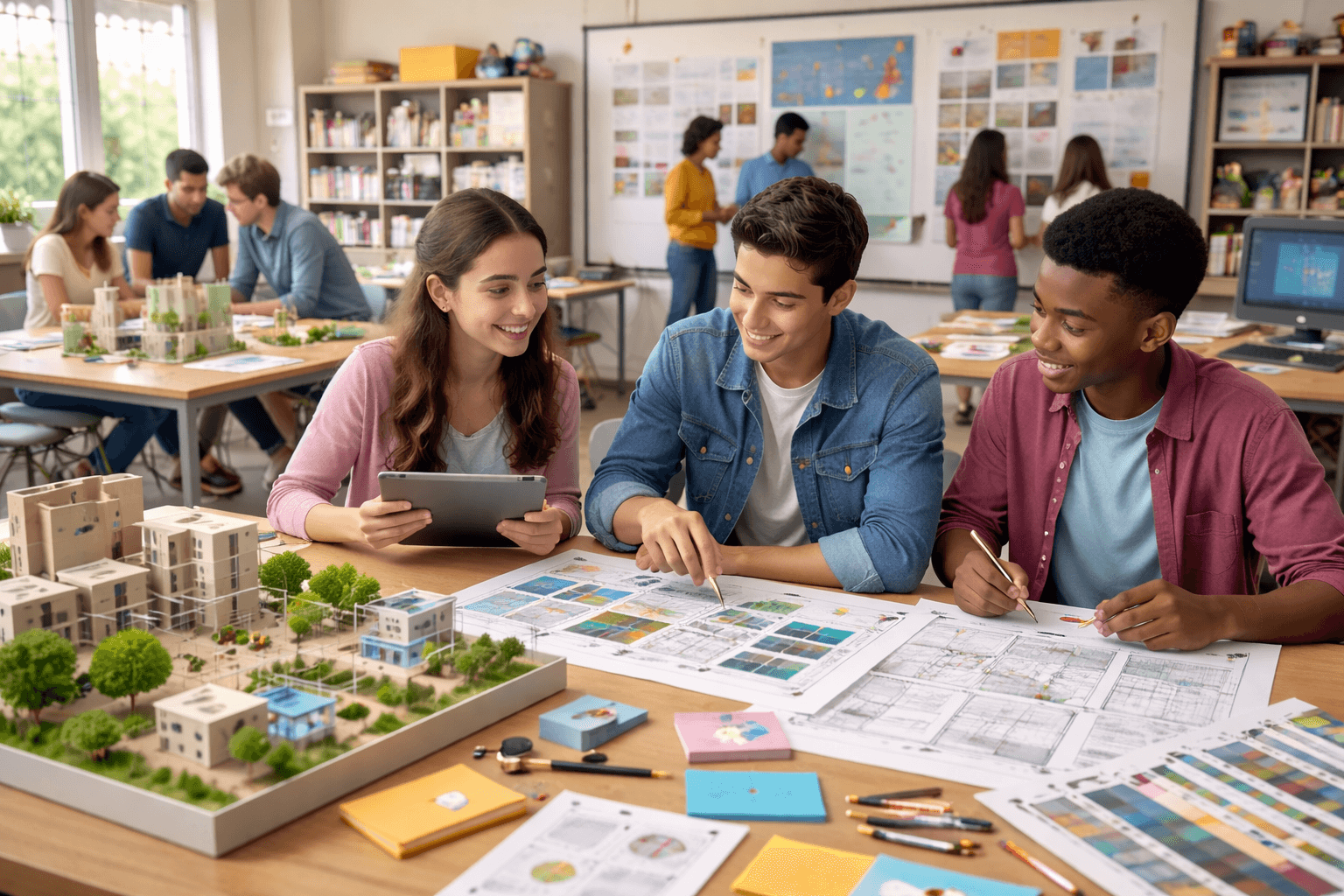
Real-world learning often starts with a moment that feels unfamiliar to students used to traditional classrooms. A group of high school seniors stands at the front of the room, presenting a business proposal to local professionals. They are nervous, prepared, and aware that the feedback they receive will shape their final revisions. This is not a simulation for a test. It is learning built around real expectations.
Across the country, high schools are shifting away from instruction that focuses only on memorization and toward experiences that reflect real jobs, real problems, and real responsibilities. This change is reshaping how students learn and how educators define success.
Why High Schools Are Rethinking Instruction
For years, high school achievement was measured by grades, credits, and standardized assessments. While academic knowledge remains important, educators are increasingly recognizing a disconnect between what students know and what they can do.
Many graduates leave school with content knowledge but limited experience applying it. Employers and colleges report that students struggle with communication, collaboration, problem-solving, and adaptability. These gaps have pushed schools to reconsider what it truly means to be prepared.
Real-world learning addresses this challenge by connecting academic content to practical use, helping students understand not just the “what,” but the “why” behind their learning.
What Real-World Learning Looks Like in Practice
In classrooms built around real-world learning, students are active participants. Lessons are designed around problems, projects, and scenarios rather than isolated skills.
Students might:
Design a business plan that requires budgeting, research, and presentation
Analyze environmental data to propose sustainability solutions
Write professional emails, reports, and proposals in English classes
Develop marketing campaigns using real audience feedback
Build and test prototypes in engineering and technical courses
These tasks demand more than correct answers. Students must plan, revise, collaborate, and defend their thinking, just as they would in a workplace.
One student described it simply: “It feels more stressful than a test, but it also feels more real. You actually care if it works.”
Project-Based Learning as the Core Approach
Project-based learning has become the foundation of many real-world learning models. Instead of short assignments, students engage in extended projects that unfold over weeks or months.
Teachers guide the process, but students make key decisions. They manage timelines, divide responsibilities, and adjust their approach when problems arise. Assessment focuses on both the final product and the skills demonstrated along the way.
Many schools now replace traditional exams with presentations, portfolios, or exhibitions of learning. These assessments better reflect how students will be evaluated beyond high school.
Career Pathways and Applied Coursework
High schools are also connecting real-world learning to career pathways. These pathways align academic coursework with industries such as healthcare, technology, business, construction, and the arts.
Students may participate in:
Internships and apprenticeships
Job shadowing experiences
Industry mentorships
Certification programs alongside graduation requirements
Academic classes support these experiences. Math becomes budgeting and data analysis. Writing focuses on resumes, documentation, and professional communication. Science connects to lab safety, research methods, and real applications.
When students see how learning connects to future opportunities, engagement increases.
Learning Through Real-Life Scenarios
Scenario-based learning places students in realistic situations with constraints and consequences. These scenarios mirror the uncertainty and complexity of real work.
Examples include:
Responding to a simulated public health issue
Planning emergency response logistics
Resolving workplace conflicts through role-play
Managing limited resources within a project budget
These experiences teach students that real problems rarely have one correct answer. Instead, they learn to weigh options, make decisions, and adapt when conditions change.
Students often say this type of learning feels challenging but meaningful. “You can’t just guess,” one student noted. “You have to explain your thinking.”
The Evolving Role of Teachers
As instruction shifts, the role of teachers changes as well. Educators become designers of learning experiences, facilitators of discussion, and coaches for skill development.
This approach requires careful planning and flexibility. Teachers collaborate across subject areas, develop new assessments, and often work with community partners. While the workload can be significant, many educators report higher student engagement and deeper learning.
Professional development now focuses on project design, assessment of skills, and managing collaborative classrooms.
Measuring Success Differently
Traditional grading systems do not always capture the full impact of real-world learning. As a result, many schools are adopting alternative measures of success.
These include:
Portfolios of student work
Performance-based assessments
Skill-based rubrics
Reflection and self-assessment
Administrators and policymakers are increasingly looking at long-term outcomes such as graduation rates, postsecondary success, and workforce readiness.
Benefits Beyond the Classroom
The benefits of real-world learning extend beyond academics. Students gain confidence, independence, and a clearer understanding of their strengths and interests. They develop communication and collaboration skills that carry into adulthood.
Communities benefit as well. Partnerships with local businesses and organizations allow students to contribute meaningful work while gaining valuable experience.
Parents often notice a change, too. Students involved in applied learning tend to be more motivated and more invested in their education.
Challenges to Address
Despite its promise, real-world learning requires careful implementation. Teachers need time to plan. Schools need strong partnerships and resources. Equity must remain a priority so all students have access to high-quality experiences.
It is also important to maintain strong academic foundations. Real-world learning is most effective when it builds on solid instruction rather than replacing it.
Looking Forward
High schools are redefining what preparation looks like. Education is no longer only about delivering content. It is about helping students apply knowledge, adapt to change, and navigate complex systems.
Real-world learning reflects the realities students will face after graduation. As more schools adopt project-based, applied, and career-connected approaches, high school education continues to move closer to the world students are preparing to enter.
Subscribe to edCircuit to stay up to date on all of our shows, podcasts, news, and thought leadership articles.