




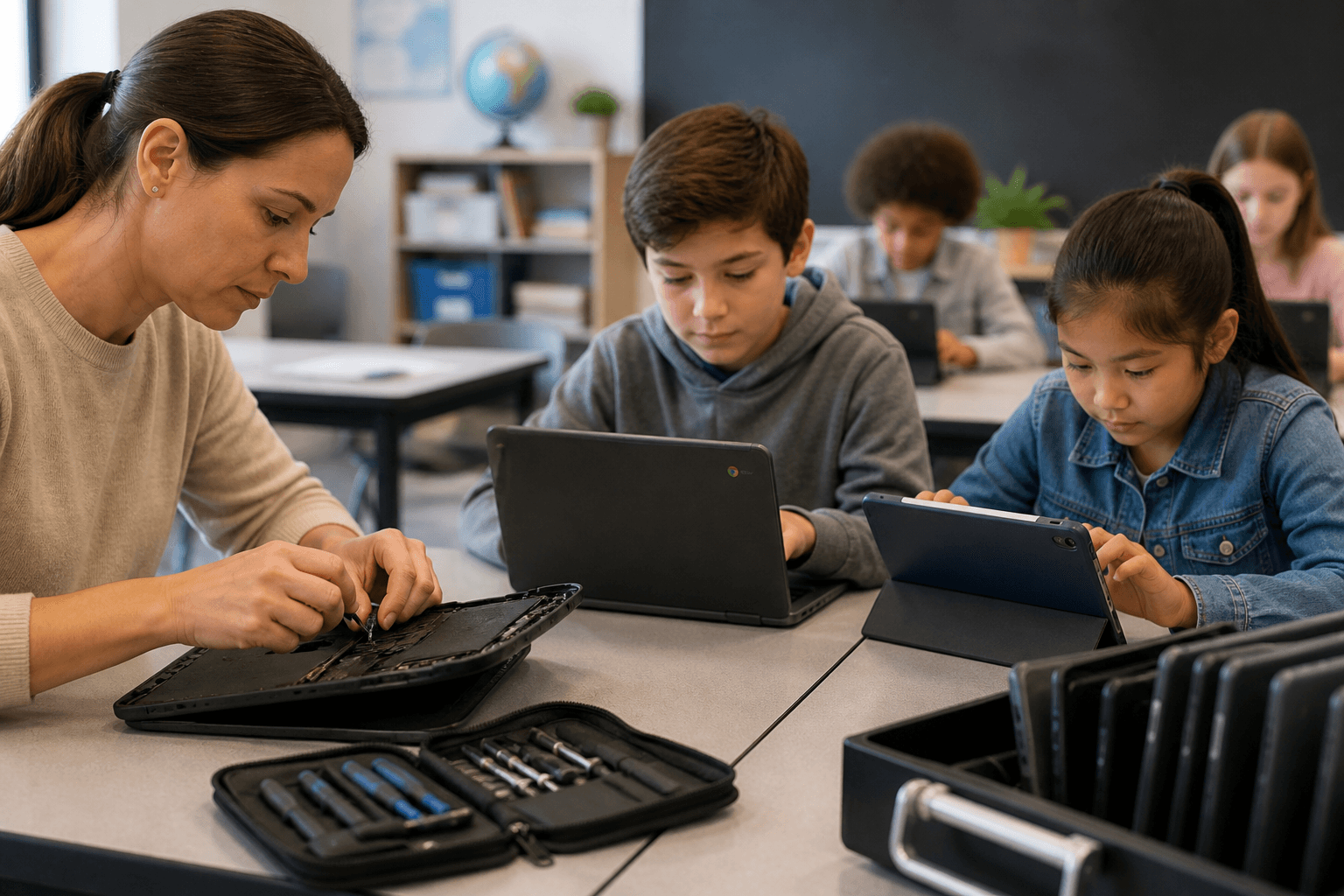
Device maintenance in K-12 schools is no longer a technical afterthought. It is a core part of how schools support learning, protect investments, and ensure students have reliable access to digital tools every day.
The shift to 1:1 devices in schools
Over the past decade, K-12 education has undergone a major digital transformation. Many districts have adopted 1:1 device programs, placing a Chromebook or iPad in the hands of every student. This shift accelerated during the COVID-19 pandemic, when remote and hybrid learning made devices essential rather than optional.
What received far less attention was what happens after rollout.
In many schools, device maintenance is still treated as a back-end IT task instead of a core part of instructional continuity. The result shows up quickly. Devices begin to fail, tickets pile up, and classroom momentum slows down.
That gap is no longer easy to ignore.
Devices break. Batteries degrade. Software becomes outdated. And when maintenance is reactive instead of planned, the impact is felt across classrooms.
Why maintenance gets overlooked
There are a few common reasons schools underestimate device maintenance:
- Initial focus is on procurement, not sustainability
- IT teams are understaffed or stretched thin
- Budgets prioritize new purchases over upkeep
- Responsibility for care is unclear between students, teachers, and IT
The result is predictable: devices fail faster, support tickets increase, and instructional time is disrupted.
The real cost of poor device maintenance
When device maintenance is not prioritized, the consequences show up in classrooms almost immediately.
Instructional disruption
Picture a classroom where five students cannot log in, three devices will not hold a charge, and one has a cracked screen that makes it unusable. The lesson does not stop, but those students are already behind.
In a 1:1 environment, even small failure rates create real gaps in participation.
Increased IT workload
Without preventive maintenance, IT teams spend most of their time reacting. Instead of improving systems, they are stuck clearing backlogs, triaging urgent issues, and managing frustrated staff.
This is where burnout starts to show.
Higher long-term costs
Reactive maintenance is expensive. Emergency repairs, rushed replacements, and lost devices add up quickly. Districts often end up paying more over time because they delayed small, manageable upkeep.
Schools that invest in structured maintenance programs regularly extend device lifespan by one to two years. At scale, that is a major budget difference.
Equity breaks down quickly
When device maintenance is inconsistent, equity breaks down fast. The students who lose access are often the ones who rely on school devices the most.
Maintenance is not just operational. It directly impacts who gets to fully participate in learning.
What effective device maintenance looks like
Strong device maintenance programs are proactive, structured, and shared across the school community.
1. Preventive maintenance routines
Routine checks and updates reduce the likelihood of major failures. This includes regular OS updates, battery health checks, and physical inspections.
Preventive care is far less disruptive than emergency fixes, and far less expensive.
2. Clear ownership and accountability
One of the most common gaps in schools is unclear responsibility. When no one owns device care, everyone assumes someone else does.
Effective programs define roles clearly:
- Students take responsibility for daily handling
- Teachers reinforce expectations in real time
- IT teams manage systems, repairs, and tracking
Small habits, like proper storage and charging, reduce damage more than most schools expect.
3. Student education and digital responsibility
Students need to see devices as tools, not temporary equipment.
Simple habits matter:
- Carrying devices correctly
- Keeping food and liquids away
- Reporting issues early instead of ignoring them
Schools that invest even a small amount of time in this see measurable drops in damage rates.
4. Streamlined repair and support systems
When something does go wrong, response time matters.
Efficient systems include:
- Clear ticketing workflows
- Defined repair timelines
- Access to loaner devices
The goal is not zero issues. The goal is minimal disruption.
5. Lifecycle planning
Every device has a lifespan, and ignoring that reality leads to budget surprises.
Lifecycle planning allows districts to:
- Forecast replacement cycles
- Spread costs over time
- Avoid large, reactive purchases
This is where maintenance connects directly to financial planning.
The role of leadership in device maintenance
School and district leaders play a critical role in shifting maintenance from reactive to proactive.
Budget alignment
Maintenance must be built into technology budgets, not treated as an optional expense.
This includes funding for:
- Repairs and parts
- IT staffing
- Device management tools
Policy development
Clear policies help set expectations for device use and care. These policies should be communicated to students, staff, and families.
Culture shift
Maintenance should be seen as part of the learning environment, not just a technical function.
When schools treat devices as essential learning tools, care and responsibility follow.
Moving from reactive to proactive maintenance
Many schools are now recognizing the need to rethink their approach.
A proactive strategy includes:
- Tracking device performance data
- Identifying common failure points
- Addressing issues before they escalate
This shift reduces costs, improves reliability, and supports better learning outcomes.
Moving from reactive to proactive maintenance
Many schools are starting to recognize that their current approach is not sustainable.
A proactive strategy is built on visibility and planning. That includes tracking device performance, identifying repeat issues, and addressing patterns before they escalate.
This shift changes how IT teams operate. It also changes how classrooms function. When devices are reliable, teachers can plan with confidence and students can stay engaged.
Final thoughts
Device maintenance in K-12 schools is not just about fixing what breaks. It is about protecting instructional time, supporting equity, and making technology investments last.
Schools have already committed to digital learning. The devices are in students’ hands.
The real question now is whether those devices will continue to support learning consistently or slowly become a source of disruption.
Without a clear maintenance strategy, even the strongest 1:1 program starts to break down. With one, it becomes sustainable.
Subscribe to edCircuit to stay up to date on all of our shows, podcasts, news, and thought leadership articles.
Related reading
More on EdTech