EdReform: Do We Know When We See Political Theater?
John McLaughlin discusses recent news on IDEA funding levels and how the law should be understood in 2016.
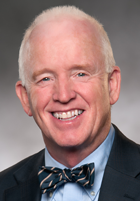

John McLaughlin spent time discussing recent news about IDEA and funding levels. McLaughlin shares his perspective on what and or how we should reframe our interpretation of IDEA in 2016.

CoffeED Episode: John McLaughlin on IDEA
For additional perspective on this hot topic, you might like to hear McLaughlin’s co-author, Mark Claypool, on this episode of CoffeED.
How to Tell Reform From Political Theater
Special education funding draws strong statements from every side, and it can be hard for educators and parents to tell real change from performance. A few questions help when reading or hearing news about IDEA or any education reform:
- Is there a plan or only a promise? Real reform comes with a bill, a budget line, or a rule. A statement with no follow-up may be aimed more at the audience than at schools.
- Who pays, and when? Look for whether money is actually appropriated and when it reaches states and districts, not only what is proposed.
- What changes for students? Ask how the proposal would affect services for a child with a disability in a real classroom.
- Who is in the room? Proposals shaped with teachers, families, and school leaders tend to hold up better than ones announced to them.
- What happens after the headline? Follow the story past the first announcement to see whether anything was passed, funded, or carried out.
Asking these questions is one way to reframe how we interpret IDEA news, which is the conversation McLaughlin invites in this episode.
More CoffeED Conversations on At-Risk Students
Previous episodes of CoffeED focused on the dropout issue. Check out our CoffeED episodes with Bill Milliken of Communities in Schools, and a follow-up conversation with Milliken, Dan Domenech of the AASA and Mark Claypool of ChanceLight Behavioral Health and Education. Claypool is McLaughlin’s co-author of We’re In This Together: Public-Private Partnerships in Special and At-Risk Education.
About John M. McLaughlin, Ph.D.
John M. McLaughlin, Ph.D., directs the Research & Analytics unit of ChanceLight Behavioral Health and Education. Dr. McLaughlin holds a BA, MA and Ph.D. from Peabody College of Vanderbilt University, the University of Chicago and the University of Minnesota, respectively.
He was a certified geography teacher and secondary school administrator in Tennessee, where he served as a teacher. He then spent the last ten years of his work in that state as principal of an alternative high school. In 1977, he founded Benton Hall Academy, a school in the Nashville area for students in need of a small and caring environment. From 1993 to 2000, he published The Education Industry Report, a monthly summary of investment activity in the education arena.
He has been interviewed by virtually every major newspaper, magazine and broadcast outlet in the U.S. for his insights on the interface of public education and free enterprise, and he has been published several times throughout his career. His most recent writing includes:
- an article, “Alternative Education’s Impact on Office Disciplinary Referrals” (with Eva Gillham), in The Clearing House, September 2012;
- a book of fiction, The Last Year of the Season, 2014, North Star Press; and
- We’re In This Together: Public-Private Partnerships in Special and At-Risk Education (with Mark K. Claypool), 2015, Rowman & Littlefield Education.
Related reading
More on K-12