 EdCircuit Staff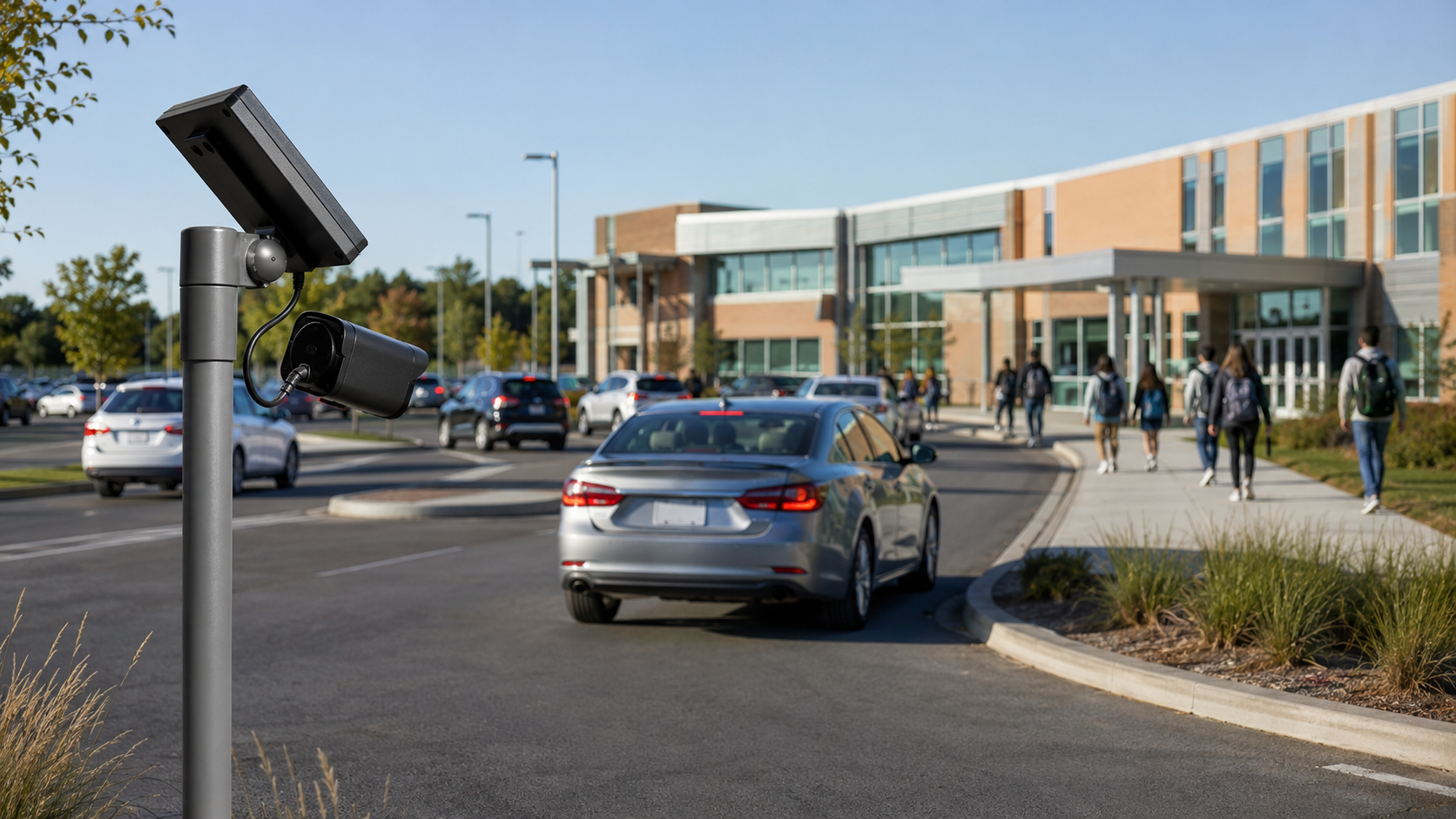
Flock cameras in schools are becoming a new layer of campus security, even though many educators, students, and families may not realize the cameras are there.
A teacher turns into the staff parking lot at 7:12 a.m. A high school senior arrives a few minutes before the bell. A parent enters the pickup line, a delivery driver pulls behind the cafeteria, and a visitor comes to an evening school board meeting.
To the people inside those vehicles, it feels like an ordinary trip onto school property. To an automatic license plate reader, each arrival may become a searchable record.
The camera can capture a plate number, vehicle characteristics, its location, and the exact date and time. A second camera near the exit may record when that same vehicle leaves. The small, solar-powered device mounted near a driveway is not simply watching the parking lot. It is building a record of vehicle movement.
That capability is drawing the attention of school leaders searching for better ways to respond to threats, theft, vandalism, and unauthorized visitors. It is also raising a harder question: How much surveillance should a school conduct in the name of safety?
Automatic license plate reader technology, usually called ALPR or LPR, forces districts to confront two responsibilities at once. Schools must protect the people on campus, but they must also protect the trust of the community they serve.
What an ALPR Camera Actually Sees
An ALPR is different from a conventional security camera that records a wide view of a parking lot. It is built to detect passing vehicles, photograph them, and use optical character recognition and computer vision to convert what the camera sees into searchable information.
According to Flock Safety’s description of its system, its readers capture license plate images, vehicle characteristics, timestamps, and camera locations. Flock says its ALPR product does not use facial recognition or collect biometric or driver information. The company also says data is generally deleted automatically after 30 days unless a customer’s contract, policy, or local law requires a different period.
A license plate, however, is a persistent identifier attached to a vehicle. One camera sighting may reveal little. Repeated sightings can establish a pattern: where a vehicle appeared, when it arrived, and where it went next.
On a school campus, the surrounding context can make the owner easy to infer. Administrators may know which student drives a particular blue sedan. Staff parking assignments, vehicle-registration records, security reports, and law enforcement databases can add another layer of information. The technology may not identify the person behind the wheel, but vehicle data can quickly become personal data in practice.
Why Schools Are Buying the Cameras
School campuses present a difficult security environment. They may include several buildings, open parking lots, athletic fields, delivery areas, and multiple entrances. Hundreds or even thousands of vehicles can pass through each day.
Traditional security video is often reviewed after an incident. Staff must find the right camera, locate the correct time, and hope the plate is visible. An ALPR makes vehicle information searchable. It can also send an alert when a plate on an approved list passes a camera.
For a district, that can mean learning that a vehicle connected to a documented threat or no-trespass order has entered school property. It can help investigators identify a car involved in theft, vandalism, an assault, or an abduction concern. During a missing-person or AMBER Alert investigation, it may show whether a vehicle entered or left campus. In an emergency, even a few minutes can matter.
The Licking Heights Local School District in Ohio began with four Flock cameras around its high school and middle school. The district’s safety supervisor described the cameras as another way to respond to vandalism, theft, unauthorized access, and the arrival of people prohibited from school property. The system was intended to provide faster alerts and strengthen coordination with local police.
Colleges and universities cite similar benefits. EdTech Magazine reported that Ohio State University uses readers at entrances, exits, parking structures, and other locations. The university said plate-reader information helped investigators identify a potential suspect vehicle following a homicide near campus. The University of Georgia has also placed readers at major entry and exit points to give dispatchers and investigators another source of information during and after an incident.
These are not hypothetical uses. A verified alert involving a credible threat can give school safety personnel valuable time. A readable plate can turn hours of video review into a faster lead.
The concern begins with everything else the cameras capture.
A Security Tool That Records Everyone
An ALPR does not limit itself to suspicious vehicles. It records the cars of teachers, students, parents, coaches, volunteers, delivery workers, and visitors who are not suspected of doing anything wrong.
The system may be installed to identify a handful of vehicles of concern, yet it creates records about everyone who crosses its field of view. The size of that collection can grow quickly.
In 2026, Signal Cleveland reported that Cleveland Metropolitan School District had 201 readers across 70 buildings, usually with a camera at both the entrance and exit. District officials pointed to investigations involving stolen vehicles, break-ins, and unauthorized vehicles. The annual contract cost was reported at $603,000.
At that scale, privacy is only one part of the conversation. A school board should also ask whether the network is proportionate to the problems it is solving and whether it is producing measurable results. Would additional lighting, security staffing, secure entrances, threat-assessment resources, or student mental-health support address a greater need? ALPR may be one useful layer, but it should not become the entire strategy simply because it produces alerts and searchable data.
The rapid spread of the technology has already produced public backlash. Some communities have paused or reconsidered their programs, while activists have created public maps of camera locations. TechCrunch reported in February 2026 that cameras had been vandalized in several states. More recently, an August 2026 CBS Mornings report highlighted growing opposition across the country. Hood County, Texas, shut down and covered its cameras following privacy concerns, while residents gathered in Fargo, North Dakota, to protest the technology.
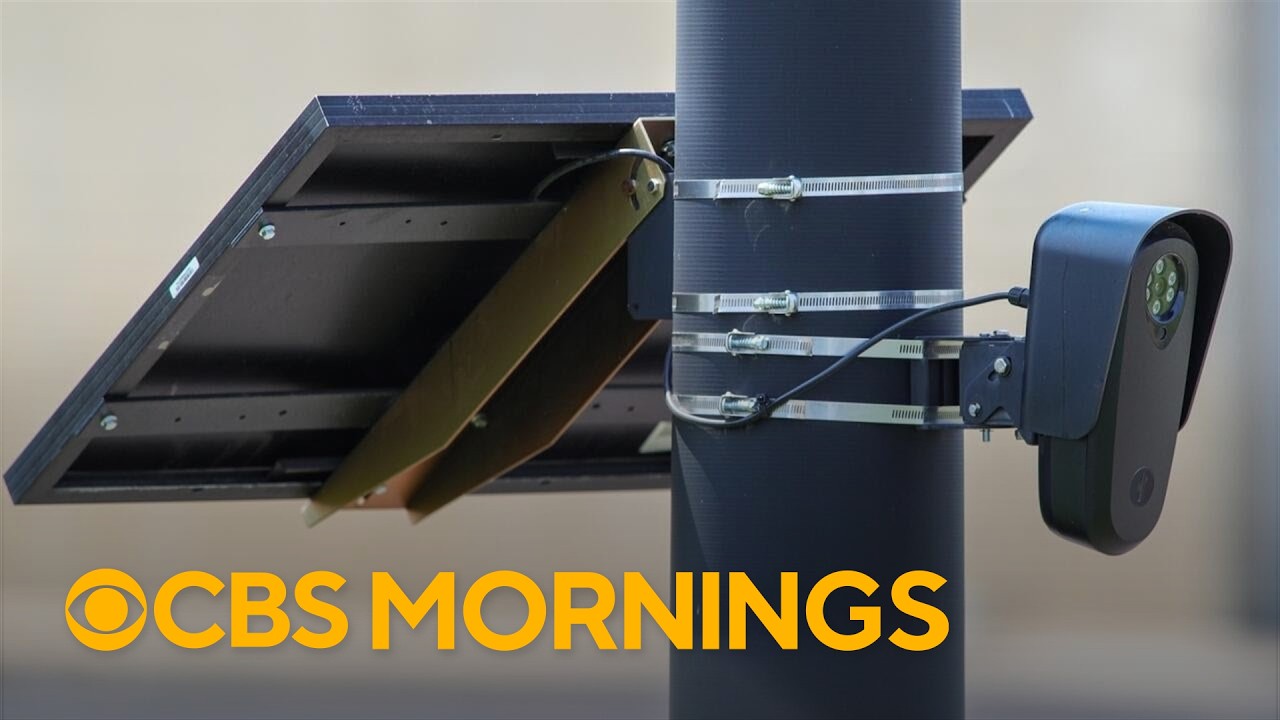
Damaging cameras is not public oversight. The backlash does reveal what can happen when surveillance expands faster than the policies meant to govern it. A district may view an installation as a routine security purchase while families see a system they were never told would record their movements.
Who Else Can Search the Data?
The most important privacy question may not be how school employees use the system. It may be whether the district’s camera data can be searched by outside agencies.
Flock says customers control their data, determine who has access, and choose whether to participate in sharing relationships. Those choices can keep school data tightly restricted or place it within a much broader law enforcement network. The difference may come down to contract language, system settings, and decisions that never received public discussion.
A 2026 investigation by The 74 found that more than 100 public school systems nationally had installed Flock devices. Audit logs obtained from six Texas districts showed school-camera data was searched far more often by outside police agencies than by the districts themselves. In one month, more than 3,100 agencies reportedly conducted over 733,000 searches involving eight cameras operated by Alvin Independent School District. Some searches listed immigration-related reasons.
The investigation found no evidence that the districts themselves conducted immigration searches or necessarily knew outside agencies were doing so. That is precisely why access and auditing matter. A school can purchase what it believes is a narrowly focused safety tool while its camera data is used in investigations that have no connection to campus.
Flock has said federal immigration authorities do not receive direct access from the company and that customers control sharing. Local agencies, however, may conduct searches on behalf of federal partners, and a network search may include data from participating school cameras.
For families, the technical distinction between direct and indirect access may offer little comfort. If parents believe a trip to school could expose their movements to agencies far beyond the district, some may avoid conferences, school events, student services, or routine contact with educators. A safety system that makes part of the community afraid to enter school property is creating a different kind of risk.
Retention Rules Are Changing
In August 2026, Flock announced that it was reducing its recommended default retention period from 30 days to seven days. Existing customers, however, may retain their previously approved settings, and individual customers will continue choosing the retention period that fits their policies. For districts, that makes verifying the school’s actual setting more important than relying on the company’s stated default.
Seven days may sound brief, but across a busy school district, it can still produce thousands of records showing when vehicles arrived and departed. Some districts may retain that information for 30 days or longer, while records connected to an active investigation can be preserved beyond the standard retention period.
Districts also need to know what happens after data leaves the primary system. Downloaded images, exported reports, screenshots, and evidence attached to a case may not disappear on the same schedule. A written retention rule means little if copies can remain indefinitely in email accounts, local folders, or outside agency files.
The U.S. Bureau of Justice Assistance’s license plate reader policy template emphasizes written rules for collection, access, use, sharing, retention, deletion, accountability, and audits. The guidance was developed for justice agencies, but the same questions belong in any school district operating a vehicle-surveillance system.
Seven Decisions Districts Must Make in Public
Buying cameras is the easy part. Governing them requires a district to draw clear lines before the first plate is scanned.
- Define the purpose. A policy should name the situations in which a search is allowed, such as a credible threat, stolen vehicle, missing person, documented no-trespass order, or investigation of a specific incident. “General school safety” is too broad to protect against mission creep.
- Prohibit misuse. The same policy should bar searches driven by curiosity, routine monitoring of employee attendance, tracking students without a documented safety reason, or monitoring lawful protests, union activity, religious services, and other constitutionally protected activity.
- Limit and verify access. Only employees with a legitimate operational need should be able to search the system. Each search should require a documented reason and, when appropriate, an incident or case number. A plate match must be verified before staff or police take high-risk action; an alert is an investigative lead, not proof.
- Control outside sharing. District leaders should be able to name every agency with direct or network access to school-camera data. Sharing should be narrow, intentional, approved in writing, and reviewed regularly. Default settings should never substitute for a school board decision.
- Set a retention rule that covers copies. The district should choose the shortest practical period and place it in both policy and contract language. The same rule must address downloads, exports, screenshots, investigative files, and data held by partners.
- Tell the community before installation. Camera purposes, general locations, retention rules, sharing arrangements, and complaint procedures should be available in plain language. Public board discussion, visible notice near monitored entrances, and an accessible online policy should come before deployment, not after questions arise.
- Measure whether the cameras work. An annual report should include the number of alerts, searches, confirmed matches, incidents assisted, false or unconfirmed alerts, outside-agency searches, policy violations, and total program cost. Renewal should require a fresh public review. If the cameras are not delivering enough safety value to justify their cost and intrusion, the district should reduce or end the program.
Safety Depends on Trust
The debate over Flock cameras in schools is often framed as a choice between safety and privacy. Schools cannot afford to surrender either one.
An automatic license plate reader can provide crucial evidence after a crime and an early warning when a known threat reaches campus. It can also create a detailed record of when students, employees, families, and visitors arrive and leave, then make that information available beyond the people who collected it.
That does not make the technology inherently good or inherently harmful. It makes the rules around it essential.
Before turning on the cameras, a district should be able to explain what is collected, why it is needed, who can search it, who can receive it, how long it remains, and how the public will know whether the system is working.
If a school cannot answer those questions openly, it is not ready to scan the first plate.
edCircuit note:
Readers can explore DeFlock Maps, an open-source, community-driven map of reported ALPR locations. Because the information is crowdsourced through OpenStreetMap, locations may be incomplete, outdated, or incorrectly identified.
Subscribe to edCircuit to stay up to date on all of our shows, podcasts, news, and thought leadership articles.