



 EdCircuit Staff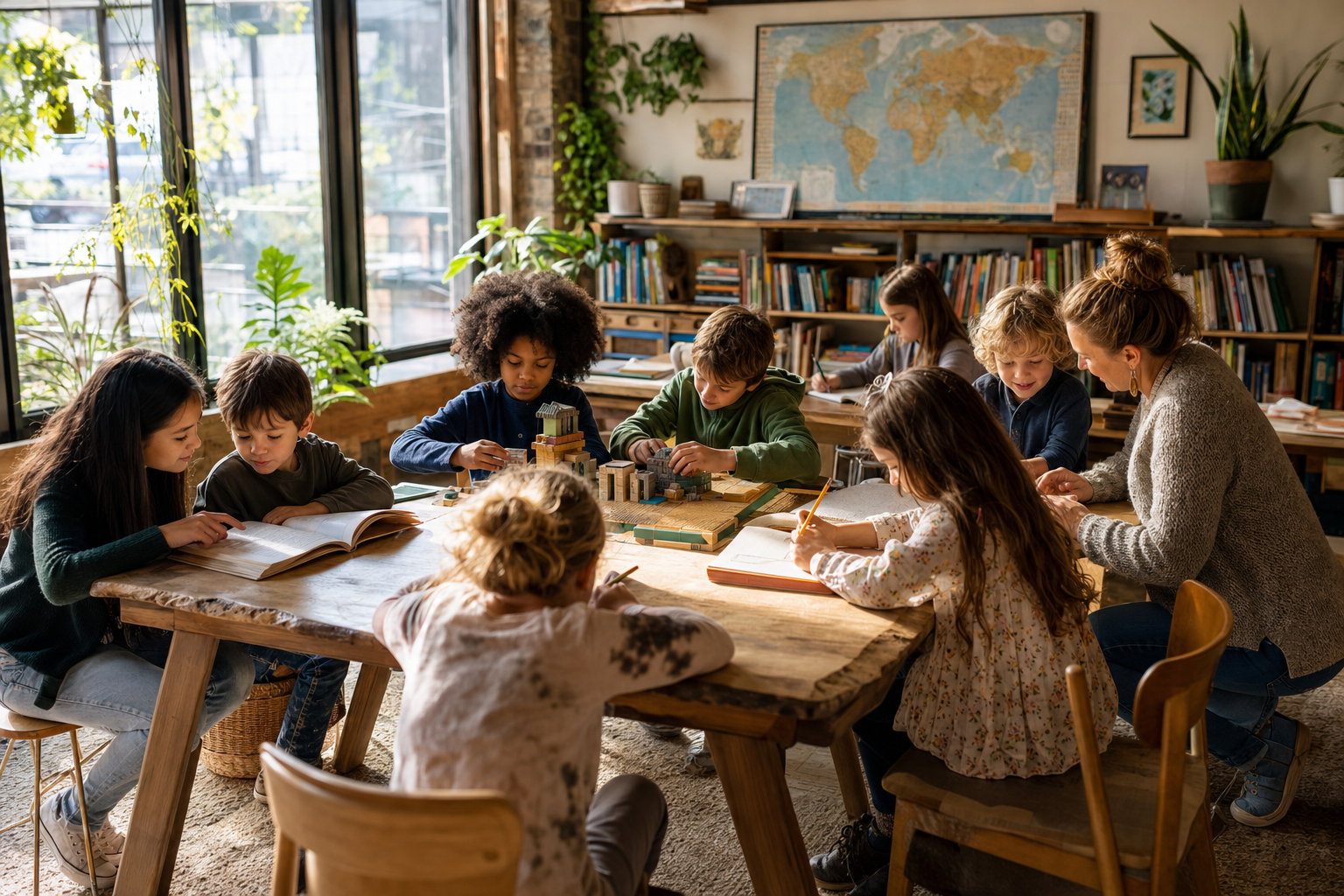
A microschool is a very small school, often with 15 to 30 students of different ages, that offers personalized, flexible learning in a home, church, storefront or community space. Microschools grew rapidly after the pandemic, and state education savings accounts now pay for a large share of their tuition. Supporters see a flexible alternative for families that want something different; critics worry about oversight and accountability. This guide explains what microschools are, how many there are, what they cost, how they are regulated and what research says so far.
What is a microschool?
RAND, which has studied microschools in depth, describes them as “small, tuition-based schools (serving around 15 students) that are designed to offer a more personalized and flexible learning experience compared with traditional schools.” Microschools typically have multi-age classrooms and focus on self-paced learning. There is no federal definition, and the term covers a wide range: a former teacher running a mixed-age class in a rented space, a network such as Acton Academy, a homeschool group that meets several days a week, or a small program run by a public school district or charter.
Microschools vs. homeschool, private school and learning pods
- Homeschool: parents are legally responsible for education. Many microschools operate under homeschool laws, with families enrolling their children as homeschoolers.
- Private school: some microschools register as private schools, which can bring requirements such as attendance records or teacher qualifications, depending on the state.
- Learning pods: small groups of families sharing instruction, which became common during the pandemic; some pods grew into microschools.
In a 2024 survey of 400 microschools in 41 states, the National Microschooling Center found that 55 percent operated under homeschool laws, 37 percent as private schools, 6 percent as charters and 3 percent under other state categories.
How many microschools are there?
Counts vary because microschools are hard to define and many are not registered as schools. Each estimate uses a different method:
| Source | Estimate |
|---|---|
| RAND, March 2025 | Between 1 million and 2 million students attend full time, with many more part time |
| National Microschooling Center, May 2025 | About 750,000 students, about 2% of U.S. students |
| National Microschooling Center, May 2026 | About 75,000 microschools serving about 1.5 million students |
The National Microschooling Center’s 2026 survey of 1,000 microschools, reported by K-12 Dive, found a median enrollment of 20 students in nonpublic microschools and 30 in public ones; 87 percent serve children ages 5 to 11. They meet in commercial spaces (38 percent), houses of worship (22 percent) and homes (17 percent).
How much does a microschool cost?
Tuition varies widely. The National Microschooling Center found an average annual cost of $8,124 in its 2025 survey, and RAND reported a median monthly fee of $650 in 2023, about $6,500 for a 10-month year. Most microschools, 63 percent, rely on tuition, but public money is increasingly important: half of microschools now receive more than a quarter of their tuition from state private school choice programs such as education savings accounts, The 74 reported in June 2026.
How states regulate microschools
Rules differ sharply by state. West Virginia, in 2022, became one of the few states to define a microschool in law, separate from private schools, homeschooling and learning pods. Georgia, Tennessee and Texas have passed “Learning Rights Protection Acts” that protect microschools’ right to operate, while in states such as Illinois, Maine, Massachusetts and Oregon, pods and microschools may face child care or private school licensing requirements. Florida recently allowed microschools registered as private schools to use former churches, libraries and community facilities without rezoning.
Accreditation is uncommon. In 2026, 67 percent of microschools were not accredited, though 87 percent said they were interested in it.
Do microschools work?
The evidence is thin. RAND noted in 2025 that microschools’ effects on achievement had not been rigorously evaluated. In a follow-up study published in November 2025, RAND could include fewer than 0.1 percent of U.S. microschools and estimated negligible effects on students’ academic growth compared with similar students.
The debate
Supporters value small classes, mixed-age learning, flexible schedules and the ability to tailor learning to each child. Critics focus on oversight as public money grows. “Some microschools aren’t required to have certified teachers, conduct annual assessments, or even guarantee civil rights protections,” said Weadé James of the Center for American Progress, adding that if public voucher dollars are involved, “there has to be some level of oversight and accountability.” Don Soifer of the National Microschooling Center warned that defining microschools too tightly can backfire: “The moment you define it in law, it becomes obsolete.”
What families and school leaders should ask
- Is the microschool registered as a private school, a homeschool program or something else, and what does that mean for my child’s records and diploma?
- What are the teachers’ qualifications, and what background checks are done?
- How is learning measured, and are results shared with families?
- What services are available for students with disabilities?
- Can state education savings account funds be used, and what are the full costs?
For district leaders, microschools are part of a wider shift in where families educate their children. Some public school districts and charter schools now run microschools of their own.
Frequently asked questions
What is a microschool? A very small school, often around 15 to 30 students of mixed ages, that offers personalized, flexible learning, usually for tuition.
How much does a microschool cost? About $8,000 a year on average, according to the National Microschooling Center’s 2025 survey, though costs vary widely and state school choice funds often cover part of it.
Are microschools legal? Yes, but under different rules in each state. Most operate under homeschool laws or as private schools.
Are microschools accredited? Most are not: 67 percent were unaccredited in 2026.
How many students attend microschools? Estimates range from about 750,000 to 2 million, depending on the source and definition.
Subscribe to edCircuit to stay up to date on all of our shows, podcasts, news, and thought leadership articles.
Related reading
More on School Models

