 EdCircuit Staff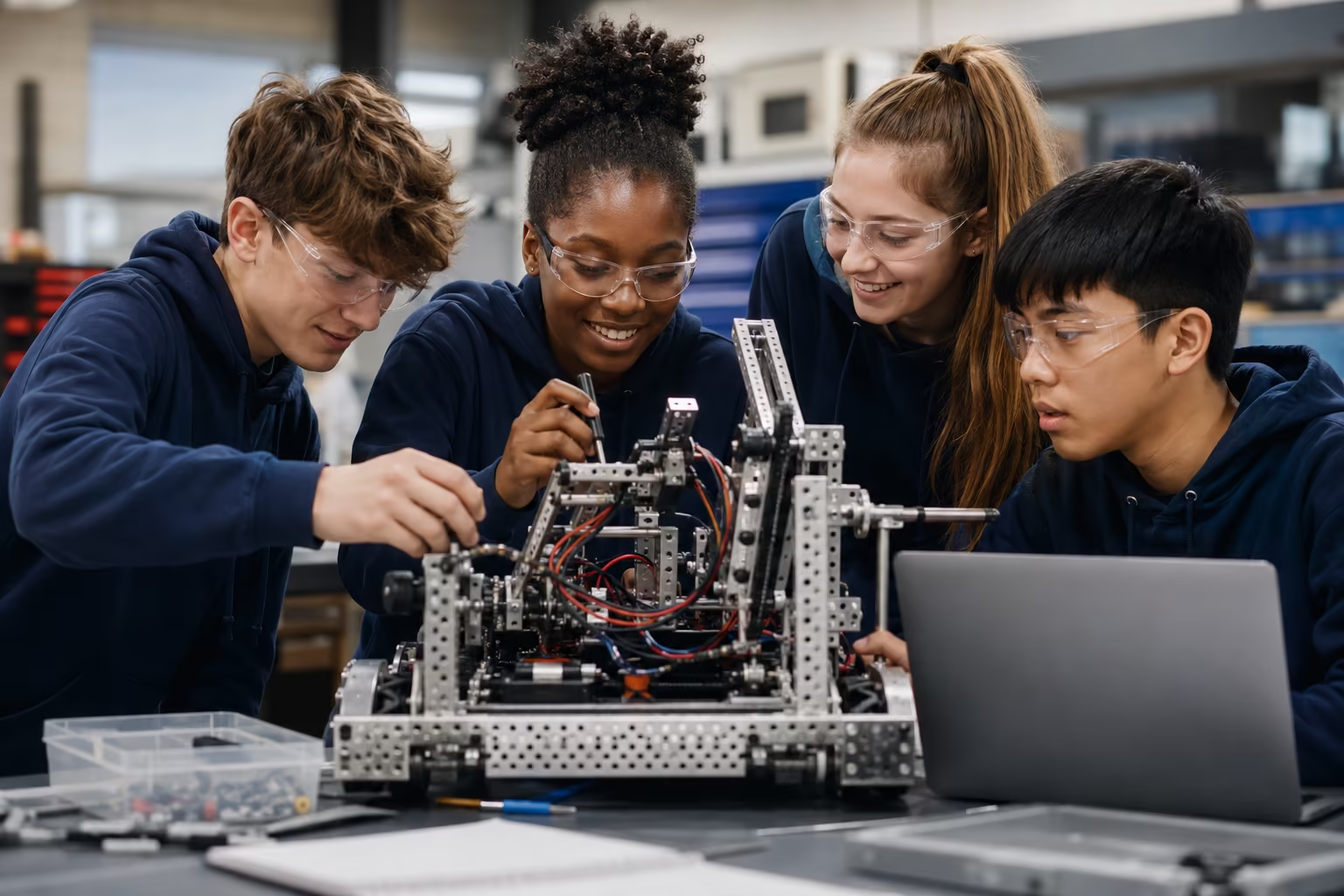
Robotics clubs in schools are becoming one of the most powerful Safer STEM opportunities in K–12 education, helping students develop technical skills, confidence, leadership abilities, and career readiness while preparing them for a future increasingly shaped by automation, artificial intelligence, and advanced technology.
The robot stopped moving with less than thirty seconds remaining in the match.
A group of students rushed around a laptop searching for the problem. One student checked the code. Another inspected the wiring. A mentor pointed toward a loose connection. The fix took only seconds, but it felt like an eternity. As the robot came back to life and completed its task before the buzzer sounded, the crowd erupted in cheers.
Scenes like this are unfolding every week in schools across America.
What outsiders often see as students simply building robots is actually something much larger. Robotics clubs have become incubators for innovation, teamwork, creativity, resilience, and problem-solving. They provide opportunities for students to apply classroom knowledge in authentic ways while exposing them to careers and technologies that will define the future workforce.
As districts search for ways to engage students, strengthen Safer STEM pathways, and create meaningful learning experiences, robotics clubs are emerging as one of the most impactful investments schools can make.
A Club That Extends Learning Beyond the Classroom
Educators have long searched for ways to answer a common student question:
“When am I ever going to use this?”
Robotics clubs answer that question almost immediately.
Mathematics suddenly becomes essential when students need to calculate movement distances, gear ratios, or navigation paths. Science concepts become tangible as students explore forces, energy transfer, and mechanical systems. Coding transforms from lines of text on a screen into commands that bring machines to life.
Students quickly discover that robotics is not a single subject.
It is the intersection of many subjects working together.
Engineering, computer science, mathematics, design, communications, business, project management, and even public speaking all play important roles.
This interdisciplinary approach mirrors how real-world organizations operate. Rarely does a professional engineer work in isolation. Success often depends on collaboration, communication, and the ability to solve problems as part of a team.
Robotics clubs allow students to experience those realities long before they enter college or the workforce.
Learning Through Failure
One of the greatest lessons robotics teaches has nothing to do with robots.
It teaches students how to fail.
In traditional academic settings, mistakes are often viewed as something to avoid. In robotics, mistakes are expected.
Robots break.
Sensors malfunction.
Programs crash.
Designs fail.
Competition strategies fall apart.
Students learn that setbacks are not signs of failure but opportunities for improvement.
That lesson is increasingly valuable in a world where innovation depends upon experimentation and continuous improvement.
Employers consistently rank adaptability, resilience, and problem-solving among the most desirable workplace skills. Robotics naturally develops those qualities because students encounter challenges that cannot be solved simply by looking up an answer in a textbook.
They must think critically, collaborate, troubleshoot, and try again.
Those experiences create confidence that extends far beyond robotics competitions.
Why Robotics Matters More Than Ever
The timing of robotics growth in schools is not accidental.
The world is changing rapidly.
Artificial intelligence is transforming industries. Advanced manufacturing facilities are expanding across the country. Automation is reshaping logistics, transportation, healthcare, agriculture, and countless other sectors.
Today’s students will enter a workforce dramatically different from the one their parents experienced.
According to workforce development experts, many of the fastest-growing careers involve technology, automation, engineering, cybersecurity, data analysis, and advanced manufacturing systems.
Robotics clubs provide an early introduction to these fields.
Students begin understanding how machines operate, how software controls systems, and how technology can solve complex problems. They learn the fundamentals that serve as building blocks for future careers in engineering, computer science, artificial intelligence, aerospace, cybersecurity, industrial automation, and robotics itself.
For many students, robotics becomes the first step toward discovering a passion they never knew existed.
National Organizations Creating Pathways for Success
One reason robotics programs continue to flourish is the extensive support available through national organizations dedicated to student innovation.
Among the most recognized is FIRST. Founded to inspire young people to pursue science and technology careers, FIRST has built a comprehensive ecosystem of programs that span elementary school through high school.
Programs such as FIRST LEGO League, FIRST Tech Challenge, and FIRST Robotics Competition allow students to engage in age-appropriate challenges while developing engineering and leadership skills.
Another major player is VEX Robotics, whose competitions have expanded into thousands of schools worldwide. VEX offers accessible entry points for beginners while providing advanced opportunities for experienced teams.
Organizations such as SkillsUSA and Technology Student Association also provide robotics-related competitions that connect students with broader career and technical education experiences.
These organizations offer much more than competitions.
They provide curriculum resources, teacher training, mentor networks, grant opportunities, and proven frameworks that help schools launch successful programs.
For educators considering a robotics club, the good news is that they do not have to start from scratch.
An entire support system already exists.
Building a Robotics Program Without an Engineering Degree
One of the most common concerns educators express is simple:
“I don’t know enough about robotics.”
The reality is that many successful robotics programs were started by teachers who had little or no engineering experience.
Science teachers.
Math teachers.
Technology teachers.
Media specialists.
Career counselors.
Librarians.
Administrators.
In many cases, the advisor’s role is not to be the expert.
The advisor’s role is to create opportunities.
Students often become researchers, problem-solvers, and innovators themselves. They watch tutorials, read documentation, collaborate with mentors, and learn through experimentation.
Robotics clubs frequently become environments where teachers and students learn together.
That collaborative culture can be incredibly powerful.
The willingness to start is often far more important than having all the answers.
Connecting Schools With Local Industry
Perhaps one of the most exciting aspects of robotics programs is their ability to create authentic partnerships between schools and local businesses.
Across the country, employers are facing workforce shortages in engineering, manufacturing, skilled trades, cybersecurity, information technology, and advanced technical fields.
Business leaders increasingly recognize that workforce development must begin long before students enter college or apply for jobs.
Robotics clubs provide a natural bridge.
Local manufacturers may sponsor equipment purchases.
Engineering firms often provide mentors.
Technology companies can offer software, internships, or technical guidance.
Community colleges frequently partner with schools to provide facilities, dual-enrollment opportunities, and workforce certifications.
Universities may host competitions, workshops, or summer camps.
These partnerships benefit everyone involved.
Students gain access to expertise and career exploration opportunities.
Businesses develop relationships with future talent.
Schools gain resources that may otherwise be unavailable.
Communities strengthen their educational and economic ecosystems.
A robotics club can become far more than a student activity.
It can become a community-wide investment in the future.
Creating Opportunities for Every Student
While robotics is often associated with engineering and coding, successful robotics teams depend upon a wide range of talents.
Students may serve as programmers, designers, builders, marketers, videographers, photographers, public speakers, social media coordinators, fundraisers, project managers, or team leaders.
This diversity of roles creates opportunities for students with varying interests and strengths.
Not every student wants to write code.
Not every student wants to design mechanical systems.
Some excel at communications.
Others thrive in leadership roles.
Some enjoy organizing logistics or managing budgets.
Robotics teams demonstrate an important lesson:
Innovation requires diverse perspectives.
Students learn that meaningful contributions come in many forms.
That sense of belonging often attracts students who may not see themselves reflected in traditional extracurricular activities.
The Parent Perspective
Parents are increasingly searching for activities that provide meaningful experiences while helping students prepare for future opportunities.
Robotics checks many boxes.
Students develop technical skills.
They build leadership abilities.
They strengthen collaboration and communication skills.
They create portfolios that can support college applications.
Many students also gain access to scholarships offered through robotics organizations, universities, and industry partners.
Perhaps most importantly, robotics allows students to demonstrate initiative.
Colleges and employers increasingly value applicants who have engaged in authentic projects, solved real problems, and shown the ability to work as part of a team.
A robotics club provides those experiences in abundance.
Preparing Students for an AI-Powered Future
The conversation surrounding education increasingly centers on artificial intelligence.
While AI continues to generate headlines, robotics offers something equally important: hands-on engagement with the technologies shaping tomorrow’s world.
The students participating in robotics clubs today may one day design autonomous vehicles, develop smart manufacturing systems, secure critical infrastructure, build healthcare technologies, or create innovations that have not yet been imagined.
They are learning how technology works rather than simply consuming it.
That distinction matters.
Schools have an opportunity to move students from passive users of technology to active creators of technology.
Robotics clubs help make that transformation possible.
Building More Than Robots
At first glance, a robotics club appears to be about machines.
Look closer, however, and something much more meaningful is happening.
Students are learning how to collaborate.
They are learning how to lead.
They are learning how to solve problems.
They are learning how to recover from setbacks.
They are learning how to turn ideas into reality.
Most importantly, they are beginning to see themselves as innovators.
As schools seek ways to prepare students for an increasingly complex and technology-driven future, robotics clubs offer a compelling model for what modern learning can look like.
The robots may be what attract students initially.
But the confidence, skills, relationships, and opportunities they gain along the way are what truly change lives.
And for many students, that journey begins with a single after-school meeting, a curious mind, and the courage to build something that has never existed before.
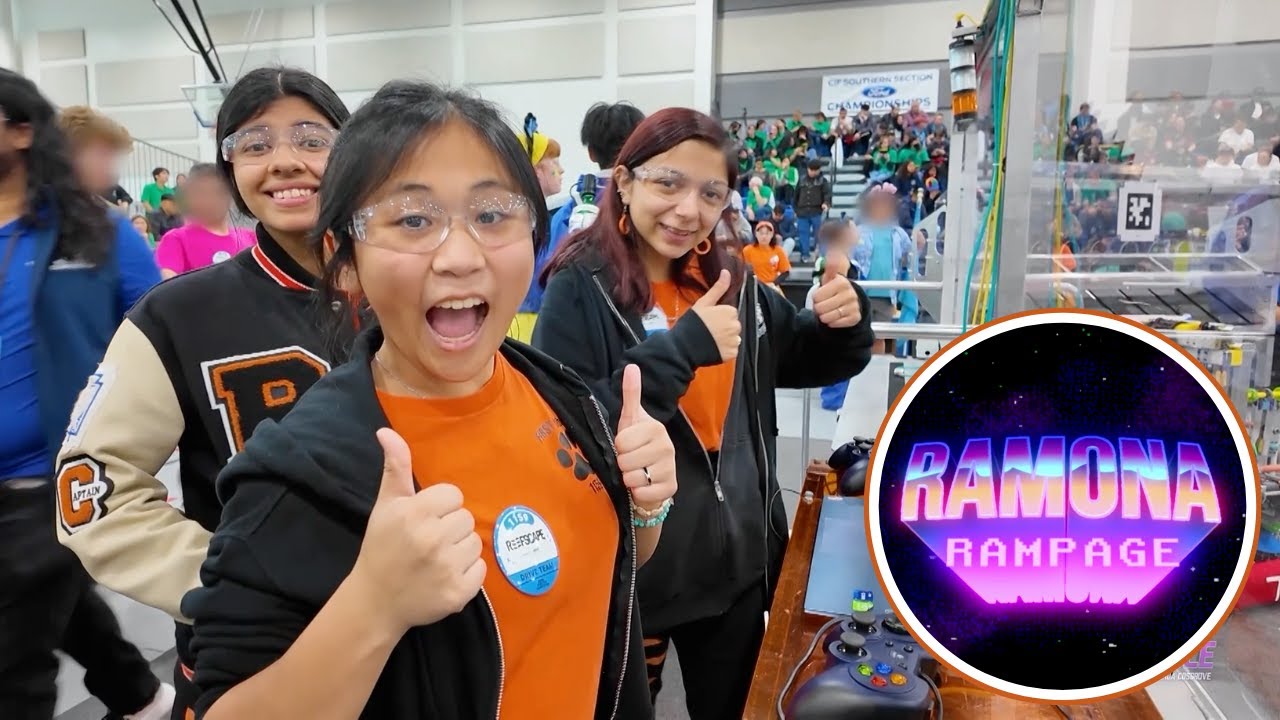
Mission Unstoppable – What’s It Like To Be On A High School Robotics Team?
Subscribe to edCircuit to stay up to date on all of our shows, podcasts, news, and thought leadership articles.