
 EdCircuit Staff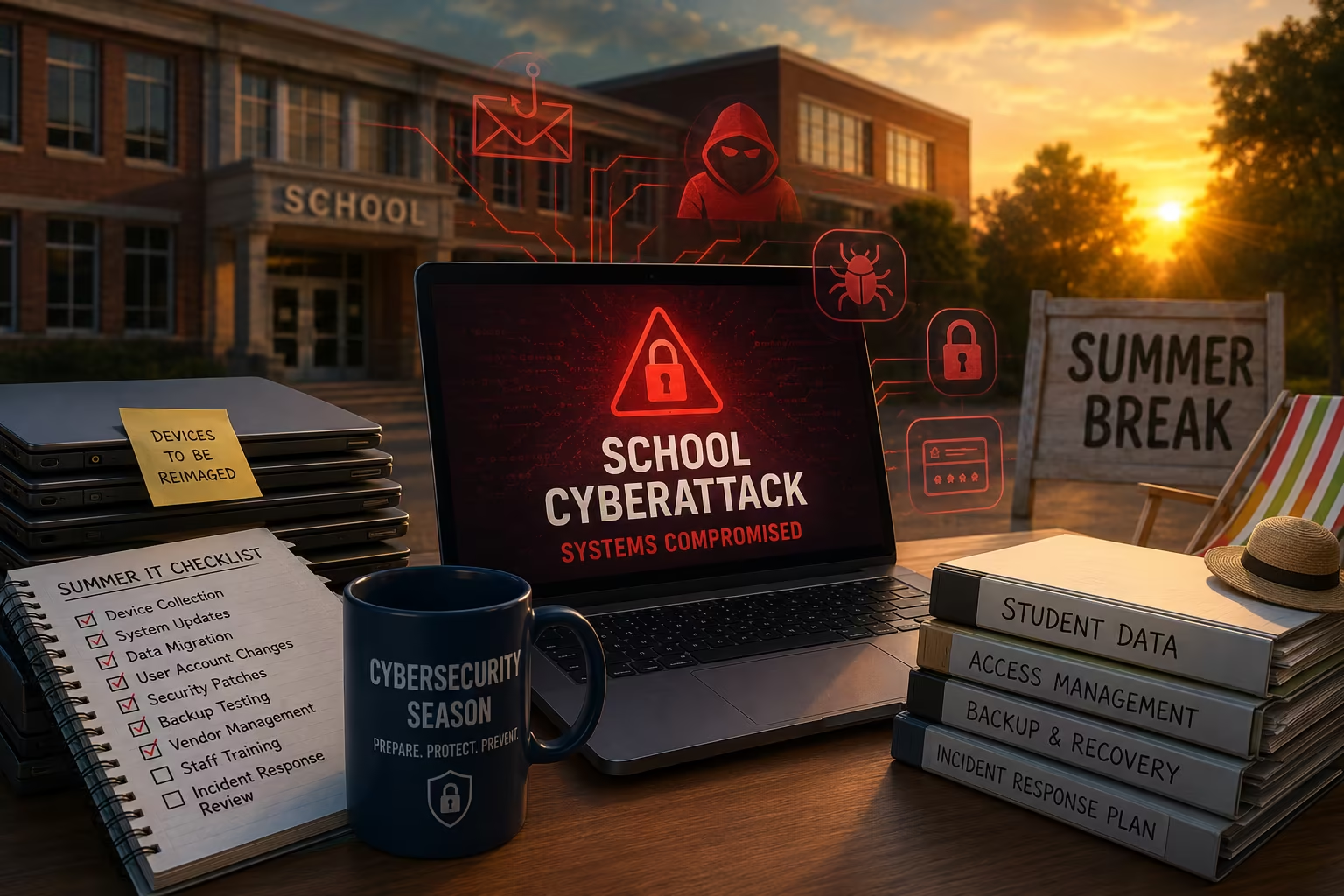
School cyberattacks are becoming one of the most significant operational threats facing K–12 districts, and summer break has emerged as one of the most vulnerable times of the year for school cybersecurity.
To most communities, summer break signals a well-deserved pause. Students head off to camps and vacations. Teachers recharge after another demanding year. School hallways become quiet.
Behind the scenes, however, district technology teams enter one of the busiest and most complex periods of the year.
Thousands of student devices are collected. Servers are upgraded. Software platforms are replaced. Accounts are archived. New staff members are onboarded. Security systems are updated. Data is migrated. Summer school programs continue operating. Construction projects introduce new technologies into buildings.
At the same time, cybercriminals are paying attention.
What many district leaders are beginning to recognize is that summer break has evolved into a prime opportunity for cyberattacks against schools. The combination of reduced staffing, major technology transitions, and delayed detection creates conditions that sophisticated attackers actively seek to exploit.
Summer is no longer simply a maintenance season.
It has become cybersecurity season.
School Cyberattacks Continue to Rise Nationwide
Over the last several years, schools have increasingly found themselves in the crosshairs of cybercriminals.
Unlike businesses that can absorb operational disruptions through alternative revenue streams, schools operate on strict academic calendars and depend heavily on technology to support learning, communication, transportation, payroll, and student services.
A successful cyberattack can impact:
- Student Information Systems
- Transportation scheduling
- Payroll processing
- Emergency notification systems
- Learning management platforms
- Human resources operations
- Financial systems
- Security cameras
- Door access controls
- Special education services
For cybercriminals, schools represent attractive targets because they possess large amounts of sensitive data while often operating under tight budgets and limited cybersecurity staffing.
What was once viewed as an IT issue has evolved into a leadership issue affecting every aspect of district operations.
The consequences of a cyberattack extend far beyond technology. They can disrupt instruction, delay school openings, damage community trust, and create significant financial burdens.
Why Summer Creates the Perfect Cybersecurity Storm
During the school year, school systems benefit from constant activity.
Teachers log into systems daily. Students access learning platforms throughout the day. Administrative staff monitor operations. Help desks receive immediate reports when something appears unusual.
Summer changes that environment completely.
Technology departments suddenly become responsible for dozens of critical projects simultaneously.
Districts often spend summer months:
- Replacing student devices
- Updating operating systems
- Migrating data
- Refreshing servers
- Installing security patches
- Deploying new software
- Updating wireless networks
- Integrating artificial intelligence tools
- Reconfiguring user permissions
- Preparing student schedules
- Supporting summer learning programs
Every change introduces potential vulnerabilities.
Cybersecurity professionals frequently describe periods of major transition as periods of heightened risk. Summer represents exactly that scenario for schools.
Technology teams are essentially renovating the digital infrastructure of the district while simultaneously trying to keep every system secure.
Cybercriminals Understand School Calendars
Today’s cybercriminal organizations operate more like businesses than individual hackers.
They conduct research.
They identify vulnerabilities.
They understand organizational behavior.
And increasingly, they understand school calendars.
Attackers recognize that summer often means:
Reduced Monitoring
Many district employees are on vacation, working modified schedules, or transitioning between school years.
An unusual login attempt or suspicious system alert that might be noticed immediately in October could go undetected for days during July.
Delayed Response Times
A ransomware attack discovered during the school year often triggers an immediate district-wide response.
Summer staffing structures can create delays that give attackers additional time to move through systems.
Infrastructure Changes
Cybercriminals frequently target organizations during major technology upgrades because changes can create temporary security gaps.
New software implementations, cloud migrations, and network modifications all create opportunities if not properly secured.
Third-Party Vendor Access
Summer projects often require outside contractors, technology vendors, consultants, and construction teams to access systems and facilities.
Every additional connection creates another potential attack surface.
Summer Is When Districts Change Everything
One reason summer has become such a critical cybersecurity period is that nearly every major technology initiative happens during these months.
While classrooms sit empty, districts are often engaged in their largest operational projects of the year.
Technology leaders may be:
- Replacing aging infrastructure
- Implementing new cybersecurity solutions
- Expanding cloud services
- Deploying artificial intelligence platforms
- Updating network architecture
- Managing construction-related technology projects
- Integrating new vendors
- Rebuilding student account structures
The challenge is not simply completing these projects.
The challenge is completing them securely.
A single overlooked permission setting, unpatched device, or misconfigured cloud service can create vulnerabilities that remain hidden until students return.
The Hidden Cybersecurity Risks Inside Student Devices
Summer device collection is often viewed as a logistical challenge.
In reality, it is also a cybersecurity challenge.
When students return district-issued laptops, tablets, and hotspots, technology teams must do far more than inspect physical damage.
Each device may contain:
- Saved passwords
- Cached credentials
- Browser cookies
- Personal cloud accounts
- Unauthorized software
- Browser extensions
- VPN applications
- Malware
- Phishing remnants
- AI tools outside district policies
A device that appears physically perfect may still represent a significant security risk.
Technology teams must determine what information should be archived, deleted, retained, or transferred before devices are reissued.
Special education devices add another layer of complexity.
Many communication and accessibility devices contain individualized settings that support student learning. Districts must carefully preserve necessary configurations while ensuring sensitive information remains protected.
This process requires collaboration among technology teams, instructional leaders, compliance officers, and special education staff.
Summer School Keeps Systems Running
Many community members assume schools are largely inactive during summer.
That assumption is far from reality.
Districts continue supporting:
- Summer school programs
- Credit recovery courses
- Athletic programs
- Student camps
- Extended school year services
- Professional development
- New staff onboarding
As a result, systems remain active while major infrastructure work occurs in the background.
Technology leaders must maintain reliable operations while simultaneously rebuilding portions of the district’s digital ecosystem.
The balancing act creates complexity that cybercriminals are eager to exploit.
Human Error Remains the Greatest Threat
Despite headlines focusing on sophisticated ransomware groups, many school cyberattacks still begin with remarkably simple mistakes.
A phishing email.
A reused password.
A fake invoice.
A compromised vendor account.
A fraudulent login request.
Summer can unintentionally increase these risks.
Temporary staff, seasonal workers, contractors, coaches, and newly hired employees may not be familiar with district cybersecurity expectations.
Meanwhile, technology teams often face aggressive timelines to complete projects before the first day of school.
Cybercriminals understand that stressed organizations are more likely to make mistakes.
That reality makes cybersecurity awareness training just as important as firewalls and endpoint protection.
Artificial Intelligence Is Changing the Threat Landscape
Artificial intelligence is creating both opportunities and challenges for school cybersecurity.
Districts increasingly use AI-powered tools to:
- Detect network anomalies
- Identify suspicious activity
- Monitor login behavior
- Analyze threat intelligence
- Improve security operations
At the same time, attackers are leveraging AI to improve their own tactics.
Modern phishing emails can be professionally written and highly personalized.
Fake invoices can appear legitimate.
Impersonation attempts can mimic trusted administrators.
Fraudulent vendor communications can be nearly indistinguishable from authentic messages.
The emergence of AI-generated cyber threats means districts must prepare for attacks that are more convincing and harder to detect than ever before.
Cybersecurity and School Safety Are Converging
For years, districts treated cybersecurity and physical safety as separate responsibilities.
That distinction is disappearing.
Today’s schools rely on interconnected technologies that support:
- Visitor management
- Emergency communications
- Security cameras
- Door access systems
- Transportation operations
- Student accountability
- Building monitoring
A successful cyberattack can affect far more than digital records.
It can impact the systems districts depend upon to keep students and staff safe.
As a result, many districts are incorporating cybersecurity planning into broader school safety and emergency preparedness strategies.
The conversation is no longer limited to IT departments.
It now includes superintendents, school boards, safety coordinators, principals, and community stakeholders.
What School Boards Should Be Asking This Summer
Cybersecurity has become a governance issue.
School boards increasingly play a critical role in helping districts understand and manage cyber risk.
As summer projects move forward, board members should be asking important questions:
- Have district backups been tested recently?
- Are critical systems protected by multi-factor authentication?
- Do we have a current ransomware response plan?
- Have we conducted a cybersecurity assessment this year?
- How are vendors vetted and monitored?
- What cybersecurity training have employees completed?
- Does our cyber insurance coverage meet current needs?
- How quickly could we restore operations after a major disruption?
These conversations help ensure cybersecurity remains a strategic priority rather than a reactive response.
Summer Is No Longer Downtime
For students, summer break represents freedom.
For educators, it provides an opportunity to rest, reflect, and prepare for another school year.
For district technology teams, however, summer has become one of the most important—and most vulnerable—periods of the year.
Behind the scenes, thousands of devices are collected and reimaged. Accounts are created and removed. Infrastructure is upgraded. Vendors access systems. Data is archived. Security controls are tested. New technologies are deployed.
At the same time, cybercriminals are actively searching for opportunities to exploit moments of transition.
The districts that thrive in today’s cybersecurity environment understand that summer is no longer simply a maintenance season.
It is cybersecurity season.
The work completed between June and August may never be visible to students or families, but it often determines how securely and successfully a district begins the school year.
When the first bell rings in the fall, the safest districts will not necessarily be the ones that worked the hardest during the summer.
They will be the ones who planned, protected, tested, and prepared for the threats they hoped would never come.
Subscribe to edCircuit to stay up to date on all of our shows, podcasts, news, and thought leadership articles.