 EdCircuit Staff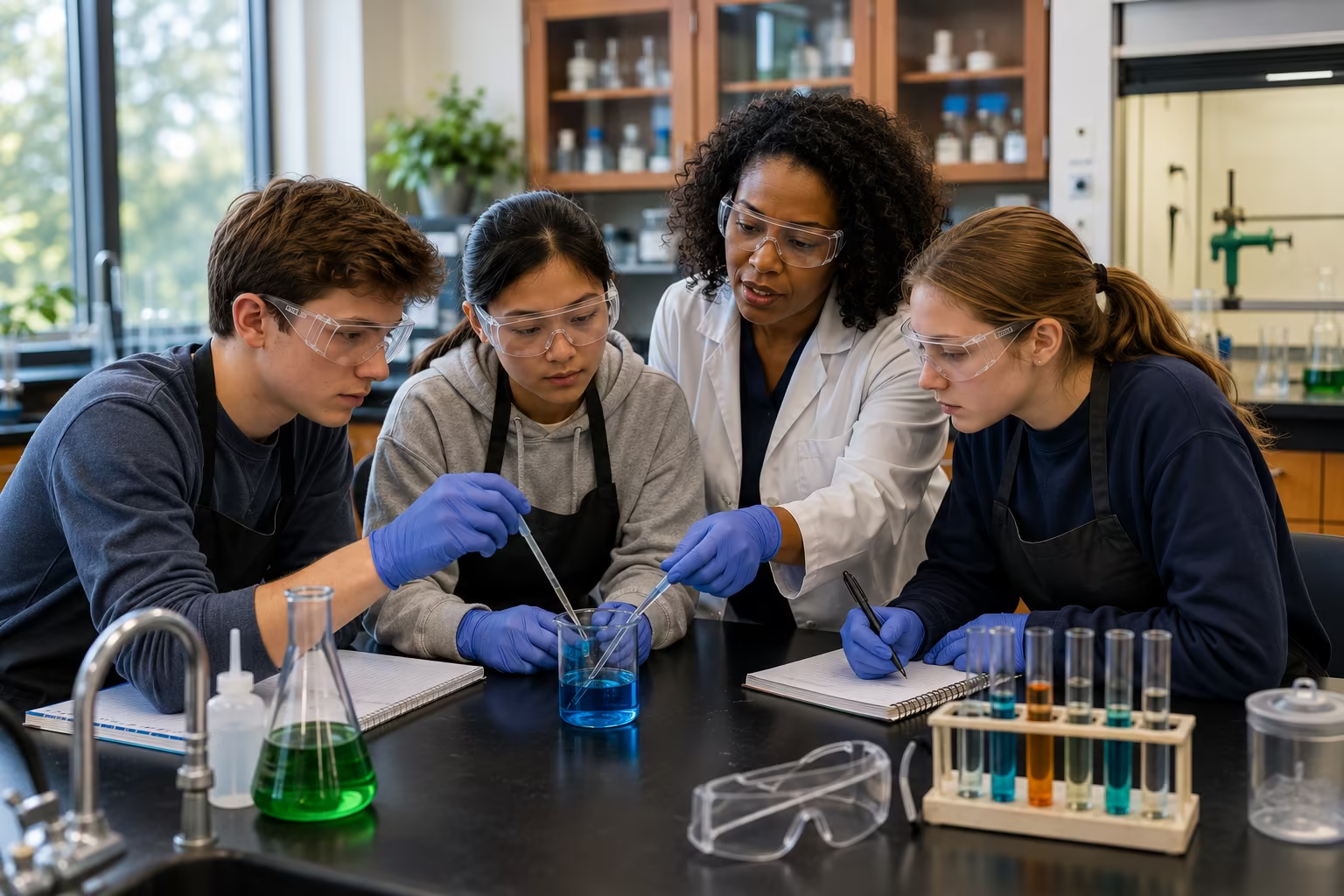
Science lab safety culture is not built during an inspection. It is not created by a checklist, a training session, or a compliance report. A true safety culture develops over time through thousands of decisions made by educators, administrators, laboratory managers, facilities personnel, and students.
It is reflected in what people do when nobody is watching.
It is reflected in whether damaged equipment is reported immediately or quietly ignored.
It is reflected in whether a teacher speaks up about a concern.
It is reflected in whether a student feels comfortable asking a safety question.
Most importantly, it is reflected in whether safety is treated as a responsibility shared by everyone or delegated to a single individual.
The strongest science programs understand an important truth:
Inspections may identify problems.
Compliance may establish expectations.
Training may provide knowledge.
But culture determines what happens next.
A strong safety culture transforms safety from a requirement into a value.
And values tend to outlast rules.
More Than a Laboratory
Walk into two science classrooms.
At first glance, they appear nearly identical.
Both have eyewash stations.
Both have safety showers.
Both have chemical storage cabinets.
Both have PPE available for students.
Both have trained teachers and modern equipment.
Yet within minutes, the differences become obvious.
In the first classroom, students enter and immediately begin preparing for laboratory activities. Safety goggles are worn without reminders. Questions are encouraged. Procedures are reviewed naturally. Students understand expectations because those expectations have been reinforced consistently throughout the year.
In the second classroom, safety feels more like an interruption. Procedures are discussed only when necessary. Expectations vary. Students view safety requirements as obstacles rather than responsibilities.
The difference between these classrooms is not equipment.
It is culture.
One classroom has integrated safety into everyday learning.
The other treats safety as a task.
The safest laboratories are rarely defined by the resources they possess.
They are defined by the behaviors they encourage.
Safety Is About People
When schools discuss laboratory safety, the conversation often begins with equipment.
Eyewash stations.
Fire extinguishers.
Safety showers.
Fume hoods.
Chemical storage systems.
These resources are essential.
However, equipment alone does not create a safe environment.
A safety shower only helps if it remains accessible.
PPE only works when it is worn correctly.
Emergency equipment only protects people when it is maintained and ready for use.
Every safety system ultimately depends on human behavior.
This is why culture matters.
Safety is not simply a collection of equipment, policies, and procedures.
It is a reflection of how people think, communicate, and respond.
The strongest science programs understand that safety is fundamentally about people protecting people.
The Most Powerful Safety Tool Is Communication
One of the most overlooked elements of laboratory safety has nothing to do with chemicals or equipment.
It is communication.
In healthy safety cultures, people feel comfortable speaking up.
Teachers raise concerns.
Students ask questions.
Laboratory assistants share observations.
Facilities personnel identify issues.
Administrators listen.
No one fears criticism for reporting a concern.
This environment is often described as psychological safety.
It means individuals trust that raising a concern will be viewed as responsible rather than disruptive.
This may be one of the most important characteristics of a strong safety culture.
Many incidents are prevented because someone spoke up.
Many hazards are corrected because someone asked a question.
Many improvements occur because someone noticed something others missed.
The strongest science programs encourage these conversations long before problems develop.
They understand that silence is rarely a sign that everything is fine.
Often, it is simply a sign that people are uncomfortable speaking.
The Near Miss Nobody Remembers
Imagine a teacher opening a chemical storage cabinet and noticing a container beginning to deteriorate.
The label is fading.
The container shows signs of age.
The material is removed and evaluated.
Nothing happens.
No spill occurs.
No emergency response is required.
No headlines are written.
Most people would never consider this a significant event.
Yet it may have been one of the most important safety victories of the year.
Why?
Because a potential problem was identified before it became an incident.
Strong safety cultures celebrate these moments.
They understand that preventing incidents is often invisible.
The absence of an accident rarely receives attention.
But the systems, observations, and decisions that prevented that accident deserve recognition.
The safest laboratories are not those that never encounter hazards.
They are the laboratories that identify hazards before they create consequences.
The Chemical Hygiene Officer as a Culture Builder
Many people associate the Chemical Hygiene Officer with compliance.
Inventories.
Documentation.
Inspections.
Training.
While these responsibilities are important, the most effective CHOs contribute something even more valuable.
They help shape culture.
A strong CHO becomes an educator, mentor, advocate, and connector.
They encourage conversations.
Promote accountability.
Support professional growth.
Help staff understand not only what procedures exist but why they matter.
They connect teachers, administrators, facilities teams, and leadership around a common goal.
In many schools, the CHO becomes one of the most important champions of safety culture.
They help ensure that safety remains visible long after inspections have ended.
Culture rarely develops by accident.
It grows because people intentionally nurture it.
Leadership Sets the Tone
Every strong safety culture begins with leadership.
Teachers influence classrooms.
Principals influence buildings.
Superintendents influence districts.
School boards influence organizational priorities.
People pay attention to what leaders prioritize.
When leaders ask questions about laboratory safety, staff notice.
When leaders participate in inspections, staff notice.
When leaders allocate resources to address concerns, staff notice.
When leaders celebrate safety successes, staff notice.
The message becomes clear.
Safety matters.
Conversely, when safety conversations disappear, priorities often shift.
The strongest leaders understand that culture is shaped not only by what they say but by what they consistently support.
Safety culture grows when leadership demonstrates commitment through action.
Students Shape the Future of Safety
One of the most powerful aspects of science education is that students are learning more than science.
They are learning habits.
They are learning professional expectations.
They are learning responsibility.
Students who learn to wear PPE correctly today may become healthcare professionals tomorrow.
Students who learn the importance of chemical safety may become engineers, researchers, manufacturers, or laboratory technicians.
Students who learn to identify hazards and communicate concerns carry those skills into future careers.
Every science classroom becomes an opportunity to teach both scientific knowledge and professional responsibility.
The impact extends far beyond graduation.
A strong safety culture helps prepare students not only for academic success but for success in the workplace.
Culture Outlasts Compliance
Regulations change.
Policies evolve.
Personnel retire.
Leadership transitions occur.
A strong safety culture remains.
People continue asking questions.
Training continues.
Inspections continue.
Improvements continue.
The organization adapts because safety has become part of its identity.
This is one reason culture matters so much.
It creates sustainability.
It ensures that safety remains important even when circumstances change.
The strongest science programs are not dependent upon one individual.
They are supported by shared values.
When safety becomes part of the culture, it becomes part of how the organization thinks.
The Legacy We Leave Behind
Years from now, students may not remember every experiment they completed or every scientific concept they studied.
They may, however, remember the habits they learned.
They will remember preparing before acting.
They will remember identifying risks before proceeding.
They will remember communicating concerns rather than ignoring them.
They will remember that safety was treated as something important.
Those lessons extend far beyond the laboratory.
They influence future engineers, healthcare professionals, researchers, technicians, educators, and leaders.
A strong science lab safety culture does more than protect students today.
It helps shape the professionals they become tomorrow.
Because the safest laboratories are not built by inspections alone.
They are built by people who believe every student deserves an environment where curiosity is encouraged, discovery is celebrated, and safety is woven into every aspect of learning.
That is what a true science lab safety culture looks like.
And that is a legacy worth building.
Subscribe to edCircuit to stay up to date on all of our shows, podcasts, news, and thought leadership articles.
More on Science and Lab Safety