edCircuit
  • Start Here
    • Login
    • Register
    • Subscribe
    • Submit a Press release
    • Advertise or Sponsor
    • Contribute
    • Get Interviewed
  • On The Wire
  • K-12 Education
    • All K-12
    • K-12 Teachers
    • Teaching Strategies
    • Special Education and IEPs
    • Dyslexia
    • Gifted and Advanced Learning
    • Early Childhood, Pre-K and Kindergarten
    • School Calendar
    • Tutoring and Homework Help
  • Professional Development
  • Higher Education
  • All Higher Education
    • College Admissions
    • Trade Schools and Career Education
    • Graduation
  • Artificial Intelligence
  • Cybersecurity
  • School Safety
    • Science and Lab Safety
    • School Design and Facilities
  • Continuing Education
    • Online Certificate Programs
    • Teaching Jobs and Careers
    • Teacher Appreciation
  • Education Policy and Government
    • Department of Education
    • School Choice
  • EdTech
  • Hot TopicsUpdated
    • Social-Emotional Learning
    • Diversity, Equity, Inclusion
    • Creativity
    • Digital Citizenship
    • ESports
    • Covid-19
    • Future of Education
    • Innovation
    • School Models
  • STEM and STEAM Education
  • Learning
    • Online Learning
    • Hybrid and Remote Learning
    • Augmented and Virtual Reality
    • Project-Based Learning
    • Curriculum and Instruction
  • Media
    • EDU Shows
    • EDU Podcasts
  • Community
    • Educators
    • Parents
    • Students
    • Advocates
    • Administrators
    • edLeaders
    • Global
  • Industry
    • EdTech Entrepreneurs
    • Market Trends
  • About edCircuit
Thursday, October 15 2026 - Welcome
  • LOGIN
Home Archives

Series: Science Safety

A laptop on a white desk whose screen shows a grid of smiling children in a video class call
HiddenDigital CitizenshipK-12

What Does Screen Time Really Do to Our Kids?

by Devishobha Chandra February 26, 2021
written by Devishobha Chandra 4 minutes read
This entry is part 1 of 12 in the series Science Safety

We are living in unprecedented times, with the pandemic having accelerated our learning curve and adaptation to new technology uses. Well, if not new, sustained use of technology for old purposes. The education industry is one of the most disrupted sectors because it involves even our youngest children. What Does Screen Time Really Do to Our Kids?

Digital learning (this link no longer available) has become the norm for most of us, so much that it’s hard to imagine that most of us thought it impossible or simply crazy to teach children with the screen between us. Concerns about screen-time have been on the rise – many parents feel powerless over the screen-addiction building in their kids. It’s not for nothing that the NetFlix movie ‘The Social Dilemma’ created ripples everywhere – people everywhere, especially parents, could clearly imagine the unfolding of such a thing in their lives. 

However, there’s good news. Technology can be great. Screen time can motivate children. Mobile apps can accelerate learning- and if this is done early enough – it carries an astounding multiplier effect. 

There’s a growing body of evidence that interactive apps have helped increase proficiency in literacy skills, knowledge of the alphabet, phonological awareness, and numeracy skills, and in many cases, have proven to be much more effective than classroom instruction alone.

Many might recall the much-viewed TED talk by Dr. Sugata Mitra, where he spoke about his “school in the cloud” experiment that demonstrated the ability of children to miraculously self-organize and learn on their own. The good news with the proliferation of technology is that the trend only seems to increase at a dramatic pace with smartphone penetration putting learning apps in the hands of parents – even illiterate ones, and thereby, in the hands of the children who need them. 

Curious Learning, an organization with a mission to empower everyone to read, works with the partners to curate, localize and distribute free, open-source apps to children in under-resourced countries. The results have been staggering so far. 

Curious Learning’s results from the pilot research with Massachusetts Institute of Technology, Tufts University, and Georgia State University across seven countries and 4000 children pointed to evidence that touch-interface apps for learning to read are very helpful in aiding personalized intervention for literacy skills. The team found that learning times were slashed significantly with the use of appropriate apps for learning. 

Here’s an example: The usage of the ‘Feed The Monster’ app in Arabic-speaking refugee children showed that an average of just 22 hours on the app resulted in learning outcomes equivalent to 2-3 months of learning in a well-resourced school. Another example would be increased reading fluency and accuracy after using a game created by the Behavioral Science Institute in Holland. 

From the pilot study, the Curious Learning team estimated that approximately 500 hours of appropriate usage of a curated set of learning apps would result in the equivalent of 3 years of schooling! Such results are game-changers for education – and the most beautiful part is that they come at a fraction of the cost!

Not to mention that learning apps can still be used effectively along with classroom instruction. 

The Curious Learning team works on the basis of the AppMap chart – a chart that lists the collection of skills needed to become a proficient reader.  The AppMap chart categorizes apps in the Learning Referral Network(LRN) based on the skills it addresses and the languages it covers. The skills themselves are graded and divided into four broad levels of achievement – pre-reader, emerging reader, early reader, and consolidating reader.  Then, the AppMapp chart matches the learning objectives and content areas in a particular app to the skills and skill levels, indicating the areas covered by each app. 

A set of multiple apps curated in this highly scientific and targeted fashion is now ready to yield learning outcomes in a fraction of the time of regular classroom learning. Learning windows are astonishingly compressed.

With great power comes great responsibility. Technology unleashes the kind of power never seen before, but if used correctly – well – the results are for everyone to see!


  1. EdTech Magazine – The Pros, Cons, and Lessons Learned from Schools that Do Virtual Snow Days
  2. Microsoft – The irreversible change of education – for good
February 26, 2021 1 comment
0 FacebookTwitterPinterestLinkedinWhatsappCopy LinkEmail
A word cloud with large words like RISK, MANAGEMENT, PROJECT, PROBABILITY, and LOSS, surrounded by related terms such as COST, ASSESSMENT, CONSEQUENCES, IDENTIFICATION, and PROCESS.
EducatorsK-12 TeachersedLeadersAdministratorsProfessional DevelopmentScience and Lab SafetyK-12School Safety

Risk Management for K-12 Schools

by Science Safety October 26, 2022
written by Science Safety 12 minutes read
This entry is part 2 of 12 in the series Science Safety

Risk Management for K-12 Schools

In our increasingly litigious world, it is becoming commonplace for people to use the words ‘risk’, ‘hazard’ and ‘liability’ quite interchangeably, which is incorrect, especially when you examine what risk management for K-12 means to a school, or to a whole school district.  To understand how the risk management process can influence our behaviors and choices involving field trips, student sporting events, extra-curricular activities, and even individual classroom teaching, we need to appreciate the multi-faceted role this plays in a school system. Using the context of student-based activities or investigations, teacher demonstrations and the physical learning and teaching environments in phys-ed, science, STEM, and CTE are the focal areas of this perspective as these program areas have inherent risks associated with them due to the hands-on nature of the instructional method and the tools, apparatus, equipment, and chemicals used to meet the curricular expectations for students.  Risk management policies for each school district need to be reviewed often, much like a chemical hygiene plan, and be aligned with the financial, legal, and risk aversion or risk appetite for the local jurisdiction in an effort to minimize risks, maximize safety and be financially responsible simultaneously. 

Understanding Risk Management

At the root of risk management in schools and school districts today is the guiding mantra of ‘What would a prudent person do in this situation?’ and then a determination is made based on an evaluation of the educational value vs the risks associated with performing that specific activity, that task, or being in that potential learning environment.  It is worth noting that ‘reasonable means reasonable, not perfect’ when evaluating these scenarios. Knowing that educators are expected to perform a hazard analysis for the activities they select for their classes and make a personal judgement call based on the risks contrasted with the educational value of their intended action.  Fundamentally, this is what is involved with professional risk management specialists, who ultimately can shape the curriculum based on case law, precedents, and using formulas and actuarial tables to calculate the likelihood of an accident or injury occurring.   The construct of risk management is not to prohibit teachers and students from having fun or having a memorable experience, but to temper these thoughts with some disciplined safer, and better professional practices and a thorough understanding of the actual risks involved with a particular activity, excursion, or opportunity.  We will explore this in detail after having a more comprehensive understanding of how risk management works in tandem with program services to offer a safer teaching and learning environment across the district.

Risks in the Curriculum

 We can agree that physical education, science, STEM and CTE programs have a higher element of risk associated with them than the humanities or a mathematics programs, simply due to the access to hazards such as equipment, apparatus, chemicals, dissection specimens, tools, machinery, and raw materials found in these areas. Then layer in the dimension of the students using the apparatus and equipment for the first time and you can visualize the risks in these gymnasiums, classrooms and laboratories.  Therefore, having a formalized safety training program is extremely important for both the educators and the students because this is a mechanism that risk managers refer to as a ‘reduction’ since all involved will have a greater awareness of their surroundings and have an understanding about standardized operating procedures and emergency procedures in the event of an accident or injury.  Risk managers often refer to the ‘3-P’s’ which are: Policy; Procedure; and Proof.  The policy is in place to help inform safer choices, and most school districts have standard operating procedures for almost all aspects of the school daily activity cycle for academics, athletics, field trips, and other parts of the school day, and the proof which is ‘proof of insurance’ from a vendor, supplier, or contractual risk transfer or waiver of liability situations.  This is the essence of what risk management looks like in a school district setting. 

The greatest risk is exposing students to hazardous conditions, environments, or activities which many new educators or administrators feel are ‘acceptable’.  Would it be a reasonable expectation for students to have a thorough understanding of the various tools and machinery in a CTE laboratory on their first day of class?  Is it reasonable to expect students to know the biological or chemical hazards in their STEM program in the first week of the semester? How about students participating on a high ropes adventure course as a field trip?  Honestly, there is a need for a calibration device that could be used here since it is quite varied and depends on the person, the region, and other factors. This is where a noticeable problem exists today and there is absolutely a need to re-calibrate people on what is a legitimate risk.  This has been partially created due to the inconsistencies across the school system, and not all jurisdictions manage similar risks in similar ways. 

What compounds this problem is also the reality that many people overestimate or underestimate ‘risk’ or ‘exposure’ because they are unaware of the actual ‘real’ risks are – which increases liability.   Having standardized educational or training programs will help to stabilize this and provide some consistency as a benchmark.  Insurance carriers are very skilled at this aspect of risk identification and also into risk mitigation because they have seen similar scenarios beforehand from other school district jurisdictions. Luckily, in science, STEM and CTE, there is a mechanism for making these judgement calls involving safety, risk, and liability called a ‘hazard analysis and risk assessment’.

Risk Management and Safety

You should understand this before reading onwards. Risk Management DOES NOT APOLOGIZE FOR SAFETY.  Safety for those most precious assets, our students, our children, and our loved ones is something that is expected from all layers of the school system from the district office to the principal’s office to the classroom door and even onto the school bus.  While some people may be upset or disappointed about safety protocols and procedures, these rules are in place for a reason, often as a result or an accident or injury from a similar activity in the past.  Most jurisdictions use a risk matrix tool that evaluates the risks and the potential for accidents or injuries.  Much like seatbelts in a car, which are in place to protect the occupants of the vehicle in the case of a motor vehicle accident.  Most people can reduce risk by removing hazards and modify the proposed activity to accommodate this removal or reduction of an original element of the scenario.  Once this assessment is completed, it should be communicated and shared with others to establish modified procedures and policy that allow for these ‘safer’ activities including the accommodations and changes, which is what insurance companies typically do for their member school districts to facilitate decision making through the lens of compliance and safety first. The risk management matrix tool is a dynamic resource that changes and evolves as new activities are evaluated so that better and safer choices can be made in the future.  

Understanding Risk Management

To make the whole topic of risk management easier to understand, here are some of the key takeaways for you from this important tenet of the education and insurance relationship.   From discussions with active Risk Management Officers from school districts we have compiled some of their comments here related to what risk management means to them.

  • Risk management is not always the big picture, but in the FINE PRINT – which is where the details are!
  • Risk management is about assessing the educational value vs the inherent risk for activities involving staff and students.
  • Asking questions to validate if the activity is age / stage / ability appropriate and looking for any recent accidents or injuries.
  • Asking if there can be any modifications made to reduce risk that will allow for the activity to occur?
  • Are there any possible injuries that can be foreseeable? Is there a history of injuries and what controls are in place to reduce the risk?
  • Will proper supervision offset the risks? What is the optimum number of adults to students (ratio) on a field trip or excursion?
  • Is there a banned list of activities? Is there an approved list of activities?  These are both excellent ways to provide safer guidance for decision-making.
  • Avoidance is the only 100% effective method to reduce risk but it is not always the best learning environment for students.
  • You should be able to identify risks and avoid doing things that have high risk, low educational value, and if these cannot be reduced, managed or controlled, they should not be allowed.

It is a reality today that many school district staff, including teachers are younger – and are making personal choices for a ‘perceived healthy lifestyle’ on their social media networks, however these activities typically involve risk-taking activities which is a problem.  Numerous recent events have resulted in injuries or death from people looking for that great photo or image from a spectacular vantage point.  These once-in-a-lifetime images often involve equally risky behaviors.  Take for example the activity known as ‘Zorbing’ where you roll down a hill in a large plastic bubble.  What could go wrong with an activity like this?  This is something that appeals to many people with a larger appetite for risk, but should this activity be endorsed or supported with students on a field trip excursion as part of a school program?  The mindset shift from what is perceived as acceptable to what is ‘actually’ acceptable is where that prudent person test is especially valuable in making a distinction between risk and reward.   

Formalized Safety Training for Risk Management for K-12

There is another dimension to this risk management discussion which needs to be addressed, which is formalized safety training.  Safety training and awareness for teachers, principals, and students is a control measure that can reduce risk, but it is often overlooked.  According to Dr. Tyler Love and Dr. Ken Roy in their 2021 survey of schools from across the USA, made some key findings including the reality that 35% of science, STEM and CTE educators have NOT had any formal safety training in either their faculty of education experience or at the school district level when they were first hired.  Understanding that safety training is a legal OSHA requirement and yet there is a large gap of safety trained teachers to address.  Unfortunately, it appears as if the mindset of having an adult in the classroom and overlooking the lack of safety training is a reality of the teacher shortage being experienced across the country.   Another key finding from the Love/Roy study was that a teacher with formal safety training is 49% less likely to have an accident in their program.  Not having teachers properly safety trained is not a good risk management practice and one that has implications for the students and the staff involved.  Is it reasonable to assume that teachers who have minimal background in safety can make prudent choices when it comes to performing a safety review (hazard analysis and risk assessment) and do they know what to look for? 

Many experienced classroom teachers struggle with this practice and some educators are more concerned about making memorable events for their students than about making these ‘safer’.  Recently, in Virginia, a science teacher with 15 years of experience was performing a demonstration using methanol and it ended badly with students and the teacher being taken to the hospital for burns sustained during this event.  And if this can happen with an experienced science teacher, imagine the additional risks that can accompany a new teacher without any formal safety training or actual hands-on experiences to reflect on, to make these safer choices in science, STEM or CTE for themselves, colleagues, and students.

Science programs have many legal regulatory rules to be followed and legislation that mandates certain aspects of teaching in a laboratory such as the OSHA CFR 1910.1945 (the Laboratory Standard) which requires that teachers are safety trained when they are first hired and again when their role or subject area changes.  It also requires that a chemical hygiene plan is written and reviewed annually (at a minimum), a designation for a Chemical Hygiene Officer (a vital role in risk management) and literally hundreds of additional rules specifically regarding the safer operation in a laboratory and associated chemical store room at the school.  The HazCom standard is used for the CTE rooms and has additional responsibility for the employer and the employee.  Successful risk management involves a comprehensive understanding of these and many other safety aspects that are designed to keep people safer.  An important risk management pillar is to reduce risk and increase awareness and the use of student safety acknowledgment forms combined with a personalized, progressive, grade and discipline-specific safety training on the hazards in the program (science, STEM, and CTE).

 To summarize the role of risk management in CTE, science, and STEM there are some critical aspects to ensure the safer learning environment for students.  The use of a safety acknowledgement form in all classes is a great first step, especially when used with formalized, specific safety training for everyone in the school ecosystem which can drastically reduce risks and the potential for accidents or injuries.  Having educators perform a safety review based on their planned activities where they evaluate the risks and make a determination including modifications to their initial thoughts by evaluating the risks and comparing to the educational value of the activity is one of the most important criteria in risk management in these program areas.  By having a more transparent conversation about safety and risks in schools, and communicating what are actual risks vs. perceived risks and creating a matrix for making these assessments available for principals evaluating field trip safety and for the classroom teacher who can use that same methodology when choosing age and stage and ability appropriate activities for their students, the overall risk management strategy against a Science Safety Risk Management Framework will be a natural part of the pedagogical process that is woven into the culture of safety awareness in the district from the boardroom to the classroom.  Most people do not consider this aspect of school district safety until there is an injury or an accident, but risk management is a vital component to a balanced educational experience for students and staff.

Materials to Review:

  • Love, T. S., Sirinides, P., & Roy, K. R. (2022) Examining Factors Associated With Accidents in Career and Technical Education and STEM Education Labs – A National Safety Study Paper presented at the annual meeting of the American Educational Research Association, San Diego, CA
  • A Science Safety Risk Management Framework
October 26, 2022 4 comments
0 FacebookTwitterPinterestLinkedinWhatsappCopy LinkEmail
Unrecognizable male worker in formal wear browsing modern netbook while sitting at table during work in office with colleague
Science SafetyScience and Lab SafetyK-12EducatorsSTEM and STEAM EducationSchool Safety

STEM Legal Liability in Schools – Improved Safety

by Science Safety November 21, 2022
written by Science Safety 15 minutes read
This entry is part 3 of 12 in the series Science Safety

The recent tragic event at Dinwiddie High School in Virginia involving the use of methanol in a chemistry classroom has elevated the legal liability concerns typically found across many of the Science, STEM, and CTE programs nationally in our schools. Let’s spend some time discussing STEM Legal Liabilty in schools.

This heightened sense of awareness about the hazards involved with chemical handling and the entire chemical hygiene program, safety training, standardized operating procedures and the entire risk management framework that exists today in K-12 schools and districts should evolve into a movement to understand exactly what the legal liabilities are for teachers, school principals, and school districts overall. 

According to the Pennsylvania Department of Education, there is a common misconception among administrators and faculty members that these type of accidents (e.g., eye injuries, lacerations, amputations, and other permanent injuries resulting from STEM education classroom and laboratory activities) will not happen to them or occur at their school. The reality is that these accidents occur at schools more often than administrators and faculty would like to believe.

Negligence in Schools Opens Questions For Legal Liability

Educators are those people who are responsible for our most precious assets – our children – and are held to a higher standard of safety, compliance, and liability because of this responsibility. 

As parents of students in a school system, we trust that the school bus will deliver our children to and from school daily. That the facilities have the proper safety infrastructure, sanitation, and hygiene protocols to ensure that the teaching and learning environment is safer, and that the teachers are properly trained in emergency situations and have the ability to perform a hazard analysis prior to performing any activity that has an element of risk and make a determination if the educational value exceeds the risk, and make decisions accordingly. 

This is the gold standard of safety and compliance which involves no accidents, no injuries, no loss, and no missed learning opportunities that are used as a scaffold for student learning and comprehension.  Yet, accidents and injuries occur across the nation in our schools, in science, STEM, and CTE programs due to the inherent risks associated with those disciplines, a lack of safety training, and insufficient risk identification and mitigation at the school and at the district level.  

Most accidents and injuries in science, STEM, and CTE programs are considered ‘preventable’.

Annually, there are cases involving students who have been accidentally injured or harmed in schools, with the most common injuries reported involving: cuts/lacerations; burns; slips, trips and fall accidents; impact with a projectile; inhalation of fumes; and electric shocks. 

90% of these injuries are on the hands or fingers of the injured person, with students suffering these types of injuries approximately 80% of the time. 

The leading causes of accidental injury in schools today are glue guns, equipment & machinery, power tools, chemical spills & splashes, and airborne projectiles.  Most of these incidents were handled at the school level and did not involve outside medical interventions.

These findings were recently validated by a 2021 national study on STEM and CTE completed by Dr. Kenneth Roy and Dr. Tyler Love in a report called, “A National STEM Education Imperative: What the Data Tells Us”, a fascinating snapshot of our current STEM and CTE programs from a safety perspective.    

There are also incidents that require outside medical intervention when students are injured severely and are taken to a hospital for specialized medical care.  According to Barrios et al in a 2007 study found that 58% of the time, the injury resulted from ‘a failure to properly supervise students’, which is a Duty of Care obligation.  In these situations, there is negligence on the part of the educator or instructor. 

Another layer of complication is the impact accidents have on school ecosystems.  Many teachers falsely believe that they are protected by what is collectively called the ‘Held Harmless’ clause in their employment agreements and/or teacher union/federation protective covenants because they are certified professional educators.  Let me be clear.  THIS IS A FALSE ASSUMPTION and often the teacher is found to be negligent because of failures under their duty to instruction, supervision, and/or maintenance.

 This is because under common law statutes and interpretations, teachers have a duty of care to protect their students from all reasonable, foreseeable risks of injury or harm.  When determining legal liability the standard of care often used is “what would a careful or prudent parent would do in this situation?”.  In simple terms, was the educator negligent in that instance resulting in an injury?

Duty of Care Obligations & Legal Liability

“Duty or Standard of Care” is defined as an obligation, recognized by law, requiring conformance to a certain standard of conduct to protect others against unreasonable risk (Prosser et al., 1984).  This means that school staff and school or district leaders (supervisors/administrators) are required to actively anticipate foreseeable harm to students and to others in the school.  Furthermore, these leaders are required to act to prevent resultant injury or damage.  

“The breach of a particular duty owed to a student or others may lead to liability for both the teacher and the school district that employs that teacher” (Ryan, 2001).  To meet these responsibilities, teachers of science and STEM are expected to engage in safer behaviors to protect others from foreseeable harm.  

An added layer that should be used is the Chemical Hygiene Officer, designated and trained at the school district level. This person has responsibility and accountability to oversee the district chemical hygiene plan and ensure adequate safety training, procedures, and products are in place. 

According to industry experts Dr. Roy and Dr. Love, it is imperative for science/STEM teachers and supervisors to understand their duty of care owed to students. While the duty to protect students from unreasonable risk or harm remains the same for each individual, the behavior expected of a teacher to meet the duty of care changes with each situation.

Teachers must act reasonably (objectively measured according to previous court rulings and best practices as recommended by professional associations.) to prevent harm to students. Specific behaviors that constitute meeting the duty of care owed to students are discussed below.

Failure to perform required behaviors can result in students being injured, sometimes fatally. Failure to exercise duty of care may also result in teachers and school districts being sued for negligence.

Teachers need to understand their state’s education law relative to any statutes, regulations, codes, and policies that specify a teacher’s duty of care and any possible consequences of breaching that duty.

Duty of Instruction and STEM Legal Liability

Duty of care requires that teachers provide safety instruction and the appropriate level of supervision during every lab activity that is done within their instructional space (e.g., classroom, laboratory or in the field).  Duty of Instruction means that school districts are responsible for providing safety training to employees that may be exposed to hazardous materials and procedures.

– Duty to Notify Students of Safety Practices and Procedures – Teachers have a duty to discuss safety practices with students at the beginning of the school year, establishing the rules by which all experiments will be conducted. These safety practices should be outlined in a safety acknowledgement document which students and parents/guardians sign.

These signed documents should be kept on file for at least the year during which the student is enrolled in the class, and no student should be permitted to participate in a laboratory activity without this document being on file. However, warning students of hazards in the class once at the beginning of the school year is not enough, safety must be reinforced every time students engage in any activity with the potential to cause harm. A review of safety protocols and procedures followed up by a demonstration should take place to teach students how to operate all tools and equipment safely.

Duty to Instruct and ALWAYS model Safety 

Students pay attention to what teachers do as well as to what they say. As STEM teachers we have a duty to provide safety instruction and model appropriate safety practices, such as wearing approved, certified, indirectly vented chemical splash goggles and other appropriate personal protective equipment (PPE), for our students.  

Teachers should make sure that paraprofessionals and other adults in the room do the same.  In addition, teachers must demonstrate for students how to perform various laboratory skills, techniques, and the intended proper use of laboratory equipment in the safest possible manner.

Duty to Warn Students of Hazards

Teachers must explicitly and specifically warn students of the dangers they may encounter during a laboratory activity. This includes reminding students that scalpels and scissors are sharp. While it may seem as though this is common sense, teachers protect themselves by including a written warning on any laboratory materials and making a verbal warning before the laboratory begins. Also, teachers should provide safety signage around the lab, and warn students when they see a potentially hazardous situation created from their novice actions. Teachers should also document safety actions in their lesson plans as an objective and crucial part of their procedures for that lesson.

Duty of Supervision and STEM Legal Liability

Duty to Enforce Safety

All science and STEM teachers must exercise caution when students and student assistants are working with tools of any kind. Personal protective equipment must be worn when using tools and teachers must keep students in their direct line of sight while tools are in use. Teachers must also ensure that students follow all safety procedures at all times. A student who is behaving inappropriately in the laboratory should be removed from that setting, with progressive disciplinary consequences to follow. In addition to referencing appropriate laboratory behavior in the safety acknowledgement form, schools should consider including a description of proper behavior in the laboratory in their Code of Conduct.

Teachers have the sole responsibility for the laboratory activities that are carried out in their instructional spaces; therefore, teachers must never leave their students unattended while any laboratory activity is in progress. Even if another adult (such as a paraprofessional, a specialist, or a substitute teacher) is present, unless that adult is certified in science education and has received annual safety training, the adult must not be in charge of a class engaging in a laboratory activity.

Laboratory activities or science projects that are assigned for completion at home should be reviewed by teachers to be certain that they can be conducted safely and, if applicable, that students have the necessary personal protective equipment. Teachers may be held liable if a student or family member is injured by an experiment that the student was assigned to complete at home. These activities should be reviewed with parents/guardians to ensure that necessary supervision may occur.

Duty of Maintenance

– Inspect for Safety – Teachers should inspect equipment prior to, during and after laboratory activities to ensure that they are in proper working order. Students should be asked to report any equipment that is not functioning properly, with no fear of punishment. Teachers should make sure that they perform any demonstrations and lab procedures themselves before doing them with their classes in order to ensure that they are aware of any and all safety precautions that should be taken.

– Maintain Equipment – Teachers have a duty to make sure that personal protective equipment and engineering controls are operating properly and meet manufacturer’s specifications, as well as OSHA specifications (or state health and environmental safety office specifications for non-OSHA states). If a piece of equipment is not functioning properly, it should be tagged and locked out of operation. The equipment should be repaired or replaced before being used again.

Negligence or Recklessness

In some situations, a teacher or administrator may be sued for recklessness rather than for negligence. A claim of recklessness suggests that the defendant was aware of the risk of substantial harm but engaged in the behavior anyway. In 2014, a science teacher conducted a demonstration in which she poured ethanol on a student’s wrist (with the student’s permission) and set it on fire, claiming it would burn the alcohol without injuring the student (Mack, 2014). In this case, the teacher was charged with criminal recklessness.

Both negligence and recklessness charges can result in substantial compensatory damages, but recklessness charges can also result in punitive damages in some states. Even if the teacher or administrator does not face legal consequences of negligence or recklessness, a breach of duty of care may result in termination of a teaching position or revocation of a teaching license.

The duty to maintain a safer science and engineering instructional space is shared by teachers, administrators, school boards, parents, and students. Teachers and administrators need to communicate frequently with stakeholders in order to ensure that student safety remains a school priority.

Safer Learning with Minimal STEM Legal Liability

Teachers can often achieve safer laboratory experiences and show documented evidence of meeting the Duty of Care by using the following three-step approach to activity and program planning.  It is as simple as evaluating the educational benefit versus the potential hazard or risks involved.

1. Hazard Analysis:

A hazard analysis is a list of potential sources of harm (hazards) to persons, property, or the environment. An effective hazard analysis focuses on the relationship between the worker (student), the tasks, the materials used, and the work environment. Information for the hazard analysis may come from Safety Data Sheets, GHS compliant chemical labels, manufacturer’s specifications on tools, professional organization practices and other resources.

2. Risk Assessment:

Using the hazard analysis, a risk assessment takes the results of the hazard analysis to determine the possible dangers to human health, safety, or the environment.  In other words, based on the hazards, how much of a danger is this activity going to be in the classroom? Factors associated with risk assessment include 1) Probability of harm: When considering the hazards, what is the likelihood this hazard may occur? and 2) Severity of harm. Will the hazard cause property damage, minor injury, severe injury, or death?

3. Safety Actions:

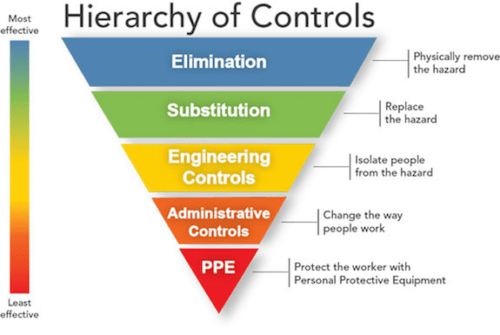
Through the hazard analysis and risk assessment, it can be determined which safety actions need to be implemented to mitigate the risks as much as possible. The Center for Disease Control (CDC) and the National Institute for Occupational Safety and Health (NIOSH) have created a hierarchy of controls. Based on the hazard analysis and safety actions, activities can be evaluated to determine how the risk associated compares to the instructional value of the activity.  Please see reference below:

STEM Legal Liability A1

Safer, Legal, and Better Professional Practices

To provide and maintain a learning and working environment for students and staff that is as safe as possible, NSTA recommends school district officials, including administrators, principals, assistant principals, science supervisors, and superintendents:

  • Review existing school or employer insurance policies to ensure adequate liability insurance coverage for laboratory-based science instruction;
  • Develop and implement comprehensive safety policies with clear procedures for engaging in lab activities; ensure that these policies comply with all applicable local, state, and federal health and safety codes, regulations, ordinances, and other rules established by the applicable oversight organization, including the Occupational Safety & Health Administration (OSHA), International Code Council (ICC), and National Fire Protection Association (NFPA); and be reviewed and updated annually in consultation with school or district science educators; 
  • Ensure better professional safety practices by following safety recommendations of established organizations, such as NSTA and its affiliates, the National Science Education Leadership Association, and the American Chemical Society;
  • Become knowledgeable of and enforce all local, state, and federal codes and regulations to ensure a learning environment for students and staff that is as safe as possible (Particular attention should be given to hazard prevention, including reasonable class sizes to prevent overcrowding in violation of occupancy load codes (ICC 2015, NFPA 2015) or contrary to safety research (West and Kennedy 2014); adequate number or size of labs (Motz, Biehle, and West 2007). Attention should also be given to replacement or repair of inadequate or defective equipment, and the proper use, storage, disposal, or recycling of biological, chemical, and physical materials.);
  • Understand that the number of occupants allowed in the laboratory must be set at a level based on building and fire safety codes; size and design of the laboratory teaching facility; biological, chemical, or physical hazards; and students’ needs (NSTA 2015a; Roy 2006).

*Note: Science classes should have no more than 24 students to allow for adequate supervision during science activities, even if the occupancy load limit might accommodate more (NSTA 2014b). It is equally important to ensure adequate workspace for each student. NSTA recommends 60 sq. ft. for each secondary student and 45 sq. ft. for each elementary student in a laboratory/classroom setting (Motz, Biehle, and West 2007).

Final Thoughts on Legal Liability in Science, STEM and CTE programs

Based on the literature reviews and position statements from trusted professional associations regarding legal liability specifically in science, STEM, and CTE programs across the country, it appears that a more holistic approach is needed from a risk management perspective that involves annual safety training specifically for grade-level and discipline-specific educators, an understanding of how to perform a hazard analysis for selected activities, a review of the existing safety and reference documentation such as safety manuals and chemical hygiene plans, as well as ensuring adequate PPE availability, engineering controls, annual physical inspections and secured storage of items found in these classes.

Many jurisdictions will have parts of a safety program in place but understanding the duty of care obligations and the shared liability that exists in K12 schools is a solid foundation to implement the other necessary complimentary parts of a total safety solution.  Teachers — If you ask yourself,  ‘Should we be doing this activity?’— the answer is always NO.  Use your good judgment and apply your prudent practices with your students and you will provide a safer platform for your students as they continue their journey towards post-secondary and the workplace.

Subscribe to edCircuit to stay up to date on all of our shows, podcasts, news, and thought leadership articles.

November 21, 2022 28 comments
0 FacebookTwitterPinterestLinkedinWhatsappCopy LinkEmail
Laboratory beakers and flasks filled with bright blue, orange and red liquids on a white bench against a black background, crisp studio light
K-12 TeachersAdministratorsScience and Lab SafetyProfessional DevelopmentK-12

The Importance of Chemical Hygiene Plans in School Districts

by Science Safety November 28, 2022
written by Science Safety 12 minutes read
This entry is part 4 of 12 in the series Science Safety

Why The Importance of Chemical Hygiene Plans in School Districts? I am often surprised by the lack of awareness in safety concerns across elementary, middle, and high school science and STEM programs regarding the cavalier attitude towards chemicals and the special considerations necessary for safety compliance.  This is a result of many false assumptions, and I am not the first, nor will I be the last safety advocate to bring some attention to this growing concern in our school science chemical storerooms.  According to the Pennsylvania Department of Education, a common misconception among administrators and faculty members is that these type of accidents (e.g., eye injuries, lacerations, amputations, and other permanent injuries resulting from STEM education classroom and laboratory activities) will not happen to them and will not happen at their school.

The recent chemistry accident involving methanol occurred at Dinwiddie High School in October 2022, resulted in tragedy for the teacher, students, and the school district.  There was an under-appreciation of the hazards associated with this specific chemical (methanol) and multiple failures from a duty of care perspective based on the details provided thus far.  This was a preventable accident that could have been avoided, and the Chemical Hygiene Officer with a recent and robust Chemical Hygiene Plan could have provided the safety awareness and safety education and training necessary to perform a hazard analysis prior to the activity.   Some superintendents are now asking about their own chemical hygiene plans for their schools as a result of this event in Virginia.  Having increased awareness of the documentation and required training and annual filing requirements is beneficial to everyone in the school district ecosystem.

Schools across the country are expected to have a Chemical Hygiene Plan (CHP) in place in OSHA governed states, and an Environmental Hygiene Plan (EHP) in place in non-OSHA governed states.  These documents are very important and are a mandated regulatory requirement for the employer (school district) to manage, review, edit, and are created as a mechanism to communicate chemical hygiene protocols specifically for the schools in each jurisdiction, including standard operating procedures, emergency management protocols, and chemical waste management to name a handful of the requisite functions of this important document.

According to the National Science Teaching Association, the National Science Education Leadership Association, The Council of State Science Supervisors, the American Chemical Society, OSHA and NIOSH, ‘Academic science laboratories can be unsafe places for teaching and learning due to risks associated with biological, chemical, and physical hazards’.  If you have ever been in a science department with apparatus, equipment, chemicals related materials, you will agree with this statement.  This applies to schools offering hands-on, comprehensive K-12 science programs since there are physical laboratory facilities and hazardous chemicals on-site.  According to current case law and a thorough understanding of risk management protocols in school districts, we know that there are legal liability concerns associated with teaching science and STEM, especially when negligence or recklessness is involved.  This is a separate and important conversation as it relates to the overall chemical hygiene program in each jurisdiction.   

What you need to know about Chemical Hygiene Plans

The OSHA Laboratory Standard (CFR 1910.1945) requires the development and implementation of a formal, written, and employee-accessible program, referred to as a Chemical Hygiene Plan (CHP). This plan, as defined by OSHA, must be “capable of protecting employees from health hazards associated with hazardous chemicals used in the laboratory.”  Here is some important background information for the school district Directors of Education, Superintendents, and Chemical Hygiene Officers which is applicable to their role and responsibility for occupational health and safety.  The OSHA Laboratory Standard (29 CFR 1910.1450) requires that all school district employees working in laboratory settings (including special education teachers and paraprofessionals) undergo safety training before they enter the lab. This is to ensure employees are made aware of the hazards and how to effectively work safely with the chemicals and their hazards in the science department. 

According to the OSHA Lab Standard, this formalized safety training must occur when new teachers are hired or when teachers are given a new assignment (new subject area or grade level) when these new environments involve the use of chemicals or potentially exposure to chemical hazards during the regular course of their job function.  The law is clear: All employees must be provided with current and relevant information and training specifically related to the physical and health hazards of chemicals present in their laboratory.  This means that when teachers are hired, they should be trained in safety based on legal, safer, professional standards that are grade-level and subject-specific.  So, does that mean that if you were trained ten years ago, that you are considered ‘safety trained and compliant’?  Many employers (school districts) under the OSHA Lab Standard can determine a schedule or frequency for safety training updates or ‘refresher course training’ in consultations with their Chemical Hygiene Officer and the Legal or Risk Management Officer at the school district.  Many school districts have annual teacher compliance training and require an additional specific science or STEM safety training on a recurring annual ‘safety refresher’ course for teachers to keep them updated on safety practices and procedures.  This is a commonly used better professional practice in science and STEM education nationally and a federally mandated OSHA requirement for training.

With regard to the expectations and legal implications for newly hired teachers and those who have started a new position or teaching assignment, the employer (school district) has a duty to firstly inform workers of the following safety items:

  • the content of the OSHA Laboratory standard and its appendices (the full text must be made available);
    • the location and availability of the Chemical Hygiene Plan (CHP); (Environmental Hygiene Plan in non-OSHA governed states)
    • provide employees with information pertaining to permissible exposure limits (PELs) for OSHA-regulated substances or recommended exposure
    • provide employees with the acceptable levels for other hazardous chemicals where there is no applicable standard;
    • provide employees with background information regarding signs and symptoms associated with exposure to hazardous chemicals in the laboratory;
    • the location and availability of reference materials on the hazards, safe handling, storage and disposal of hazardous chemicals in the laboratory, including safety data sheets.

Secondly, OSHA requires the employer provide the following safety training topics specific to the safer handling of chemicals in the science department:

  • methods and observations used to detect the presence or release of a hazardous chemical (e.g., employer monitoring, continuous monitoring devices, and familiarity with the appearance and odor of the chemicals);
    • the physical and health hazards of chemicals in the laboratory work area;
    • the measures that workers can take to protect themselves from these hazards, including protective equipment, appropriate work practices, and emergency procedures;
    • applicable details of the employer’s written CHP; and
    • retraining, if necessary.

Here is the on-going legal requirement under the Lab Standard as it applies to the school district in order to be compliant with regulatory expectations. The employer (school district) is required to evaluate the effectiveness of the CHP annually and update it as necessary. It would be prudent to also do refresher training on the CHP for employees using the same schedule. An alternative is to provide additional training each month at department meetings.  However, as the NSTA makes known that you need to be aware that in certain state jurisdictions, public employers are not covered under OSHA and may not have to comply with this standard.  However, better professional practice advocates the lab standard’s components in all public and private school science labs; e.g. chemical hygiene officer, chemical training, etc.  Based on the accidents and injuries that are still occurring in our school science and STEM departments, it is a prudent practice to apply these stringent safer practices even if there is no legal requirement, seeing that every person in a school district is directly or indirectly accountable for maintaining a safe learning and teaching environment.   

Inconsistency is a real problem for school districts 

From my experiences working with small, moderate, and larger school districts across the country, there is one word that can be used to encapsulate the implementation of the chemical hygiene plan.  Inconsistency.  I am using this word based on the differing levels of understanding and appreciation for the innate value of a chemical hygiene plan as it relates to increasing the level of safety awareness across the school district.  While many superintendents and directors of education can appreciate the legal aspects of the CHP, and ideally having a designated Chemical Hygiene Officer manage the safety program for science and STEM programs in schools, yet many administrators do not understand the true legal aspects of this critically important document.  Let me be clear: If there is not a designated Chemical Hygiene Officer in your school district, that responsibility automatically becomes the responsibility of the superintendent, regardless of their education, experience, training or exposure to chemical hygiene practices and procedures.  This is real.  And frightening.  And makes the Superintendent legally liable and accountable. This illustrates one of the multiple reasons that there is a culture of inconsistency across the nation when looking at the chemical hygiene plan and its management for the teachers and staff in the school district.  Inconsistency breeds accidents and injuries.

Chemical Hygiene Officer Accountability

School districts need to have a Chemical Hygiene Plan in place with all the previously mentioned criteria and components, and the site-specific standard operating procedures for the unique equipment, apparatus, materials, and chemicals in the schools located in each local region.  This unique localized CHP is connected to the EPA and local municipal or county fire marshal guidance and wastewater pollution control thresholds for safer disposal practices for chemical wastes generated on-site in school buildings.  Through the knowledge, interpretation and experience of the Chemical Hygiene Officer, the school district can implement the CHP as part of the legal, safer, and professional standards and connect this to their overall risk management program covering activities involving chemicals in school laboratories.  Remember that non-OSHA states are governed by a similar Environmental Hygiene Plan that accounts for chemical safety for products in school science departments.   

The responsibilities of this position require the District Chemical Hygiene Officer (CHO) to:

  • Develop and implement the Chemical Hygiene Plan (CHP) and the safety program for the district, including professional development and safety training, reporting, and other functions noted here;
  • Ensure that employees have received appropriate safety training that is grade and discipline-specific to the courses being taught and has been properly documented for insurance and liability purposes;
  • Ensure that employees have access to the Chemical Hygiene Plan, SDS (safety data sheets) and other suitable reference materials in order to provide a safer teaching and learning environment;
  • Work with administrators and teachers to develop and implement the district approved safety program and make adjustments as necessary based on an abundance of safety and risk mitigation;
  • Monitor the procurement, use, and disposal of chemicals used in the schools’ science and STEM laboratory programs. This can include creation of a ‘banned’ or an ‘approved’ chemical listing;
  • Assure that inspections of equipment and space in the laboratory are performed when appropriate and that accurate records of OH&S physical inspections are maintained;
  • Provide technical assistance to schools and employees on the Chemical Hygiene Plan based on legal and professional standards found in OSHA, NFPA, NIOSH, and others; (see reference links below)
  • Assure that the Chemical Hygiene Plan is reviewed at least annually and revised as needed, so that it is always in compliance with current legal requirements and safer, professional standards-based practices;
  • Make decisions regarding requests to use chemicals identified as explosive, carcinogenic, mutagenic, highly toxic, or otherwise unsuitable for general school laboratories;
  • Determine the need for personal protective equipment beyond that specified for general laboratory use based on the activities being performed and ensuring that there is PPE for all individuals in the lab;
  • Implement appropriate training with regard to chemical hygiene for all district employees whose normal work locations include laboratory areas;
  • Provide regular, formal chemical hygiene and housekeeping inspections;
  • Provide regular, formal inspections on safety infrastructure including eye wash stations, drench showers, fume hoods, ventilation systems, fire prevention equipment, and PPE supplies;
  • Complete an annual physical inspection in each chemical store room and laboratory, prep area and facility in the science department and file this inspection document with OSHA before July 1 each year;
  • Coordinate requests for acquisition, use or disposal of chemicals identified as explosive, carcinogenic, mutagenic, highly toxic, or otherwise unsuitable for general school laboratories;

Next Steps for Superintendents, Supervisors and Chemical Hygiene Officers

Now that you understand the importance of the Chemical (Environmental) Hygiene Plan and the designated person in the school district to manage the implementation, safety training, document reviews and on-site annual inspections, and the additional necessary legal aspects of the CHP, you should ask these three questions:

  1. Is there a current CHP in the district?
  2. Who is the designated Chemical Hygiene Officer?
  3. How accountable do you feel for the chemical health and safety in your district?

The answers to these questions will help you determine what your next steps will be as you develop your risk management program and use the Chemical Hygiene Plan as the foundational component of the safety plan in the science and STEM programs in your district.  Please consult with your Science Supervisor, Chemical Hygiene Officer, School Science Department Heads, Facilities Directors, and professionals with a comprehensive understanding of chemical hygiene plans and the intent and impact these documents have on the overall safety program.  Many templates are available to help you develop a personalized CHP from trusted professional organizations or third-party vendors that can assist you to elevate the safety awareness and meet the regulatory compliance associated with the CHP or EHP in your area.  Bottom line is that ensuring that teachers have access to this annually reviewed, current, chemical safety document is extremely important to your risk mitigation and legal liability.    

Related reading

  • STEM Legal Liability in Schools – Improved Safety
  • Enhancing Safety in Science Education: The Essential Guide to Chemical Hygiene Plans
  • Consider the Benefits of a Chemical Hygiene Officer in Each Middle & High School
November 28, 2022 13 comments
0 FacebookTwitterPinterestLinkedinWhatsappCopy LinkEmail
A classroom chalkboard covered in handwritten words in colored chalk, with the large words LEARN and CLASSROOM in the center, soft daylight
Professional DevelopmentScience and Lab SafetyTrade Schools and Career EducationSTEM and STEAM EducationK-12School SafetyEducatorsAdministrators

Safety Training in STEM and CTE Programs a Necessity

by Science Safety December 15, 2022
written by Science Safety 16 minutes read
This entry is part 5 of 12 in the series Science Safety

Safety Training in STEM and CTE, Why is it necessary? Why you should do it, and how often?

This is a common question from school districts, school building administrators, and teachers since there is some variation in the answer depending on the jurisdiction that you are in (certain states have different interpretations and regulations) and, ultimately, the frequency of safety training is determined by the employer (school district).

As you can imagine, this can be frustrating and difficult for stakeholders in educational systems to understand and schedule to be considered ‘compliant’ with federal, state, and local requirements. Let us investigate the most referenced safety standards that apply to science, STEM, and CTE teachers (and students) and their supervisors at the school and district levels. 

As a benchmark indicator, according to Dr. Roy and Dr. Love in their recently published ‘What the Data Tells Us’ research, 35% of Science, STEM, and CTE teachers have NEVER had formalized safety training (either during their preservice or initial hiring at the school district)  which is a frightening and preventable statistic with legal implications for teachers, principals, and superintendents in case of an accident or an injury to a staff member or a student.   

Research On Safety Training

One of the most interesting key findings from the 2021 Dr. Roy and Dr. Love study on safety in schools was that ‘There was an identifiable lack of safety training, as only 54% of participants reported receiving such training during undergraduate technical and teaching methods courses. This not only puts students at a higher risk of an accident but also does so for the teacher! 

Teacher preparation programs and mentor teachers should ensure safety is a core focus for all preservice teachers. Undergraduate and Faculty of Education programs should have a practical laboratory safety training component as a requisite criterion or condition of graduation where students are expected to be able to demonstrate competency and understanding of fundamental laboratory safety procedures and hazard identification coupled with risk assessment and exposure to legal, professional safety standards including the OSHA Laboratory Standard and the National Fire Protection Act (NFPA) at a minimum due to the inherent risks found in the science laboratories and CTE laboratories in schools across the land.   

Key Findings On Occupational Science Training

Another key finding from Drs. Roy and Love were that ‘there was also an identifiable lack of safety training provided by school districts. The Occupational Safety and Health Administration (OSHA) requires employers (school districts) to train employees (teachers) upon initial hiring, anytime thereafter when a new hazard is present (e.g., new equipment, new chemical, etc.), and when there is a new job assignment in the workplace (STEM or CTE lab). 

Further research featuring statistical analyses from the data in this study revealed that a lack of safety training, along with other factors, was significantly associated with increased accident rates. This is a preventable statistic with the proper grade and discipline-specific safety training provided at least annually to educators in science, STEM, and CTE programs. This is both a powerful and frightening fact when considering that there is no consistency in safety training and these teachers are the same people responsible for modeling proper laboratory procedures for students in the laboratory. Makes you think about the multiple failures in existing safety training strategies in school districts, doesn’t it?   

A Legal Perspective on Safety Training for Educators

K12 science laboratories are often perceived as ‘dangerous’ or ‘unsafe’ places for teaching and learning due to the inherent hazards and risks associated with a combination of biological, chemical, and physical hazards in these academic laboratories. OSHA recognized the need for a series of legal standards specifically for science laboratories and in 1990 (over 30 years ago) created what is collectively known as the ‘Laboratory Standard’ (29 CFR 1910.1450), which requires all employees working in laboratory settings (including special education teachers and paraprofessionals) to undergo safety training before they enter the lab.

This is to ensure employees are aware of and know how to work with chemical hazards in the work area. This is important – since there is no mention of physical or biological hazards mentioned in the regulation referenced, only ‘chemical’ hazards. The potential physical and health hazards associated with chemicals are the baseline for OSHA 1910.1450 and the requirement for a Chemical Hygiene Plan. The CHP must be tailored to reflect the specific chemical hazards present in the laboratory where it is to be used.

The OSHA Lab Standard clearly states that ‘Laboratory personnel must receive training regarding the Laboratory standard, the CHP, and other laboratory safety practices, including exposure detection, physical and health hazards associated with chemicals, and protective measures.’

Laboratory Safety Information Requirements

As responsible educators know, under CFR 29 OSHA 1910.1450, safety training must occur during the initial work assignment and prior to assignments involving new chemical exposure situations. All workers in the laboratory must be provided with access to relevant safety information and training that includes, at a minimum, the following criteria:

  1. Access to the OSHA Laboratory Standard and associated appendices
  2. Access to the Chemical Hygiene Plan (CHP), otherwise referred to as an Environmental Hygiene Plan in non-OSHA jurisdictions
  3. Access to the Permissible Exposure Limits (PEL) in case of potential exposure to OSHA-regulated hazardous substances
  4. Access to Threshold Exposure Limits (TEL) for chemicals in the laboratory inventory
  5. Review of potential chemical exposure health and physical symptoms and signs awareness
  6. Access to Safety Data Sheets (SDS) and associated safer handling and responsible chemical management practices involving storage, dispensing, disposal, and waste management.

Refresher On Safety Training

Additionally, OSHA mandates that the school district (employer) provide the following safety training topics initially and as part of the ongoing and ‘refresher’ safety training to all employees with access to the laboratory or chemical storeroom:

  1. Monitoring and methodology are used to detect the accidental release of a hazardous or potentially hazardous chemical. This will include assessing odors, precipitate, and physical observations of chemicals and their storage system.
  2. Identify the potential chemical hazards (physical and health hazards) for chemicals found in the inventory on-site.
  3. A hierarchy of controls and measures is used to mitigate these chemical risks, including administrative controls, engineering controls, PPE, substitution, and elimination, as well as the laboratory’s standard operating procedures and emergency procedures.
  4. Access to the Chemical Hygiene Plan and specific sections that apply to the role and responsibilities associated with the program being instructed.
  5. Retraining and assessment when required (frequency to be determined by the employer)

Ensuring Your Chemical Hygiene Plan

The employer is required to review the chemical hygiene plan (CHP) or environmental hygiene plan (EHP) annually and make edits and enhancements. It is a responsible practice to provide these updates and some form of safety training to fellow educators in the form of a ‘safety refresher’ training on the contents of the CHP.

Certain jurisdictions require that at science and STEM department monthly meetings that a portion of the time is allocated to safer practices and conversations of legal and professional safety practices that apply to the department and formal documentation for these training sessions. 

Many factors contribute to the safety training schedule, which will be unique to each school and district, yet the requirement for progressive, ongoing relevant safety training exists. Ensure that all department members acknowledge the safety training content being discussed as a mechanism to reduce legal liability and potential legal entanglement.

Key Elements of Safety Training for Educators

According to the official NSTA position paper on ‘Safety and School Science Instruction,’ there are some key elements to be aware of regarding safety training in these program areas. Comprehensive safety programs are important tools in reducing injury during science activities.

School district leaders are responsible for developing and adopting a comprehensive safety program that includes safety policies and procedures that are consistent with better professional practices and legal safety standards.

NSTA recommends school districts develop safety programs based on the following guidelines:

  • Safety programs should be consistent with the Duty of Care (NSTA Safety Advisory Board 2014a) as applied to engineering controls (e.g., fume hoods, fire extinguishers, etc.), administrative procedures (e.g., chemical management policies and emergency procedures), and personal protective equipment (safety goggles, gloves, etc.).
  • Safety programs should include a Chemical Hygiene Plan to properly manage hazardous chemical and biological materials (e.g., appropriate selection, storage, inventory, use, and disposal).
    • Program procedures should meet or exceed existing standards adopted from federal government agencies, such as the Environmental Protection Agency (EPA) and Occupational Safety and Health Administration (OSHA); professional material standards associations, such as the National Fire Protection Association (NFPA), International Code Council (ICC), and the American National Standards Institute (ANSI); professional teacher associations, such as NSTA, the National Science Education Leadership Association (NSELA), and the American Chemical Society (ACS); and appropriate state and local agencies.
  • All school employees, independent contractors, and emergency personnel should have direct access to Safety Data Sheets (SDS) or other similar updated guidelines for all hazardous chemicals used in instruction. SDS set forth guidelines for the safer handling and use of chemicals. OSHA publishes these guidelines and has adopted a new system titled the Globally Harmonized System of Classification and Labeling of Chemicals (GHS). 
  • School districts should designate one or more chemical hygiene officers or someone equivalent who has the knowledge and training to monitor and oversee the implementation of a Chemical Hygiene Plan. The NSTA encourages all school districts, including those not covered under OSHA’s Laboratory Standard (OSHA 1990), to comply with this laboratory standard for safer working and learning environments for teachers and students.
  • School district officials, such as principals, assistant principals, science supervisors, superintendents, and board of education members, must share the responsibility of establishing, promoting, maintaining, and updating safety programs to include changes in legal safety standards and better professional practices.
  • School district officials should inform teachers of the nature and limits of applicable professional liability and tort insurance held by the school district (NSTA 2007a).

Safety training is essential to ensure that science activities are conducted in the safest manner possible. NSTA recommends the following actions for ongoing science and STEM educator safety training programs:

  • All teachers and others responsible for the safety of students and other personnel should receive necessary, appropriate, and ongoing training related to the operation of the engineering controls, personal protective equipment, safety procedures, and all components of the safety plan.
  • School districts, as employers, have the legal responsibility to conduct districtwide science safety training for all K–12 teachers of science upon their initial assignments to classrooms, labs, or storerooms where hazardous chemicals are present and prior to assignments involving new exposure situations.
    • In addition, training should occur annually so teachers can review, discuss, and update the safety program, share experiences and better professional practices, and receive legal updates and other information related to science instruction and safety.
  • All science teachers should have the opportunity to participate in the design and implementation of safety training programs that meet the goals outlined in the school district’s overall safety program, including the Chemical Hygiene Plan.
  • Safety training programs should cover the legal duty or standard of care owed by teachers to students (NSTA 2007b) and include state safety regulations and all school board policies applicable to the science classroom.
  • Safety training programs should include ways to reduce the potential risk of injury from exposure to bloodborne pathogens and other potentially infectious materials (OPIM) (OSHA 1992).
  • Safety training should include strategies for accommodating students with academic, remedial, or physical needs and English Language Learners.
  • Safety training programs should help teachers learn how to understand and apply the contents of SDS or other guidelines in preparation for hazardous chemical use.

Safer Actions for Educators

Knowing that there is a legal requirement for relevant safety training in K12 schools and across school districts in the USA, according to Dr. Ken Roy, there are some actions that can be taken to increase the level of ‘safety awareness’ about appropriate (grade and age as well as subject-specific) safety training. 

The following is a brief list of action items that should be shared with employers to protect teachers and students in the academic science laboratory. The list is based on both legal standards and better professional safety practices. It is a starting point for improved biological, chemical and physical hazards notification/awareness, understanding, action, and protection. The comprehensive list includes the following:

Chemical Hazards (toxins, corrosives, flammables, and reactives):

  1. Require an active inventory of all hazardous substances used in the lab and directly accessible SDS for each one.
  2. Require a hazard communication program addressing the use of SDSs, proper labeling, storage, use, disposal, and employee training.
  3. Require labeling on all containers for hazardous substances with pictograms, a signal word, hazard and precautionary statements, the product identifier, and supplier identification. Hazardous substances transferred to another container must have a limited amount of information when used more than one shift or out of the originator’s possession during the shift.
  • This label must contain two key pieces of information: the identity of the hazardous chemical(s) in the container (e.g., chemical name) and the hazards present. It is a responsible practice to have the GHS-compliant label on the container (vessel) at all times.

       4. Require employee training on hazardous substances, including:

    • Explanation of SDS – what it is and how to use it.
    • Employee’s “right to understand!”
    • Location of biological, chemical, and physical health hazards in specific work areas and protective measures to be used.
    • Details of communication program, including labeling system, inventory system, and SDSs.
    • Access and review of a communication program for hazardous substances.

 Biological Hazards (microbes, animals, plants, and genetically modified agents):

  1. Require a written exposure control plan for occupational exposure to bloodborne pathogens and other potentially infectious materials (OPIMs).
  2. Require employee training for Biological hazards resulting from Bloodborne pathogens, including:
    • Access and review of the plan.
    • Explanation of epidemiology and symptoms of Bloodborne diseases.
    • Explanation of the modes of transmission of Bloodborne Pathogens.
    • Explanation of appropriate methods for recognizing tasks and the other activities that may involve exposure to blood and OPIMs.
    • Explanation of use and limitations of methods that will prevent or reduce exposure, including engineering controls, standard operating procedures, and Personal Protective Equipment or PPE.
    • Information on types, proper use, location, removal, handling, decontamination, and disposal of PPE.
    • How to select appropriate PPE.
    • Specific information on Hepatitis B and vaccines is available.
    • Information and protocol to follow in case of an emergency involving blood or OPIMs.
    • Protocol to follow for an exposure incident.
    • Explanation of signs, labels, and color-coding.
    • How to obtain information on types, selection, proper use, location, removal handling, decontamination, and disposal of PPE.
    • Who to contact during an emergency.
    • Awareness of biological hazards in working with microbes, animals, plants, and genetically modified agents.

Physical Hazards (heating devices, noise, projectiles, fire, cold, electrical, etc.):

  1. Require employee training for physical hazards.
  2. Appropriate use of personal protective equipment.
  3. Awareness of electrical hazards – fire and shock.
  4. Awareness of compressed gases – explosion, projectiles, flammables.
  5. Awareness of mechanical hazards – moving machinery, projectiles, springs.
  6. Awareness of radiation hazards – ionizing and non-ionizing radiation.
  7. Awareness of working with thermal hazards (heat sources).
  8. Appropriate machine guarding on power tools.

The noted suggestion list is a start to help raise the level of awareness and understanding on the part of both the employer and the employee relative to working with biological, chemical, and physical hazards in the academic laboratory. Science education is meant to be fun and engaging– but also safer by having a well-informed school administrator, science faculty, and student body. 

Additional Considerations For Safety Training

As a reminder, school districts, as employers, have the legal responsibility to conduct districtwide science safety training for all K–12 teachers of science upon their initial assignments to classrooms, labs, or storerooms where hazardous chemicals are present and prior to assignments involving new exposure situations. In addition, progressive training should occur annually so teachers can review, discuss, and update the safety program, share experiences and better professional practices, and receive legal updates and other information related to science / STEM instruction and safety.

So there is the answer to the frequency of safety training. ANNUAL safety training is the safer choice and the most practical for teachers, CHOs, school building administrators, and other staff members. By having a current, compliant, cost-effective, consistent, and comprehensive safety training and risk management system in place, you can reduce the risks and provide a safer and multi-dimensional hands-on experience for your students. This safer learning environment will provide a platform for students to explore the world around them and select a future trajectory based on the innate curiosity found within them, rooted in these safer learning experiences originating in the science laboratory. 

Remember that there is no ‘fine line’ between safe and unsafe, therefore having appropriate, relevant, annual (ongoing) safety training is a necessary component of your instructional program from a legal and professional perspective for school principals, department heads, teachers, and all other stakeholders in the educational ecosystem.  

Summary Thoughts on Current Safety Training  Practices

One of the most interesting key findings from the 2021 Dr. Roy and Dr. Love study on safety in schools was that ‘There was an identifiable lack of safety training, as only 54% of participants reported receiving such training during undergraduate technical and teaching methods courses. This not only puts students at a higher risk of an accident but also does so for the teacher! Teacher preparation programs and mentor teachers should ensure safety is a core focus for all preservice teachers.

There was also an identifiable lack of safety training provided by school districts.

The Occupational Safety and Health Administration (OSHA) requires employers (school districts) to train employees (teachers) upon initial hiring, anytime thereafter when a new hazard is present (e.g., new equipment, new chemical, etc.), and when there is a new job assignment in the workplace (STEM or CTE lab).

Further research featuring statistical analyses from the data in this study revealed that a lack of safety training, along with other factors, was significantly associated with increased accident rates. 

This is a preventable statistic with the proper grade and discipline-specific safety training provided at least annually to educators in science, STEM, and CTE programs.

Ensure that your risk management program includes ANNUAL safety training for your schools’ science, STEM, and CTE teachers. You have a responsibility under your’ duty of care obligations to provide safer learning and teaching environments and regulatory and legal obligations under OSHA, NFPA, and other professional standards to do the same. It is a priority to reduce liability through hazard and risk mitigation in schools, and proper safety training and awareness is the best method to achieve this objective.       

Science Safety
‘Safety First. Accidents Last.’

December 15, 2022 0 comments
0 FacebookTwitterPinterestLinkedinWhatsappCopy LinkEmail
A red paper-cut Christmas scene on white: Santa's sleigh and reindeer flying over a small snowy village with a Christmas tree
HiddenSTEM and STEAM EducationScience and Lab SafetyK-12

Santa Claus – A STEAM Safety Experiment

by Science Safety December 22, 2022
written by Science Safety 14 minutes read
This entry is part 6 of 12 in the series Science Safety

At this festive time of year, many students and adults are thinking about Santa visiting them on Christmas Eve, providing that they have been ‘nice’ and not on the naughty list. In this article, we will critically examine the important factors associated with Santa’s big night from an informed, intelligent STEAM safety perspective. Thankfully, Santa has allowed some globally recognized safety agencies to participate in the pre-planning procedures and to perform safety inspections to validate that come December 24th. He can complete his tasks of delivering millions of presents to households across the planet. 

Let’s explore some of the recognized safety concerns regarding Santa, his protective clothing, his magical flying sleigh, and its weight distribution capabilities, his workforce, animal safety, the safety plans and protocols in place, and the necessary logistics and specialized training involved in making global deliveries in a compressed timeline under often treacherous conditions including the cover of night, ice, snow, working at heights, confined spaces and of course’ science.’ 

This is the ‘science of safety’ overview for our northern friends, Kris Kringle, Pere Noel, St. Nicholas, Father Christmas, or Santa Claus, among other names commonly used, as we look at the potential occupational hazards through a safety lens. 

Benefits of Performing a Hazard Analysis and Risk Assessment for Santa’s STEAM Safety

As educators, we are aware of the necessity for performing a hazard analysis and risk assessment before any demonstration or activity is conducted in the laboratory with students. Santa graciously provided a copy of the safety action planning document to identify any hazards or risks encountered on Christmas Eve and some preventative actions to ensure that this global action is performed with safety at the forefront of the conversation.

Here is the summary of these safety actions for your review and consideration provided by the occupational health and safety department in conjunction with the North Pole legal department. (note that some of the criteria have been removed from this listing as they are proprietary to some of the technology and magic systems used)

“As the holiday season approaches, Santa Claus and his elves prepare for Christmas Eve. Between all the present wrapping, route planning, and checking the Naughty and Nice lists, Father Christmas must allocate time to complete an extensive and comprehensive safety checklist to avoid potential personal injury or property damage during the Christmas Eve global deliveries. When your job involves a lot of walking on snowy rooftops and night flying, it’s always a good idea to take extra precautions”. 

Snapshot of some of the minimum STEAM safety standards for Santa:

  • Perform a safety check on the sleigh to ensure all parts are in good working order, including seatbelts, airbag restraint system, emergency parachute, runners, signal lights, communication systems, and all other relevant instrumentation and safety features
  • Ensure safety footwear has proper traction and can keep feet dry on rooftops
  • Always check for a fire before descending the chimney
  • Feed and properly groom reindeer before departure, including full physical medical evaluations before the flight
  • Inspect reindeer auditory and visual (bells and lights) communication system on reins and harnesses as well as tensile strength testing on all gear for reindeer
  • No texting and flying permitted. Use wireless earbuds with Bluetooth technology.
  • Limit cookie intake at each house to prevent sugar rush and subsequent crashes and avoid warm milk to stay alert for the duration of the global present distribution operation
  • Do not consume brandy, wine, beer, or other alcoholic beverages left out for Santa since there is a no-drinking and flying zero-tolerance policy (0.0%) in effect.
  • Wear properly fitted ANSI/ISEA Z87.1 D3 safety eye protection to avoid snow blindness, moisture, splashes, and impacts from the speed and altitude changes
  • Keep hands and feet dry and warm to avoid frostbite using certified, approved protective workwear with redundancy spare sets in the sleigh.
  • Keep a special thermal protective coat and pants on at all times due to temperature changes from altitude, chimneys, homes, and the ions in the atmosphere.
  • Charge the GPS battery backup system before leaving the North Pole
  • Ensure all gifts are properly wrapped and no toy products are recalled before distribution on Christmas Eve
  • Pack dog treats to distract disgruntled pets
  • Polish Rudolph’s nose for maximum illumination
  • Avoid planes, helicopters, etc., by flying as low as possible and staying away from airports.
  • If the rooftop appears icy or otherwise hazardous, seek an alternate landing area.
  • Ensure the customized magical Elf hat fits well to avoid obstructed vision
  • Stay hydrated all night for mental sharpness and acuity
  • Check-in with Mrs. Claus and/or Elves to update them on progress often
  • Install a useful weather app to the wireless device to stay abreast of precipitation, storms, etc., and have this projected onto the screen communication interface in the sleigh
  • Keep both hands on the reins at all times when in flight mode, including takeoff
  • Do not leave gifts in doorways or stairwells to protect children from potential injury
  • Do not allow reindeer to graze on poinsettias, holly, mistletoe, etc., as they can be poisonous to animals
  • Keep all hot beverages in a tightly sealed thermos to avoid spills/burns
  • In the event of a snowstorm or other inclement weather, land a sleigh somewhere safe and wait until the weather clears or use magic in combination with stealth drones
  • Upon takeoff and landing, ensure the runway is clear of Elves, reindeer, and anthropomorphic snowmen

Global Partnership for Santa’s STEAM Safety

Transport Canada (T.C.) and the U.S. Federal Aviation Administration (FAA) are involved in a specialized joint safety task force that provides assurances to Mrs. Claus, the elves, the reindeer, and of course, all the folks around the world waiting for their special delivery for Christmas morning under the tree.

Transport Canada and the FAA take this responsibility very seriously and have developed a precise formula and personalized set of criteria to evaluate the safety readiness across the entire Santa ecosystem to provide a holistic overview of the safety program.

Transport Canada inspectors have recently traveled to the North Pole to inspect Santa’s sleigh and related safety systems, including landing gear, reindeer harnesses, illumination, and multi-dimensional communications and navigation systems. Rudolph’s nose was confirmed to function at maximum brightness, and Santa’s magical bag of presents was thoroughly inspected using the latest screening and detection technology. 

Additionally, these highly skilled inspectors made observations within Santa’s stealth drone testing facility managed by security clearance authorized Elves since (while not yet confirmed) certain purposefully deployed Christmas drones may be used in future years to help with special deliveries in exceptional circumstances.

Santa and his media team remind people to keep their drones inside after dark to avoid spooking the reindeer or causing a collision with the sleigh or other aircraft. Santa also warned against pointing a laser at the sleigh, Mrs. Claus, or the reindeer as the bright, amplified light could temporarily blind, disorient and distract any of them – putting the entire Christmas Eve operation in danger.

Those who want to know about the sleigh’s progress are invited to track it on the NORAD Tracks Santa website and the #NORADSanta hashtag on social media. 

Later today, Transport Canada, in partnership with the FAA, is expected to jointly announce that Santa Claus and his sleigh have successfully passed his pre-flight inspection and are set for a safer takeoff. His cargo has been extensively screened, his sleigh purposefully loaded using advanced physical science and engineering calculations, and his initial flight plans have been filed.

Santa and his team of reindeer are expected to leave the North Pole, which is located in Canada’s north, on time to make his annual Christmas deliveries based on the long-term weather forecast following an east-to-west choreographed flight pattern aligned to time zones.

During the year, according to informed sources at the North Pole, his elves have increased safety awareness through training and testing and added some technology-enhanced systems to assist Santa in safely accomplishing his impressive tasks. For the children wondering about the newest updates, Santa Claus’s sleigh is now equipped with onboard Wi-Fi, Bluetooth, and a satellite locator beacon system monitored by the global military, including NORAD.

There is also an App that Santa is using to manage his Naughty or Nice list more efficiently with up-to-the-minute update refresh cycles. While weather conditions across the global regions Santa will fly through are extremely varied, the Jolly Old Elf shows that he is keeping up with the times.

Unofficial rumors report that some covert delivery technology will be beta testing using a new fleet of Elf-piloted drones. There is no official confirmation that Santa will give Rudolf a night off this Christmas. Still, it is unlikely since significant snow and heavy fog are expected in many cities and across multiple countries. That special red light will be needed to assist with most special deliveries.

Sources, including Mrs. Claus, confirmed that Santa has invested considerable time over the past year to successfully complete the upgraded safety and compliance training on all the necessary safety features of the upgraded sleigh and applied in advance for his SFOC—Santa’s Flight Operations Certificate.

Like all pilots, Santa must undergo a comprehensive annual physical exam with a doctor to maintain his pilot license. The medical auditors from T.C. and the FAA are pleased to report that Santa has passed all his physical and cognitive tests with flying colors and that his pilot license is valid for another year, allowing him to legally navigate the airspace over the countries on his special list.

According to NIOSH, being out all night can make Santa pretty tired, and they have recommended that Santa take the NIOSH online course Fatigue Prevention for Pilots: A Training Program as he gets ready for the big day for Commercial Pilots in Alaska.

There are also several new fatigue detection technologies available. The NIOSH blog series can help Santa select the one that will work best for him. It’s a long night, and in addition to fatigue considerations, Santa will need a bathroom break after drinking a glass of milk at every stop. Santa should also visit the NIOSH webpages on Aircrew Safety & Health, which include information on circadian rhythm disruption and cosmic ionizing radiation and noise and hearing loss.

Quick Facts

  • Track Santa and the reindeer as they make their way around the world thanks to the NORAD Tracks Santa website (www.noradsanta.org) and the #NORADSanta hashtag.
  • Santa wants to ensure that everyone who asked for a drone this year knows how to fly it safely and legally. Read his list of safety tips at www.tc.gc.ca/SafetyFirst.
  • Santa consistently impresses his pilot friends with his uncanny ability for safe takeoffs and landings in urban centers and flying in whiteout conditions.
  • Santa’s pre-flight checklist includes looking for ice build-ups, checking Rudolph’s nose, and ensuring that the elves on board are informed about safety procedures, in addition to the proprietary list from T.C. and the FAA.

Fatigue-Influenced STEAM Safety Concerns for Santa

Santa’s all-nighter to deliver holiday presents around the world could put him at heightened risk for a fatigue-related sleigh crash over North America, according to researchers at the Washington State University Elson S. Floyd College of Medicine and the Perelman School of Medicine at the University of Pennsylvania. 

The case study, published in Sleep Health earlier this year, identified the safety impacts of a 23-hour night shift in late December on an overweight, older male seasonal worker and his reindeer-propelled global distribution team, as well as strategies to mitigate the impacts for a safer flight.

Using 2020 data from Santa’s duty schedule and his package delivery route from the North American Aerospace Defense Command (NORAD), researchers pinpointed the window of time within Santa’s night shift when a high accumulation of wake from hours on duty would coincide with low circadian rhythm. They found that Santa would be at maximum sleepiness over North America, primarily the United States and Mexico, while on his annual route. 

“Like other night-shift and extended-duty workers, Santa faces several fatigue-related risks that can greatly impact safety while on the job, and, unfortunately, his highest level of risk occurs right as he is delivering packages here in the U.S.,” said Hans Van Dongen, co-author of the study, professor in the WSU Elson S. Floyd College of Medicine and director of the WSU Sleep and Performance Research Center. “Out of an abundance of concern for Santa, his reindeer, and our communities, we wanted to share this analysis to ensure every precaution could be taken for a safe flight.”

While researchers noted a sleigh crash would be extremely rare, they identified several strategies to reduce Santa’s overall risk. The most powerful countermeasure involves shifting the biological clock by a three-hour phase delay, which would increase alertness during the latter parts of Santa’s duty period.  

This shift could be achieved with the administration of melatonin immediately before the start of his journey; however, reindeer would not be able to participate in this method. Alternatively, bright light exposure could be used in the evening to delay the biological clock. While blue light is the most effective, researchers recommended white light due to the potential wash-out of blue light against red seasonal worker attire and reindeer noses. 

Additional methods include altering the sleep schedule to 10 hours per day leading up to the extended night shift to eliminate prior sleep debt and protect against sleep deprivation, screening for obesity-related sleep disorders such as sleep apnea, and consuming caffeine.

“Each of these fatigue-reducing countermeasures on their own produces improved alertness, but taken in aggregate, they could significantly reduce sleigh crash probability,” said Mathias Basner, MD, Ph.D., a professor of Sleep and Chronobiology in the Department of Psychiatry at Penn and lead author of the study. “By Santa, his reindeer, and the team at the North Pole implementing these measures leading up to and on December 24th, we would have greater assurance that he could safely perform his gift distribution duties for the duration of his shift.” 

 Though little research has been done to determine the fatigue-related effects of cookies and milk or hay and water, researchers recommend that Santa and this reindeer refrain from consuming eggnog or other alcoholic beverages synergistically induce fatigue and general impairment. 

Conclusions

Overall, there is good news for the children of the world since, as previously reported, Santa passed his specialized medical exam, and the magical sleigh and reindeer have also been approved for flight on Christmas Eve by trusted safety authorities. 

Through a thoughtful approach to evaluating and identifying hazards, risks, and mechanisms to mitigate these concerns from an occupational health perspective, it appears that if you are fortunate enough to be on the nice list, you will wake up on Christmas morning to a special present from Old St. Nicholas in your home.   

The safety concerns identified in this article were compiled from multiple sources to enhance Santa’s safety strategy using known, trusted legal standards and safer professional practices. The main takeaway is that despite his magical powers and special abilities, Santa still relies on implementing safety actions resulting from the hazard analysis and risk assessment process to meet the annual global present delivery objectives on December 24th. 

If safety is central to Santa, this should apply to you and your school as part of your holistic approach to safer practices. As Santa explained to the evaluation committee recently, “Ho! Ho! Hope! is not a safety standard operating procedure. Safety needs to be planned and purposeful and serve as the foundation for all evidence-based decisions for the annual Christmas global distribution program.”

Special thanks to the contributors, including Santa himself, Mrs. Claus, participating Elves, and elite safety members from Transport Canada, the FAA, and NORAD, for facilitating this Santa safety article.

Merry Christmas to All, and a Safer Happy New Year!

Read more about STEAM/STEM in education here. 

References

  • https://www.ncbi.nlm.nih.gov/pmc/articles/PMC4676089/
  • https://blogs.cdc.gov/niosh-science-blog/2022/12/12/holiday-2022-2/
  • https://www.beierlaw.com/blog/christmas-safety-tips-santa-claus/
  • https://dailyhive.com/vancouver/canada-clears-santa-claus-for-takeoff
  • https://www.rcinet.ca/eye-on-the-arctic/2018/12/24/christmas-santa-claus-transports-canada-flight-gifts/
  • https://www.netnewsledger.com/2015/12/23/64007/
  • https://news.wsu.edu/press-release/2022/12/12/wsu-sleep-researchers-say-santa-at-risk-for-crashing-sleigh-over-north-america-due-to-fatigue/
December 22, 2022 0 comments
0 FacebookTwitterPinterestLinkedinWhatsappCopy LinkEmail
Newer Posts
Older Posts

Participate

  • Contribute
  • Sponsor
  • Submit Release
  • Subscribe
  • Get Interviewed

We value your privacy

We use cookies to enhance your browsing experience, serve personalized ads or content, and analyze our traffic. By clicking "Accept All", you consent to our use of cookies.

Customize
  • Needed for the site to work: signing in, the cart, your consent choice. Always on.

    8 cookies
    • ss_consent 1 yearYour cookie choice on this site, so you are not asked again.
    • wordpress_logged_in_* 2 days, or 14 days with "remember me"Keeps you signed in as you move between pages.
    • wordpress_sec_* 2 days, or 14 days with "remember me"The secure half of your sign-in.
    • wordpress_test_cookie SessionChecks that your browser accepts cookies when you sign in.
    • wp-settings-* 1 yearYour display settings when signed in.
    • wp_woocommerce_session_* 2 daysYour shopping session: the cart and the checkout.
    • woocommerce_cart_hash SessionTells the site whether your cart has changed.
    • woocommerce_items_in_cart SessionWhether your cart holds anything.
  • Remembers choices you make, such as a language or a region, and supports features like live chat.

    1 cookie
    • woocommerce_recently_viewed SessionThe products you looked at, so the site can show them again.
  • Helps us understand how visitors use the site: which pages are read, and for how long.

    2 cookies
    • _ga 2 yearsGoogle Analytics: tells one visitor from another. Set only after you allow analytics.
    • _ga_* 2 yearsGoogle Analytics: keeps your session state. Set only after you allow analytics.
  • Measures how fast pages load so we can make them faster.

  • Used to show you content and offers that match your interests, on this site and elsewhere.

    1 cookie
    • sbjs_* SessionWooCommerce order attribution: where you came from, so a purchase can be credited to the campaign or site that sent you.

Your browser asks us not to sell or share your information (Global Privacy Control), so advertising cookies stay off.

Do not sell or share my personal information

Some cookies from other companies help show you offers on other sites. Tick the box and save your preference to opt out of that sharing; untick it to opt back in at any time.

Your browser sends Global Privacy Control, so this preference is set for you and cannot be changed here.

Sign In

Keep me signed in until I sign out

Forgot your password?

Password Recovery

A new password will be emailed to you.

Have received a new password? Login here

Shopping Cart

Close

No products in the cart.

Close
-
00:00
00:00

Queue

Update Required Flash plugin
-
00:00
00:00

Your cart (items: 0)

Products in cart

Product Details Total
Subtotal $0.00
Shipping and discounts calculated at checkout.
View cart
Go to checkout

Your shopping cart is empty

Return to shop

Notifications