
Storytelling in Education: Michael Hernandez and Micaela Blei on Student Voice
Media arts teacher Michael Hernandez and storyteller Micaela Blei explain why stories help students make sense of chaos, and what schools lose by testing them.


Michael Hernandez and Micaela Blei on storytelling in education: student voice backed by evidence, why every story is a draft, and priorities over tests.
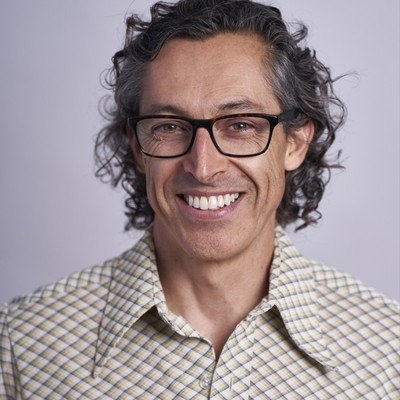
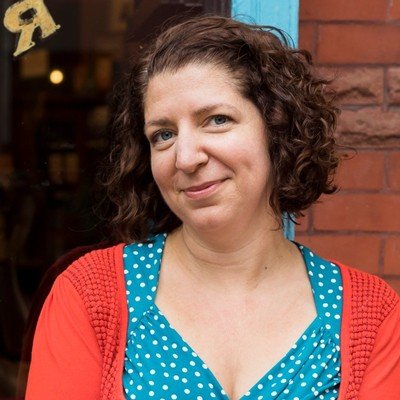
Michael Hernandez and Dr. Micaela Blei were due to lead a session at SXSW EDU in March 2020 called “Take the Mic: Amplify and Engage with Storytelling.” The conference was cancelled as COVID-19 spread, so they brought the conversation to edCircuit’s Education Today podcast, presented by Soundtrap for Education. Hernandez is an award-winning media arts teacher and consultant who teaches visual storytelling to high school students. Blei, a co-founder of The Moth’s Education Program, studied teachers telling their own stories for her doctoral research. Together they explained why storytelling in education matters more, not less, in a crisis, and why schools so often leave it out.
 Education TodayS1E4, Storytelling in Education Evolves in the Age of COVID-19Play episode: S1E4, Storytelling in Education Evolves in the Age of COVID-19 (28 minutes 15 seconds)Follow on SpotifyApple
We are all already storytellers
Blei said “storytelling” has come to mean many things across many industries. In her work, it means people telling true stories from their own lives to other people, whether on a stage, in a recording or across a table. The important point for teachers is that this is not a specialist skill like ballet or the cello. “We in the world are already telling stories all the time,” she said. That allows teachers to take a strengths-based approach and tell students: this is something you already know how to do.
Hernandez described story as the way people “put order on chaos.” We tell ourselves stories to make sense of how we reacted to something, and we tell others stories about ourselves, including through social media posts. Good stories, he added, begin with empathy. Before you can tell one well, you have to be a good listener and know who your audience is, how you want them to feel and what you want them to understand.
Whose story, and backed by what evidence
Hernandez worried that the stories schools tell are too often standardized: which novels are read, whose voices are heard and whose are left out. He saw an opening for teachers to work with students on current events and stories that connect to their lives.
He also cautioned against a shallow version of student voice. Empowering students to tell their story should not slide into the idea that any opinion is valid regardless of the facts. “You’re not entitled to your opinion unless you can back it up with evidence,” he tells his students. That spring, he pointed out, people were acting on very different stories about the virus, and many of them were not listening to scientists or medical experts. Telling and listening to stories, he said, has real-world consequences.
Blei agreed and placed it in a longer history. Stories once focused on grand narratives of great people; over the last few centuries they shifted to individual narratives. Both speakers saw value in that shift, but Blei argued that an individual voice has to be understood in relation to the story of a community, a society and a country. Storytelling, she said, is a good place to examine how individual agency interacts with the greater good.
What teachers learn by telling their own stories
For her doctoral research, Blei ran a storytelling workshop with teachers. She found that it helped them with one of the profession’s persistent tensions, between the personal and the professional. Teaching is a caring profession, and teachers bring themselves into the classroom, but they also need boundaries. Telling stories gave teachers a way to work out what to share and what to keep private, and to help others set healthy boundaries of their own.
She also found that listening is part of the story. By listening, responding and helping someone shape what they want to say, the listener becomes part of that story. Telling stories together was a shared process, and it left teachers feeling more supported and less isolated.
Every story is a draft
Hernandez liked the idea that stories are collaborative and living. Schools often teach a story as a fixed shape with a beginning, middle, climax and end, but real stories keep going and change as other people contribute. When he is struggling with something, he makes something, and he sees storytelling almost as a design thinking exercise: by telling a story and working on it with others, people discover what they feel and find solutions they had not seen.
Blei picked up the design thinking point. Drafting a story is iterating on it, which changes what a draft means. You are not drafting to reach a perfect version, she said. You are showing people the latest version, an idea that applies to student work far beyond storytelling.
Storytelling has moved out of school
Asked what storytelling looks like in high schools, Hernandez said it is mostly one-directional. Even at a high-performing school like his, pressure from standardized tests, college applications and grades leaves little room for experiments or drafts. Everyone, he said, is conforming to a compliance culture.
So students tell their stories elsewhere: in group texts, on Instagram and on Snapchat, often with real creativity. That shows storytelling matters to them, but Hernandez called it a missed opportunity. Schools worry about what students post and whether they understand it, yet have rarely taught them, in a structured way, how to use these tools well, or how to interpret the digital stories other people tell.
Priorities instead of assessment
Hernandez called assessment a double-edged sword. Schools will not invest time or money in something that is not tested, but testing something can ruin it by imposing rigid structures and leaving no room to respond to students or current events. Narrative evaluation of a young child’s work takes time that teachers with 30 or more students rarely have.
Instead of starting with assessment, he suggested starting with priorities: the skills, abilities and mindsets students should have, and the products they can make to show them. Much of the worry about cheating, he argued, comes from assessments that can be gamed. An e-book or a podcast series is “cheat resistant,” because students have to produce something and learn along the way.
Story versus narrative
Blei was in New York City during the recording, and she described following New York Governor Andrew Cuomo’s daily briefings as one example of why stories hold attention in a crisis. The narrative was about who New Yorkers could be: strong and helping each other. The story was a man with a family, a brother and a father. Story, she said, gives people one thread to follow through the noise, which can be clarifying and focusing, not just soothing.
She also described how people tell stories to claim an identity or to negotiate one. During the lockdown she found herself recalling times she had been brave, which helped her reinforce that part of herself. “It’s not just entertainment,” she said. “It’s survival.”
Hernandez tells his students to find what is universal in their characters, so that any audience can connect with them. In the end, he said, “story makes us feel not alone.”
Listen to the full conversation in the player above, or find every episode on the Education Today show page.
Subscribe to edCircuit to stay up to date on all of our shows, podcasts, news, and thought leadership articles.
Related reading
More on Teaching Strategies